Watch: how it's done
How To Easily Build a Horizontal Cedar Privacy Fence — embedded from YouTube
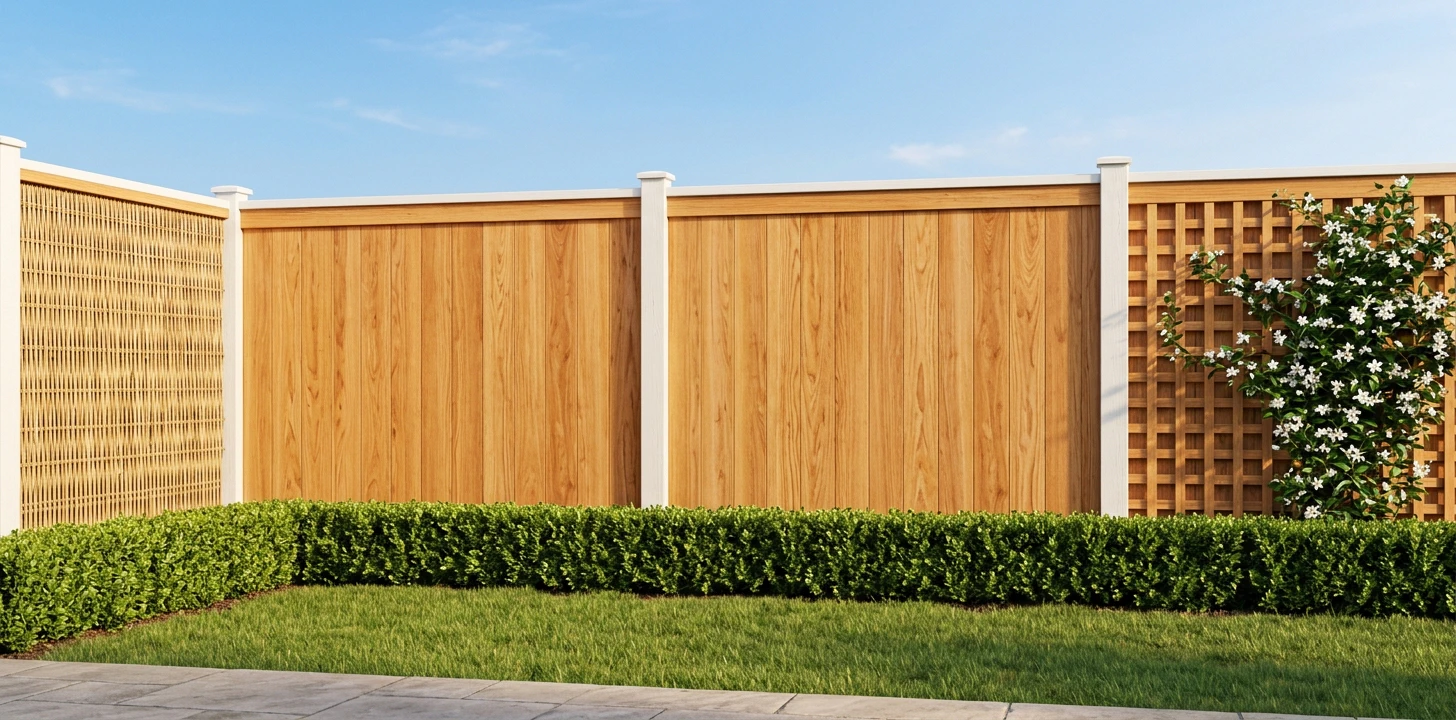
Compare fence stain, bamboo privacy screens, cedar lattice and faux brick for outdoor walls and fences. Real prices and renter-friendly outdoor privacy options.
Why this pick: Behr's premium fence stain is the Home Depot bestseller for a reason — semi-transparent options let wood grain show through while protecting from UV. Reapply every 3-5 years on south-facing fences.
Why this pick: Cedar lattice (rather than pressure-treated pine) ages naturally to silver-gray without staining required. Perfect support for climbing flowers like jasmine and clematis that add another layer of privacy organically.
Why this pick: Smart Tiles' exterior-rated faux brick panels turn boring siding or stucco into an architectural feature. Renter-friendly for outdoor walls of rented houses — peels off cleanly with heat gun on move-out.
Why this pick: Real bamboo or rattan privacy screens tied to existing fence with zip ties. Renter-safe (literally lifts off), looks natural, fades from sun. Best on east/north-facing fences to delay fade by 2-3 years.
Prices verified July 2026 · US market · subject to change
How To Easily Build a Horizontal Cedar Privacy Fence — embedded from YouTube
Backyard fences, side patio walls, and balcony privacy panels get less design attention than any indoor surface, but they're the most-visible piece of your home from neighbors and from your own outdoor space. A weathered gray fence reads "neglected." A stained, vine-covered, or screened fence reads "intentional." The materials matter as much as the install effort — for most yards, an afternoon of work transforms outdoor space.
The two real options for full fence-panel and outdoor wall replacement. The upfront price difference is significant ($15-25 cedar vs $30-50 composite per linear foot), but the 30-year maintenance math flips the answer for most homeowners.
| Natural cedar | Composite panels | |
|---|---|---|
| Cost installed (per linear ft) | $15–25 | $30–50 |
| Maintenance schedule | Re-stain every 3-5 yrs | None — annual wash |
| Lifespan | 15-25 yrs (with maintenance) | 25-50 yrs (warranty-backed) |
| 30-year DIY total | $2,480–4,340 + 48 hrs work | $3,000–5,000 + 0 maintenance |
| Best for | Dry climates, natural aesthetic, DIYers | Humid/coastal/fire-prone, set-and-forget |
Pick cedar if you live in a dry/temperate climate, prefer the natural-wood aesthetic, and are comfortable with weekend maintenance every 3-5 years. Pick composite if you're in a humid or wildfire-prone climate, own long-term, or value set-and-forget over DIY weekends. For higher-end residential projects, the hybrid (cedar focal wall + composite perimeter) lands at the cost-per-year sweet spot.
Still deciding between these two? Read the full Cedar vs Composite comparison → — the 30-year DIY-vs-contracted cost math, climate compatibility rules, fire safety code requirements in CA defensible zones, and 6 FAQs specific to this pair.
Behr Premium Fence Stain costs $30-40 a gallon (one gallon covers ~150 sq ft of fence). Semi-transparent stains let wood grain show through while protecting from UV. Reapply every 3-5 years on south-facing fences; longer on north/east. For pressure-treated lumber, wait 6 months after install before staining — the wood needs to dry out from treatment chemicals first.
Bamboo or rattan privacy screen rolls (sold by the linear foot or in 4×8 ft panels) zip-tie onto existing chain-link or wood fences in an hour. Renter-safe — they lift off without damage. Natural bamboo fades from sun in 3-5 years; treated/colored versions last 5-7. The natural texture works with cottage, modern, or zen aesthetics.
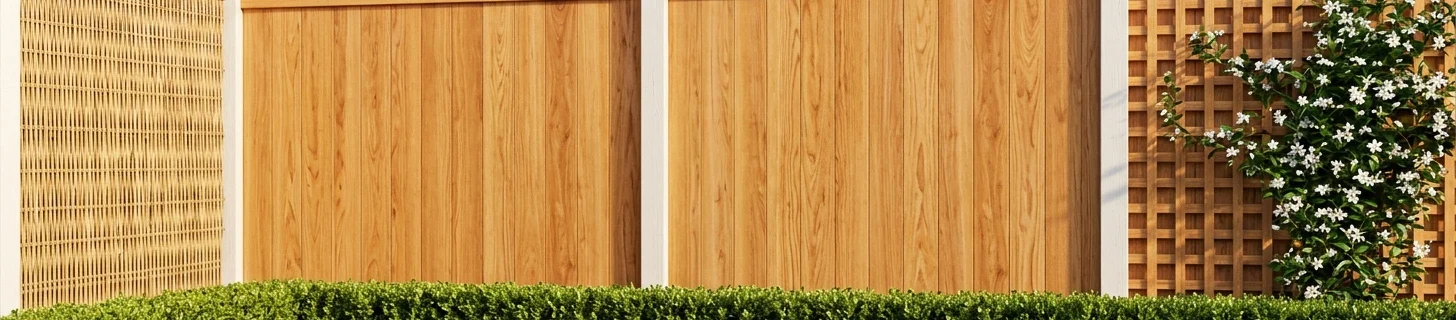
Cedar lattice panels (4×8 ft sheets) cost $30-50 each and mount with deck screws into fence posts or wall framing. Cedar ages to silver-gray without staining required — unlike pressure-treated pine, which yellows and cracks. Perfect support structure for climbing flowers: jasmine, clematis, climbing hydrangea, sweet peas. After one growing season, the lattice disappears under foliage.
Smart Tiles' exterior-rated faux brick panels stick onto siding or stucco walls with construction adhesive. Turns a plain wall into an architectural feature in an afternoon. Particularly good for hiding ugly utility walls (where the electric meter is, behind a hose reel, etc.) or accenting a single wall of a screened porch.
If you're renovating and have a real budget, thin brick or stone veneer ($8-15/sq ft) is the permanent answer. But for a few hundred dollars and a weekend, the four options above transform outdoor walls without commitment. Save real veneer for the front of the house where it matters most.
Generally no — fence stain is designed to penetrate raw or previously-stained wood. Painted fences need the paint stripped (pressure washing + chemical stripper, or sanding) before staining. If the paint is in good shape and you like the color, just repaint with exterior wood paint — much easier than converting to stain. Stripping paint off a 100 ft fence is a 2-day project minimum.
Untreated natural bamboo: 3-5 years before significant fading and brittleness. Treated/dyed bamboo: 5-7 years. Lifespan depends heavily on sun exposure — west-facing screens fail fastest. Add a clear UV-protectant spray each spring to extend life. When they finally fail (cracking, browning, breaking individual canes), the bamboo composts. Genuinely eco-friendly compared to PVC alternatives.
Depends on the plant. Annual or perennial vines (sweet peas, morning glory, clematis) are fence-safe — they grow on lattice, not into the fence wood. Aggressive climbers like English ivy, Virginia creeper, and wisteria can damage wood fences by holding moisture against the surface and accelerating rot. For wood fences, stick to lattice-climbing varieties; for chain-link or metal, almost any climber is fine.
The PVC/polyurethane material itself is weatherproof. The adhesive bond to the underlying wall is the weak point — extreme temperature swings (freezing winters, hot summers) can break the adhesive bond after 3-5 years. For climates with mild winters, expect 5-8 years. For climates with freeze-thaw cycles, replace closer to year 5. Real brick veneer beats faux brick on lifespan in any climate.
Bamboo or reed privacy screen rolls — about $1.20 per linear foot. For a 50 ft fence, that's $60 of screen plus $15 of zip ties. Zip-tie the screen to the chain-link every 12-18 inches. One-hour install, completely renter-safe (lifts off). Looks much better than ugly green vinyl privacy slats that get sold for the same purpose at hardware stores.
New comparisons, renter hacks and Amazon finds — every Sunday.