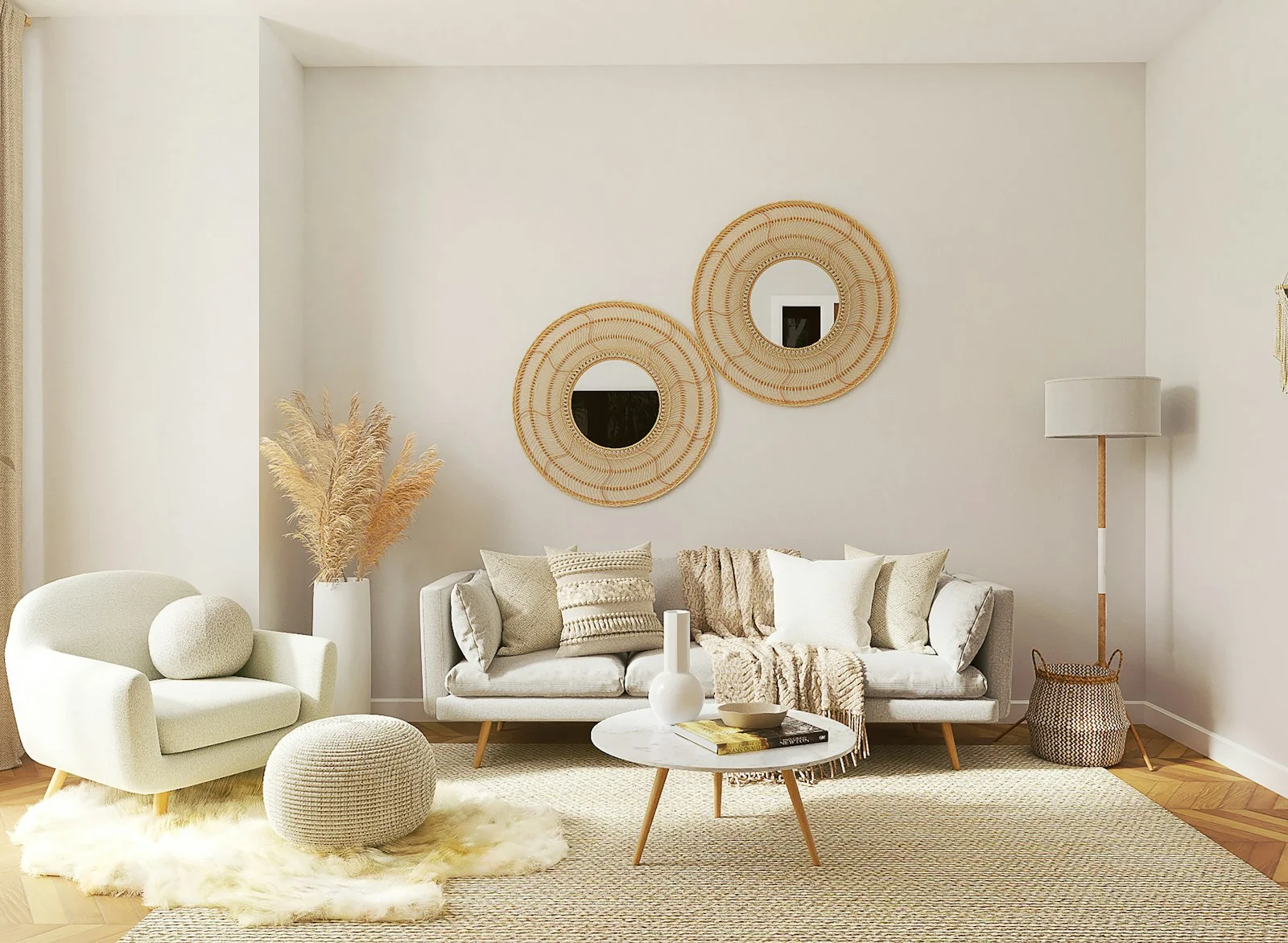
The accent-wall strategy
Living rooms have the largest wall surface of any room — typically 350–500 sq ft of paintable wall. Treating it all the same way wastes the opportunity and the budget. The accent-wall strategy puts the dramatic finish on a single wall (usually the one with the TV or the one behind the sofa) and keeps the others neutral. You get 90% of the visual impact at 25% of the cost.
What to put on the accent wall
- Dark paint: Hale Navy, Iron Ore, Cavern Clay. $40 total for a single wall. Best when the other walls stay light.
- Peel & stick wallpaper: $120–250 for a typical accent wall. Bold pattern transforms the room without commitment.
- Gallery wall over neutral paint: $120–200 in frames and prints. Most personal, indefinite "lifespan."
- Shiplap or wood paneling: $400+ in lumber. Owner-only, but adds real character and resale value.
The hierarchy of visual impact
If budget is tight and you can only do one thing in your living room, the order of impact-per-dollar is — (1) replace the overhead light fixture, (2) do an accent wall, (3) add or replace the area rug. The light fixture especially gets overlooked but is what people first see when they walk in. $40–80 on Amazon gets you something that looks $200+ in person.
Renter-friendly without compromise
None of these living-room moves require permission beyond a basic landlord email — peel-and-stick wallpaper comes off clean, gallery walls use Command strips, area rugs need no install. Even paint is usually fine if you commit to repainting white at move-out. The "shiplap for owners only" rule still applies, but everything else here is renter-safe.
Gallery wall or paint? The one real decision
Of the accent-wall options above, two get confused most because they compete for the same wall: a curated gallery and a solid dramatic color. They're different bets — the gallery buys personality and depth for $120-200 plus a planning evening; the paint buys instant transformation for $40 and a Saturday. Our gallery wall vs accent paint head-to-head breaks the tie, including the paper-template layout method that separates "designed" galleries from "taped up some frames" — and the combined move (dark paint under matte black frames) that Pinterest can't get enough of.
Don't skip the fifth wall's furniture: the rug
A living-room rug has a sizing rule that decides whether the room reads intentional: at minimum, the front legs of every seating piece should sit on it. An 8×10 is the realistic floor for most sofas-plus-chairs layouts; a 5×7 floating in the middle shrinks the whole room. Budget $150-300 for the right size rather than $80 for the wrong one — in a room where the floor itself rarely needs replacing, the rug is the floor decision, and it moves with you at zero landlord risk.