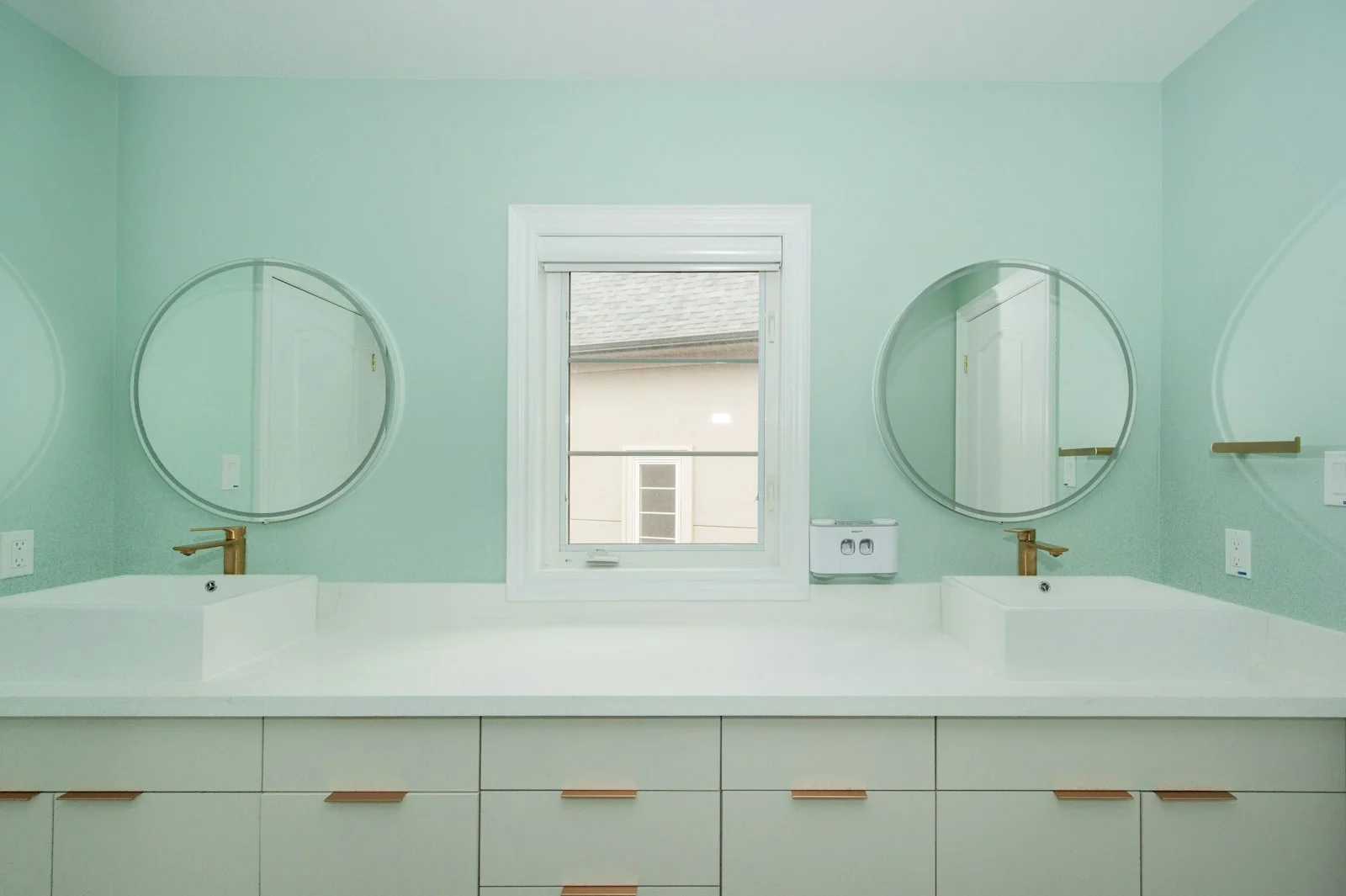
The full-bathroom budget
A typical small bathroom (40 sq ft floor, 100 sq ft of wall, 25 sq ft of vanity) can be refreshed for as little as $110 in materials — vinyl peel-and-stick floor, mold-resistant paint on walls, contact paper on the vanity. That's the renter-friendly weekend project. At the other end, real ceramic floor, beadboard wall panels and a full vanity reface puts you around $700 in material for a long-term owner update.
Renter vs owner: what changes
The single biggest variable in any bathroom decision is whether you'll be in this place in three years. For renters, removability is everything: peel-and-stick floor, removable wallpaper, contact-paper vanity. Total under $150 for a complete visual reset, all removable on move-out. For owners, the calculus flips — spending more upfront on materials with 15+ year lifespans gets you cheaper cost-per-year over time. Click-lock LVP and PVC beadboard panels are the sweet spot.
What we don't recommend
- Carpet anywhere in a bathroom. It exists, people install it, and within 18 months it smells like mold.
- Wallpaper directly inside a shower or behind a tub. Even mold-resistant paint struggles here — wallpaper has no chance.
- Cheap peel-and-stick adhesive products without quality testing. Bad adhesive on cheap products means the material outlasts the bond.
What to do first
If your bathroom feels tired, do these three things in order before any material project: deep clean and re-caulk the tub/shower (one afternoon, $5 of caulk), swap the light fixture for something more modern ($30 on Amazon), and replace the toilet seat (5 minutes, $25). All three together are under $100 and transform how the bathroom reads. Then tackle floor/walls/vanity once that baseline is solid.
Think in humidity zones, not rooms
The reason bathroom projects fail isn't bad materials — it's the right material in the wrong zone. Every bathroom has three: the wet zone (inside the shower surround, beside a splashing tub), where only tile, tub-rated paint and glass belong; the splash zone (behind the sink, around the toilet), where materials need to shrug off droplets and daily steam but never sit in water; and the dry zone (the wall opposite the shower, upper walls with a good exhaust fan), where nearly anything from the rest of the house works — including peel-and-stick wallpaper. Map your bathroom into those three zones before buying anything and half the "will this survive?" questions answer themselves. The other half is the exhaust fan: run it during and 20 minutes after every shower and you effectively shrink the wet zone; skip it and the whole room slowly becomes one. Deliberately turning the entire room into the wet zone is a wet room, and it's a different budget category — the wet room cost guide breaks down what a curbless, fully waterproofed floor actually costs.
The head-to-heads for each zone
For the floor, vinyl plank vs ceramic tile is the classic renter-vs-owner call, and epoxy vs tile covers the trendy seamless-floor question (short version: great look, mandatory anti-slip grit). For walls, wallpaper vs tile stickers explains which product goes on which surface — they don't actually compete. For the vanity, paint vs contact paper hinges on whether the bathroom has a daily shower. And before hanging anything patterned, the wallpaper mistakes guide covers the humidity rule that decides bathroom installs.