Watch: how it's done
How to Install PVC Wainscoting — embedded from YouTube
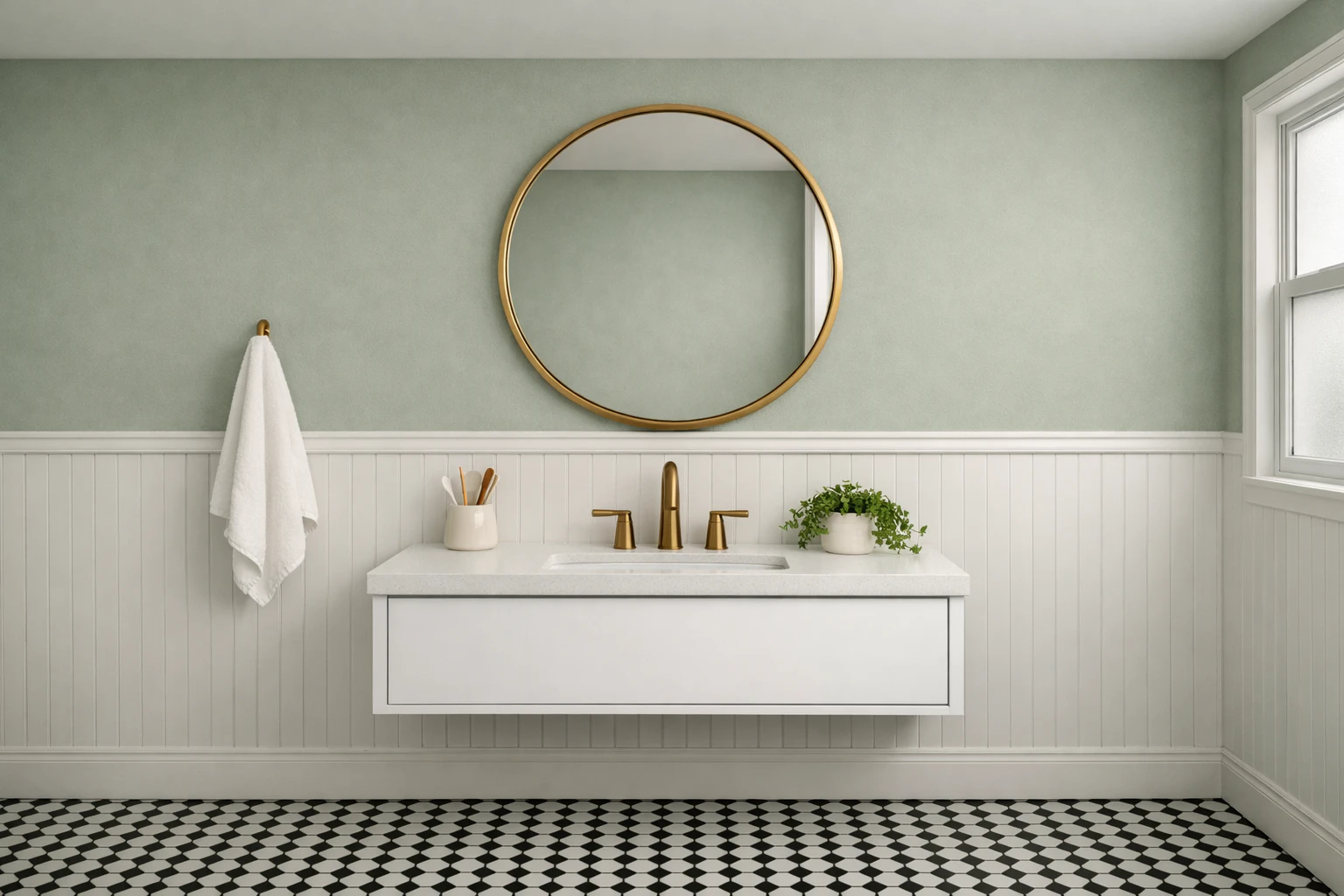
Compare latex paint, peel-and-stick wallpaper and tile stickers for bathroom walls. Renter-friendly options with full cost breakdown.
Why this pick: Home Depot's mid-tier paint, the pick for any wall not in direct shower spray. The bathroom-specific line adds mold resistance, costs less than Benjamin Moore with similar coverage.
Why this pick: Brewster Home Fashions makes NuWallpaper — the original peel-and-stick brand with a decade on the market. Largest pattern catalog in the category, cleanest removal track record.
Why this pick: Picked over flashier names for one reason — their adhesive is specifically rated for 80%+ humidity. Most tile stickers fail near showers within months; LUCKYYJ stays put.
Prices verified July 2026 · US market · subject to change
How to Install PVC Wainscoting — embedded from YouTube
Bathrooms eat finishes faster than any other room in the house. Steam, splashes, daily temperature swings and humidity north of 70% mean most products rated for "10 years" end up looking tired in three. The real question isn't "what's prettiest" — it's "what's prettiest and doesn't peel by year two."
The two renter-friendly options most often weighed against each other for a bathroom refresh — but they don't actually compete the way most comparisons frame them. They cover different surfaces, and the best renter move is often using both.
| Peel-stick wallpaper | Tile stickers | |
|---|---|---|
| Goes on | Painted drywall, plaster | Existing ceramic tile only |
| Cost (small bathroom) | $50–100 | $25–40 |
| Lifespan in damp zone | 3–5 years | 2–3 years |
| Pattern variety | Thousands + custom print | 200–400 designs |
| Best for | Full-wall transformation above tile line | Retro-tile rescue without demo |
Pick wallpaper for drywall above the tile line, accent walls, or any surface where the existing wall is paint not tile. Pick tile stickers if you're rescuing dated ceramic tile without removing it. For most rental bathrooms with both surfaces, use both — total $75–140 for the highest-impact renter bathroom rescue at this budget.
Still deciding between these two? Read the full Wallpaper vs Tile Stickers comparison → — the surface-compatibility decision that decides it, the both-at-once renter rescue recipe, humidity reality check by zone, and 6 FAQs specific to this pair.
Not every wall in your bathroom is the same. The wall behind the shower or tub takes a daily soaking. The wall behind the toilet barely gets touched. Use that to pick materials by zone:
Mold-resistant bathroom paint like Zinsser PermaWhite or KILZ Restoration costs $0.40 per square foot — cheapest by far. The catch is sheen and prep: use eggshell or semi-gloss (matte holds moisture against the wall and grows mildew), and patch any cracks before you paint. Two coats minimum in a steamy bathroom.
Removable wallpaper from Tempaper or NuWallpaper goes up in 1–2 hours and comes off cleanly on move-out. The mistake renters make is wallpapering the wall directly behind the shower — even the best removable adhesive starts lifting in a high-steam environment. Use it on the wall the shower faces, behind the toilet, or above the vanity instead.
Vinyl tile stickers from Quadrostyle or LUCKYYJ go over existing tile and transform a 1990s bathroom into something Pinterest-worthy. They work best on flat, clean ceramic — uneven or textured tile surfaces don't bond well. Expect 2–3 years before edges start to curl, especially near the shower.
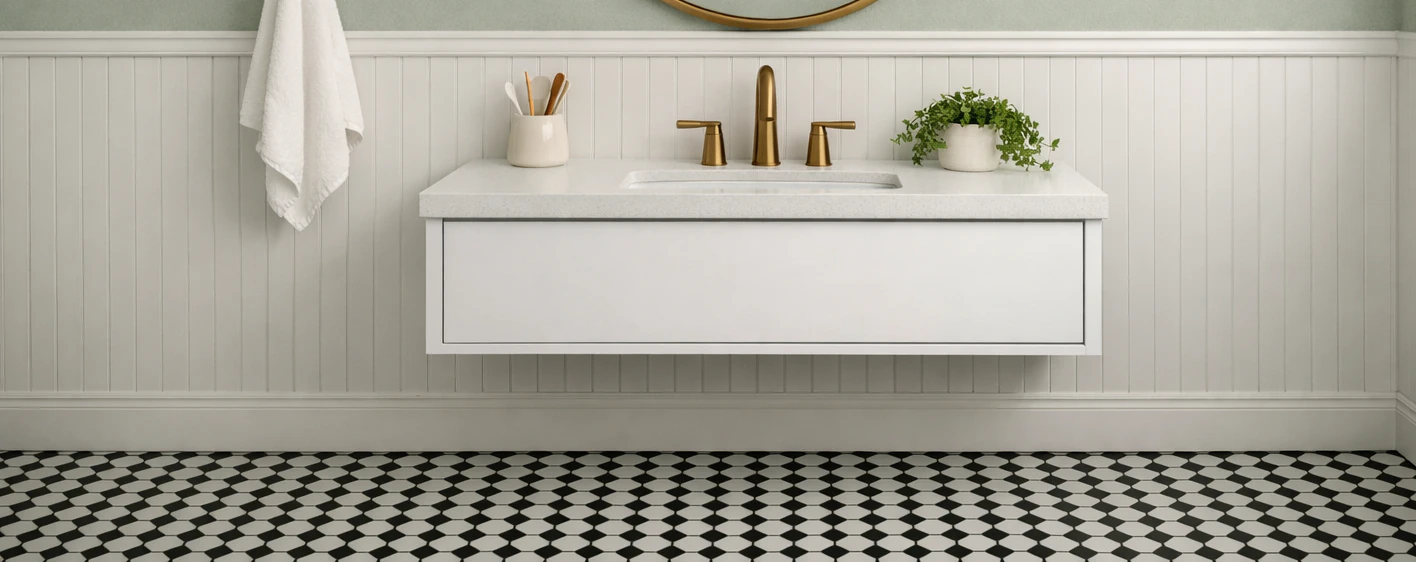
PVC beadboard panels (AquaTile, DPI's RapidWall) are essentially waterproof wainscoting. They cover damaged drywall, last 15+ years, and don't care about humidity. The downside: they need a real install (adhesive, panel adhesive, trim) and they're permanent. Best for owners with a tired bathroom and a free weekend.
It depends on the wall. On walls not directly hit by shower steam, peel-and-stick wallpaper lasts 3–5 years with no issues. On the wall the shower sprays toward, expect lifting at edges within 6–12 months. Run a tiny bead of clear caulk along the top and bottom edges to slow that down. Run your bathroom fan during and after every shower regardless of wall finish.
Strongly recommended for any bathroom with a tub or shower. Regular interior paint will work for a year or two before mildew spots start showing up in corners and along the ceiling line. Mold-resistant paint adds antimicrobial agents into the paint film, costs only $5–10 more per gallon, and roughly triples the lifespan. Brands worth looking at — Zinsser PermaWhite, KILZ Restoration, Sherwin-Williams Duration Home.
Yes, but it's a four-step process — clean with TSP, sand lightly, apply a bonding primer (XIM 400 or Stix), then two coats of epoxy or urethane paint. Skip any step and you'll be repainting in a year. Tub and tile refinishing kits from Rust-Oleum bundle the bonding primer and topcoat together — easier than sourcing each separately. Expect 5–7 years of life if the prep is good.
For small cracks, use a mesh patch and lightweight spackle, sand smooth, prime, then paint. For larger damaged areas — especially around a vanity where water has done damage — cut out the affected drywall back to studs, screw in a fresh patch, tape and mud the seams. If the damage is widespread, beadboard PVC panels are often less work than patching, since they hide everything underneath.
Semi-gloss or satin. Both repel moisture and wipe clean — matte finishes hold moisture against the wall and grow mildew much faster. Semi-gloss is more reflective and reads shinier up close; satin is the modern default for bathrooms and ceilings where you want a softer look. Skip flat or matte entirely in any wet room.
New comparisons, renter hacks and Amazon finds — every Sunday.