Watch: how it's done
The Ultimate Guide to Gallery Walls — embedded from YouTube
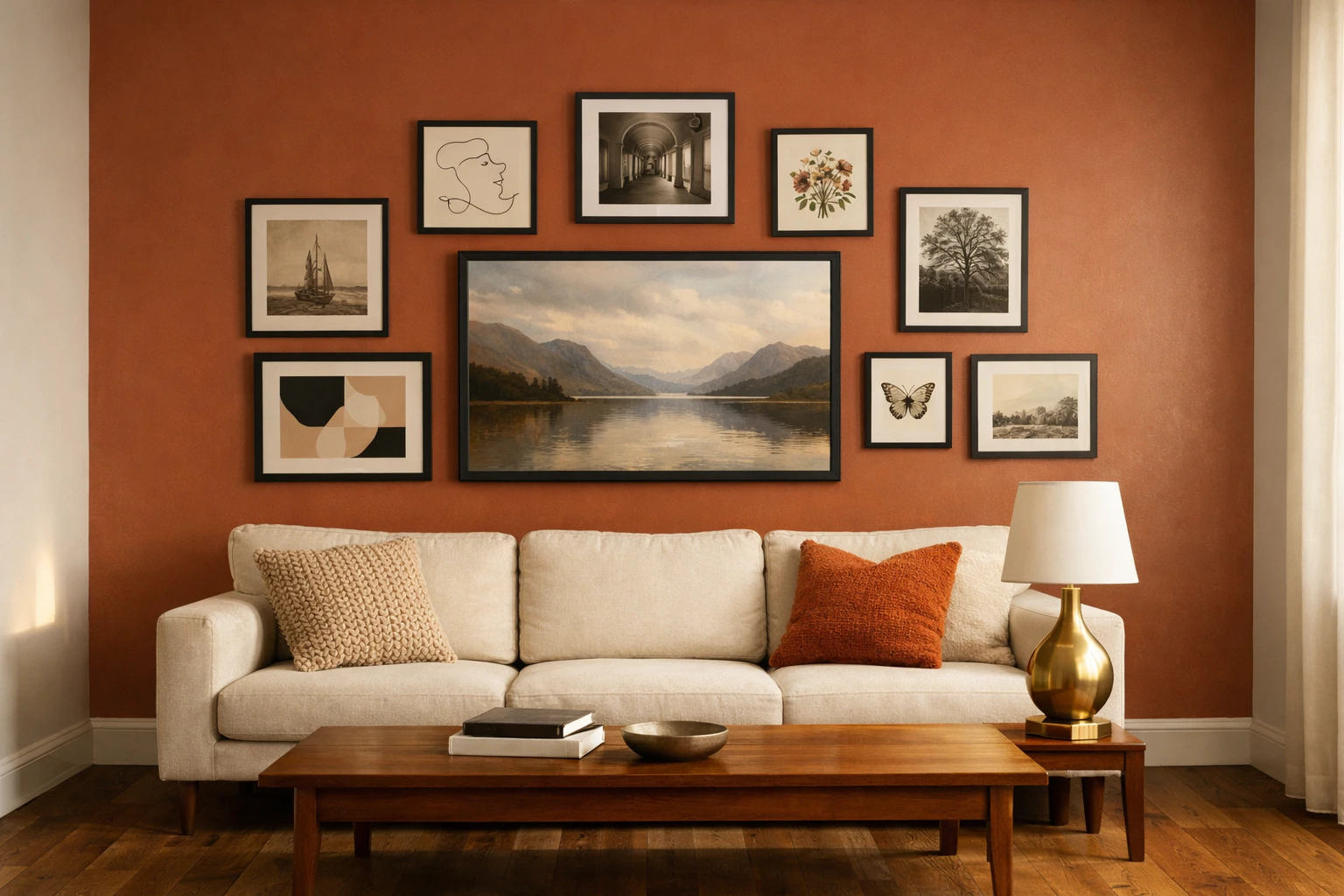
Paint vs peel-and-stick wallpaper vs gallery wall for living rooms. Full cost breakdown with renter-friendly options highlighted.
Why this pick: Same Behr Premium Plus. Living rooms benefit most from the matte finish — the largest wall area in the house means the most surface where matte's flaw-hiding helps the room photograph well.
Why this pick: Same NuWallpaper. Living room accent walls are typically larger than bedroom ones (10+ ft wide), so pattern alignment matters — NuWallpaper's vertical-drop patterns are easier to match.
Why this pick: 3M's Command strips are the only adhesive hangers we trust for art. Cheaper imitations release at random temperatures and humidity changes; Command's formula is patented and consistent.
Prices verified July 2026 · US market · subject to change
The Ultimate Guide to Gallery Walls — embedded from YouTube
Living room walls set the tone for the whole apartment. They're also where most DIY budgets go wrong — people try to redo all four walls and burn through their budget on the first one. The accent-wall trick: pick the single wall most people see when they walk in (usually behind the couch or TV) and put the dramatic finish there. Paint the other three walls a soft complementary color. You get 90% of the visual impact at 25% of the cost.
The two most-Pinterest-saved living room wall moves. If you're choosing between these two specifically, here's the short version before the full breakdown of every approach below.
| Accent paint | Curated gallery wall | |
|---|---|---|
| Cost | $30 | $120–200 |
| Effort | Half-day Saturday | Planning weekend + hanging |
| Pattern depth | Solid color, flat | Layered frames + rhythm |
| Change-ability | Easy — repaint anytime | Hard — moving frames creates holes |
| Best for | Budget, simplicity, frequent color swaps | Design focus, longer stays, depth lovers |
Pick accent paint if budget is under $50 or you want it done in one Saturday — solid color reads as intentional and lets the rest of the room breathe. Pick a gallery wall if you want a designed-looking living room and you're willing to plan the layout — the 30-minute paper-template method is what separates designer galleries from haphazard ones. Best move for owners: do both — dark accent paint + matte black gallery frames is the most-saved combination on Pinterest.
Still deciding between these two? Read the full Gallery Wall vs Accent Paint comparison → — the 30-minute layout method that prevents nail-hole disasters, the combined-approach secret weapon, frame finish rules, and 6 FAQs specific to this pair.
Quality interior paint costs $0.40 per square foot and changes a room in one weekend. The mistakes that hurt the result more than the brand of paint:
Removable wallpaper from Tempaper, NuWallpaper, or Chasing Paper costs $1.50–2.20 per square foot. For an accent wall (typically 80–120 sq ft), that's $120–250 — a real budget item but a real visual impact. For four walls of a 16×16 living room, you're at $1,000+, which is wallpaper-store territory and a different decision entirely.
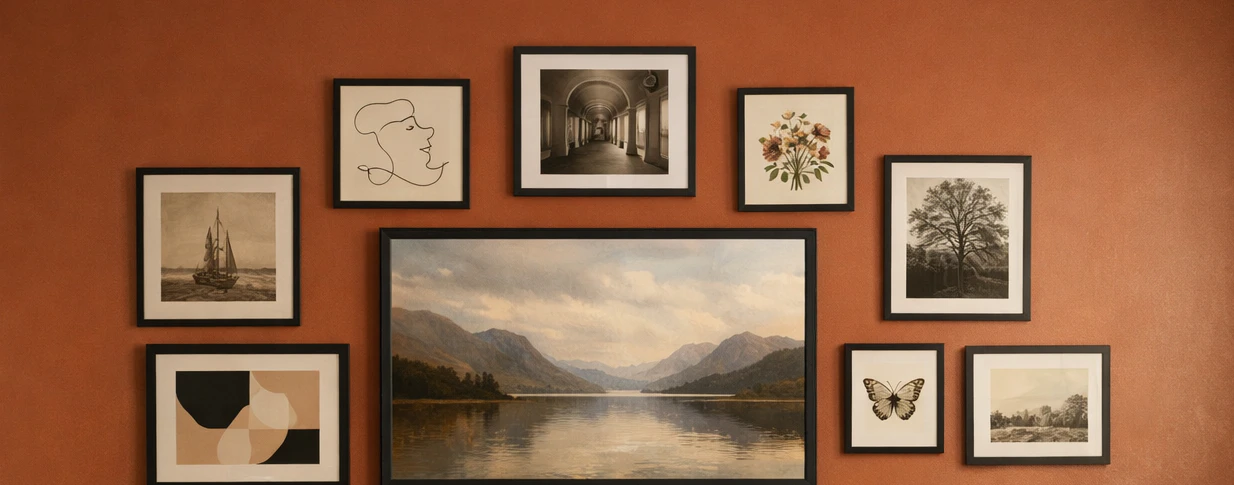
A gallery wall of 8–12 framed prints over a painted wall is the most cost-effective design move in any apartment. Mix print sizes, keep frame finishes consistent (matte black, natural wood, or brushed brass — pick one), and start with the biggest piece roughly at eye level. Use Command picture-hanging strips for anything under 2 lbs to keep walls deposit-safe.
Budget: $120–200 for frames and prints from Amazon (Americanflat, Frametory) plus Society6 or Etsy prints. Look at finished arrangements on Pinterest for layout templates — eyeballing it almost always produces something off-balance.
Real shiplap or tongue-and-groove wood paneling adds character and 20+ year durability. At $3–4 per sq ft plus labor, a 120 sq ft accent wall is $400–500 in material. It also requires a nail gun, miter saw, and a willingness to commit — the nail holes mean it's coming down hard. Skip if you rent.
Three reliable approaches:
Counter-intuitive but true — dark, warm colors (deep navy, charcoal, dark green) make small rooms feel intentionally cozy, not cramped. Light expanding colors on every wall just make the room feel washed out. A dark accent on one wall with light neutrals on the other three adds depth and makes the room look bigger by tricking the eye into perceiving more distance. Test a 2×2 ft swatch on the wall and live with it for 48 hours before committing.
Lay everything out on the floor first — same scale as the wall. Cut paper templates of each frame in the actual dimensions and tape them to the wall with painter's tape. Move them around for a day until the spacing looks right (2–3 inches between frames is the standard). Then hang one frame at a time, taking down the paper templates as you go. This 30-minute step prevents the most common gallery wall problems — uneven spacing and pieces hung too high.
It depends on the texture depth. Light orange peel works, though edges may eventually lift. Knockdown or popcorn texture is a hard no — the adhesive can't bond across the texture peaks and you'll get visible bubbling. Skim-coat the wall with joint compound first, sand smooth, and prime before applying. The 2 days of prep work is worth it for the 3–5 years the wallpaper will last.
Sometimes. New drywall always needs primer. Bare wood needs primer. Painting light over dark needs primer. Repainting an existing color in a similar shade with a quality paint (Benjamin Moore Aura, Behr Marquee) — most people skip the primer with no visible difference. For patching jobs, spot-prime just the patched areas to prevent flashing. When in doubt, prime — it's an extra $30 and a few hours.
Two coats for almost every job. One coat looks fine while wet but dries with visible roller streaks and the previous color often shows through, especially on white over a darker color. Premium one-coat paints (Behr Marquee, Sherwin-Williams Emerald) genuinely work for going color-to-similar-color, but two coats is still the safe answer if you want a professional finish.
New comparisons, renter hacks and Amazon finds — every Sunday.