Watch: how it's done
How to Install Vinyl Plank Flooring — embedded from YouTube
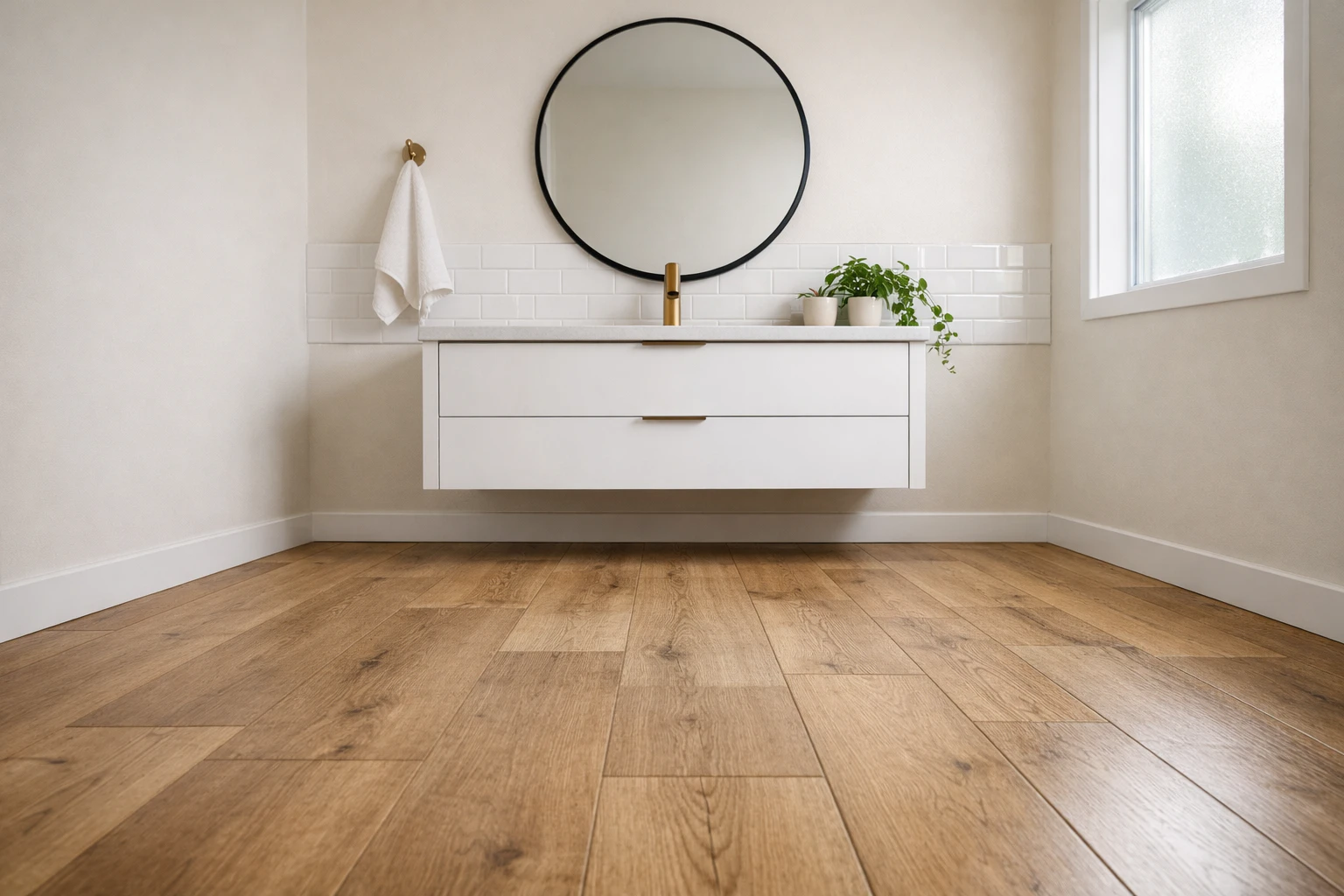
Compare peel & stick tiles, vinyl plank, epoxy and ceramic tile for bathroom floors. Real prices, difficulty ratings, and Amazon links for every option.
Why this pick: The only consumer epoxy specifically formulated for tub and tile surfaces. Generic floor epoxy fails on glossy ceramic; this one bonds because it includes a built-in adhesion promoter.
Why this pick: FloorPops invented the cement-tile peel-and-stick category and still leads it. Their 12-inch design library is the largest in the category, and the adhesive holds up better than no-name competitors in bathroom humidity.
Why this pick: Home Depot house brand with a lifetime residential warranty — rare in luxury vinyl. We picked it for the consistently waterproof core and edge-locking that doesn't separate in humid bathrooms.
Why this pick: Merola's value comes from their pattern library — small mosaic and hex tiles that look like Spanish or Moroccan imports at half the price. Quality matches the big name brands at the bigbox stores.
Prices verified July 2026 · US market · subject to change
How to Install Vinyl Plank Flooring — embedded from YouTube
Bathroom flooring is one of the highest-impact upgrades a renter or homeowner can make — but it's also where most DIY projects fail. Standing water, daily temperature swings, and tight cuts around toilets and tubs make the bathroom less forgiving than any other room. The right material isn't always the most popular one. It's the one that matches your living situation, your floor underneath, and how long you plan to stay.
The two grown-up options that survive a bathroom for years. If you're choosing between these two specifically, here's the short version before the full breakdown of all four options below.
| Vinyl plank | Ceramic tile | |
|---|---|---|
| Cost | $2.80/sq ft | $4.50+/sq ft |
| Lifespan | 12–15 years | 20+ years |
| Install | One weekend, DIY | Two days, wet saw |
| Renter-safe? | Yes | No — permanent |
| Resale value | Modest | High |
| Best for | Renters, budgets | Owners staying 10+ yrs |
Pick vinyl plank if you rent or want install done in a weekend — it's a third of the project cost and removable. Pick ceramic tile if you own long-term and want resale-recoverable upgrade — it lasts decades and "tiled bathroom" sells houses.
Still deciding between these two? Read the full Vinyl Plank vs Ceramic Tile comparison → — the bathroom water-and-grout problem, slip safety, radiant heat pairing, and 6 FAQs specific to this pair.
Epoxy bathroom floors are trending for one reason — a seamless, waterproof surface with no grout to seal. But the bathroom is a wet, barefoot, enclosed room, and that changes the math against the century-old tile standard.
| Epoxy | Ceramic tile | |
|---|---|---|
| Cost (DIY material) | $3–4/sq ft | $4.50+/sq ft |
| Grout to seal? | None — seamless | Yes, every 1–2 yrs |
| Slip safety wet | Needs grit additive | Textured options grip |
| DIY in a small bath | Hard — fumes, one-shot | Forgiving, work at pace |
| Lifespan | 10–15 years | 20+ years |
| Best for | Seamless modern look, slab baths | Slip-safe wet zones, resale |
Pick epoxy if the seamless no-grout look is the goal, the bathroom is on a slab, and you'll hire a pro or take on a real DIY challenge with mandatory anti-slip grit. Pick tile if you want the safest wet floor, a proven 20+ year lifespan, and a forgiving install.
Thinking about a seamless floor? Read the full Epoxy vs Tile comparison → — the slip-safety fix, the indoor-fume reality, the no-grout advantage, and 6 FAQs including basement bathrooms.
Peel-and-stick vinyl tiles start at $1.30 per square foot and need no tools beyond a utility knife. For a small bathroom (35–45 sq ft) you're looking at $50–60 of material and one Saturday afternoon. The catch: edges near the tub and toilet are the failure point. Run a thin bead of clear silicone caulk along those seams as a final step and you'll get 4–5 years instead of 18 months.
Skip peel & stick if your subfloor is anything other than smooth, clean and flat. Old vinyl with embossing, cracked tile, or rough concrete will telegraph through every tile within months.
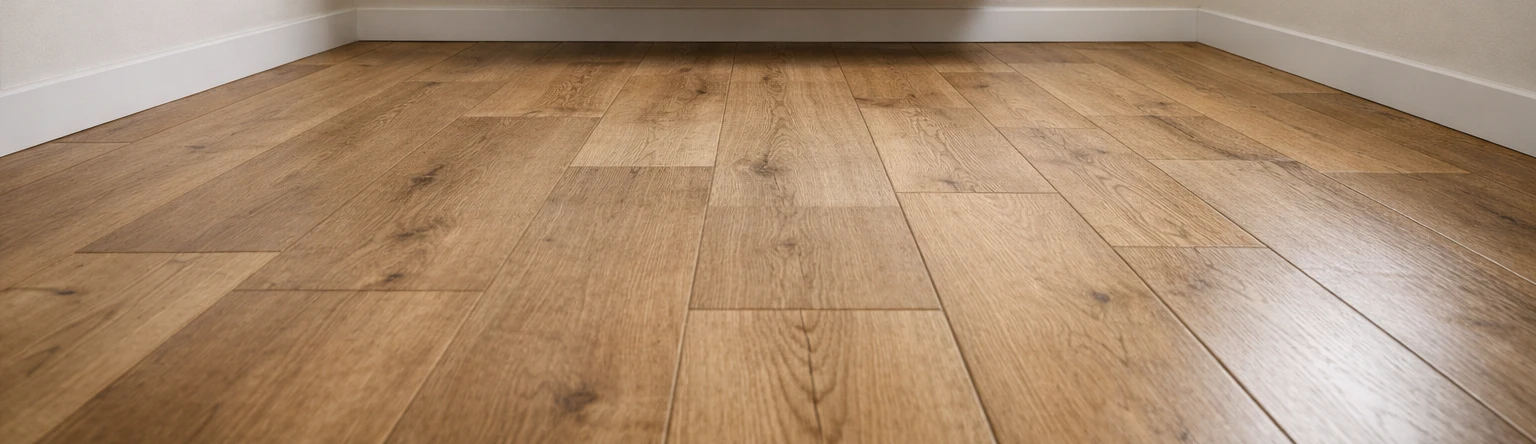
Click-lock luxury vinyl plank (LVP) is technically a "floating floor" — it doesn't glue to the subfloor, just snaps together and sits on top of whatever's there. Brands like LifeProof and Smartcore make 100% waterproof LVP that handles bathroom moisture without warping. At $2.80 per square foot it's twice the cost of peel & stick, but the lifespan is three times longer.
Two things to plan for: it raises the floor by 5–7 mm (door clearance), and the install around a toilet flange takes patience the first time. Watch one YouTube video before starting.
At $4.50/sq ft for material plus another $1–2/sq ft for thinset, grout and saw rental, ceramic doubles or triples the project cost. The payoff is a 20+ year lifespan and real resale value. If you own and you're settled, it's the best long-term choice. If you might move in two years, the math doesn't work.
Per-year cost matters more than upfront price for a flooring decision. Run the numbers on a 40 sq ft bathroom:
Yes — click-lock LVP floats over almost anything as long as the surface is flat and stable. If your existing tile has cracked or loose pieces, replace or stabilize those first. For deep grout lines (more than ~3 mm), most LVP manufacturers recommend a thin underlayment to prevent the planks from flexing into the grooves over time.
The vinyl itself is waterproof, but the seams between tiles are not. Water that pools — around a tub, near a shower curtain, or from a leaky toilet — will eventually work its way under the edges and break the adhesive. A clear silicone caulk bead at the tub/toilet seams adds years to the lifespan. For a wetter bathroom, vinyl sheet or LVP is a better choice.
Most modern click-lock LVP from brands like LifeProof comes with pre-attached foam underlayment. If yours doesn't, a 1 mm cork or foam underlayment is worth $30–50 for the noise reduction and warmth. Skip the underlayment if you're installing over radiant heat or your manufacturer specifically warns against it.
Most landlords say yes if the change is reversible and looks like an upgrade. Click-lock LVP is removable on move-out. Peel-and-stick tiles come off (sometimes with hair-dryer help). Get permission in writing — a short email is enough — and offer to either remove it or leave it depending on what they prefer. Permanent installs like ceramic almost always need explicit approval and may need to be removed at your cost.
Vinyl sheet flooring at roughly $0.90–1.30 per square foot beats peel-and-stick on price for floors larger than 30 sq ft, because there are no seams and very little waste. The trade-off: it's harder to cut around fixtures, and adhesive sheet flooring isn't renter-friendly. For pure cheapest-per-sq-ft, that's it. For best value, vinyl plank wins on cost-per-year.
New comparisons, renter hacks and Amazon finds — every Sunday.