Watch: how it's done
Painting a Vanity — DIY Bathroom Makeover — embedded from YouTube
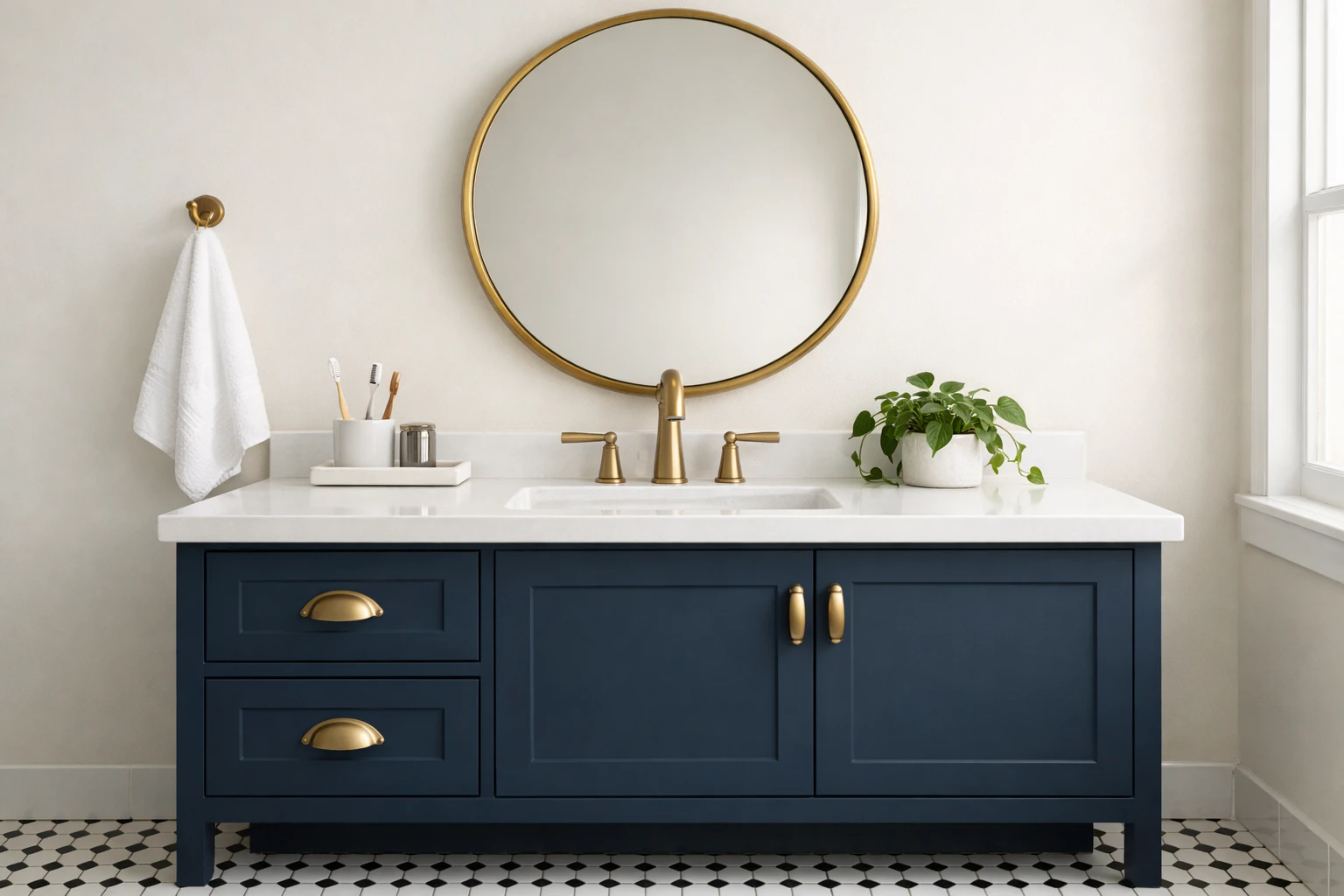
Compare Rust-Oleum kits, chalk paint and contact paper for refreshing a bathroom vanity. Renter-friendly options with real costs.
Why this pick: Annie Sloan says she developed Chalk Paint in 1990; a 1-litre tin is $45 and covers about 140 sq ft, so two coats run about $0.64/sq ft. The brand says Chalk Paint needs Wax or Lacquer and recommends Lacquer for high-traffic areas, which suits a bathroom vanity.
Why this pick: Rust-Oleum's Cabinet Transformations White Tint Base kit is $79.99 for up to 100 sq ft of cabinet surface and includes Krud Kutter cleaner/degreaser, a bond coat and a top coat. The listing says no stripping or sanding, but the data sheet (CAB-07) calls for an X-cut tape test and scuff sanding if more than 10% of the old finish lifts, and rates the finish for kitchens and bathrooms when applied below 60% humidity; cabinets go back into full use after 24 hours per the listing, full cure in 7 days.
Why this pick: A 17 in x 78 in roll of d-c-fix film (about 9.2 sq ft) is $12.99 on the dcfix store listing. The d-c-fix FAQ recommends its films in wet rooms only for bathroom furniture such as cabinets, with the room aired regularly, and says leftover adhesive can be soaked off with water.
Prices verified October 2026 · US market · subject to change
Painting a Vanity — DIY Bathroom Makeover — embedded from YouTube
A single-sink vanity is one or two doors and a couple of drawers — about 6–10 sq ft of faces to refresh. Below are the three approaches on the cards above: a quick wrap, a low-prep chalk paint, and a bonded paint kit.
The choice splits along whether you rent or own, and whether the vanity sees a daily shower. Here's the short version.
| Contact paper wrap | Paint | |
|---|---|---|
| Material cost (6–10 sq ft) | $4.99 (one Con-Tact roll) or $12.99 (one d-c-fix roll) | ~$47 (quart of enamel + quart of primer) or $79.99 (full kit) |
| Cost per sq ft | $1.41 (d-c-fix); $0.37 (Con-Tact) | $0.80 of kit coverage ($79.99 per 100 sq ft) |
| Install | 1–2 hours | 3 days (kit) |
| Removable? | Yes — renter-safe | No — permanent |
| Humidity | d-c-fix: wet rooms on cabinets only, room aired | Apply kit below 60% humidity |
| Best for | Renters, half/guest baths | Owners, bathrooms with a daily shower |
Pick contact paper if you rent, budget is under $20, or the bathroom is a half-bath with little steam. Pick paint if you own and the vanity is in a bathroom with daily shower use — a $35.99 quart of Benjamin Moore Advance plus a quart of Zinsser Bulls Eye 1-2-3 (about $11 in Paint Supply's 18-quart case) is about $47, less than a full kit.
Still deciding between these two? Read the full Paint vs Contact Paper comparison → — the bathroom humidity problem, the right-sized paint approach, splash-zone caulking, and 6 FAQs specific to this pair.
Easier — less surface and almost no grease. Harder — daily steam and splashes work on adhesives and unsealed paint. Pick for moisture, not price.
A 17 × 78 in. roll of d-c-fix film (about 9.2 sq ft) is $12.99 on the dcfix store, about $1.41 per sq ft; Con-Tact's Creative Covering is $4.99 for an 18 in. × 9 ft roll on its own store. One roll covers a vanity. The d-c-fix FAQ recommends its films in wet rooms only for bathroom furniture such as cabinets, with the room aired regularly; its instructions want a smooth surface free of dust, grease and silicone. Wrap cut edges to the back of each door.
Annie Sloan says Chalk Paint very rarely requires sanding or priming, and a 1-litre tin is $45 and covers about 140 sq ft. In a bathroom the topcoat is not optional: Annie Sloan's how-to guide pairs the paint with Wax for indoor use or Lacquer for high-traffic areas — a vanity by the sink is the Lacquer case.

The White Tint Base kit is $79.99 at one retail listing and covers up to 100 sq ft, so it pays off only if a kitchen comes next. Per the CAB-07 data sheet, the box holds Krud Kutter cleaner/degreaser, a bond coat and a protective top coat. The listing says no sanding, but the sheet has you test first: bond-coat a small patch, cut an X after 2 hours, tape and pull, and scuff the doors if more than 10% comes off. Apply below 60% relative humidity — not right after a shower — and don't clean it until the 7-day cure is done.
On door and drawer fronts, yes, if the room is aired: d-c-fix allows its film in wet rooms only on bathroom furniture such as cabinets, with regular airing. The trouble spots are the bottom edge, where floor water wicks up, and sides touching the wall — wrap edges to the back and caulk where the vanity meets the wall.
Yes, with the right primer — plain latex has nothing to grip on slick laminate. Benjamin Moore's Advance data sheet says to sand cabinetry with 220 grit and names Fresh Start 046 primer for laminate; Zinsser says Bulls Eye 1-2-3 bonds to glossy surfaces without scuff sanding. The Rust-Oleum kit has no separate primer: its bond coat is made for wood, laminate and melamine, and the X-cut test tells you whether to scuff first.
Yes — at least for the finish coat. Painting doors on the hinges leaves brush marks where the door meets the frame and almost always results in drips on the cabinet box. Label each door and paint flat on sawhorses; the Rust-Oleum sheet says rehang 12 hours after the top coat.
Contact paper — 1–2 hours. Chalk paint with sealer — 1–2 days. Rust-Oleum kit — about 3 days, then a 7-day cure before scrubbing. Benjamin Moore Advance takes longer: 16 hours between coats. None need experience, just patience.
New comparisons, renter hacks and Amazon finds — every Sunday.