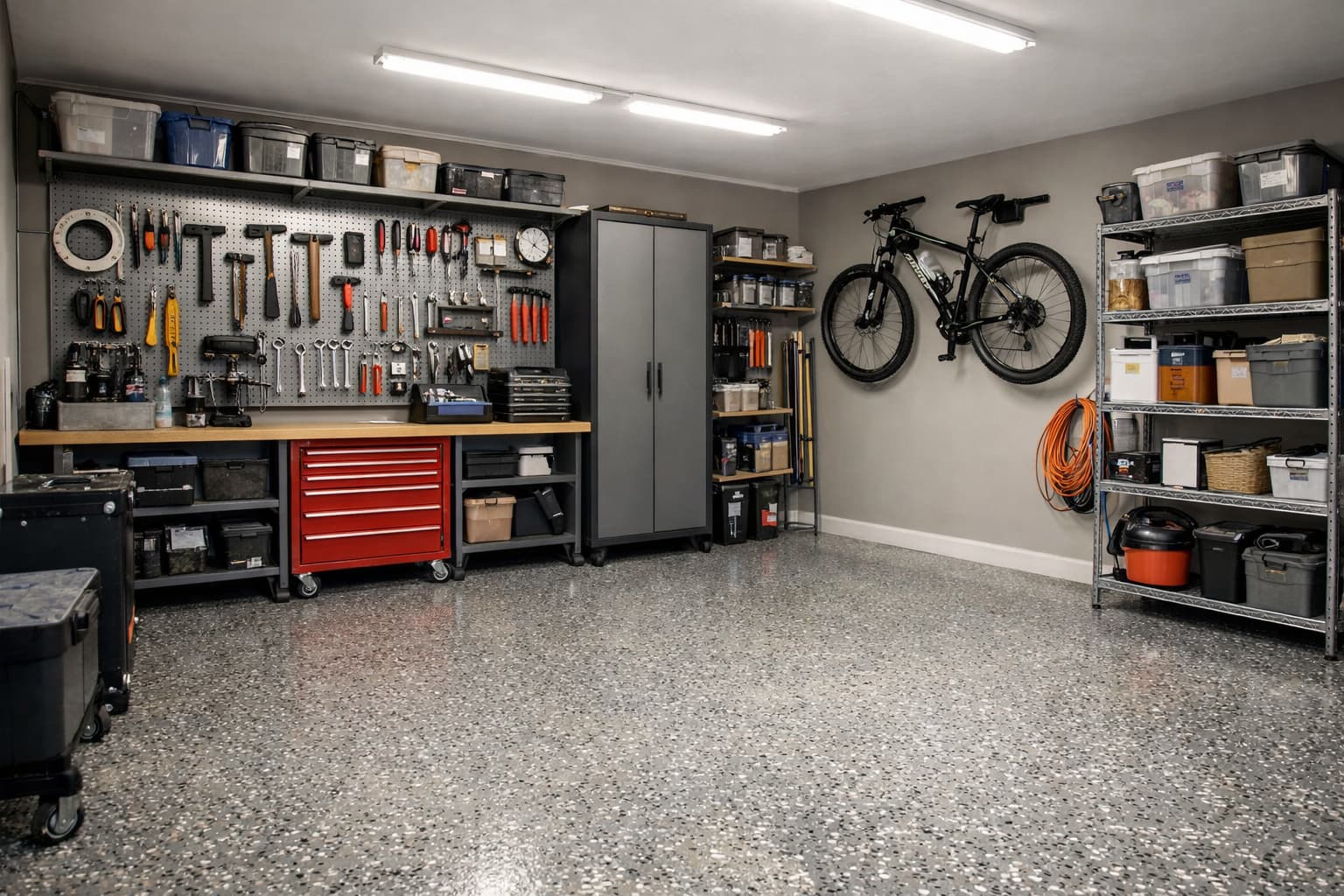
Garage organization: the floor-space ROI
A garage is rarely actually small. It's just full of stuff that should be on the walls. Moving tools, bikes and bins onto pegboard or slatwall frees the floor — which means cars actually fit, projects have room, and you stop walking sideways past the lawnmower. A Wall Control two-pack of steel pegboards is $49.99; a 4 x 8 ft Proslat PVC slatwall bundle with trims and hooks is $339.99, rated at up to 75 lb per sq ft on 16-inch stud centers.
The order to renovate a garage
- Declutter first. Don't add storage to keep stuff you don't use. Sell or donate before installing systems.
- Wall storage. Pegboard or slatwall above where the cars park, plus dedicated bike/ladder hooks.
- Floor coating. Epoxy or PVC tiles. Easier to install with empty walls than with stuff to work around.
- Lighting upgrade. LED shop lights — a 4 ft linkable fixture is $26.99 to $57.99 at Hemlock Hardware (Linkable, Satco Nuvo).
The renter-friendly garage upgrade
If you rent a house with a garage, your options narrow but aren't zero. Rubber roll mats and interlocking tiles are removable. Rail systems are not renter-friendly: Gladiator's GearTrack instructions call for a screw in every slot at every stud, or masonry screws into block. Single storage hooks such as the Park Tool 471 ($7.95) thread into a stud and leave one small hole each — ask the landlord first. Skip permanent epoxy, slatwall, and ceiling racks for rentals.
Before any coating: the moisture test
One free test decides whether a coated garage floor lasts or peels: tape a 2×2 ft square of plastic to the bare slab, sealed on all four edges, and wait 24 hours (the method in Rust-Oleum's EpoxyShield data sheet). Condensation under the plastic means the slab is releasing moisture — and any coating applied over it will blister off from underneath, regardless of brand or price. That is a prep problem, not a product problem. The full prep checklist (etching vs grinding, temperature windows, cure times) lives in our 7 garage epoxy mistakes guide — read it before opening a kit, not after the peeling starts.
Picking the actual products
Once the sequence above is done, the two money decisions each have a full breakdown. For the floor: epoxy vs interlocking garage tiles (permanent-and-cheaper vs snap-together-and-movable) and painted concrete vs epoxy (the hot-tire-pickup problem that kills paint under daily drivers). For the walls: paint vs pegboard with the tool-count sizing rule. And when it's time to buy a coating, the 11 Best Garage Floor Coatings roundup ranks epoxy, polyurea and polyaspartic kits by chemistry, cure time and climate.