Watch: how it's done
How To Do Epoxy Floor Without Stress — Easy DIY Guide — embedded from YouTube
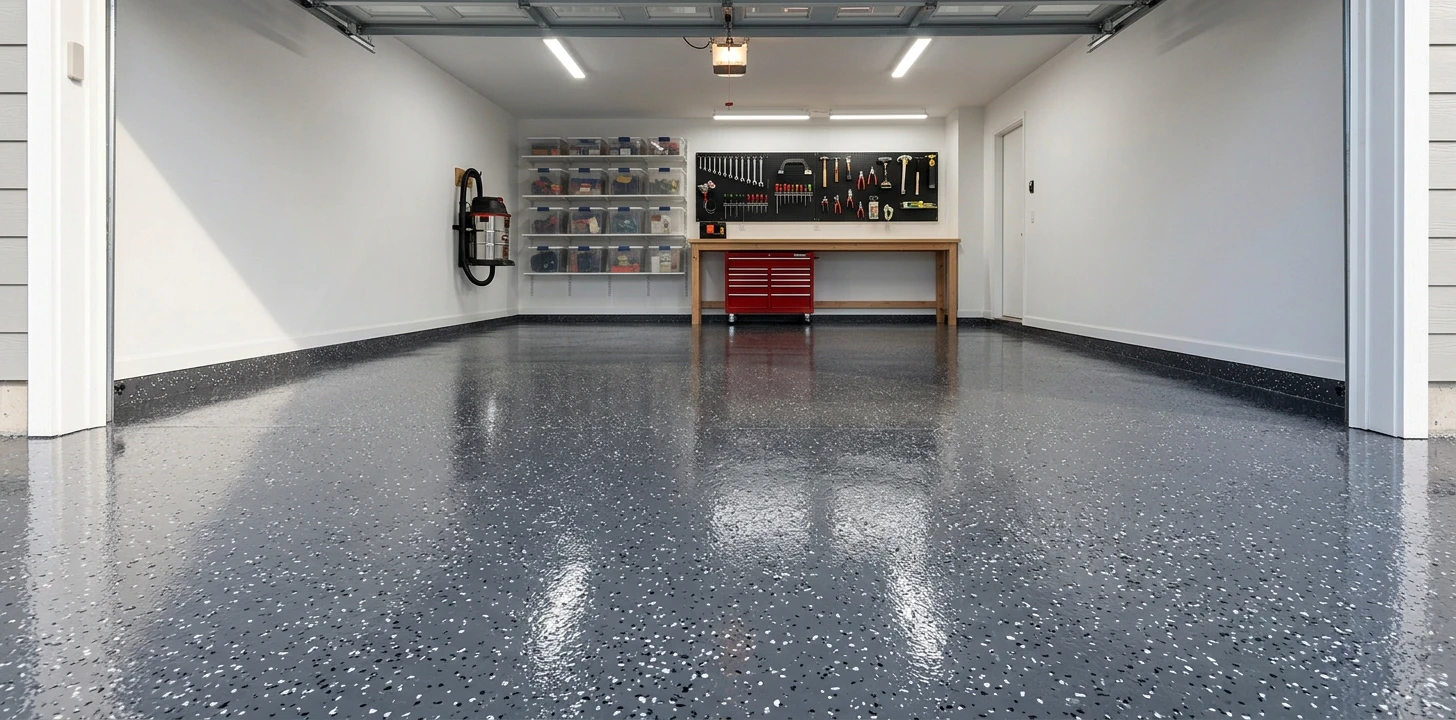
Compare epoxy coating kits, interlocking tiles, rubber mats and painted concrete for garage floors. Real prices and durability for every option.
Why this pick: Drylok (United Gilsonite Laboratories) has been making concrete coatings since 1945. Their floor paint isn't the most durable but is the most reliable in the budget tier — formula hasn't changed in decades for a reason.
Why this pick: Same Rust-Oleum EpoxyShield as the laundry room recommendation, but the garage-rated tier specifically. Two-part formula plus the decorative chips kit make it the consumer standard for under-$2/sq-ft garage floors.
Why this pick: IncStores makes commercial-grade rubber roll mats sold direct to consumers. Same exact product as what most commercial gyms use, just available in residential-sized rolls.
Why this pick: RaceDeck makes the original interlocking garage floor tile. Their drainage-channel design (water flows through, not under) is patented; cheaper imitators trap water and warp within a year.
Prices verified July 2026 · US market · subject to change
How To Do Epoxy Floor Without Stress — Easy DIY Guide — embedded from YouTube
Garage floors deal with tire pressure, oil drips, road salt, scraped sleds, dropped tools, and 40-degree temperature swings between seasons. They need a finish built for industrial wear, not just decoration. The four serious options range from $0.50 to $3 per sq ft, with very different lifespans and removability. For a typical two-car garage at 400 sq ft, that's $200 to $1,200 for the floor alone — a real budget decision.
The two most-asked-about garage floor finishes, side by side. If you're choosing between these two specifically, here's the short version before the full breakdown of all four options below.
| Epoxy coating | Interlocking PVC tiles | |
|---|---|---|
| Cost | $1.50/sq ft | $3/sq ft |
| Lifespan | 5–10 years | 10–15+ years |
| Install time | 2–3 days (48 hr cure) | One afternoon |
| Removable? | No — permanent bond | Yes — pops apart, moves with you |
| Cold climate | Fine with proper prep | Best — road salt can't penetrate |
| Slab condition needed | Clean, dry, level | Bridges minor cracks and dips |
| Cost per year | ~$0.20/sq ft | ~$0.25/sq ft |
Pick epoxy if you want a clean seamless look, plan to stay in the house 5+ years, and can shut the garage down for 48–72 hours of cure time. Pick PVC tiles if you want it done in one afternoon, you might move houses within a few years, your concrete slab has cracks or unevenness, or you deal with road salt every winter. Both beat painted concrete and rubber mats for long-term value — the full breakdown of all four options is below.
Still deciding between these two? Read the full Epoxy vs PVC comparison → — install gotchas, climate guide, real product picks and 6 FAQs specific to this pair.
The cheapest-vs-good-enough garage floor decision. If your decision is between these two budget tiers specifically, here's the short version.
| Painted concrete | Epoxy coating | |
|---|---|---|
| Cost | $0.50/sq ft | $1.50/sq ft |
| Lifespan | 3–5 years | 5–10 years |
| Install time | One Saturday | 2–3 days, 72-hr cure |
| Hot-tire tolerance | Poor — peels under cars | Excellent — rated for vehicles |
| Best for | Workshops, low-driving garages | Daily-driver garages |
Pick painted concrete if your garage is mostly workshop or storage and you park outside — the cheap, fast option is fine. Pick epoxy if cars live in the garage daily — that single factor (hot-tire pickup) decides it almost universally.
Still deciding between these two? Read the full Painted Concrete vs Epoxy comparison → — the hot-tire pickup problem in detail, moisture test, repaint paths, and 6 FAQs.
Drylok or Behr Concrete Floor Paint at $0.50/sq ft is the budget starting point. Cleans up old slabs visually for $200 in a two-car garage, but you'll be repainting in 3-5 years because car tires (especially hot summer tires after a long drive) will lift latex paint off concrete. Use only if you need it to look good for a year or two before a real solution.
Rust-Oleum EpoxyShield ($1.50/sq ft including the kit, decorative chips, and topcoat) is what most owned garages get. It bonds chemically to concrete, resists oil and salt, and lasts 5-10 years. Two-day project including cure time, requires shutting down the garage for that period. The decorative chips disguise minor floor imperfections.
Heavy-duty rubber mat in rolls ($2/sq ft) is the gym-floor approach to garage floors. It rolls out, no install needed, comes up clean when you move. Softer underfoot than any hard floor — noticeable if you do projects standing on the floor for hours. The downside is visible seams between rolls and that fact that anything spilled needs to be cleaned immediately or it can pool.
Snap-together PVC tiles from RaceDeck or SwissTrax ($3/sq ft) are the premium option. Built-in drainage channels mean melted snow and spilled fluids run through, not pool on top. Lifespan is 10-15+ years, and they pop apart for cleaning underneath or moving to a new house. Most expensive upfront but cheapest cost-per-year.
Before any garage floor project, do a 24-hour moisture test — tape down a 2×2 ft sheet of plastic and check the underside the next day. Condensation means your slab is wicking moisture from below. Painting or epoxy coating over a wet slab will fail within months regardless of product quality. The fix is a moisture-blocking primer (Rust-Oleum Concrete Bonding Primer) before the topcoat. This step separates a 6-year finish from a 6-month disaster.
For owners staying 5+ years, yes — it's the best balance of durability, look, and price. $1.50/sq ft amortized over 8 years is about $0.20/sq ft/year, cheaper than repainting concrete every 3 years. The catches — install requires the garage to be empty and unused for 48-72 hours, and fumes during cure are real (ventilate aggressively or stay out). If you can't shut down the garage that long, interlocking tiles are the alternative.
To a point. Most PVC interlocking tiles bridge gaps and minor unevenness up to about 1/4 inch over a 2-foot span. Larger dips or cracks need to be patched with concrete leveling compound before installation. The advantage of tiles over epoxy here is that you can install them on a slightly worse slab — but really bad slabs need leveling regardless of what surface you put on top.
Cat litter dumped on fresh stains absorbs the oil before it soaks in — works in the first 15 minutes after a spill. For set-in stains, oil-eating concrete cleaner (Pour-N-Restore, Oil Eater) does a good job. Stubborn stains under existing finishes mean stripping back to bare concrete, treating, then re-coating. This is the main reason epoxy coating beats bare concrete long-term — oil sits on top of epoxy and wipes off, instead of soaking into porous concrete.
Epoxy and PVC tiles handle freeze-thaw cycles fine. Painted concrete fails fastest in cold climates — water from melted snow expands when it refreezes inside the paint film and lifts it off. Road salt is also brutal on most coatings; if you live somewhere salt-heavy, prioritize PVC tiles (which the salt can't penetrate) or polyaspartic coatings (Rust-Oleum's premium garage floor option).
Most consumer kits (Rust-Oleum EpoxyShield, KILZ Garage Floor) deliver 5-7 years of normal use. Professional polyaspartic coatings (Rust-Oleum RockSolid, ArmorPoxy) push that to 10-15 years. Both ratings assume reasonable prep — etching the concrete, applying a bonding primer, two thin coats with proper cure time. Skipping the prep cuts those lifespans roughly in half regardless of product.
New comparisons, renter hacks and Amazon finds — every Sunday.