Watch: how it's done
DIY Vinyl Plank Flooring Install Over Old Floor in Laundry Room For Beginners — embedded from YouTube
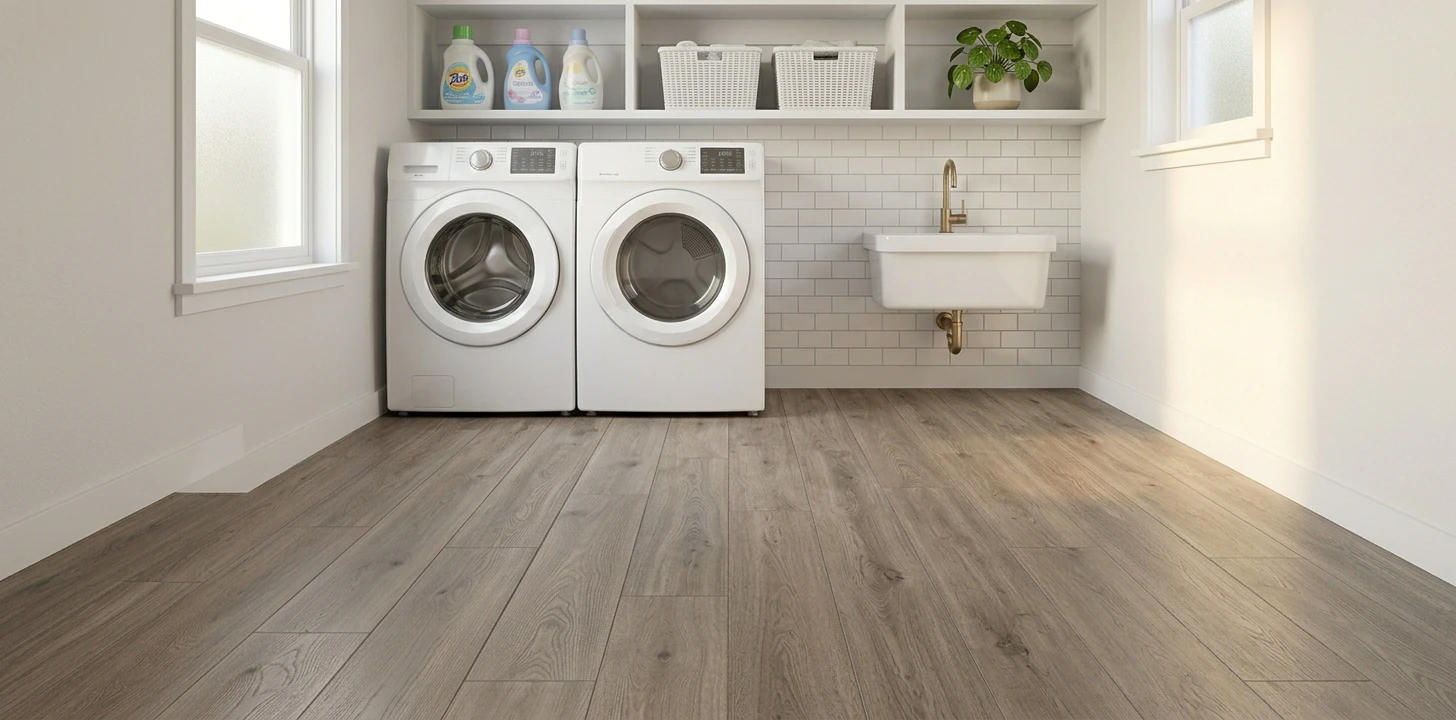
Epoxy concrete, vinyl sheet, LVP and porcelain tile for laundry rooms. Real prices and waterproof options for washer leak protection.
Why this pick: Originally branded for garages but works in laundry rooms over concrete slabs. The mid-grade two-part epoxy gives 5–7 years of leak protection at a third of pro-installed prices.
Why this pick: Armstrong invented vinyl sheet flooring 100+ years ago and still makes the most consistent product. For utility rooms where look matters less, no other brand competes on price-per-yard.
Why this pick: Same LVP, but worth noting that for laundry rooms specifically the click-lock seams are the weak point. Pair it with a $25 leak detector for full peace of mind.
Why this pick: Porcelain (not ceramic) is what plumbers recommend in wet rooms. Daltile's porcelain line is denser than competitor brands, with virtually zero water absorption — important after a washer flood.
Prices verified July 2026 · US market · subject to change
DIY Vinyl Plank Flooring Install Over Old Floor in Laundry Room For Beginners — embedded from YouTube
Every laundry room floor should be picked with one question in mind — what happens if the washer fails at 3am and dumps 20 gallons before someone notices? The answer separates the cheap-and-fine options from the cheap-and-disaster ones. Vinyl sheet, LVP, porcelain tile, and properly sealed epoxy concrete all pass the test. Paint, carpet, and laminate fail it.
The two materials most laundry-room renovations come down to. The substrate under your floor decides 40% of this before any other factor matters — and from there, washer type and leak history decide the rest.
| Click-lock LVP | Epoxy concrete coating | |
|---|---|---|
| Goes on | Wood, concrete, tile, even old epoxy | Concrete slab only |
| Cost (50 sq ft) | $140 | $60–90 (one kit covers 200+ sq ft) |
| Leak resistance | Seam + perimeter weak point | Monolithic — zero leak path |
| Vibration tolerance | Fine w/ front-loader + anti-vib pads | Bonded to slab — zero shift any washer |
| Best for | Wood-subfloor, renters, front-loader | Slab owners, top-loaders, leak-prone setups |
Pick LVP if your laundry is on wood subfloor (no real choice — epoxy can't go there), you rent, or you want wood-look continuity with adjacent living spaces. Pick epoxy if you have a slab, own long-term, have a top-loader, or the room has any leak history. On a slab specifically, epoxy is the safer-by-design choice — monolithic leak resistance, chemical tolerance, zero vibration shift add up to fewer 5-year problems.
Still deciding between these two? Read the full Vinyl Plank vs Epoxy comparison → — the substrate decision filter, the 3am washer flood scenario, front-loader vs top-loader vibration physics, and 6 FAQs specific to laundry rooms.
Before any floor decision, install a $40 plastic washer drain pan under the machine. It captures most slow leaks before they hit the floor and gives you days instead of hours to notice. This is the cheapest piece of laundry-room insurance you can buy and works with any floor type.
If your laundry sits over a concrete slab, Rust-Oleum EpoxyShield ($60 for a kit covering 200–250 sq ft) paints directly over clean concrete. Fully waterproof, easy to wipe, and gives you the modern industrial look that's actually appropriate for a utility space. Two-day project including cure time.
Old-school vinyl sheet at $1.50/sq ft is the secret budget hero of laundry rooms. Seamless across the whole floor means no leak path, glue-down adhesion means it won't shift under a vibrating washer. The downside is the look and the fact that it's permanent. Best for utility rooms where aesthetics matter less than function.
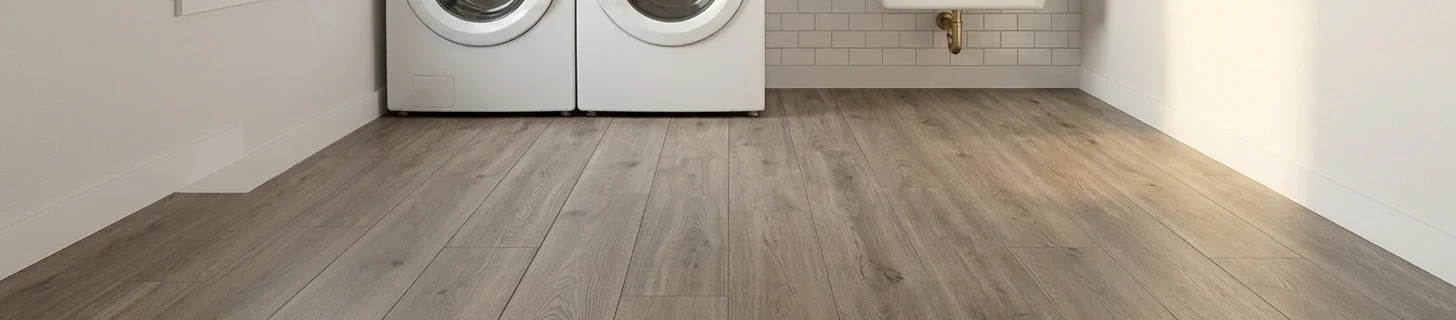
Click-lock LVP at $2.80/sq ft brings together waterproof construction, real-wood look, and float-install removability. For a 50 sq ft laundry room that's $140 in material and one afternoon of work. The seams between planks can leak under sustained standing water, so this is still pan-and-detector territory.
Porcelain at $4/sq ft is what plumbers recommend if you ask them. Completely impervious to water, lasts indefinitely, and grout (when properly sealed) keeps moisture out. The catch is install difficulty and zero forgiveness if your slab isn't flat. Owner project only.
Top-loaders vibrate harder than front-loaders, especially on spin. Heavy materials that absorb vibration — porcelain tile, real vinyl sheet glued down — outperform floating floors here. Click-lock LVP under a top-loader can develop seam separation over time as the planks shift fractionally with each cycle. Anti-vibration pads under the washer feet ($20) help any floor type.
Yes, and you should — slide it back from the wall, run the LVP under the unit's full footprint, then slide it back. Skipping under-unit coverage means if you ever replace the machine with a slightly different size, you'll see the unfinished floor underneath. Disconnect water and gas/electric before moving the unit.
Three layers in order of cost: a $40 plastic drain pan under the machine catches small leaks; a $25 leak detector with an audible alarm tells you immediately when water hits; and a $150 automatic shutoff valve cuts the water supply automatically. All three together are still under $250 — much cheaper than one flood.
Yes, once cured. Modern garage-floor epoxy kits add anti-slip grit to the top coat which gives traction without feeling rough. Skip the anti-slip additive if you want a smoother feel — most laundry rooms don't have enough water on the floor to need it. The epoxy itself is fully cured and safe to walk on within 24 hours.
New comparisons, renter hacks and Amazon finds — every Sunday.