Watch: how it's done
How to Install Vinyl Plank in a Kitchen — LVP Flooring Home Renovation — embedded from YouTube
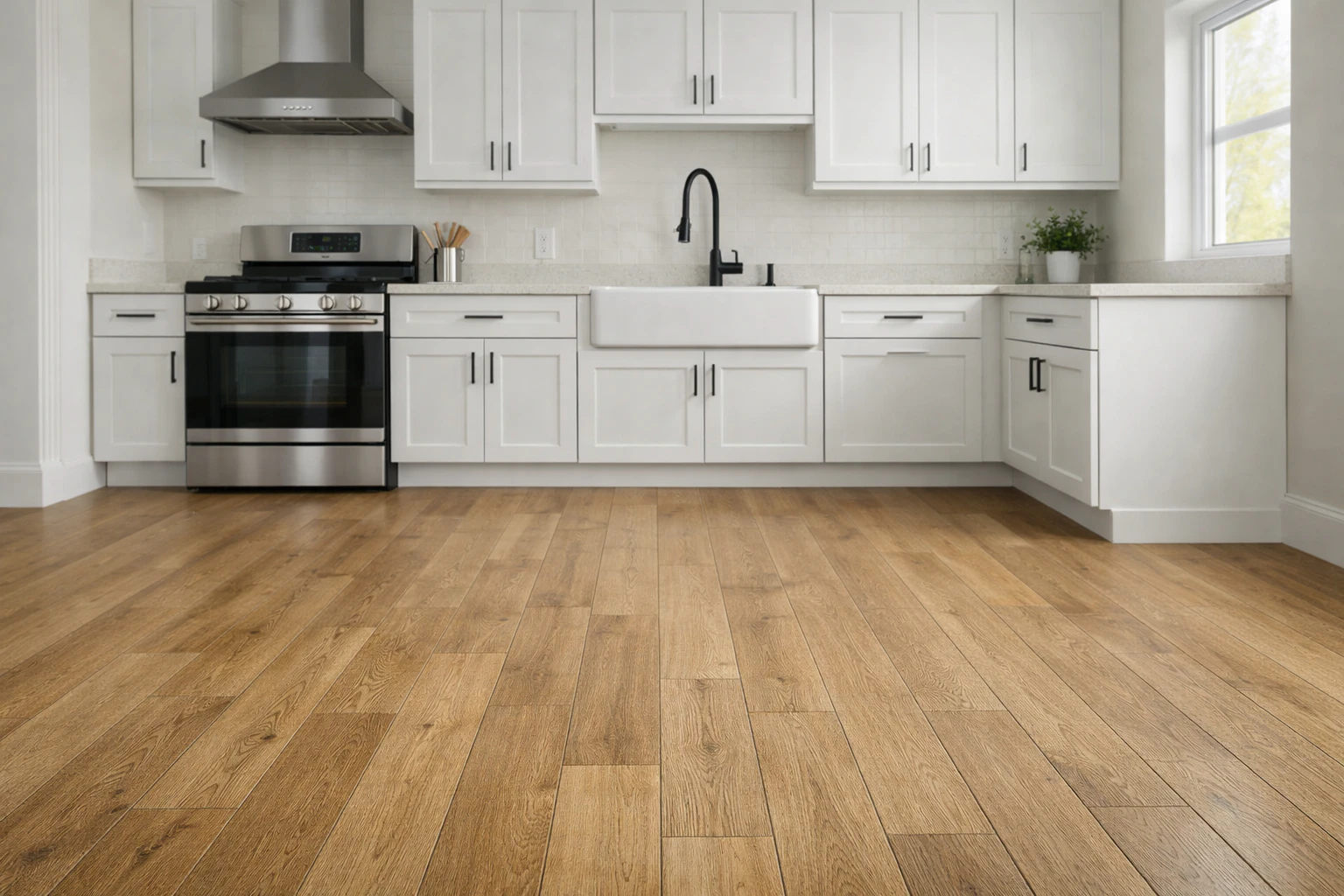
Compare luxury vinyl plank, peel & stick tile and hardwood for kitchen floors. Renter-friendly options and real costs per square foot.
Why this pick: FloorPops' kitchen-specific peel-and-stick collection adds a grease-resistant topcoat to their standard tile designs. Same adhesive quality as bathroom line, built for the kitchen mess.
Why this pick: Same Home Depot house brand we recommend for bathrooms. Kitchen-rated SKUs add scratch resistance for chair drags and dropped knives. Click-lock is forgiving for first-time installers.
Why this pick: Bruce is Armstrong's mid-range hardwood line. We picked them over Mohawk and Lumber Liquidators for consistent milling tolerances and a proven 5-year residential wear warranty.
Prices verified July 2026 · US market · subject to change
How to Install Vinyl Plank in a Kitchen — LVP Flooring Home Renovation — embedded from YouTube
Kitchen floors deal with spilled coffee, dropped knives, dragged chairs, and standing-while-cooking foot traffic for hours every day. The right floor isn't the prettiest one — it's the one that doesn't scratch, stain, or warp in five years of normal use. For a typical 100 sq ft kitchen, your real choice is between vinyl plank, peel-and-stick, and hardwood. Tile exists but it's brutal on dropped glasses and tired feet.
The two "real floor" options most kitchen renovations come down to. If you're choosing between these two specifically, here's the short version before the full breakdown of all options below.
| Vinyl plank | Solid hardwood | |
|---|---|---|
| Cost | $2.80/sq ft | $8+/sq ft |
| Waterproof | Yes — fully | No |
| Lifespan | 12–15 years | 50–100 years (refinishable) |
| Resale value | Modest | High |
| Best for | Budgets, wet kitchens, DIY | Owners, dry kitchens, resale |
Pick vinyl plank if budget matters or your kitchen gets wet — it's a third the price and fully waterproof. Pick hardwood if you own long-term and the kitchen stays dry — it refinishes for decades and adds resale value a dishwasher leak can otherwise erase.
Still deciding between these two? Read the full Vinyl Plank vs Hardwood comparison → — the kitchen water problem that decides it, the engineered-hardwood middle path, refinishing math, and 6 FAQs specific to this pair.
The decision active cooks and open-concept kitchens face: a softer LVP that flows into the dining room, or a bulletproof porcelain tile that lasts decades but is brutal on your feet over a 2-hour Sunday cook session.
| Vinyl plank | Porcelain tile | |
|---|---|---|
| Cost (100 sq ft) | ~$280 | ~$500–650 |
| Standing-cook comfort | Softer underfoot | Rigid — knee fatigue after 90 min |
| Dropped-dish survival | Plates usually survive | Plates shatter; tile chips on edge |
| Open-floor flow | Flows into dining/living | Hard break at room transition |
| Best for | Active cooks, open kitchens | Long-term owners, closed kitchens, serious bakers |
Pick LVP if you cook actively or the kitchen opens to the rest of the house — the foot-fatigue and continuity arguments are decisive. Pick porcelain tile if you own long-term in a closed kitchen and run the oven hot — tile's unlimited heat tolerance and 20+ year lifespan earn the cost premium.
Still deciding between these two? Read the full Vinyl Plank vs Tile comparison → — the under-discussed standing-cook foot-fatigue problem, open-floor continuity design rule, heat-tolerance near the oven, and 6 FAQs specific to this pair.
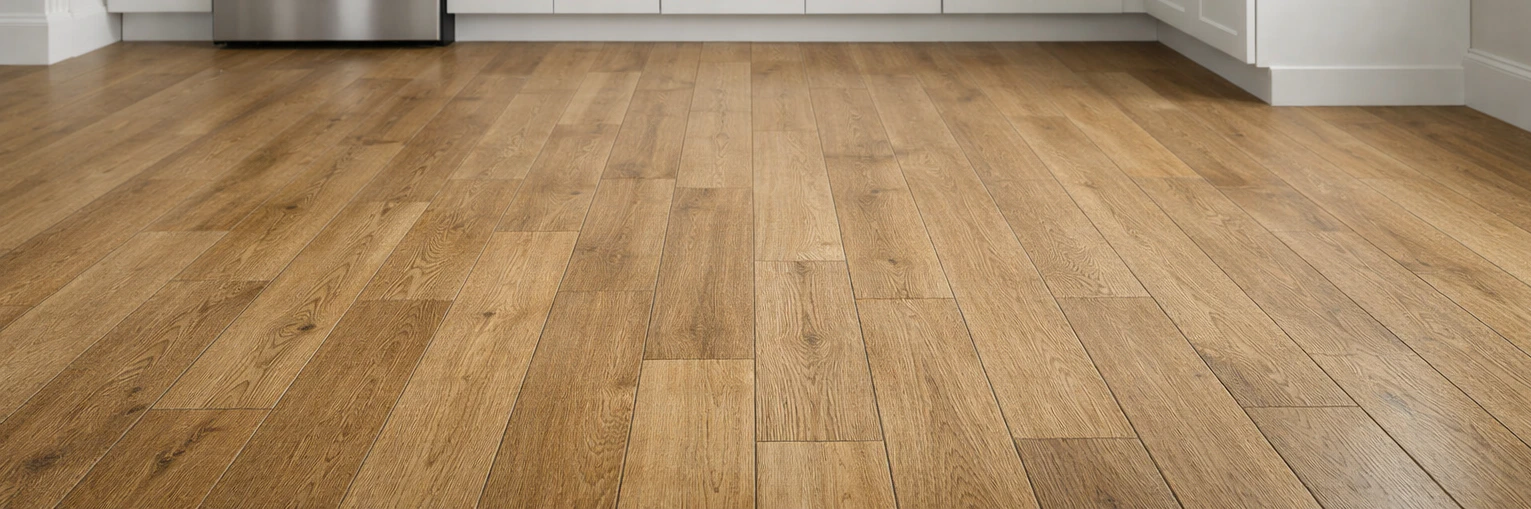
Click-lock luxury vinyl plank (LVP) is what most kitchens get today, for good reason. At $2.80 per sq ft it's mid-priced, 100% waterproof, looks like real wood, and floats over almost any subfloor. The 12–15 year lifespan amortizes to about $0.20 per sq ft per year — cheaper than peel-and-stick over time even though it costs more upfront.
Peel-and-stick tile at $1.30 per sq ft is the only choice if you rent and your landlord won't let you do anything more permanent. Keep it away from the dishwasher and sink area where standing water is most common, and reseal seams under the fridge and stove with clear caulk. Expect 3–5 years of life.
Solid hardwood at $8+ per sq ft is the premium choice for homeowners. It looks gorgeous, refinishes beautifully, and adds real resale value. The catches: it scratches (every dropped knife leaves a mark), water damage from a dishwasher leak can mean a full replacement, and the install is a full-house disruption. Worth it only if you own and care about the look.
Almost every kitchen floor failure starts under the dishwasher or refrigerator. These appliances slowly leak over years before you notice. The fix: any floor you install must extend under the dishwasher, not just up to it. And run a drip pan under the fridge water line — it's $15 of insurance.
Modern 100% waterproof LVP from LifeProof, Smartcore and similar brands handles spills and minor leaks fine. The weak point is the seams — under standing water for days (a major dishwasher leak), water will eventually work between planks and reach the subfloor. The plank itself won't warp, but the subfloor underneath can. Run a leak detector under appliances as a safety net.
Yes — click-lock LVP floats over tile as long as the tile is flat, stable, and the grout lines aren't too deep (more than ~3 mm needs underlayment). The new floor raises the surface by about 6 mm total, which usually means trimming the dishwasher feet and possibly transitioning to other rooms with a threshold strip.
For a typical 100 sq ft kitchen, expect 6–8 hours of active work for click-lock LVP — most of that is fitting around the cabinets and dishwasher cutout. Peel-and-stick is faster at about 3–4 hours. Hardwood is a 2-day project plus the time to clear the kitchen completely.
Yes if you're doing it right. The dishwasher feet need to sit on the new floor, not on the old one with a step. Disconnect the water supply (turn off the valve under the sink first), unscrew the dishwasher from the cabinets above it, and slide it out. With the floor in place, slide it back, level it on the new feet, reconnect. Takes about 20 extra minutes total.
New comparisons, renter hacks and Amazon finds — every Sunday.