Watch: how it's done
How to Tile a Small Floor with Hexagon Tiles — embedded from YouTube
Door mats, peel & stick tile, vinyl plank and ceramic for entryways. Real prices for the highest-traffic spot in your home.
Why this pick: WaterHog (Andersen Company) is what commercial buildings use at entrance doors. The rubber-backed polypropylene catches 80% of tracked-in dirt before it reaches the floor — well beyond cheap rubber mats.
Why this pick: Same FloorPops brand. The encaustic (Moroccan-style) collection is their most popular for entryways — high pattern density hides the wear that naturally happens in this zone.
Why this pick: Same Home Depot LVP. For entryways specifically, the scratch-resistant top layer matters most — pet claws and luggage wheels destroy cheaper wear layers within a year.
Why this pick: Daltile is the largest US ceramic tile manufacturer. Their hex tile (3-inch and 8-inch) is what most architectural-magazine entryways use — at roughly half the price of imported tile.
Prices verified July 2026 · US market · subject to change
How to Tile a Small Floor with Hexagon Tiles — embedded from YouTube
The entryway sees more wear per square foot than any other floor in the house. Wet boots, muddy shoes, dropped groceries, dog claws, dragged luggage. Whatever you put there has to handle abuse and set the tone for everyone who walks in. The good news — most entryways are tiny (10–20 sq ft), so even premium materials stay affordable.
The two grown-up entryway options. If you're choosing between these two specifically, here's the short version before the full breakdown of every option below.
| Vinyl plank (LVP) | Porcelain tile | |
|---|---|---|
| Cost | $2.80/sq ft | $4.50+/sq ft |
| Lifespan (entryway) | 10–12 years | 20+ years |
| Salt tolerance | Good — wipes clean | Excellent (epoxy grout in salt belt) |
| Install | One afternoon | Two days, wet saw |
| Resale impact | Modest | Strong — first-impression premium |
| Best for | Renters, short-term, mild climate | Owners, cold climate, 10+ year stay |
Pick LVP if you rent or stay under 5 years — it snaps in an afternoon and pops apart on move-out. Pick porcelain tile if you own long-term and live in a salt-belt climate — the entryway is the first impression buyers see, and tile pays back at resale.
Still deciding between these two? Read the full Porcelain Tile vs Vinyl Plank comparison → — the road-salt problem, first-impression resale data, radiant heat pairing, and 6 FAQs specific to this pair.
Before any floor project, get a real door mat. A 24×36 inch WaterHog or comparable rubber-backed mat catches roughly 80% of the dirt that would otherwise hit your floor — and it's $30. This single step extends the life of whatever floor is underneath by years.
Encaustic-look peel-and-stick tile (FloorPops, Achim) creates an impressive cement-tile vibe at $1.50 per sq ft. For a typical 15 sq ft entryway that's $25 of material and an hour of work. The high-traffic edges along the doorway are the weak point — reseal them with clear caulk after install.
Click-lock LVP is the smartest entryway choice for most situations. Waterproof so wet boots don't matter, scratch-resistant from the textured wear layer, and removable when you move. Plan on $40–60 of material for a small entryway plus baseboard or threshold trim transitions.
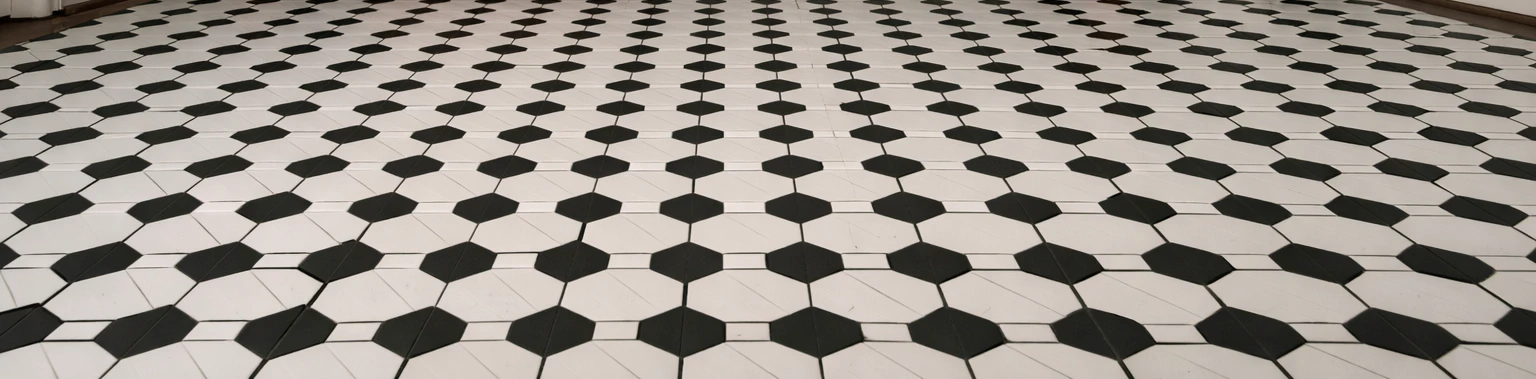
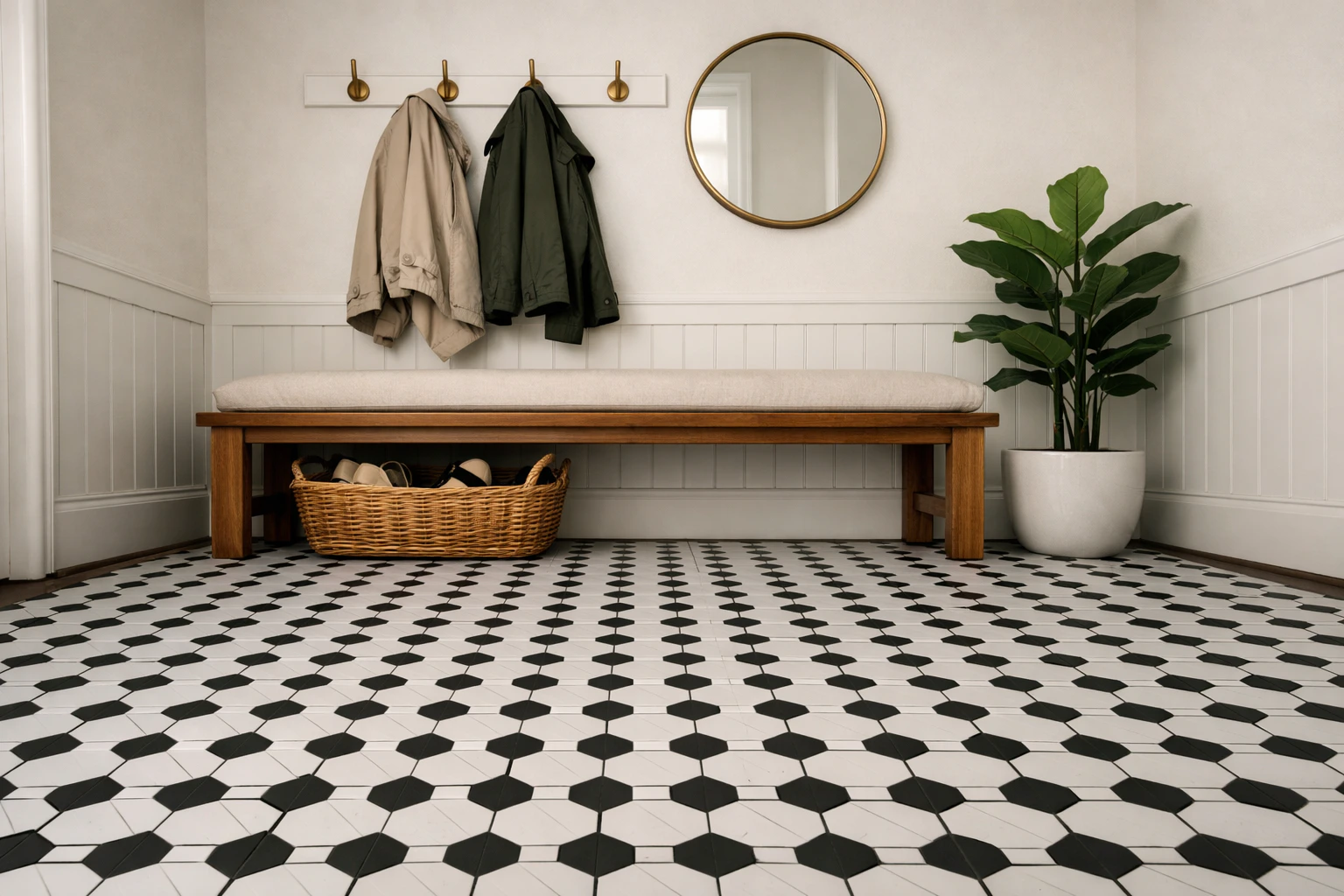
If you own, ceramic or porcelain tile in an entryway is the only true forever floor. Modern hex tiles (3-inch or 8-inch black-and-white patterns) from Daltile or MSI give the room real character. Two-day install, but you'll never replace it again.
Porcelain tile is the most durable, full stop — it's what commercial buildings use in entryways. For renters or anyone avoiding a permanent install, click-lock LVP is the next best thing. Both wipe clean with a mop and don't scratch or dent under boot heels. Avoid hardwood and laminate entirely in entryways with regular wet shoes — they will show damage within a year.
If the floor heights match, no transition is needed — just butt the materials together. If they don't (very common when adding LVP on top of existing wood), use a flat threshold strip. Home Depot and Lowe's sell pre-finished threshold strips for $15–25 that match common wood and tile finishes. Glue or screw them into place.
Yes — and it's the better choice visually if your entryway opens directly into the living room (no transition wall). Use LVP in both areas with no transition strip and the space feels larger. The exception is if you live in a snow climate — a tile or LVP entryway "drop zone" with carpet or hardwood in the living room contains the wet mess.
A 2×3 ft rug for one or two people, 3×5 ft for a family with multiple shoes going on and off daily. Position it just inside the door so the front edge sits where the door swings — that catches everything coming in. A rubber-backed waterproof underlayer prevents the rug from sliding and protects the floor underneath from moisture. WaterHog and Calloway Mills are the go-to brands.
New comparisons, renter hacks and Amazon finds — every Sunday.