Watch: how it's done
Easy Way to Install Vinyl Plank Flooring in Closets — embedded from YouTube
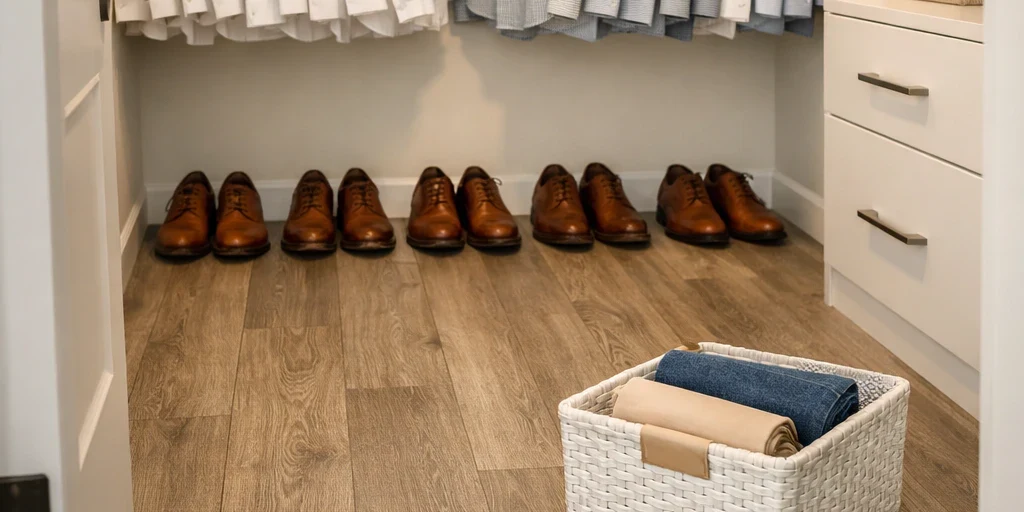
Compare LVP, FLOR carpet tiles, peel-and-stick vinyl and closet runner rugs. Real prices for the floor under your hangers and shoes.
Why this pick: Long narrow runners (2×6 ft or 2×8 ft) cover the walking lane in a walk-in closet. Adds softness underfoot without committing to full-floor changes. Cheap upgrade that transforms the feel of getting dressed.
Why this pick: Same FloorPops brand. Closets are perfect for peel-and-stick — low traffic so lifespan hits the upper end, and most closet floors aren't visible enough to require premium materials.
Why this pick: Same FLOR carpet tiles. In closets, soft underfoot matters when you're standing barefoot getting dressed. Stains can be cleaned per-tile rather than replacing the whole floor.
Why this pick: Same LifeProof brand. Closets benefit from waterproof flooring — leaky pipes from adjacent bathrooms or laundry rooms often manifest in closet floors first. LVP buys time before the leak spreads to the room.
Prices verified July 2026 · US market · subject to change
Easy Way to Install Vinyl Plank Flooring in Closets — embedded from YouTube
Most closets have whatever floor was already in the room — usually beige carpet or builder-grade laminate. Both are wrong for closets. Carpet absorbs odors and traps allergens. Old laminate gets scuffed by shoes and shows every dust bunny. Upgrading the closet floor is one of the highest-ROI 1-day projects in any house because the space is small (15-30 sq ft typically), so even premium materials are affordable.
Click-lock LVP is the default best flooring for a closet — waterproof against the bathroom-and-laundry leaks that so often reach closets first, wipe-clean against shoe grit and dust, and so cheap at closet scale ($50-90 for a typical space) that the premium-vs-budget debate barely applies. The two justified exceptions: keep existing carpet in a dry interior closet if you rent or move soon (free beats cheap), and choose carpet deliberately where barefoot warmth at 6am matters more to you than wipe-clean — a dressing-room walk-in in a cold climate is the classic case. Everything below is the detail behind that one paragraph.
Walk-in closet: the one closet type where the floor is genuinely visible and walked daily — treat it like a small room. LVP for the base, a narrow runner down the walking lane for warmth, and if the bedroom outside has wood-look flooring, running the same LVP through the doorway makes both spaces read larger (and buyers see "flooring continues into the closet" as a finished-house signal). Reach-in closet: the floor is 2 ft deep and hidden behind a door 90% of the time — function over looks. Leftover planks from any other room's install are the perfect zero-cost answer, and even peel-and-stick tile is fine here because nothing heavy rolls across it. Under-stairs closet: awkward angles make click-lock fussy — peel-and-stick vinyl conforms to weird cuts far more forgivingly, and the low headroom means you'll be kneeling on it: a foam mat insert over the vinyl earns its $15. Cedar closet: keep the floor bare cedar if it's already there (the aroma is the point — don't seal it under vinyl); if you're building the cedar in, line walls and ceiling but floor the walking surface in LVP, because cedar boards underfoot dent and wear their aroma away where shoes land.
Every LVP room install ends with part of a box left over — and a closet is the one space small enough to floor with it. If you've done (or are planning) a bedroom, hallway or laundry install from our other guides, order the standard 10% overage and earmark the remainder for the adjacent closet: same floor, zero extra material cost, and the continuous look through the closet doorway comes free. This is the single best answer to "what's the cheapest closet floor" — better than the $26 peel-and-stick refresh, because it's $0 and matches the house.
The "rip out the builder-grade carpet or leave it" decision most closets actually face. The answer hinges on what's behind the closet wall — bathroom and laundry-adjacent closets need waterproof LVP; dry interior closets can keep carpet and be fine.
| Click-lock LVP | Wall-to-wall carpet | |
|---|---|---|
| Cost (20 sq ft closet) | $50–90 + 3–4 hr install | $0 to keep existing; $40–60 new remnant |
| Leak protection | Waterproof — contains overnight floods | Absorbs leak silently for weeks |
| Bare-feet comfort | Cold in winter | Warm and soft year-round |
| Allergens + shoe odor | Wipes clean | Traps and holds in fibers |
| Best for | Bathroom-adjacent, allergy households, owners | Dry closets, renters, short stays |
Pick LVP if your closet shares a wall with a bathroom or laundry — the waterproof leak-buffer pays back the install cost the first time anything upstairs leaks. Keep the carpet if the closet is dry and you rent or plan to move within 2 years. The master bedroom closet specifically earns LVP via the "hardwood throughout" resale-listing line that bedroom flooring already delivers.
Still deciding between these two? Read the full Vinyl Plank vs Carpet comparison → — the carpet tear-out math, the bathroom-leak migration physics that decides it for moisture-adjacent closets, heavy-storage indent risk, and 6 FAQs specific to closet floors.
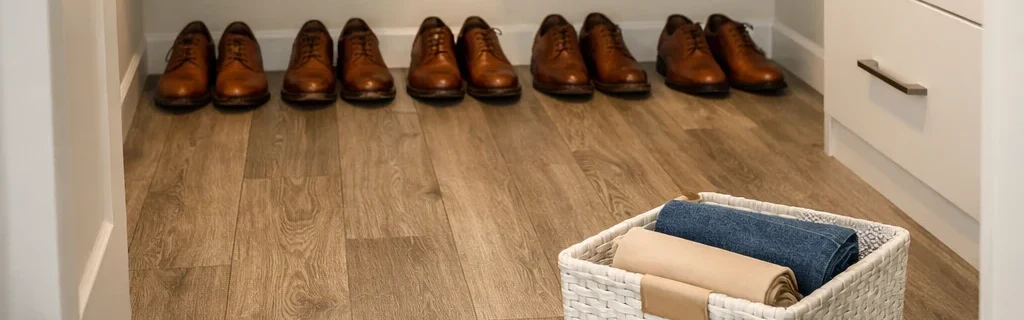
LifeProof click-lock LVP at $2.80/sq ft is the practical answer. Closets are often adjacent to bathrooms and laundry rooms — when those leak, the water finds the closet floor first. Waterproof LVP buys you days of warning before the leak spreads to the bedroom or hallway. For a typical 20 sq ft walk-in, that's $56 of material and 1-2 hours of work.
FLOR's adhesive-dot carpet tiles peel up individually when stained. Coffee on the closet floor at 6am when you're getting dressed? Pull one tile, replace for $30, done. For closets specifically, the soft underfoot matters — you're standing barefoot in there every morning. The downside: carpet absorbs shoe odors, so vent the closet (motion-sensor light helps you remember to close the door less).
FloorPops peel-and-stick at $1.30/sq ft transforms ugly builder-grade closet flooring in under 2 hours. Particularly good because closets are low-traffic — the same product lasts at the upper end of its 3-5 year range. Renter-safe, removes cleanly. For a $30 closet floor upgrade that takes one afternoon, this is the best ROI move.
A 2×6 ft or 2×8 ft narrow runner rug covers just the walking lane in a walk-in closet. $30-60, no install, instantly removable. Best when the existing closet floor isn't actually ugly — just cold underfoot. The runner adds softness right where you stand barefoot getting dressed. Add a non-slip rug pad ($10) underneath.
This is the high-wear zone. Shoes track in dirt, gravel, water — and over years grind down whatever floor is underneath. For closets with floor-mounted shoe shelves, consider putting a small section of vinyl mat ($15) under the shelves specifically. Cheap protection, easy to swap out when worn.
For a small reach-in closet: whatever's left over from your last flooring project, honestly — the space is 8-15 sq ft, hidden behind a door, and carries no rolling or heavy traffic, so leftover LVP planks (the zero-cost answer) or $20 of peel-and-stick tile both outperform their price. If you're buying fresh, budget-tier LVP is the right call precisely because the closet can't exploit anything a premium plank offers: no sun to fade it, no chairs to scratch it, no water beyond a stray leak — which the budget plank's waterproof core handles identically to a $7/sq ft designer line. The one upgrade worth paying for in a small closet isn't the floor — it's a $15 adhesive LED light so you can actually see it.
Peel-and-stick vinyl tile in pattern (FloorPops, Achim) at $1.30/sq ft. For a 20 sq ft closet, that's $26 of material and one afternoon. Adds visual character even though most people never see it, and removes the "rental beige carpet" feel that downgrades the closet experience. Lasts 4-5 years in low-traffic closets versus the rated 3-5 in higher-traffic rooms.
Generally no. LVP needs a flat, firm subfloor. Carpet flexes under foot weight and the click-lock seams will pop apart within months. Pull the carpet first — staples and tack strip are the worst part (figure 30 minutes for a typical closet). Once exposed, vacuum thoroughly, check for any subfloor damage, then install LVP directly. Skipping this step is the #1 reason DIY LVP installs fail.
Not at all — different floors in adjacent spaces is normal and intentional. The threshold between the rooms can be a metal transition strip ($15) or a wood threshold piece ($25). What matters is that the heights match within 1/4 inch — bigger height differences create trip hazards at the doorway.
Two things: don't keep dirty shoes in the closet (relocate them to an entryway tray or front-hall basket), and run a small handheld vacuum monthly. For closets with carpet flooring, sprinkle baking soda before vacuuming to absorb shoe odors. For LVP or peel-and-stick, a damp microfiber mop monthly is enough. The biggest mistake is letting dust and lint accumulate behind hanging clothes — eventually it becomes a mat.
Yes, without a rug pad. Add a non-slip rug pad ($10 for 2×8 ft size) underneath. Rubber-and-felt pads grip both the rug and the underlying floor without leaving residue. For renters worried about adhesive marks, look for "rug grippers" — small adhesive corner stickers that wash off cleanly. Either solves the slipping problem.
New comparisons, renter hacks and Amazon finds — every Sunday.