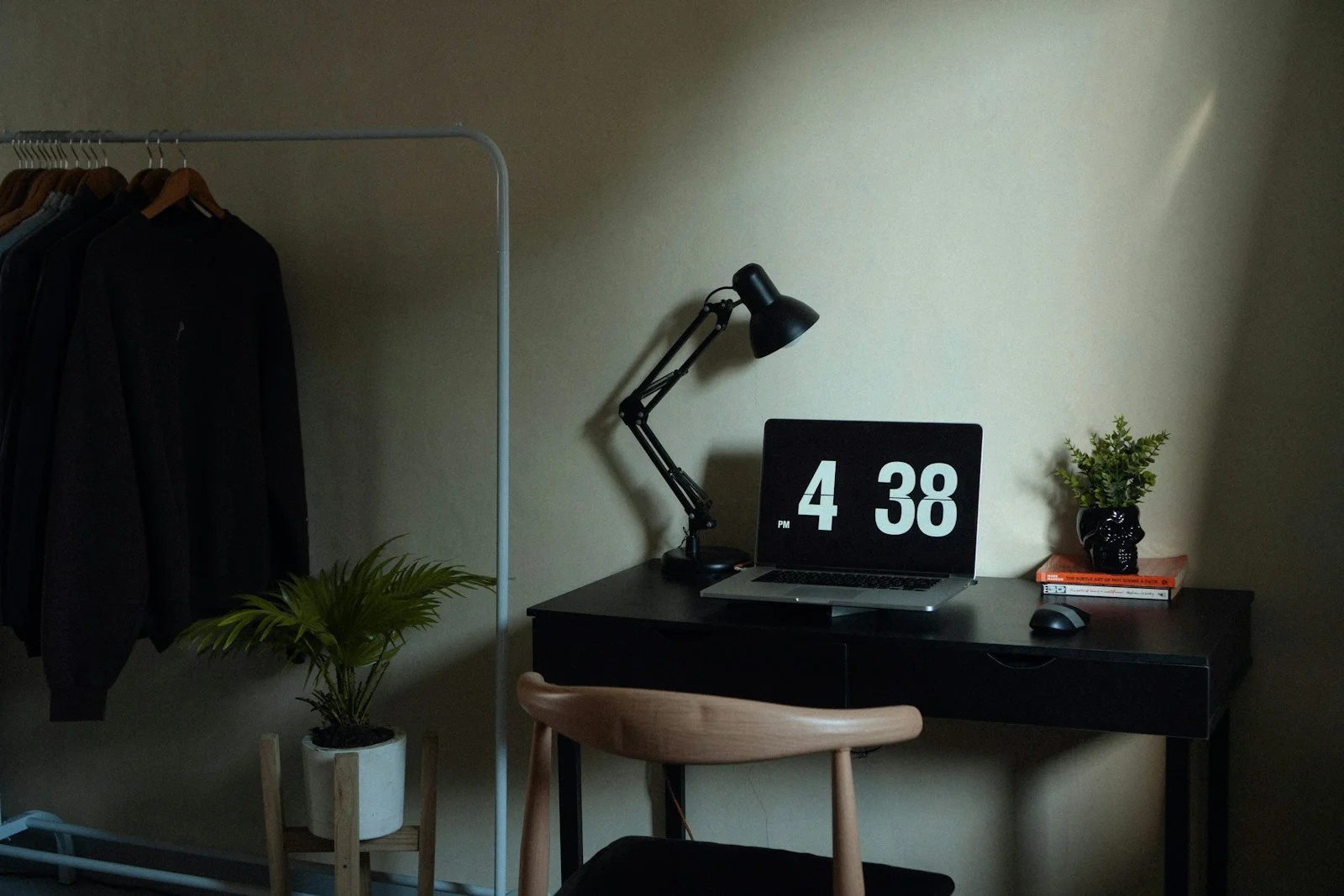
The home office trifecta
A home office that actually feels good to work in needs three things working together: floor that lets the chair roll, wall behind the camera that reads as professional on Zoom, and lighting that doesn't put you in shadow on calls. The floor and walls are what we cover here — lighting is its own rabbit hole.
Zoom-first design priorities
Since coworkers see your office wall more than your living room couch, the wall behind your camera punches above its weight in your professional image. Even if you spend $40 total ($30 of paint, $10 of frames), a deliberate accent wall reads "I take my work seriously" in every meeting. Default white walls read "I haven't thought about this."
The standing-desk addition
If you have a standing desk (or are getting one), add an Imprint anti-fatigue mat under the standing position. $50-80, immediate measurable difference in back fatigue during 8-hour work days. This is the highest-ROI office accessory after a good chair.
Cable management matters more than people think
None of the floor or wall materials solve the cable mess. J-channel cable raceway ($15-30) runs along baseboards and hides power strips. Under-desk cable trays mount to desk underside. Spend the extra hour doing this — your office instantly feels twice as professional.
The chair-wheel problem nobody budgets for
An office chair rolling 8 hours a day over one 3×4 ft patch is the most concentrated wear any residential floor sees — more than a kitchen traffic lane. Carpet pile mats down into a visible crater within a year; bare LVP survives but collects fine caster scratches in the roll zone. The decision layer is LVP vs carpet tiles: carpet tiles lose individually and get swapped ($8-15 a tile) instead of re-doing a floor, while LVP wants either a $30-50 polycarbonate chair mat or a swap to rollerblade-style soft casters ($20-30) — which also cut the rumbling sound on calls. Whatever the floor, decide the chair-zone strategy on install day; retrofitting after the wear shows means living with the evidence.
Wall finish, tested against the webcam
The unusual thing about a home-office wall is that its most important viewer is a compressed 720p video stream. Fine busy patterns shimmer into moiré artifacts on camera; large-scale motifs (4+ inch repeat) read clean; matte finishes avoid the ring-light glare that glossy paint and vinyl wallpapers throw. The full camera-first breakdown — including the hybrid of paint behind the camera and pattern on the side wall — is in wallpaper vs paint for home offices, with brand picks in the wallpaper roundup if pattern wins.