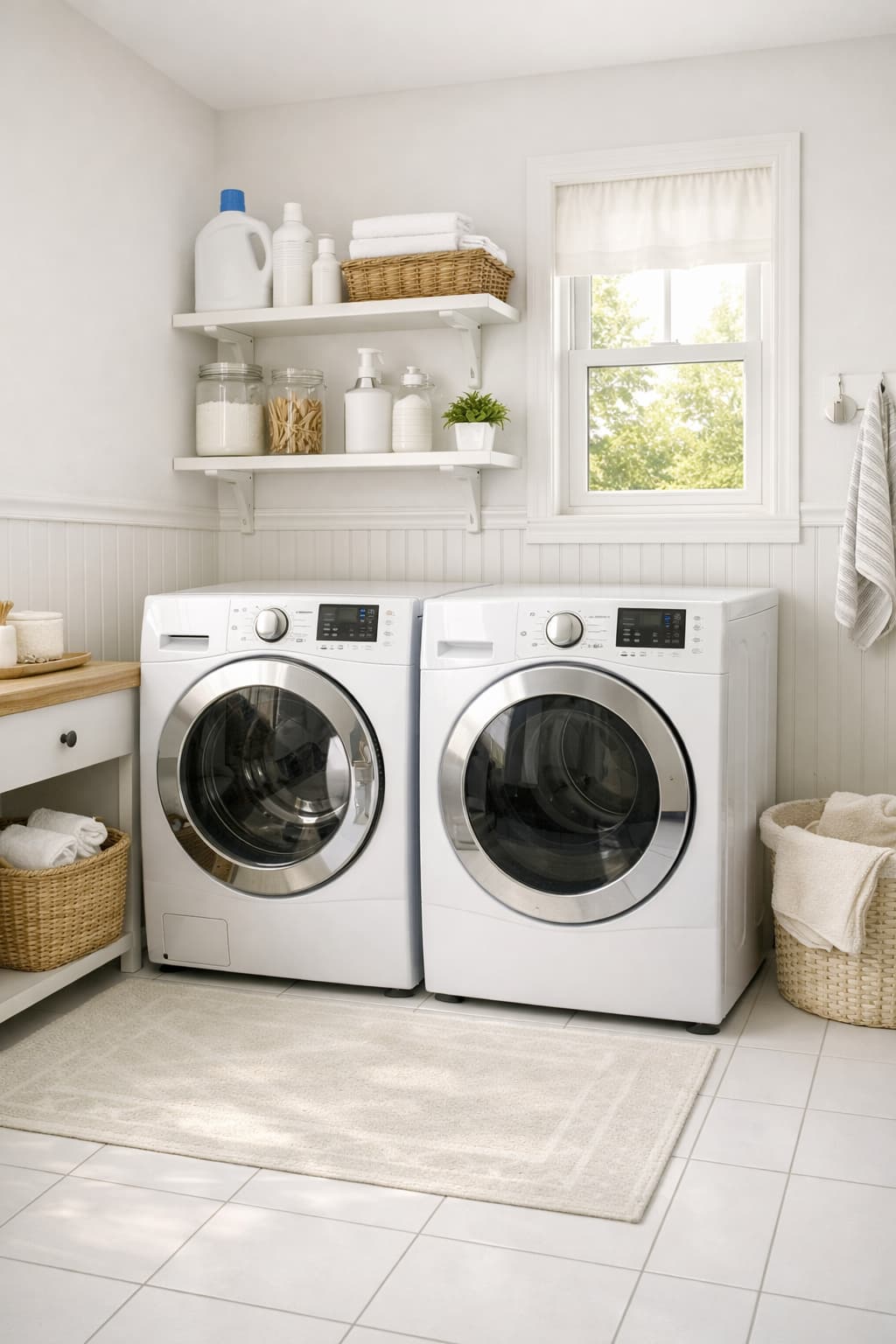
Laundry room realities
Every laundry room eventually deals with a slow washer leak, a forgotten hose connection, or dryer vent condensation. The right materials assume this and shrug it off. The wrong materials become expensive repairs in year three. For most laundry rooms (40-60 sq ft floor + 100-150 sq ft wall), upgrading both surfaces with washer-grade materials runs $300-500.
The non-negotiable: leak protection
Before any flooring or wall decision, install a $40 plastic drain pan under the washer. Add a $25 leak detector with audible alarm. Together $65 of insurance against the inevitable 3am washer failure. Whatever floor you put in then has time to do its job before water spreads to adjacent rooms.
The dual-purpose pegboard wall
The wall above the washer is wasted real estate in 90% of laundry rooms. A metal pegboard panel from Wall Control ($30-50) turns it into storage for irons, mops, brooms, supplies — all the stuff that otherwise lives on the floor or counter. Total cost $50, capacity multiplier 3-4× usable laundry storage.
Aesthetic still matters here
Laundry rooms aren't visible to guests but you spend hours per week in them. Better materials and color make weekly laundry less of a chore. Mold-resistant paint in a warm white, beadboard wainscoting, a small print on the wall — these aren't extravagant, they make the space genuinely pleasant. $50 of paint plus a $30 framed print transforms the room.
Vibration is the test most floors fail
The laundry room is the only room in the house with a machine that shakes at 1,200 RPM several times a week. That spin cycle is why the flooring question here isn't the usual cost-vs-looks debate: floating floors need the washer's feet leveled and ideally anti-vibration pads ($15-25) so the machine doesn't "walk" and work the plank seams; glued or poured surfaces don't care. The full breakdown — including what a washer overflow does to each option and why the substrate under your laundry room quietly decides the answer — is in LVP vs epoxy for laundry rooms.
Walls that survive detergent splatter
Laundry walls collect a specific kind of abuse: detergent splashes and bleach mist around the machines, plus steam every dryer cycle. That combination is exactly what wallpaper vs paint for laundry rooms weighs — scrubbable mold-resistant paint in the splash zone versus pattern where only steam reaches. The zone answer beats the either-or: paint from counter height down, pattern above, and the room gets both durability and a reason to smile at 7am. If pattern wins the upper wall, the wallpaper brand roundup flags which vinyls handle humidity.