Watch: how it's done
DIY Small Laundry Room Makeover On A Budget — Functional Decorating Ideas — embedded from YouTube
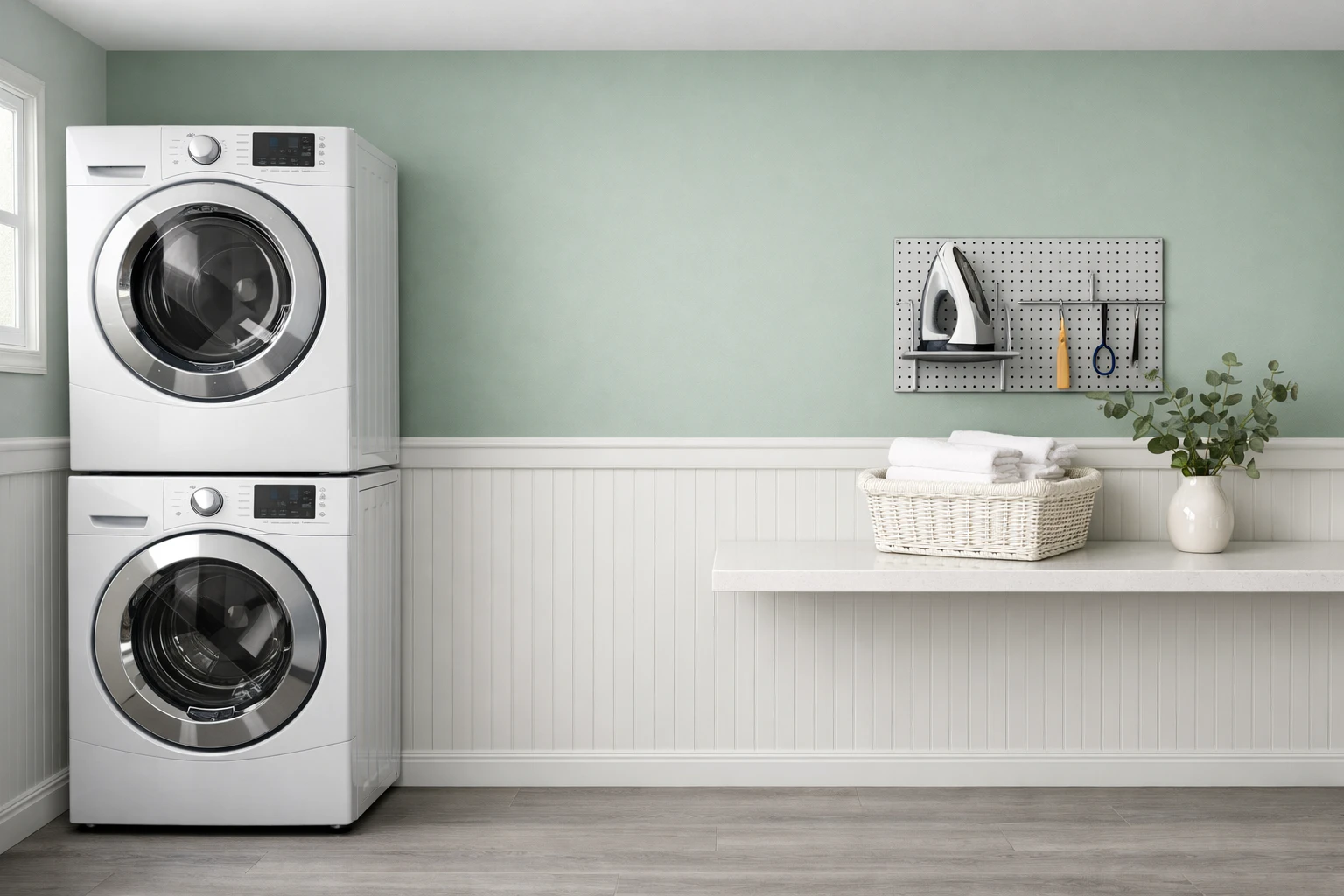
Compare mold-resistant paint, PVC beadboard, peel-and-stick subway tile, and pegboard storage for laundry walls. Real prices for the room that handles steam and splashes.
Why this pick: Zinsser PermaWhite is formulated for high-humidity rooms (bathrooms, laundry, kitchens). The antimicrobial agents are integrated into the paint film, not just a topcoat — survives scrubbing better than competitor brands.
Why this pick: Wall Control's metal pegboard is the gold standard for laundry walls — won't warp like wood pegboard, holds twice the weight. Stores irons, mops, brooms, supplies above the washer.
Why this pick: Same Smart Tiles as the kitchen backsplash. In laundry rooms, install only on dry walls (the ones not adjacent to the washer hookup). Performs poorly in direct steam zones.
Why this pick: DPI's PVC wainscoting handles wet rooms where wood beadboard would warp. Permanent install but worth it in a laundry room where appliance leaks are inevitable.
Prices verified July 2026 · US market · subject to change
DIY Small Laundry Room Makeover On A Budget — Functional Decorating Ideas — embedded from YouTube
Most laundry rooms are afterthoughts — bare drywall, builder-grade paint, no thought put into how they hold up to steam from the dryer vent and splashes from the washer. Within five years that's a wall with mildew streaks and chipped paint. The right wall material accounts for humidity, occasional splashes, and the utility function of the room — supplies, irons, mops, brooms all need a place.
The "do I decorate this room or just paint it functionally" decision that defines the laundry refresh. The right answer is split by wall — not by room — depending on each wall's distance from the dryer vent and detergent splash zone.
| Peel-stick wallpaper | Mold-resistant paint | |
|---|---|---|
| Cost (40 sq ft wall) | $80–120 | $20–30 |
| Humidity tolerance | 3–5 yrs / 6–12 mo in steam plume | 5–7 yrs everywhere with antimicrobial film |
| Detergent/bleach splash | Edges wick liquid, bleach permanently stains | Wipes clean indefinitely |
| Pattern variety | Thousands incl. custom print | Solid colors only |
| Best for | Dry display wall (opposite the washer) | Steam zone + splash zone + behind washer |
Pick wallpaper for the wall opposite the washer (out of the steam plume and splash zone) — bold large-scale pattern in a compact laundry reads as intentional design, install in 90 minutes. Pick paint for the wall behind washer hookups, the dryer-vent steam wall, and any all-wall coverage approach. For most laundry rooms with budget under $200, the zone-based hybrid (paint the steam/splash walls + wallpaper the focal wall) at $105-155 total delivers designed-laundry-room look without single-material compromise.
Still deciding between these two? Read the full Wallpaper vs Paint comparison → — the steam-and-dryer-vent humidity physics, the detergent/bleach splash failure modes, the zone-based hybrid laundry pros use, and 6 FAQs specific to laundry walls.
Zinsser PermaWhite or KILZ Restoration costs $30-40 a gallon and lasts 5-7 years in a humid laundry. Both have antimicrobial agents integrated into the paint film, not as a topcoat — they survive scrubbing better than competitor brands. Semi-gloss finish wipes clean of detergent splashes; matte finishes hold mildew faster.
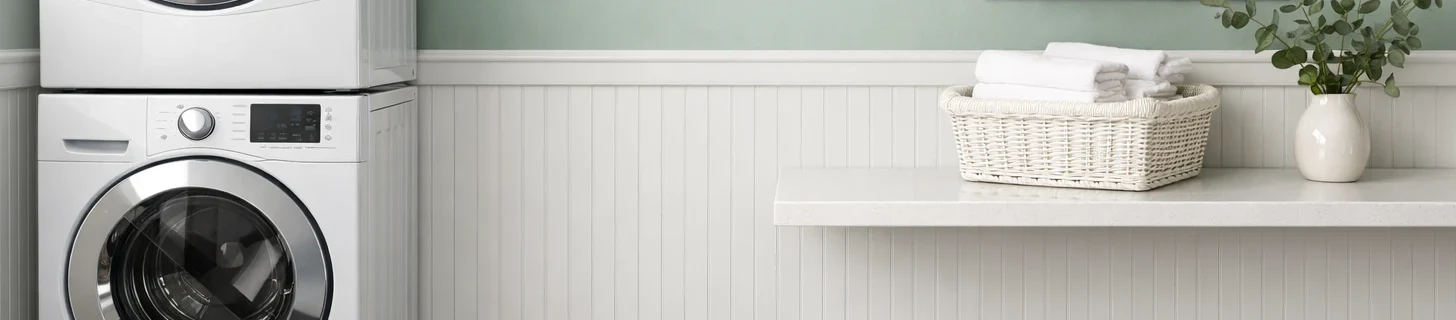
DPI's PVC wainscoting panels are essentially waterproof wainscoting. They cover damaged drywall, last 15+ years, and don't care about humidity or splashes. Drawback — they're a permanent install (construction adhesive + finish nails) and cost $200-400 to do a whole laundry room. Best when the drywall behind a washer has visible water damage from years of slow leaks.
Smart Tiles' Metro line peels off the backing and sticks to clean primed walls in 5 minutes per panel. Looks like real tile from a few feet away. Important caveat — install only on the dry walls (the ones not directly behind the washer hookup or above the dryer). Direct steam zones cause edges to lift within months.
Wall Control's metal pegboard mounts to studs and holds 20× the weight of cheap wood pegboard. Above the washer, it stores irons, mops, brooms, supplies, and turns the laundry room from "appliance closet" into "functional utility space." $50-80 for materials including pegboard, hooks, and baskets.
If your laundry has a dryer vent that runs through the room (or the dryer doesn't vent perfectly outside), yes. Regular interior paint develops mildew spots in corners and along the ceiling line within 2-3 years. Mold-resistant paint costs $5-10 more per gallon and roughly triples the lifespan in humid rooms. For dry, well-ventilated laundry rooms, regular paint is fine but won't last as long.
Only on walls not directly hit by water or steam. The walls flanking the washer (left/right) are usually OK. The wall behind the washer (where hookups are) often has slow drips that wick up the wall — peel-and-stick fails there fast. If you want tile coverage on that specific wall, real ceramic or porcelain is the only option that survives long-term.
Mark wall studs first (a stud finder is $15). For metal pegboard, drill mounting holes through the pegboard frame into 2 or 3 studs per panel using 2.5-inch wood screws. Wood pegboard needs furring strips (1×2 boards) screwed into studs first, then pegboard mounts to the strips. The 1-inch gap behind pegboard is essential — that's where the hooks slot in.
Semi-gloss or satin. Both repel moisture and wipe clean. Matte finishes hold moisture against the wall and grow mildew faster — same issue as in bathrooms. Semi-gloss is slightly more reflective; satin is the modern default. Skip flat finish entirely in any room with regular moisture.
Only minor damage (small cracks, nail holes, surface wear). For visible water stains, mildew, or bubbled paint, you need to: scrub with bleach solution, sand to bare drywall, apply Zinsser BIN shellac primer (seals stains permanently), then paint. Skipping the primer means stains bleed through within months. Major damage means cutting out and replacing the affected drywall panel.
New comparisons, renter hacks and Amazon finds — every Sunday.