Watch: how it's done
How to Apply Artscape Window Film — embedded from YouTube
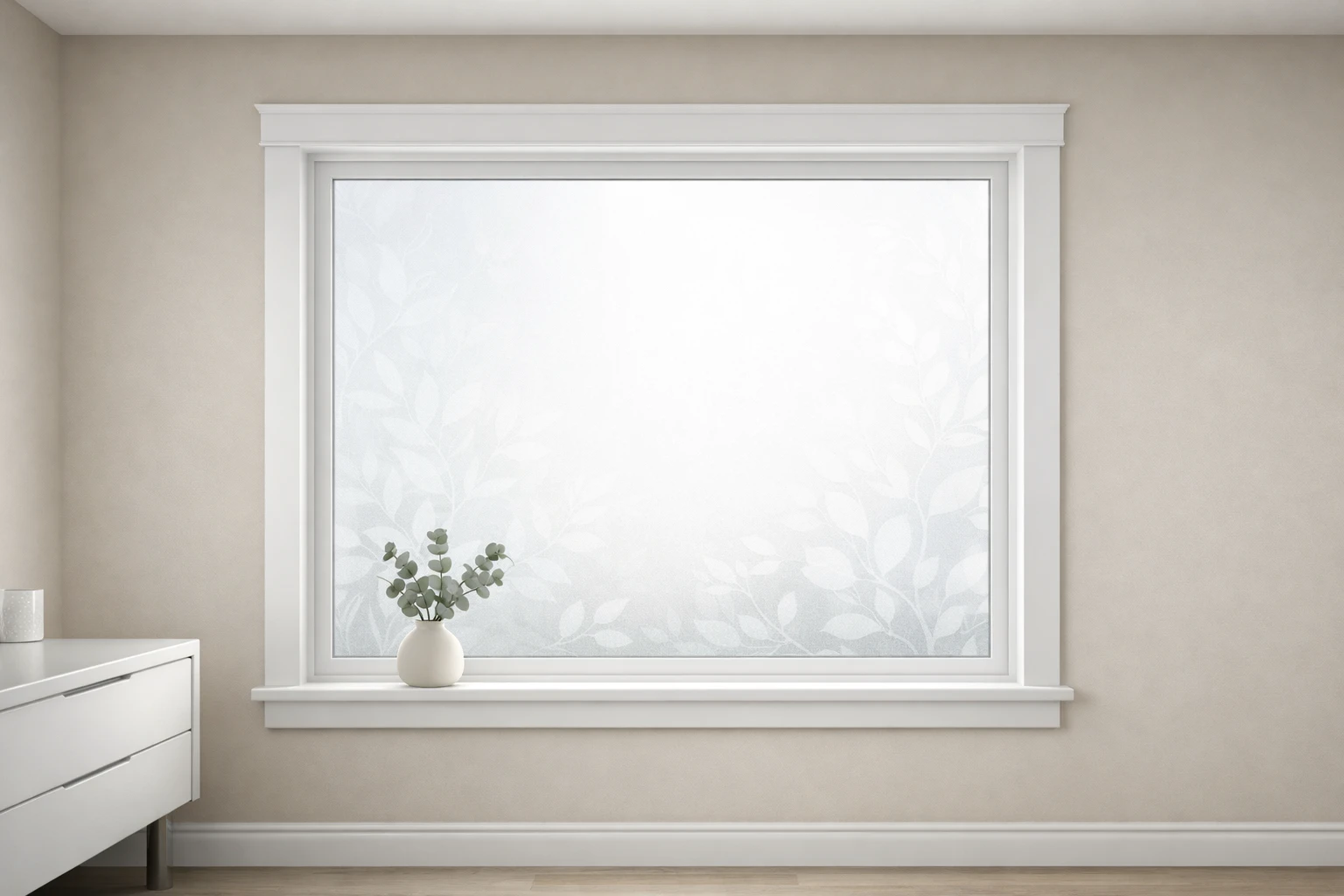
Compare frosted privacy film, stained-glass decorative film, UV-blocking film and one-way mirror film. Real prices and renter-safe options for instant window privacy.
Why this pick: VViViD's frosted film blocks visibility while letting natural light through. Renter-friendly — peels off cleanly. Best for bathroom windows, ground-floor side windows, or any window facing a neighbor.
Why this pick: Gila's UV-blocking film cuts solar heat gain and protects furniture/floors from fade. Standard tint reduces visible light 20-30%, dark tint 50%+. Installs same as decorative films — water-mounted.
Why this pick: Artscape's static-cling decorative films mimic stained glass without the weight or fragility. No adhesive — water-applied static cling. Easy to reposition during install if pattern alignment isn't perfect.
Why this pick: BDF's mirror film creates one-way visibility — looks like mirror from outside (when daylight is brighter than inside), see-through from inside. Best for ground-floor windows where you want view + privacy. Reverses at night when lights are on.
Prices verified July 2026 · US market · subject to change
How to Apply Artscape Window Film — embedded from YouTube
Most renters and budget-conscious owners default to curtains or blinds for privacy and light control. Window film does both jobs at a fraction of the cost, installs in 30 minutes, and is fully removable. Yet it stays niche because most people don't realize how dramatically modern window film has improved — today's static-cling and adhesive films are clear, well-priced, and genuinely transform how a window functions.
The decision that decides almost everything about how window film performs over years. The film pattern (frosted, decorative, UV-blocking, mirror) can be either install method — the choice between static-cling and adhesive is mostly about renter status, install forgiveness, humidity tolerance, and dual-pane window safety.
| Static-cling film | Adhesive film | |
|---|---|---|
| Cost per window | $15–25 | $20–35 |
| Install repositioning | 3–5 times peel + re-apply on wet glass | 60 sec before adhesive grabs |
| Lifespan (dry interior) | 1–2 years | 5–7 years |
| Lifespan (humid bathroom) | 6–12 months | 5–7 years |
| Removal cleanliness | Zero residue — 30 sec per window | Light residue — 15-20 min per window |
| Best for | Renters, dry rooms, first-timers, dual-pane sun | Bathrooms, kitchens, owned homes, UV-blocking |
Pick static-cling if you rent, the window is in a dry interior room, or this is your first film install. Pick adhesive if the window is humid (bathroom/kitchen), you own long-term, or you need UV-blocking for floor protection. For most multi-window homes, mix both types by room — adhesive in bathrooms/kitchens, static-cling everywhere else — total $35-110 for a fully-filmed small house.
Still deciding between these two? Read the full Static-Cling vs Adhesive comparison → — the renter security-deposit math, the dual-pane window thermal safety problem, the mix-both-types-by-room approach most homeowners actually end up with, and 6 FAQs specific to install methods.
VViViD's frosted film is what most people add to bathroom and ground-floor bedroom windows. Light passes through (the room stays naturally lit), but visibility is fully blocked. From outside, you see milky white. From inside, you see hazy outlines but no actual view through. $1.50/sq ft, installs with a squeegee and soapy water, peels off cleanly when you move out.
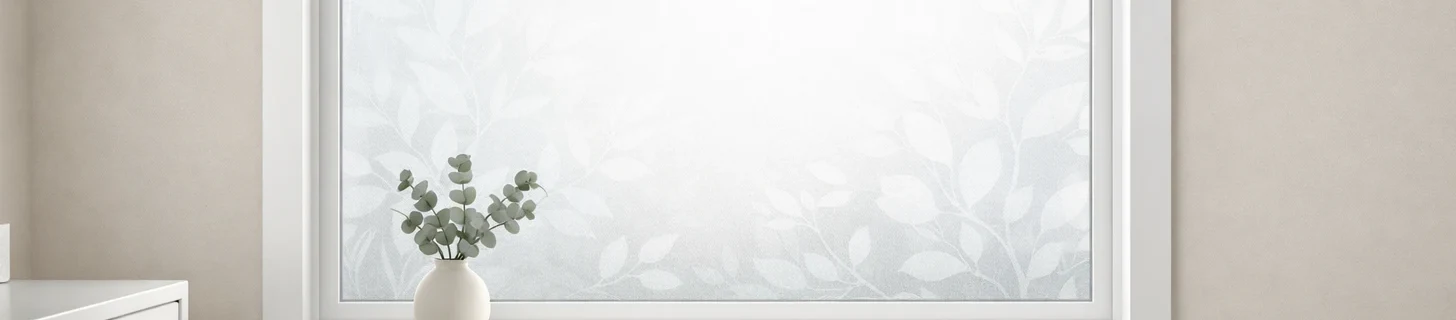
Artscape's decorative films mimic stained glass without the weight, fragility, or installation cost. Static-cling (no adhesive) so it's easy to reposition during install if alignment isn't perfect. Particularly good for kitchen windows, entryway sidelights, and any window where you want color without losing function. $2-3/sq ft.
Gila's UV-blocking film cuts 99% of UV radiation that fades furniture, floors, and curtains. For west-facing rooms, this is genuinely useful — wood floors fade visibly in 5-7 years of direct sun without UV film. Standard tint cuts visible light 20-30%, dark tint 50%+. $2/sq ft. Pays for itself by preserving the floor it sits next to.
BDF's mirror film makes windows look like mirrors from outside (when daylight outside is brighter than indoor light), while you can still see out clearly. Best for ground-floor windows where you want both view and privacy. The catch: reverses at night when indoor lights are brighter than outside — neighbors can see in. Pair with curtains for night privacy.
All four film types use the same process: clean window thoroughly with rubbing alcohol or window cleaner (any residue makes bubbles). Spray a solution of water + 1 drop dish soap on the window. Peel backing off film, apply to wet window. Squeegee out bubbles from center outward. Trim edges with utility knife. Total time per window: 20-40 minutes for first-timers, 10-15 for experienced.
Yes, completely from outside. Quality frosted film (VViViD, Coavas) blocks 100% of detailed visibility — outside viewers see a milky white surface. From inside, you see hazy shapes but no actual view through. The film transmits 70-85% of light, so the room stays naturally bright. Cheaper $5 generic frosted films can have less coverage — get one with reviews specifically calling out privacy.
Yes — it's the easiest DIY window project. 20-40 minutes per window for a first-timer. The hardest part is getting the film flat without bubbles. Spraying the window with soapy water before applying lets you slide the film around to position, then squeegee bubbles out from the center. The included instructions on most kits are good. Worst case scenario: bubbles too persistent — peel off and try again, the film is reusable for the first 30 minutes.
No, when applied to standard residential glass. Static-cling films (Artscape, some VViViD) leave zero residue. Adhesive films leave minimal residue that wipes off with rubbing alcohol. Avoid window film on dual-pane (insulated) windows in direct sun — the heat absorption can cause seal failure between the panes, voiding the window warranty. For double-pane windows, use Gila's "dual-pane safe" line specifically.
Yes — 99% UV blocking is a real measurable thing. UV is what fades wood floors, fabric, photographs, and art. The film won't reverse existing fade, but it stops new fade from that point forward. For west-facing rooms with hardwood floors, the math: $80 of UV film saves $2,000+ in floor refinishing that would otherwise be needed in 5-7 years.
No — the effect reverses based on light direction. During the day, when outside is brighter than inside, you can see out and neighbors see mirror. At night with indoor lights on, the relationship flips — neighbors can see in clearly while you see only their reflection. The standard solution is one-way film for daytime privacy plus curtains for night privacy. Some people prefer just adding curtains and skipping the mirror film entirely.
New comparisons, renter hacks and Amazon finds — every Sunday.