Watch: how it's done
How to Install a DIY Stair Runner — embedded from YouTube
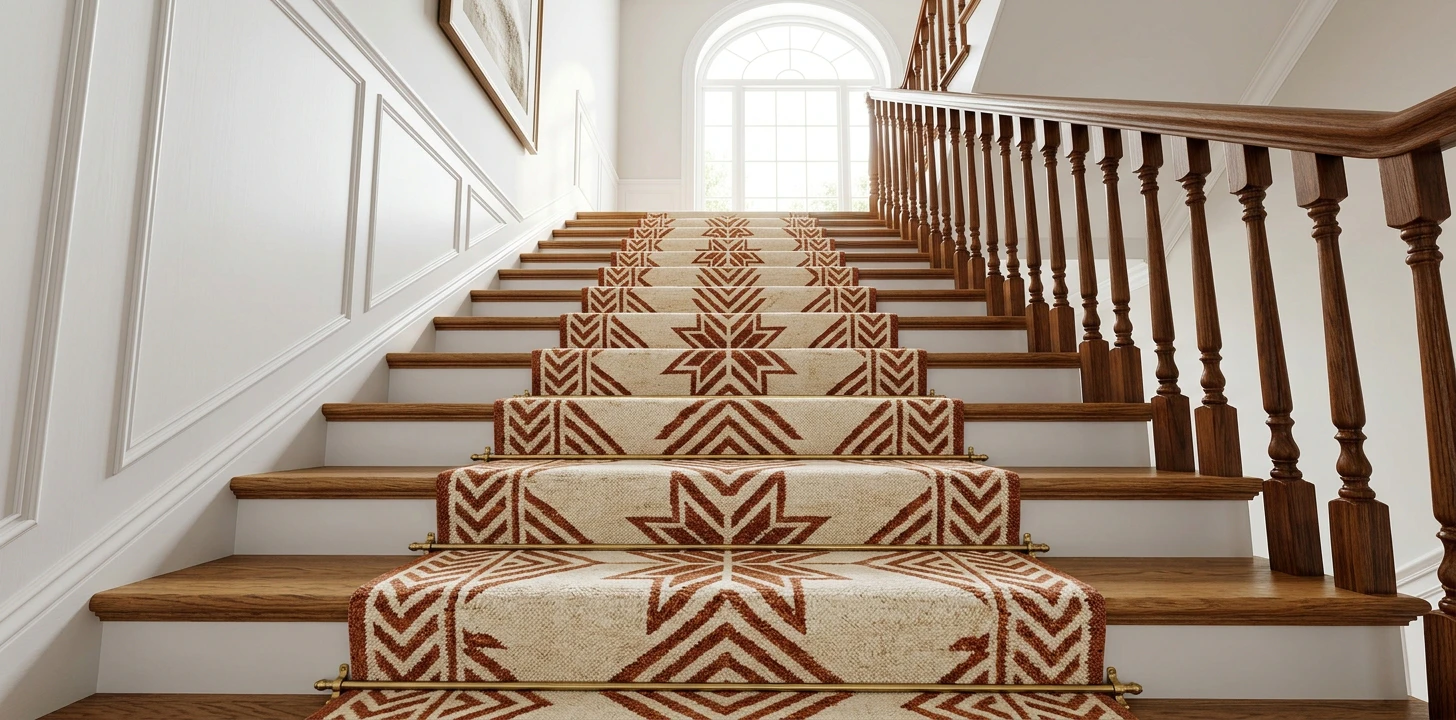
Compare stair runners, peel-and-stick tread covers, painted stairs and hardwood tread caps. Real prices and renter-friendly options for staircase makeovers.
Why this pick: Standard porch and floor paint formulated for foot traffic. Two coats with anti-slip grit additive give 5+ years of wear. Permanent install — owner-only — and slip-risk without grip strips on each tread.
Why this pick: Pre-cut stair-shaped treads remove the hardest part of stair flooring — measuring and cutting around the nosing. Adhesive holds up to daily traffic for 3-4 years before edges curl.
Why this pick: Wool or polypropylene runners attached with brass stair rods define the staircase visually. Easy to remove on move-out — just unhook the rods and pull. Most renter-safe option that looks intentional.
Why this pick: Solid red oak stair treads cap existing painted or carpeted stairs without ripping them out. Saves $2,000+ vs full stair replacement, and adds genuine resale value for owners.
Prices verified July 2026 · US market · subject to change
How to Install a DIY Stair Runner — embedded from YouTube
Stairs are the visual focal point most people walk past every single day, and they're usually the most neglected flooring decision in any home. A worn-out runner or scuffed paint job sets the tone for everything else. The good news — refreshing a typical 13-step staircase costs $50 to $400, and renter-friendly options exist that don't damage anything underneath.
The two refresh approaches most stair makeovers come down to. If you're choosing between these two specifically, here's the short version before the full breakdown of every option below.
| Stair runner with brass rods | Painted stairs (with anti-slip) | |
|---|---|---|
| Cost (13 steps) | $110–250 | $30–60 |
| Lifespan | 5–10 years | 5–7 years |
| Install | One afternoon | Two days |
| Renter-safe? | Yes — rods unhook | No — permanent |
| Slip safety | Excellent — built-in traction | Needs grit additive or dangerous |
| Best for | Renters, pets, kids, design focus | Owners, tight budget, no-pet households |
Pick a runner if you rent, have pets or kids, or want passive slip safety without thinking about grit additives — it wins on lifespan, install speed, renter-safety AND slip safety. Pick painted stairs only if you own, your household has no slip-risk residents (no pets, no kids, no elderly), and you're committed to mixing anti-slip grit into every topcoat.
Still deciding between these two? Read the full Runner vs Painted Stairs comparison → — the slip-safety problem unique to stairs, the hybrid risers-painted-treads-runner approach, pets-and-kids section, and 6 FAQs.
Pre-cut peel-and-stick stair treads from Achim or FloorPops solve the hardest part of stair flooring — measuring and cutting around the nosing. At $1.50 per tread, a 13-step staircase is $20 of material and one afternoon. Adhesive lasts 3-4 years before edges curl. Best for stairs with minimal foot traffic — heavier-use stairs (entryway-adjacent, main floor stairs) wear faster.
A wool or polypropylene runner held in place with brass stair rods is what every Pinterest "before/after staircase" post is selling. The runner itself runs $80-200, the rods are $30-50 for a set of 13. Total $110-250 for a transformation that reads as intentional. The rods unhook in seconds — renter-safe.
Pick a runner 26-32 inches wide (most staircases) and pattern-heavy enough to hide wear. Solid colors show every scuff; busy patterns (geometric, bohemian, oriental-style) hide them. Runners are sold by the linear foot — measure the total length of all your stairs including the rise.
Standard porch and floor paint runs $30-60 for a whole staircase and lasts 5-7 years. Two coats minimum, with anti-slip grit additive mixed into the topcoat (essential — painted stairs without grit are dangerously slippery). This is an owner-only move because it's permanent, and the slip risk makes it a poor choice for households with elderly residents or young kids.
If your existing stairs are painted or carpeted plywood underneath, you can cap them with real hardwood (oak, maple) using construction adhesive. At $8/sq ft for premium oak, capping 13 steps runs $300-500. Saves $2,000+ versus full stair replacement, and the result looks identical to original hardwood stairs.
Wall-to-wall stair carpet was the default for decades but has fallen out of favor — it traps dust, mildews, and shows wear within 3-5 years. If you want softness, a runner over hard treads gives you the warmth without the cleaning problem. Skip wall-to-wall carpet on stairs in 2026.
Yes, for low-to-medium traffic stairs (not main entryway stairs). Expect 3-4 years before the leading edge of each tread starts to lift. Pet households cut that to 2-3 years — claws snag the edges over time. Reseal the front edge of each tread with a thin bead of clear silicone caulk to add a year of life. For high-traffic stairs, a runner is more durable.
Not directly — you have to remove the carpet first. Most stair carpet is stapled into the wood treads underneath. Pulling staples is the worst part of the job (figure 30 minutes per step). Once the wood is exposed, sand any rough spots, fill nail holes with wood filler, prime, then paint. Don't skip primer on bare wood, or the paint will absorb unevenly.
For safety, yes — bare wood or laminate stairs are slippery, especially in socks. A runner adds traction and sound dampening (stairs without runners are loud). For aesthetics, also yes — a runner defines the staircase visually as a designed feature rather than a utility. The only stairs that arguably don't need a runner are those leading to a basement or attic where you rarely walk barefoot.
Less safe than carpeted or runner-covered stairs unless you add anti-slip grit to the topcoat. Rust-Oleum and Behr sell concrete-floor paint additives that mix into the paint and give the surface texture (like fine sandpaper) without changing the color. Without the additive, painted stairs in socks are genuinely dangerous — many ER visits per year. Don't skip this step.
Polypropylene runners with a tight low pile — they don't snag from claws and clean up easily. Avoid wool or shag for pet households. Brands like Loloi and Safavieh make pet-rated polypropylene runners in bohemian and geometric patterns. The pattern matters — busy patterns hide drool spots, pet hair, and the inevitable accident better than solid colors.
New comparisons, renter hacks and Amazon finds — every Sunday.