Updated July 2026. Prices reflect US market costs from Home Depot, Lowe's and Amazon for a typical 4×6 ft reach-in closet (~14 linear feet of shelving). Master walk-in closet costs scale roughly 2-3x linearly.
The closet decision most builder-grade homes already made for you
If your home was built after 1985, your closets almost certainly have white-coated wire shelving — it's been the contractor-grade default for 40 years and counting. The question most homeowners face isn't "wire or wood from scratch," it's "should I upgrade what's already in here to wood, and is it worth the cost." For renters and budget-first owners, the question is the reverse: is the wire-shelving install worth doing right, or should I just replace it with something that doesn't look like rental stock.
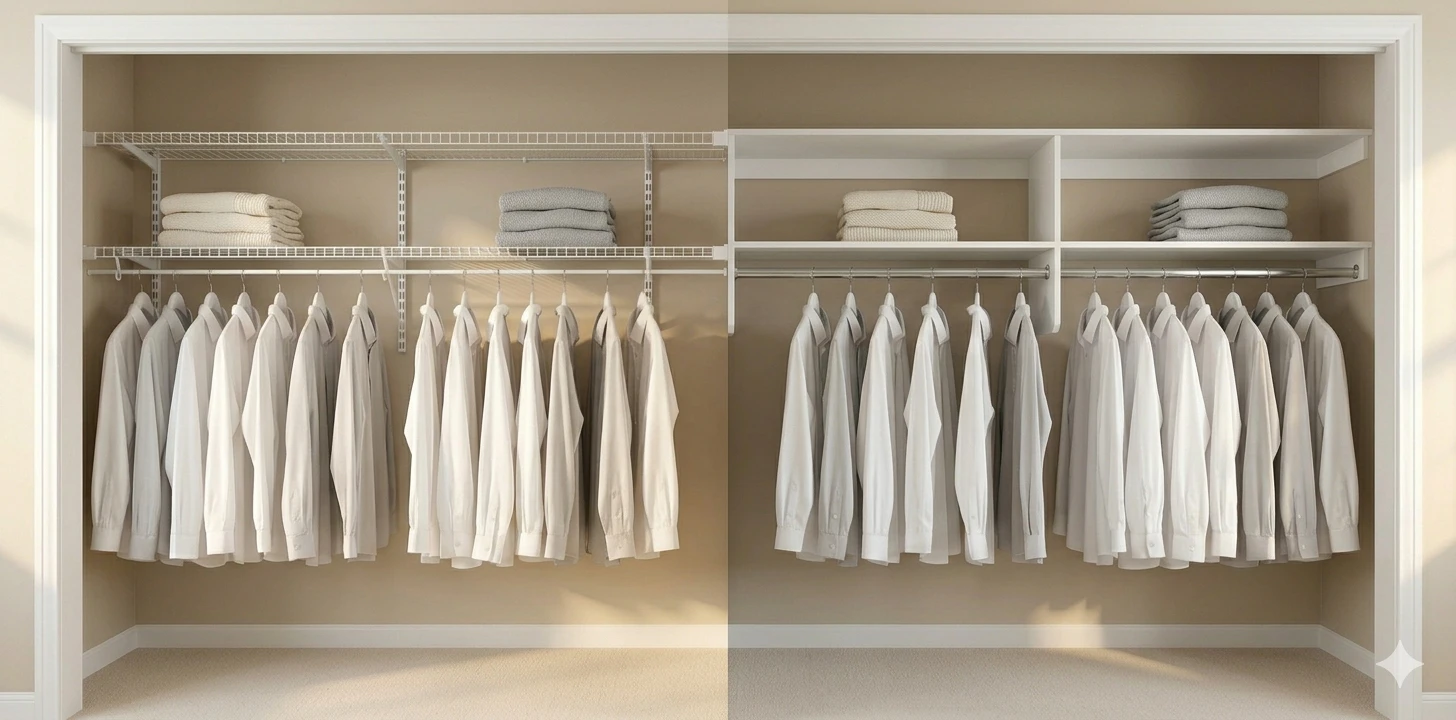
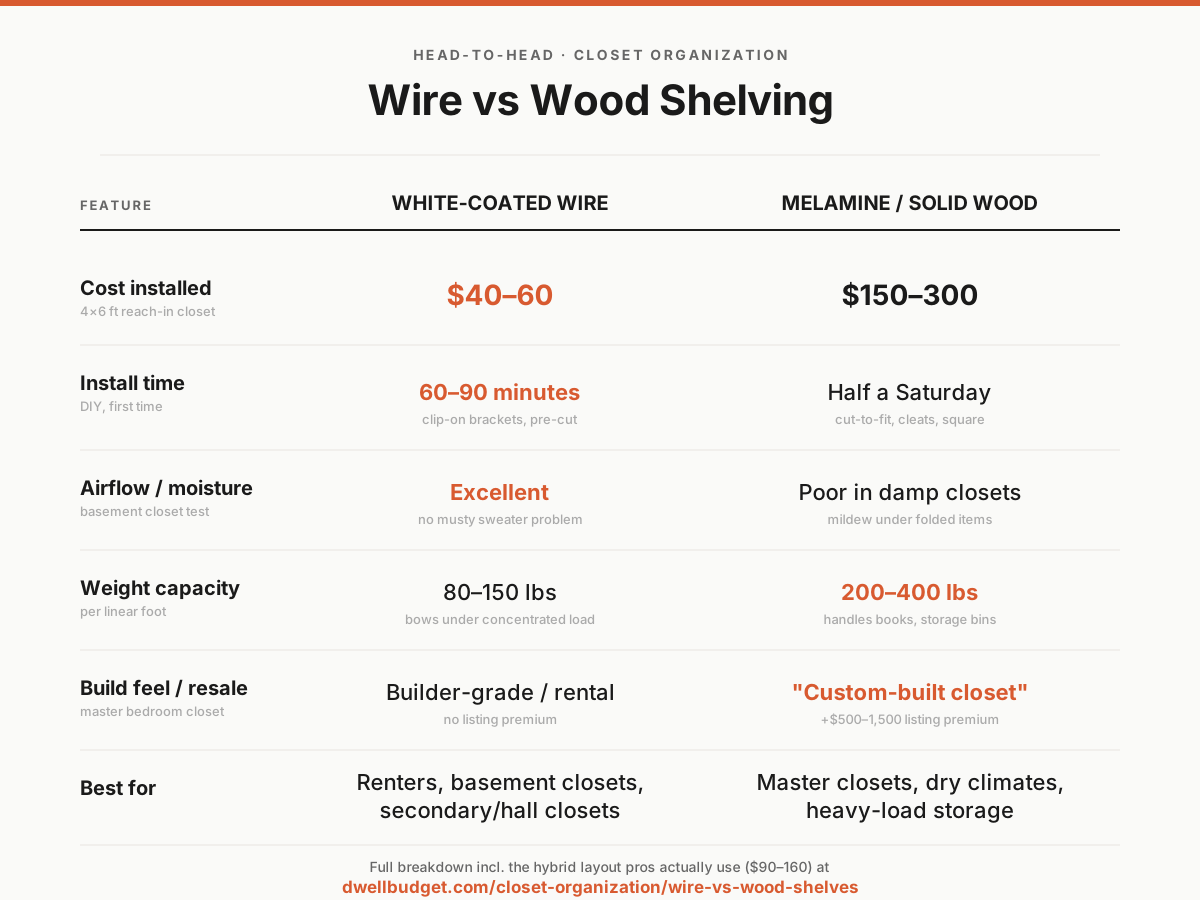
The short version: wire wins on cost ($40-60 vs $150-300), airflow (no musty sweaters in damp closets), and install speed (60-90 min vs half a Saturday). Wood wins on build feel ("custom-built closet" reads premium on listing photos), weight capacity (200-400 lbs/linear ft vs 80-150 for wire), and the customization gap (you can match exact shelf depths and add dividers). The hybrid layout combining both is the under-discussed third option that most closet professionals quietly use.
Below: side-by-side table, when each one wins, the hybrid recipe that gets you both advantages for $90-160, the moisture question that decides it for damp basements, and FAQs.
Side-by-side comparison
| White-coated wire | Melamine or solid wood | |
|---|---|---|
| Cost (4×6 ft reach-in) | $40–60 | $150–300 |
| Install time (DIY, first time) | 60–90 minutes | Half a Saturday (4–5 hrs) |
| Weight capacity | 80–150 lbs/linear ft | 200–400 lbs/linear ft |
| Airflow / moisture handling | Excellent — no trapped humidity | Poor — sweaters mildew in damp closets |
| Small-item retention | Items fall through 1-inch gaps | Solid surface — nothing falls |
| Build feel / aesthetic | Reads as builder-grade / rental | Reads as "custom-built closet" |
| Customization | Pre-cut standard lengths only | Cut to exact dimensions, add dividers |
| Resale signal (master closet) | None | +$500–1,500 listing premium |
| Best for | Renters, secondary closets, damp closets | Master closets, visible storage, dry climates |
When to pick wire shelving
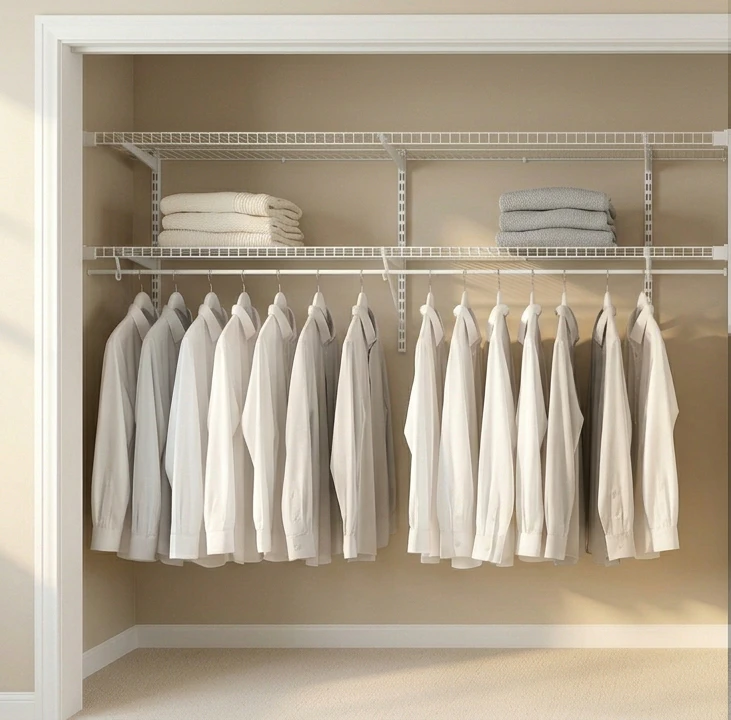
Pick wire shelving if at least three of these are true:
- The closet is in a basement, below grade, or against an exterior wall with no insulation
- You rent — wire installs and uninstalls fast, anchor holes are small and easy to patch
- Budget for the closet is under $80
- It's a secondary closet (hall, second bedroom, pantry) that nobody photographs or shows
- You want install done in 90 minutes without cutting or precision work
White-coated wire shelving from ClosetMaid SuperSlide or Rubbermaid Configurations hits $40-60 for a complete 4×6 ft reach-in kit (rod, two shelves, brackets, anchors). The install is genuinely an hour: drill 4-6 pilot holes, set the anchors, clip the brackets, snap the pre-cut shelf sections in. Standard 4 ft and 8 ft lengths cover most American closets without cutting.
The under-discussed advantage of wire is moisture handling. Closets below grade or against poorly-insulated exterior walls run higher humidity than the rest of the house, and folded sweaters on solid wood shelves go musty within 6-12 months. Wire's 1-inch airflow gaps prevent the trapped-humidity layer that causes this. If you've ever pulled a winter sweater out of storage in March and noticed it smells weird, that's the wood-shelf-in-damp-closet failure mode.
What you give up: small items fall through (the cheap fix is clear plastic shelf liners or contact paper on the top surface — $15-30 for the whole closet), concentrated heavy loads bow the shelf (skip wire if you're storing books or media equipment), and builder-grade aesthetic that reads as "rental stock" on listing photos and Instagram tours.
When to pick wood shelving
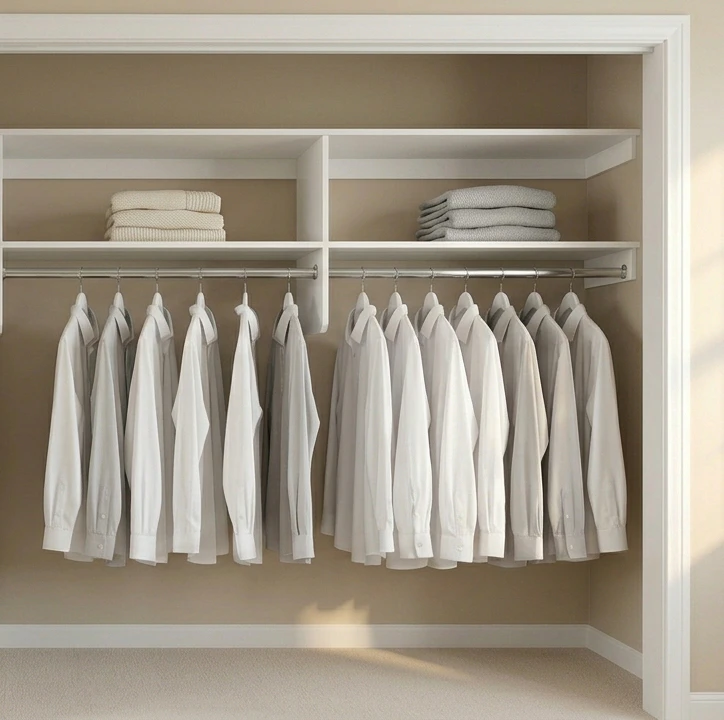
Pick wood shelving if at least three of these are true:
- It's the master bedroom closet (the one buyers actually look at on listings)
- You own the home and plan to stay 5+ years
- The closet is in the main living area — dry, climate-controlled, no humidity concerns
- You're storing heavy items: books, file boxes, media equipment, stacked storage bins
- The closet is custom-sized or has non-standard alcoves where pre-cut wire doesn't fit cleanly
Melamine wood shelving from ClosetMaid Selectives, EasyClosets, or cut-to-fit MDF from Home Depot hits $150-300 for a 4×6 ft reach-in. The install is a half-Saturday: measure each wall, cut shelves and side panels to fit (a circular saw and a square are the minimum), install horizontal cleats on three walls for support, screw the shelves in.
The biggest argument for wood in a master closet specifically is the resale signal. Real estate listing copy uses "custom-built closet" and "wood closet system" as premium feature phrases that wire shelving never gets. The dollar premium for a master closet upgrade ranges $500-1,500 in most US markets — almost always more than the cost difference between wire and wood for that single closet.
What you give up: 2-5x higher cost, 3-4x longer install, poor airflow in damp closets (wood is the wrong answer for any closet below grade or against uninsulated exterior walls), and the cut-to-fit precision requirement that DIYers without a circular saw and square typically need to outsource to a contractor.
The hybrid layout pros actually use
Professional closet designers (California Closets, Closets by Design, The Inspired Closet) routinely combine the two materials in a single closet for the best-of-both result — and most homeowners never realize it's an option.
The recipe:
- Wire shelving on top (above the hanging rod) — the zone you don't see from outside, where airflow benefits clothes most, where wire's lighter weight matters most for ceiling-adjacent installation
- Wood shelving at eye level and below — the visible zone where the built-in look matters, and where most weight-bearing storage lives (folded sweaters, baskets, shoe boxes)
- The hanging rod itself is mounted to the wood shelf above it for sturdier support than wire-clip mounting
The math: $40-60 wire on top + $50-100 wood at the front = $90-160 total for a typical reach-in. That's 70% of the wood-only cost for what reads visually as a wood closet (since the eye-level zone is what you see), plus the airflow advantage where it actually matters.
The aesthetic logic: when someone opens the closet door, the eye-level wood section is what registers — wire on top is barely noticed because it's above natural sight line. From a listing-photo or Instagram-tour perspective, the closet reads as a custom wood build. From a daily-use and clothing-care perspective, the wire on top is doing the airflow work where folded out-of-season items sit.
For master bedroom closets specifically, this is the move. For secondary closets, pure wire is fine and the hybrid is overkill.
Moisture and the basement-closet test
The single biggest predictor of wire vs wood failure isn't aesthetic or cost — it's where the closet sits in your house.
The basement-closet test: if your closet is in any of these locations, wire is the right answer regardless of aesthetic preference:
- Anywhere below grade (basement, walk-out lower level)
- Against an exterior wall in a climate with cold winters and no exterior wall insulation
- In an unconditioned space (detached garage, mudroom in an unheated entryway)
- In a humid climate (Gulf Coast, Pacific Northwest, Florida) without dedicated dehumidification
In all these conditions, wood shelves will accumulate enough trapped humidity within 6-12 months that folded items develop musty smells, surface mildew on the back wall of the shelf, and eventually visible warping. Wire's airflow prevents all of this.
For closets in the main conditioned living area (master bedroom, second bedroom, hall closet on the main floor of a heated/cooled house), moisture isn't a meaningful concern and the wire-vs-wood decision is pure aesthetic + cost + weight capacity.
The short verdict
Pick wire shelving if you rent, the closet is in a basement or against an exterior wall, your budget is under $80, or it's a secondary closet nobody photographs. Pick wood shelving if it's the master bedroom closet, you own and stay 5+ years, you're storing books or other concentrated heavy loads, or you want the "custom-built closet" listing-photo premium at resale. For master closets in conditioned spaces, do the hybrid — wire on top for airflow, wood at eye level for the finished look, $90-160 total for the best-of-both result that professional closet designers quietly use.
Comparing more closet refresh options? The full closet organization guide covers tension-rod systems (the renter-only no-drill option), motion-sensor LED lights (the highest-ROI $15 upgrade in any closet), over-the-door storage, and the contact-paper finishing trick that transforms either wire or wood from "rental" to "Pinterest" for $15.
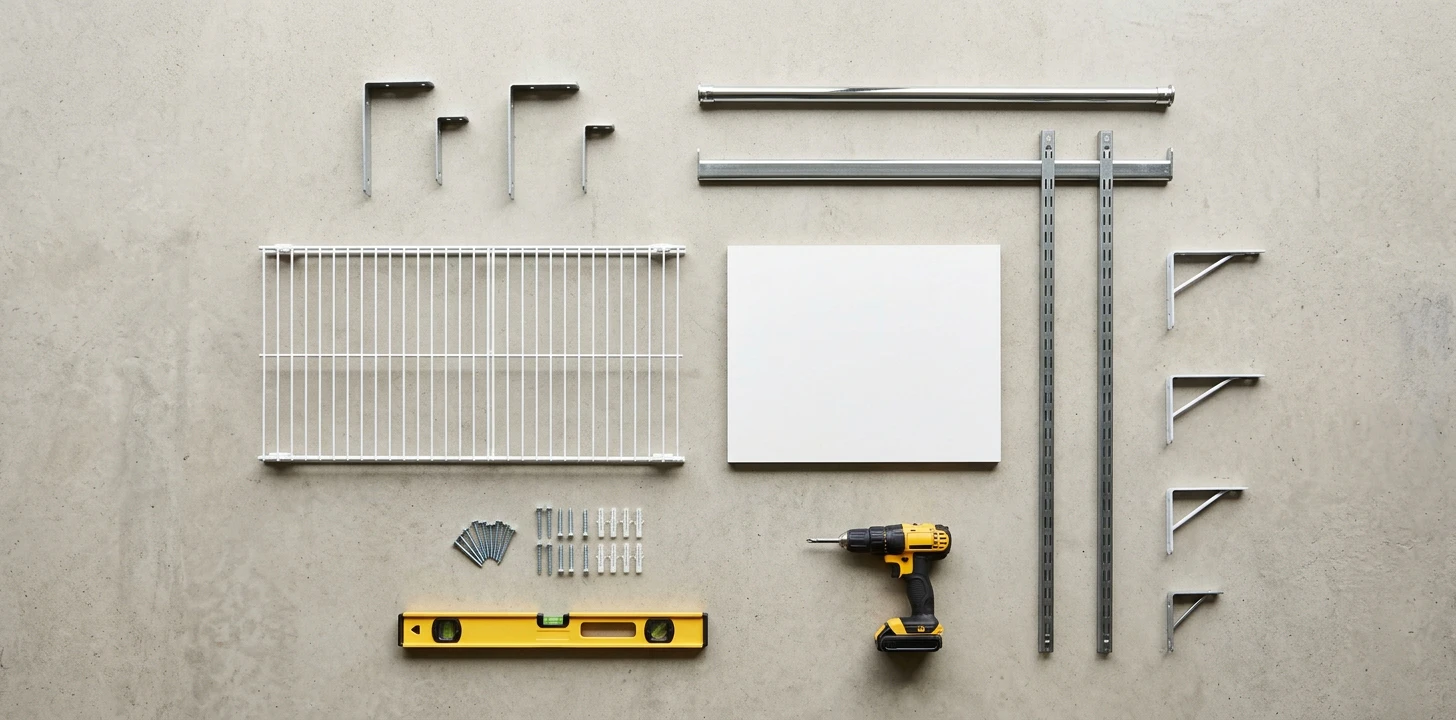 11 Best Budget Closet Systems
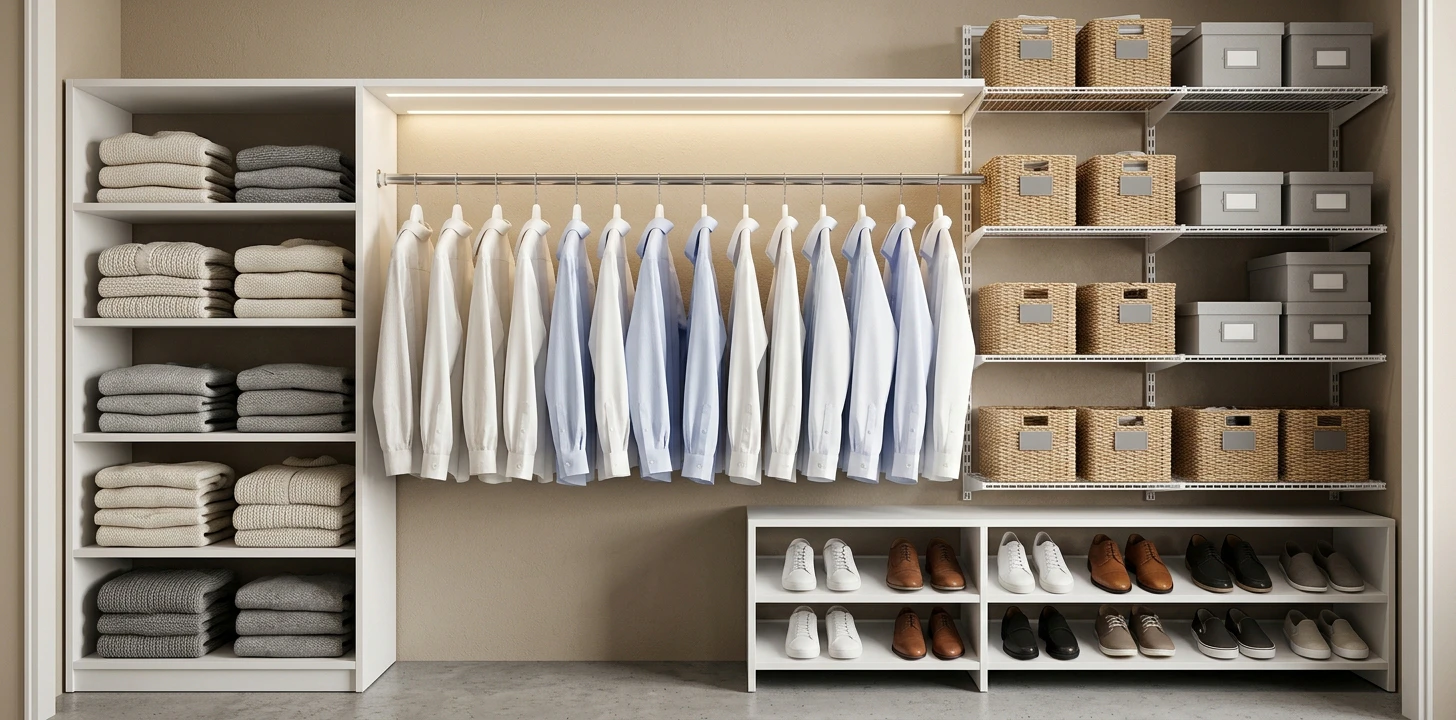 Full closet organization guide
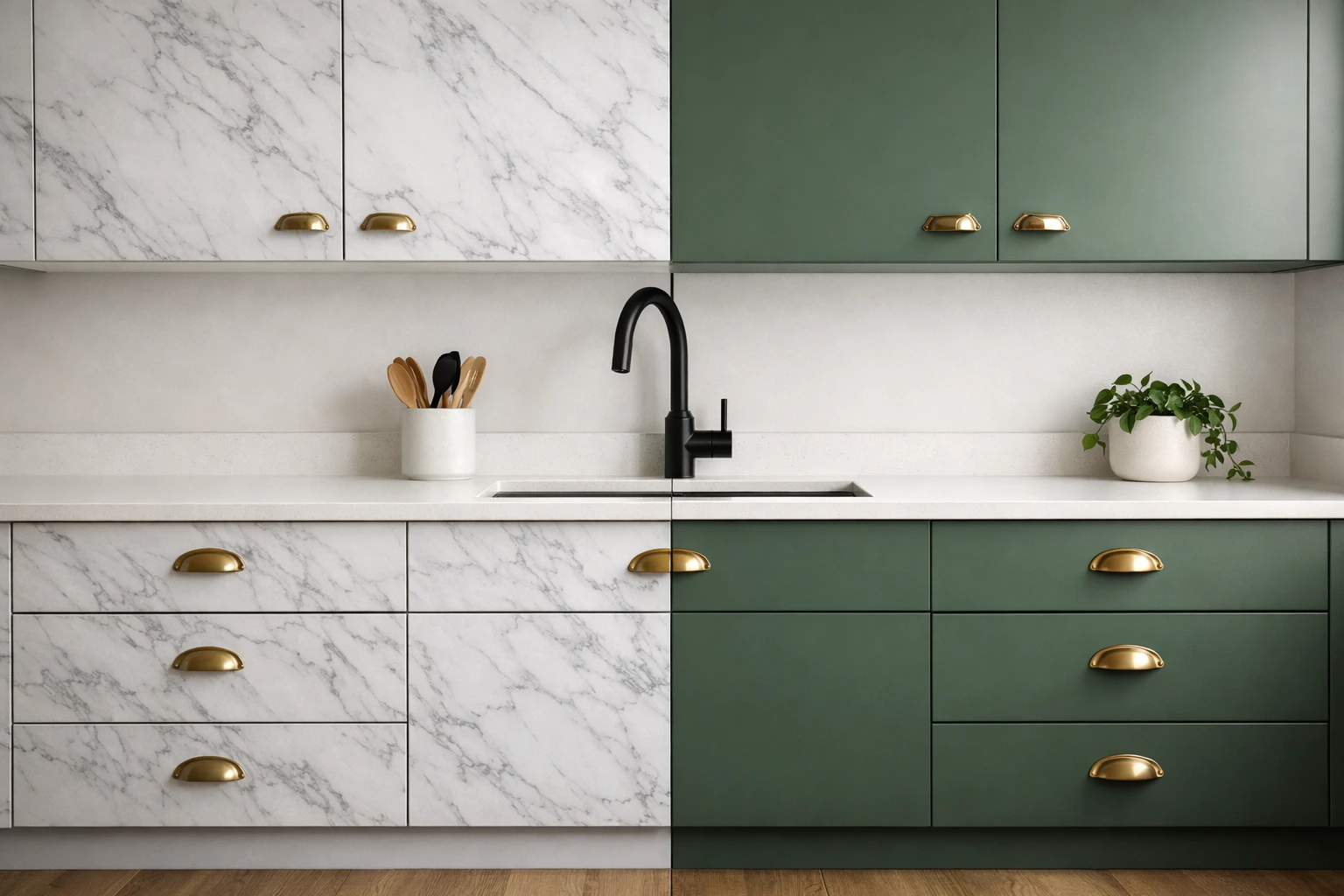 Kitchen Cabinets: Paint vs Contact Paper
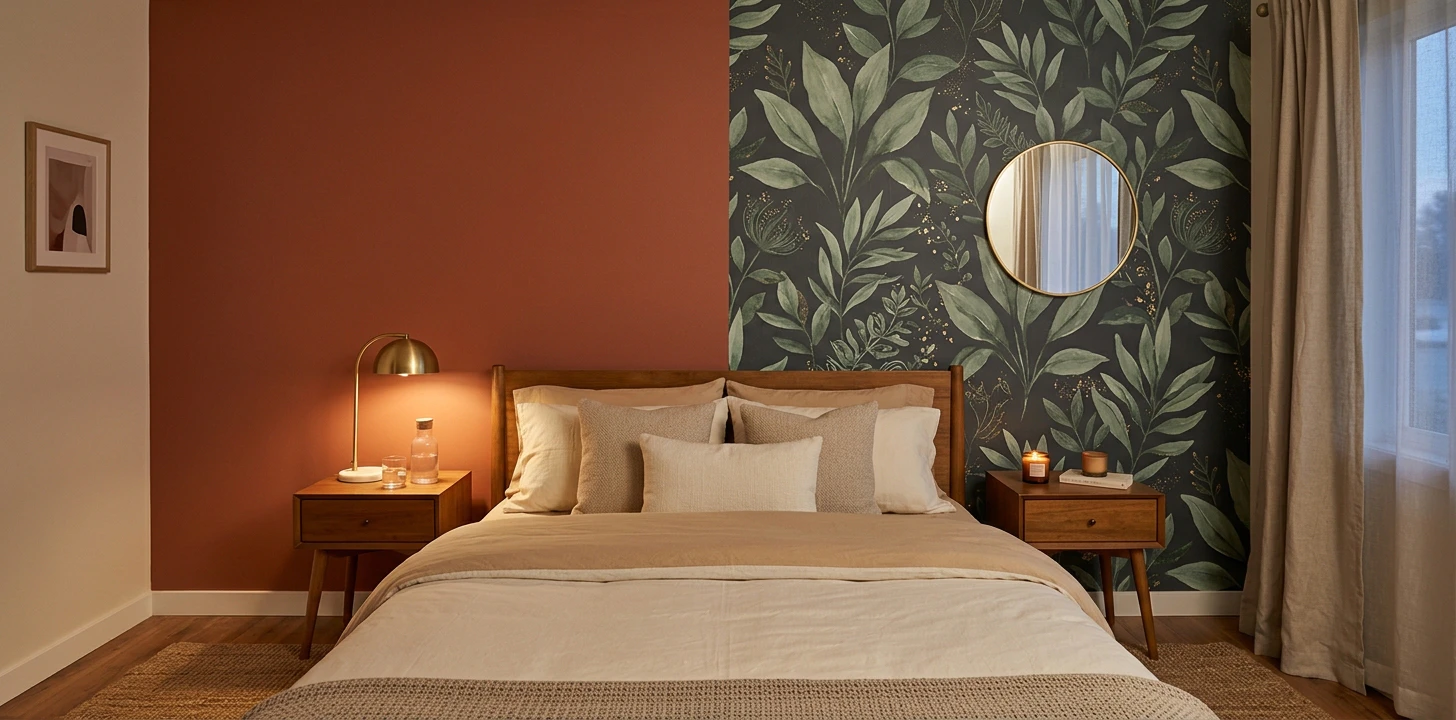 Bedroom Walls: Wallpaper vs Paint
 Home Office Walls