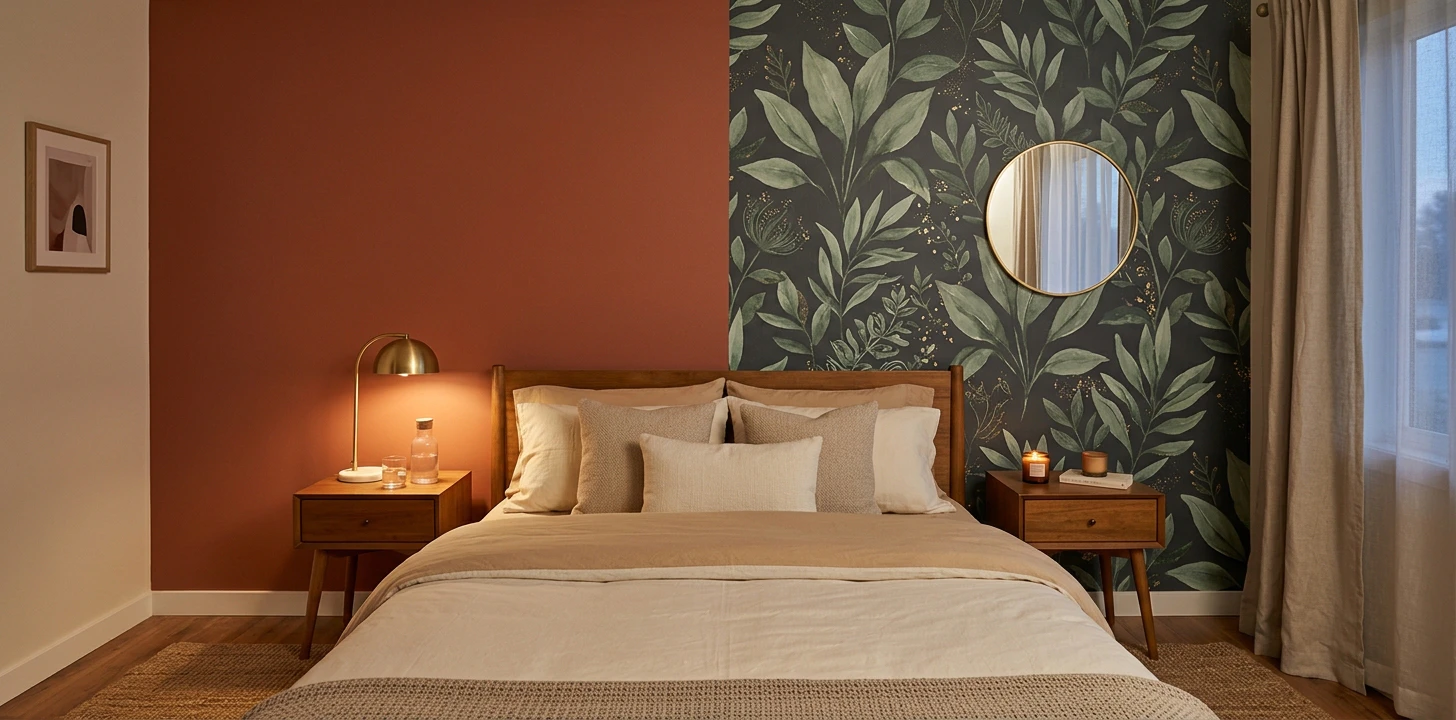
Updated July 2026. Prices reflect US market costs from Amazon, Home Depot and removable-wallpaper specialty stores. All comparisons based on a standard 100 sq ft bedroom accent wall behind a queen-size bed.
The most-debated bedroom decision on Pinterest
"Should I do wallpaper or paint behind my bed?" has been the most-saved Pinterest debate in bedroom design for the last five years running — and there's still no universal right answer. Both transform the room dramatically. Both can be done by a renter without permission. Both photograph beautifully. But they sit at opposite ends of two axes that matter: cost-and-permanence on one side, and pattern-versus-solid on the other.
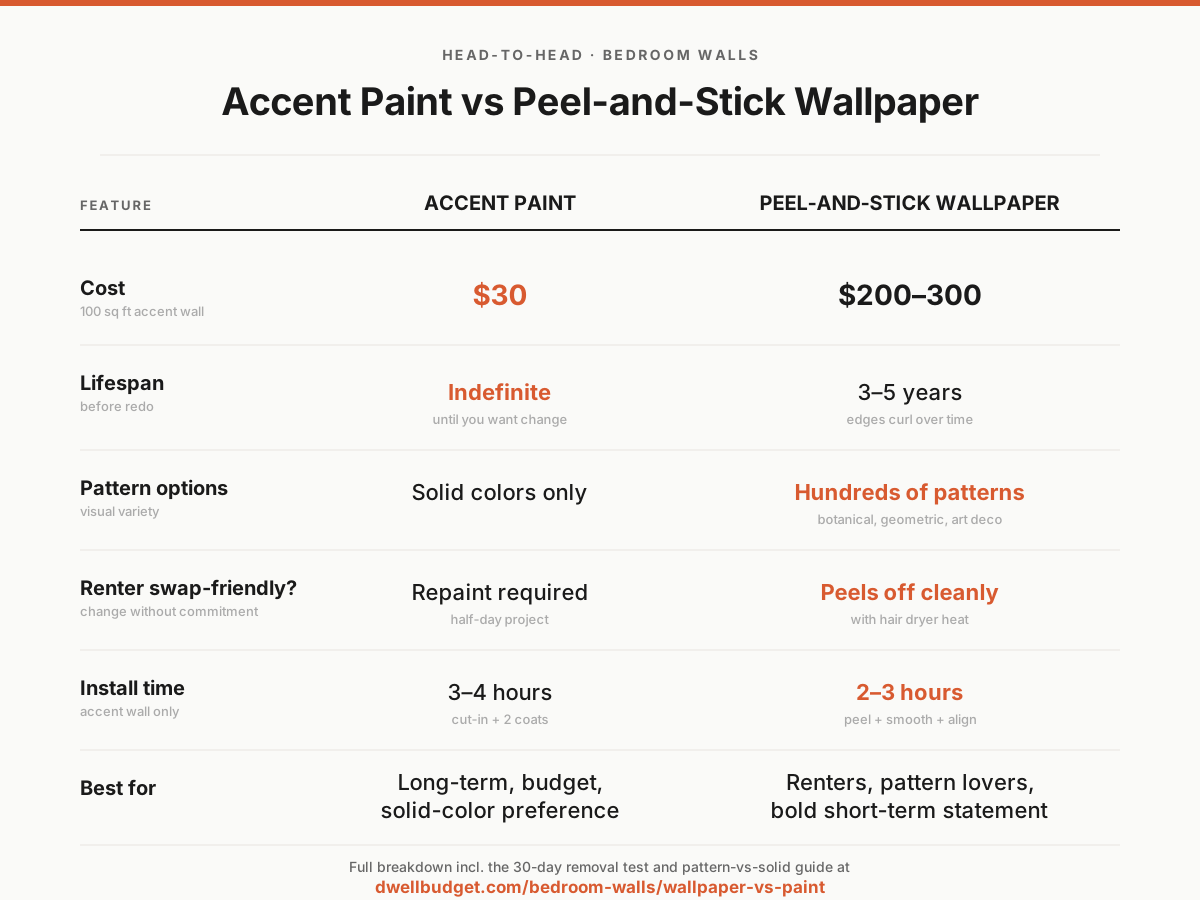
The short version: accent paint is the budget answer — $30 in materials and a Saturday morning, lasts indefinitely, repaints whenever you want change. Peel-and-stick wallpaper is the pattern answer — $200-300 and a 2-hour install, lasts 3-5 years, peels off cleanly on move-out and brings designs paint can't replicate.
Below: side-by-side table, when each one wins, whether the wallpaper actually peels off clean (the renter's worst nightmare), the pattern-vs-solid question for small bedrooms, and FAQs.
Side-by-side comparison
| Accent paint | Peel-and-stick wallpaper | |
|---|---|---|
| Cost (100 sq ft accent wall) | $30 (one gallon) | $200–300 |
| Lifespan | Indefinite — repaint when you want change | 3–5 years before edges curl |
| Install time | Saturday morning (3–4 hrs) | 2–3 hours for accent wall |
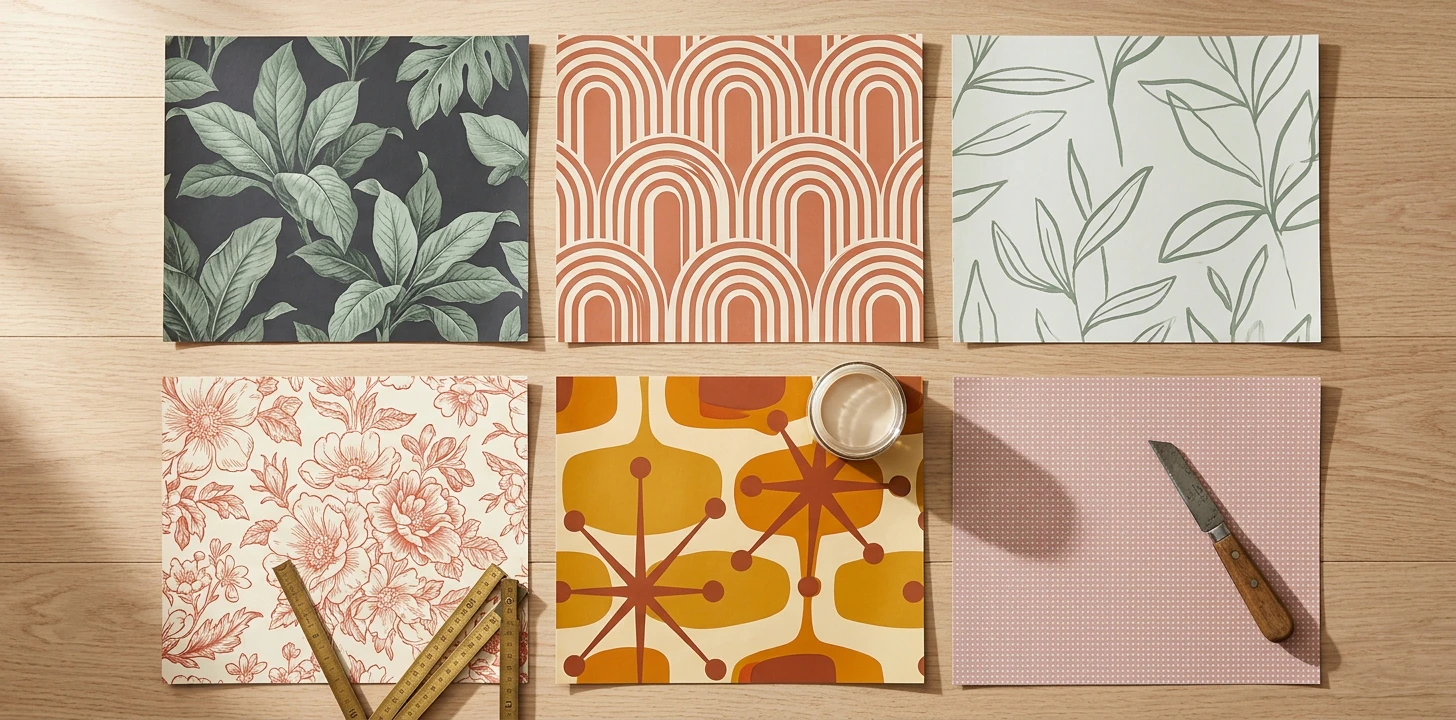
| Pattern options | Solid colors only | Hundreds — botanical, geometric, art deco, moody |
| Renter swap-friendly? | Requires repaint to change | Peels off cleanly with hair dryer |
| Tools required | Roller, brush, drop cloth, tape | Utility knife, smoothing tool, level |
| Wall prep needed | Spackle holes, light sand, prime if bare | Smooth painted wall only — no texture |
| Resale impact | Modest — buyers can repaint easily | Polarizing — love-or-hate pattern |
| Best for | Long-term, budget-conscious, frequent color changes | Renters, pattern lovers, short-term bold statement |
When to pick accent paint
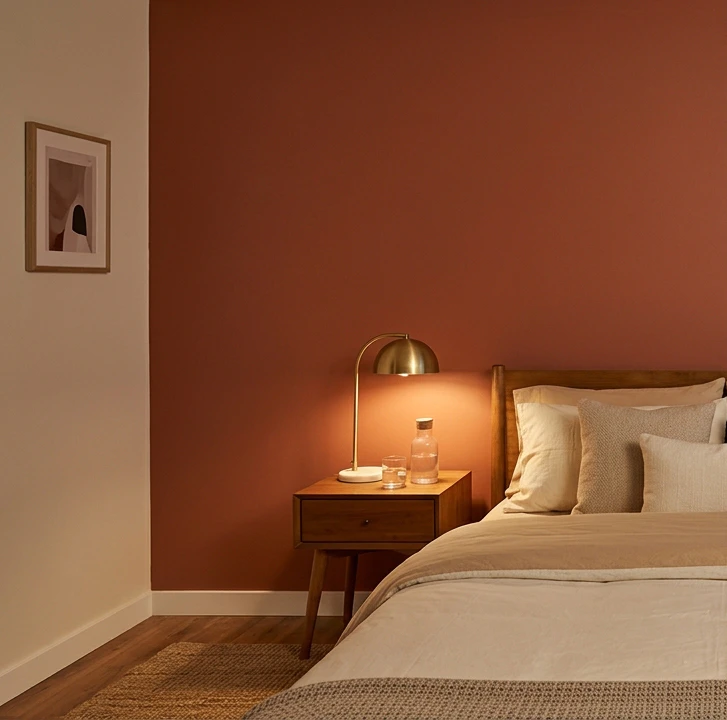
Pick accent paint if at least three of these are true:
- Budget is under $50 for the wall
- You want the look to last indefinitely without thinking about it
- You change your color preferences every 2-3 years and want easy repaints
- You own the home — and want flexibility to test bold colors freely
- Your wall has texture (orange peel, knockdown) — wallpaper won't bond well to it
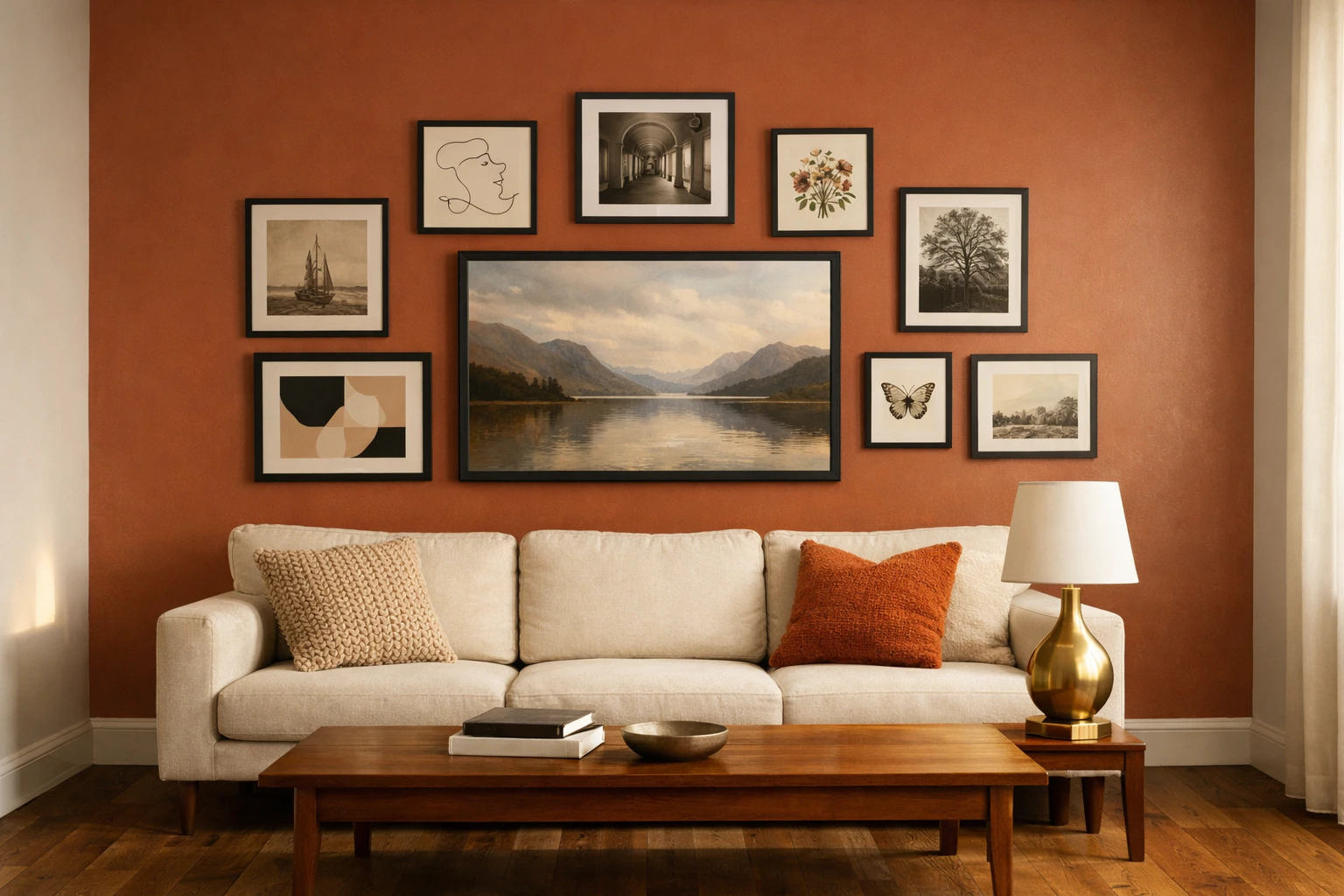
A single gallon of quality interior paint (Behr Marquee, Benjamin Moore Regal Select, Sherwin-Williams Cashmere) covers 100 sq ft with two coats for $30-50. The install is genuinely beginner-friendly — patch any nail holes with spackle, light sand smooth, cut in with a brush, roll the field, second coat after the first dries.
The honest case for accent paint in 2026: it's the right answer if you genuinely want the wall to stay that way for the foreseeable future. Paint doesn't curl, fade unevenly, or develop seams. A well-applied dark accent wall looks as good in year 10 as in year 1. And when you do want change, it's another $30 and a Saturday.
What you give up: pattern (solid colors only — no botanical, no geometric, no art deco), renter quick-swap (changing color requires repainting, which is more work than peeling wallpaper), and the Pinterest "wow" that comes from a strong patterned wallpaper. A great paint job is intentional and quietly cool; a great wallpaper is dramatic and instagram-worthy. Different goals.
When to pick peel-and-stick wallpaper
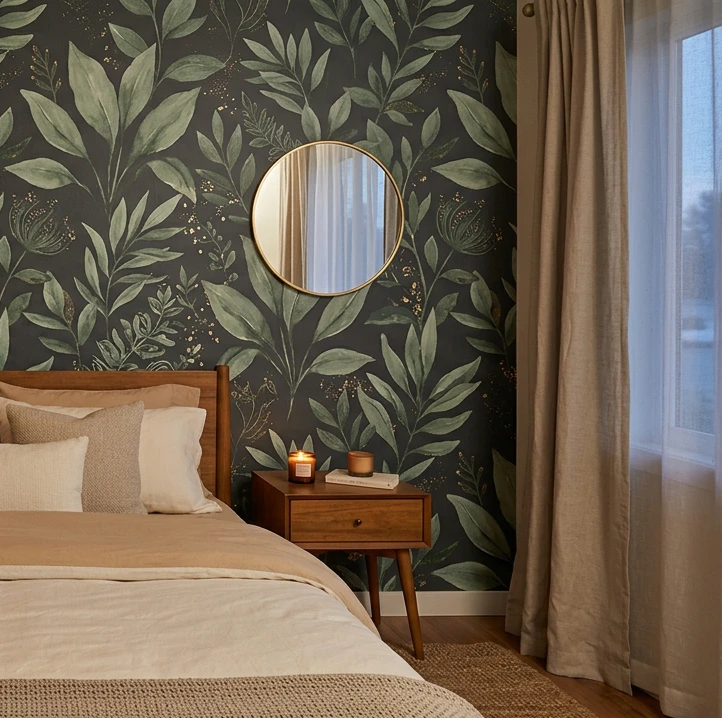
Pick peel-and-stick wallpaper if at least three of these are true:
- You rent — and want zero-damage installation
- You want a pattern, not just a color (botanical, art deco, moody florals)
- You'll be content with 3-5 years before edges start lifting
- You want a dramatic before/after change in a 2-hour install
- Your wall is smooth painted drywall (peel-and-stick needs a flat surface)
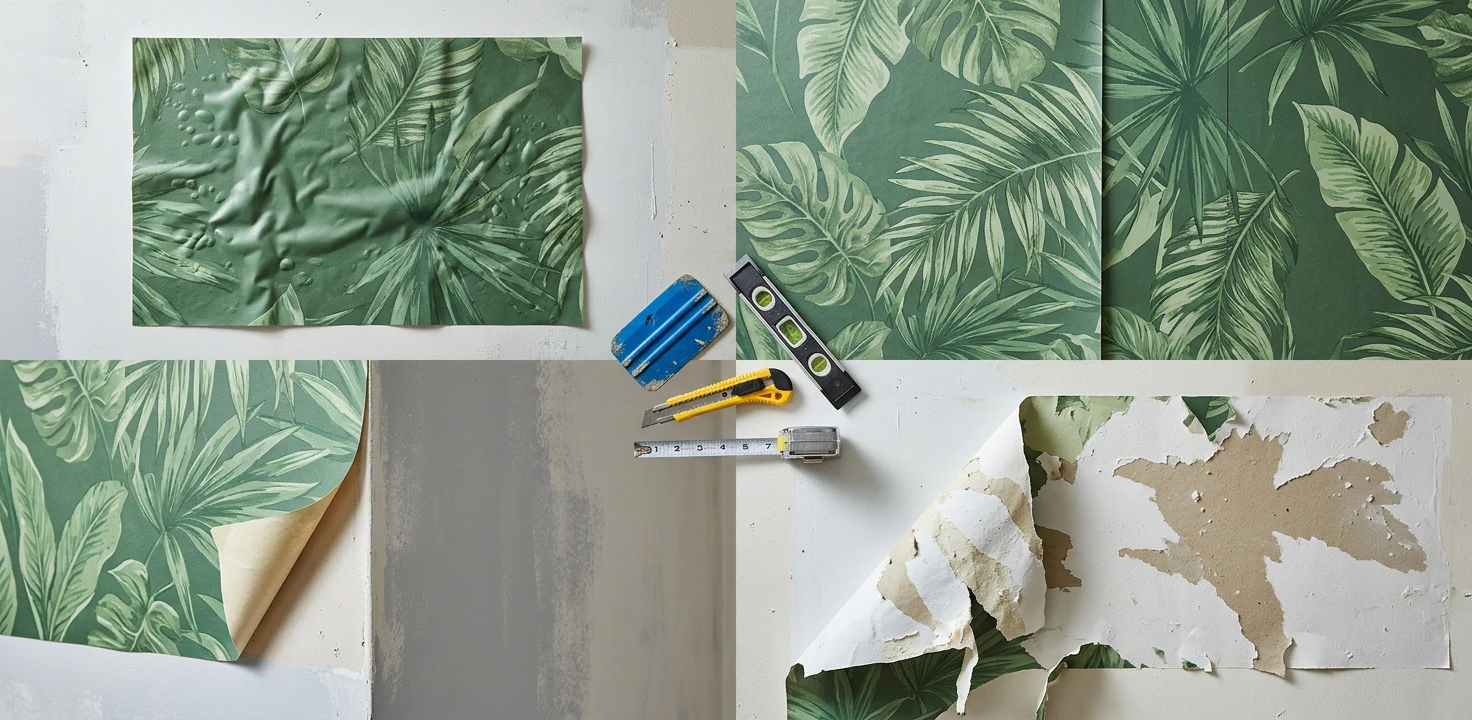
Removable wallpaper from Tempaper, NuWallpaper, or Chasing Paper at $1.50-2.50 per sq ft hits $200-300 for a 100 sq ft accent wall. The install is faster than people expect: clean the wall, peel the backing in sections, align the pattern, press into place with a smoothing tool to push out air bubbles. A whole accent wall in 2-3 hours is realistic for a first-timer.
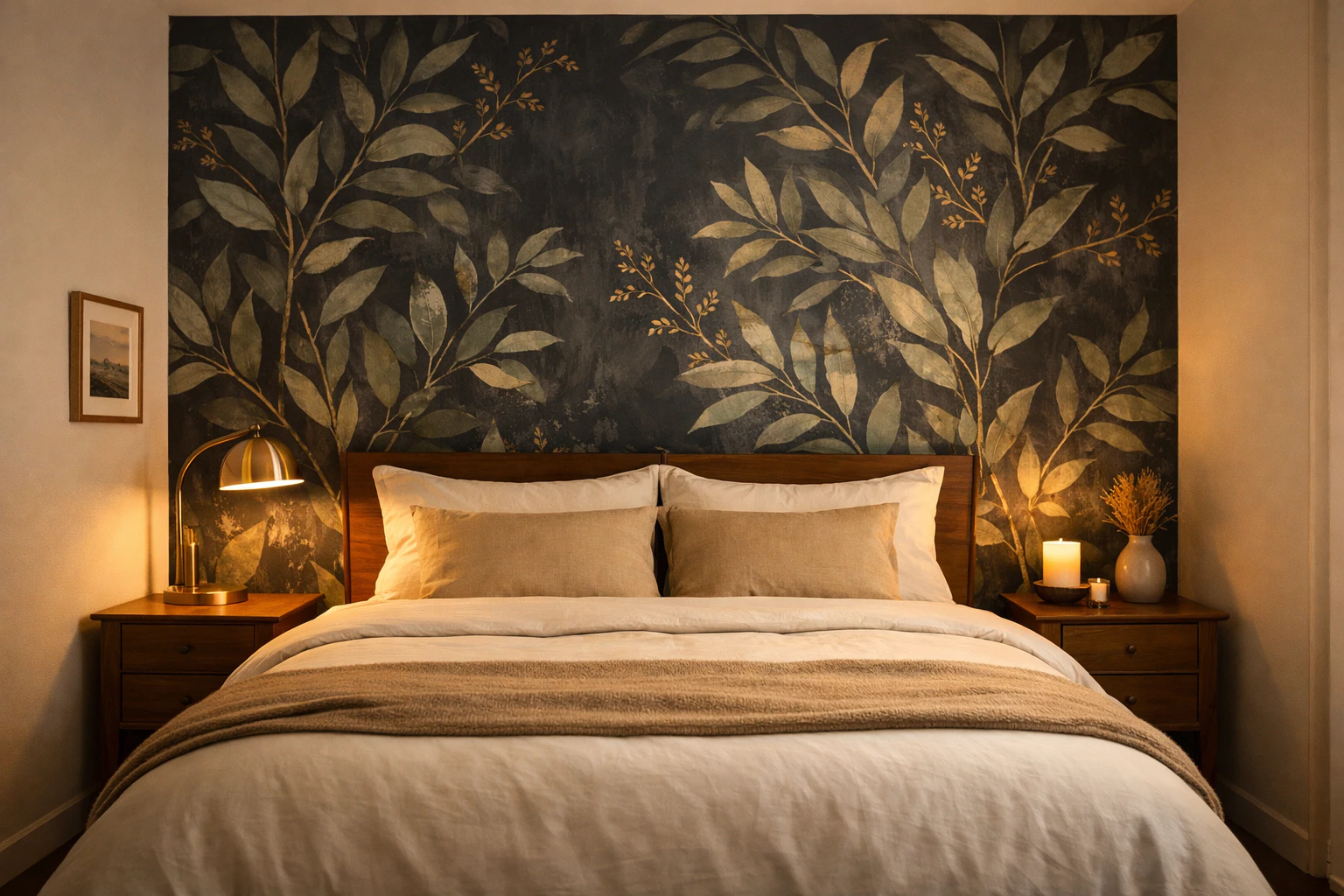
The pattern advantage is real and significant. A great peel-and-stick — dark moody botanical, art deco geometric, hand-painted style florals — does things on a wall that solid paint physically cannot. For renters specifically, it's the only way to bring real decor character to a bedroom without painting (which many landlords restrict).
What you give up: upfront cost (4-6x more than paint), lifespan (3-5 years vs indefinite for paint), wall flexibility (peel-and-stick needs a smooth painted surface — won't bond to textured drywall, fresh paint, or wallpapered walls), and resale neutrality (strong patterns polarize buyers).
"Is it really removable?" — the renter's question
This is the question that decides peel-and-stick for most renters, and the honest answer has nuance. Yes — usually — but the wall matters more than the wallpaper.
Walls where peel-and-stick comes off cleanly:
- Properly painted and primed drywall, at least 30 days post-paint
- Painted plaster walls in older homes
- Sealed paneling (rare but works)
Walls where peel-and-stick tears the surface on removal:
- Unprimed/bare drywall — the adhesive grabs the paper face
- Painted-over wallpaper — both layers come off together
- Fresh paint (under 30 days) — uncured paint pulls off with the wallpaper
- Heavily textured walls (orange peel is borderline; knockdown is a no-go)
The test: Apply a 12×12 inch sample patch in an inconspicuous spot — behind the headboard or in a closet. Wait one week. Peel it off slowly with hair-dryer heat. If the wall surface comes off with the sample, the rest of the wall will do the same on full removal. If the wall stays intact, you're cleared for the full install.
This 30-minute test prevents the worst-case renter scenario: $200 of wallpaper and a $1,500 wall-surface repair on move-out.
Pattern vs solid: which photographs better?
Both work for Pinterest. The trick is knowing which works for your bedroom.
Patterns photograph better when:
- The bedroom has good natural light (patterns need light to read)
- The pattern has variation (botanical, hand-painted style, geometric) — flat repeats look cheap on camera
- The headboard is solid/simple — pattern + busy headboard = visual chaos
- The room is at least 11×11 ft — small bedrooms make patterns feel cramped
Solid paint photographs better when:
- The bedroom is small (under 11×11) — solid color recedes visually, room feels bigger
- You have a statement headboard you want to highlight
- The room gets evening-only use (warm dark colors photograph beautifully in lamplight)
- You want the bedding to be the star, not the wall
The "Studio McGee shot" — dark moody bedroom with the bed centered, lamps on both sides, accent wall behind — usually works better with solid paint than with pattern, because the pattern competes with bedding texture. The "bohemian Pinterest" look — layered linens, plants, eclectic art — pairs better with patterned wallpaper as the room's organizing visual rhythm.
The short verdict
Pick accent paint if your budget is under $50, you want the wall to look the same for years, you change your mind about colors periodically, or your wall has texture that won't accept wallpaper. Pick peel-and-stick wallpaper if you rent, you want a real pattern (not just a color), you're willing to redo it in 3-5 years anyway, and your wall is smooth painted drywall ready to receive adhesive.
The fastest "is paint or wallpaper right for me?" test: can you describe the wall you want as a single color word, or do you find yourself describing a pattern? Color → paint. Pattern → wallpaper. Trying to force the wrong tool into the other's job is where bedroom accent walls usually disappoint.
Comparing more bedroom wall options? The full bedroom walls guide also covers 3D PVC panels — useful if you want texture without commitment, sitting between paint and wallpaper on the cost/effort spectrum.
 Best Removable Wallpaper Brands
 7 Peel-and-Stick Wallpaper Mistakes
 Full bedroom walls guide
 Living Room Walls
 Kitchen Backsplash: Peel & Stick vs Real Tile
 Kitchen Cabinets: Paint vs Contact Paper