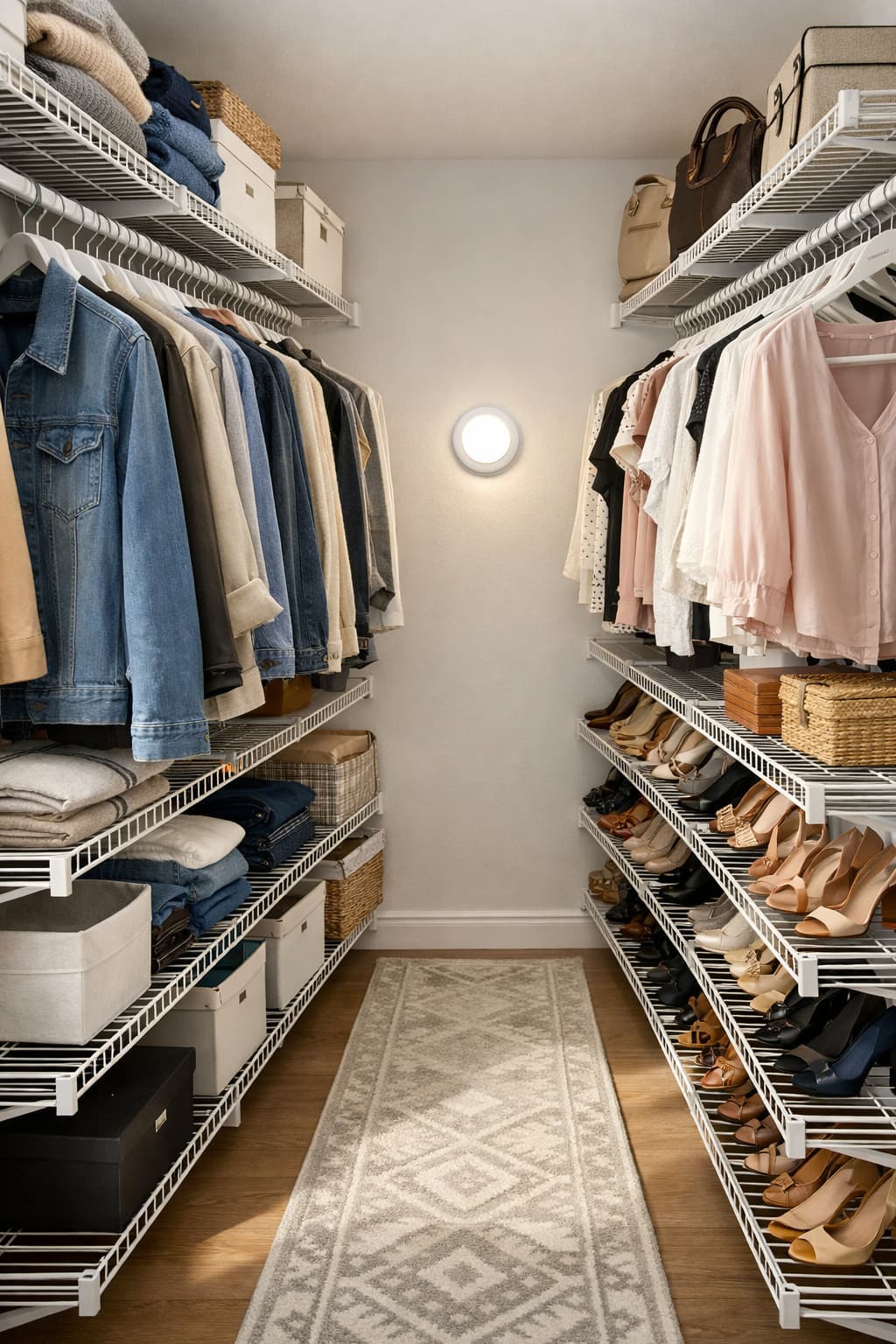
Why closet refresh has the best ROI in any house
A closet is 15-40 sq ft of opportunity that nobody pays attention to. Builder-grade closets have one rod, one shelf, and a beige floor — that's it. Upgrading both organization and flooring runs $50-200 total and transforms how getting dressed feels every single day. For under $100 you can make a closet feel like a boutique. Few projects deliver more impact per dollar.
The renter-safe stack
Tension-rod closet system ($60) + adhesive LED puck light ($15) + contact paper on existing shelves ($15) + closet runner rug ($30) = $120 for a complete closet transformation that uninstalls in 30 minutes. Best move for renters who want their wardrobe space to feel designed without any drilling.
The owner-investment stack
ClosetMaid wire shelving system ($60) + LVP floor ($80) + dedicated overhead LED ($40) + drawer dividers ($20) = $200 for a permanent closet refresh that adds genuine home value. Worth the investment because closet quality is a thing real estate buyers notice and remember.
Walk-in vs reach-in: different strategies
Walk-in closets benefit most from the full stack — flooring, dedicated lighting, multiple shelves and rod heights. Reach-in closets (the typical 2 ft deep clothes closet) just need a better organizer system and don't really need flooring changes — the floor isn't visible most of the time when the door is closed.
Measure before you buy anything
Closet systems are the one home purchase where five minutes with a tape measure saves a return trip almost every time. Record four numbers: rod-wall width, depth (24 inches is the minimum for hangers to clear the door), ceiling height, and the door opening (bi-fold and sliding doors block different halves of the closet — your most-used zone should be the one the door actually exposes). Then count what you hang versus what you fold: shirts need 1 inch of rod per hanger, pants and skirts hang double-height, and folded knits want shelves, not rods. Most builder closets get the ratio backwards — one long rod, one high shelf — for wardrobes that are half folded items.
The two closet head-to-heads
When you're past the tension-rod stage and choosing permanent systems, our ranking of 11 budget closet systems covers the actual products under $200 — and wire vs wood shelving is the real material decision — airflow and price against sturdiness and the built-in look, with a hybrid answer most guides skip. And if the closet floor is builder carpet, LVP vs carpet covers the tear-out math for the smallest floor in the house — where the material cost is so low ($50-90) that the decision is really about moisture, indent marks from shoe racks, and bare feet at 6am.