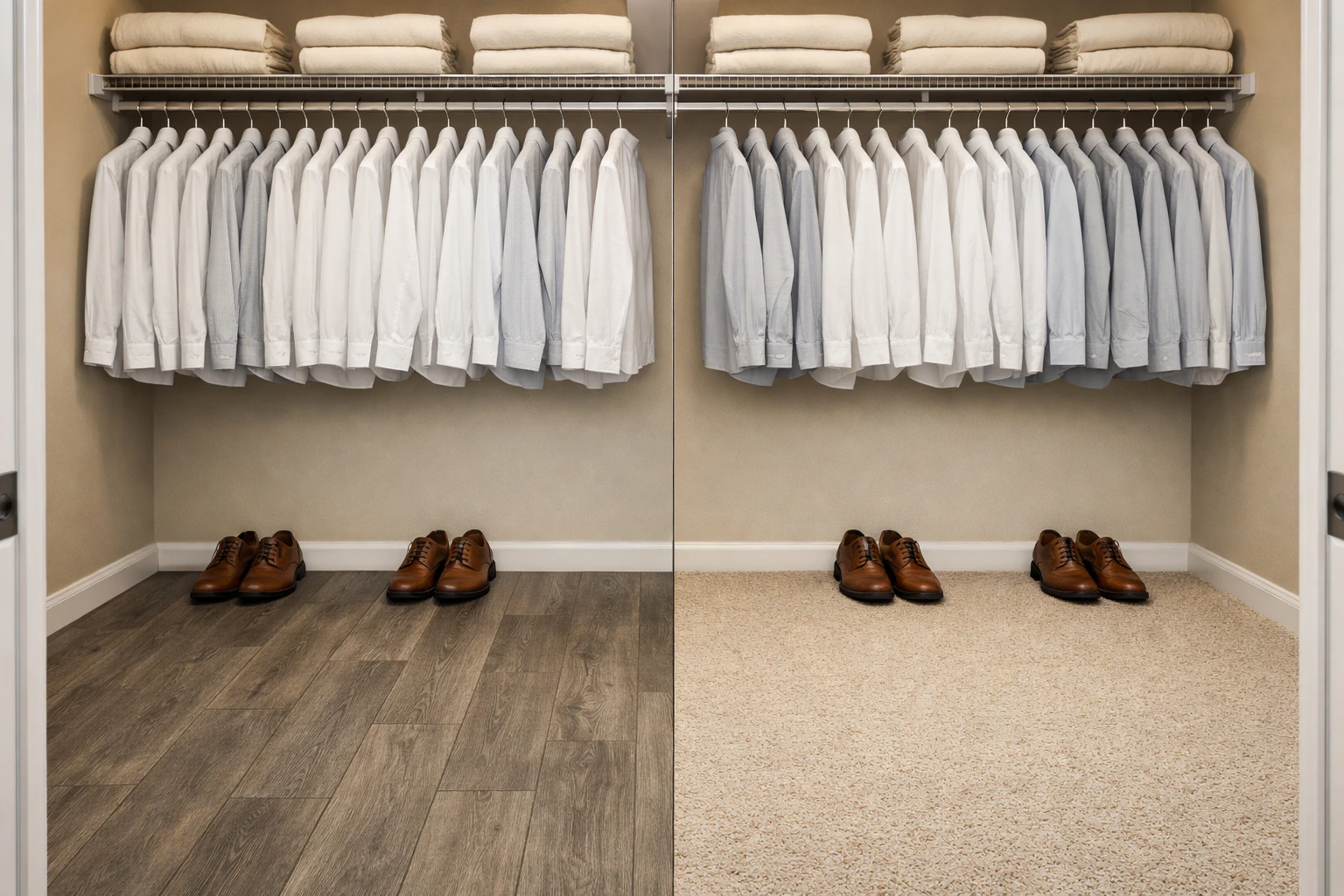
Updated July 2026. Prices reflect US market costs from Home Depot, Lowe's, and Amazon. All comparisons based on a typical reach-in or small walk-in closet — 20 sq ft of floor surface where the cost difference is small but the decision still matters.
The "rip out the builder-grade carpet" decision
Most American closets came with beige low-pile residential carpet that the builder put in by default — it's cheap to install during construction and matches the bedroom carpet most homes had in 1995. For closet floors specifically, this default is rarely the right answer in 2026. The real decision: pull out the existing carpet and install LVP, or leave the carpet and upgrade differently (runner rug on top, deep cleaning, vacuum schedule).
The short version: click-lock LVP at $60 for a 20 sq ft closet turns a beige-carpet closet into a waterproof leak-buffer with a hardwood-look floor — 90 minutes of carpet tear-out + 2 hours of plank install, total under a Saturday. Existing carpet costs $0 to keep, but absorbs shoe odors, traps allergens, and provides zero leak protection for closets adjacent to bathrooms or laundry rooms. The decision is mostly about closet position (moisture risk) and how long you're staying.
Below: side-by-side table, when each one wins, the moisture risk that decides it for any closet sharing a wall with water, the heavy-storage indent question that most owners don't consider until they move furniture, the hybrid runner-on-LVP recipe, and FAQs.
Side-by-side comparison
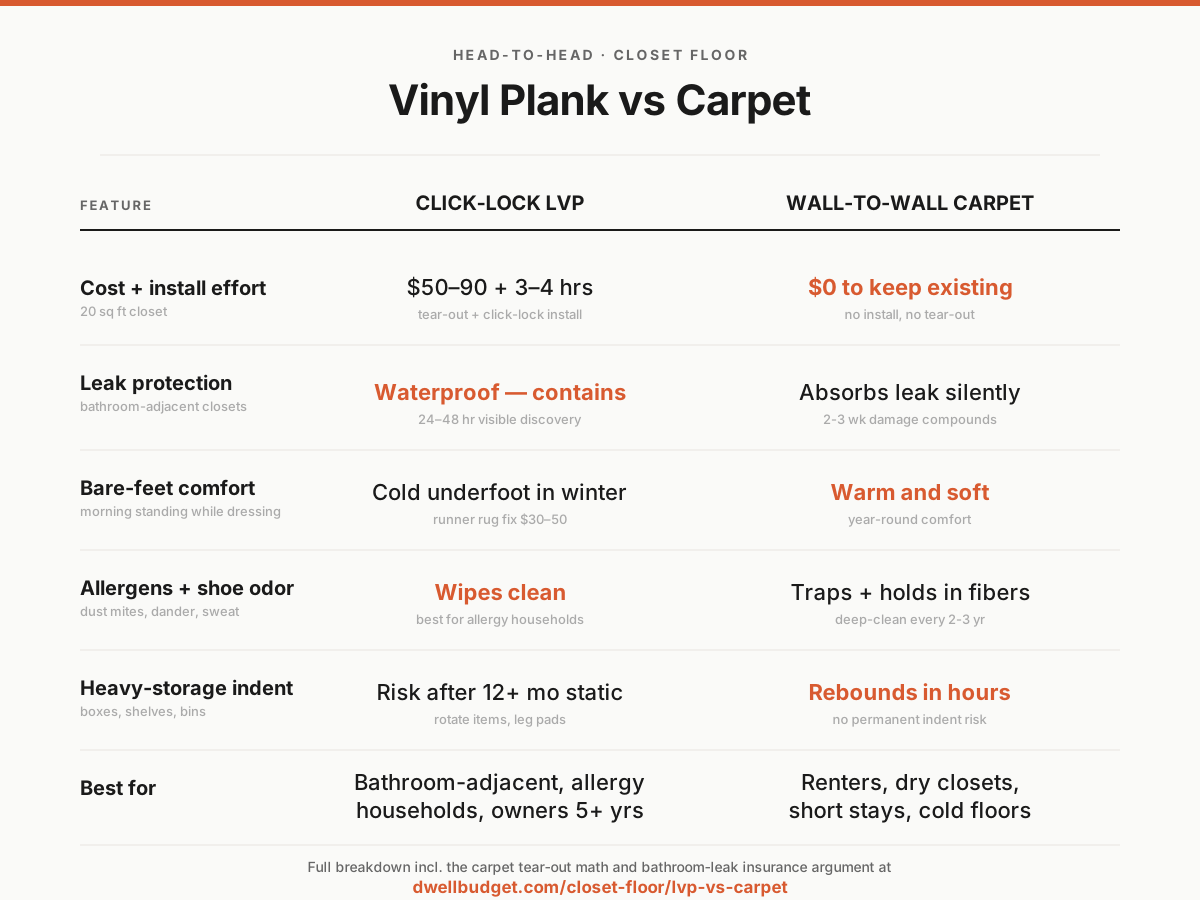
| Click-lock LVP | Wall-to-wall residential carpet | |
|---|---|---|
| Cost (20 sq ft closet) | $50–90 (incl. underlayment + transition) | $0 to keep existing; $40–60 carpet remnant new |
| Tear-out + install time | 3–4 hours (90 min tear-out + 2 hr install) | None — keep what's there |
| Leak protection | Waterproof — catches and contains | Absorbs leak silently for weeks |
| Bare-feet morning comfort | Cold underfoot in winter | Warm and soft year-round |
| Allergen / dust trap | Wipes clean — best for allergies | Traps dust mites + dander + pet hair |
| Shoe-odor absorption | None — wipes off | Absorbs and holds odors deep in fibers |
| Heavy-storage indent | Risk after 12+ months static load | Rebounds within hours |
| Resale signal | Extends "hardwood throughout" listing line | Stops the listing copy at "main areas" |
| Renter-safe? | Yes — floats over subfloor, removes cleanly | Yes — already there, nothing to undo |
| Best for | Bathroom-adjacent, allergy households, owners 5+ yrs | Renters, dry closets, short stays, cold floors |
When to pick vinyl plank
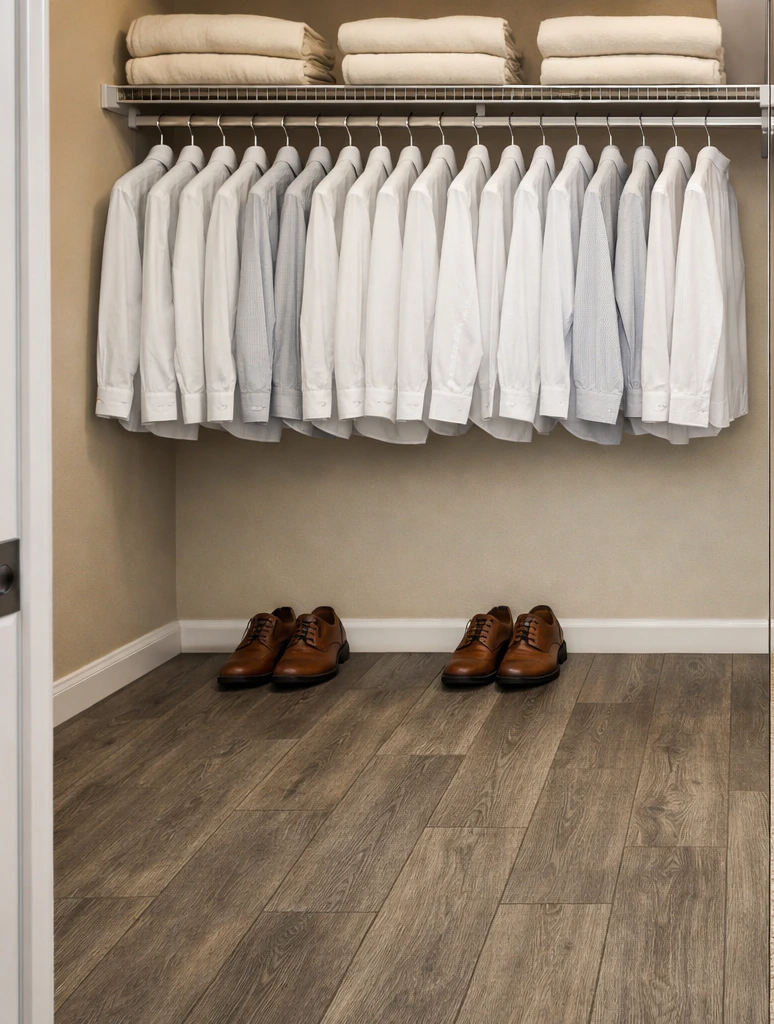
Pick click-lock LVP if at least three of these are true:
- The closet shares a wall with a bathroom, laundry room, or water-heater closet (moisture risk)
- Someone in the household has dust mite, pet dander, or pollen allergies
- You own the home and plan to stay 5+ years (the resale "hardwood throughout" line activates)
- The closet is in a basement or below-grade space (humidity issues + flood risk)
- The existing carpet is stained, smelly, or visibly worn
Click-lock LVP from LifeProof or Smartcore at $2.80/sq ft hits $56 in material for a 20 sq ft closet, plus $15-25 for a transition strip at the doorway. The install is genuinely under a Saturday: 90 minutes pulling the existing carpet, tack strip, and staples (the worst part — use a pry bar and pliers); 2 hours clicking the planks together (closets are simpler than open rooms because there's almost no cutting around obstacles).
The biggest practical argument is leak protection. For any closet sharing a wall with a bathroom, laundry, or water heater, waterproof LVP catches the inevitable upstairs leak and contains it on the closet floor for days — long enough for you to notice and shut off the water before it spreads into the bedroom or down through to the floor below. Carpet in the same closet absorbs the leak silently for weeks and rots the subfloor before anyone discovers it.
What you give up: 3-4 hours of tear-out + install work the carpet doesn't require, cold bare feet on winter mornings while getting dressed (the cheap fix is a small 2×6 ft runner rug along the walking lane — $30-50), and heavy-storage indent risk if you stack 100+ lbs of boxes on the same spot for 12+ months (rotate stored items annually to prevent).
When to keep carpet
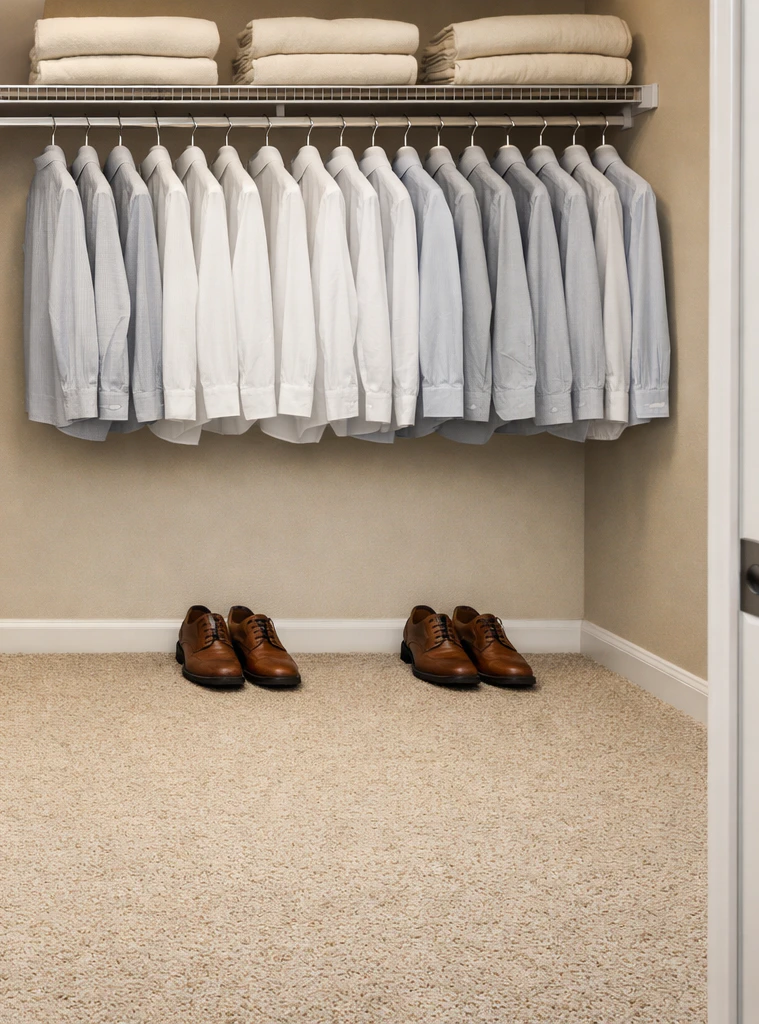
Keep the existing carpet (or replace with a fresh carpet remnant) if at least three of these are true:
- The closet is dry — no shared wall with bathroom, laundry, or water-heater closet
- You rent or plan to move within 2 years (the install cost doesn't amortize)
- You're sensitive to cold bare feet on winter mornings (the dressing-room comfort matters daily)
- The existing carpet is in acceptable shape — no stains, no smell, no visible wear
- You store heavy items (boxes, shoe collections, storage bins) that would risk LVP indent
If you're keeping existing carpet, the highest-ROI upgrades are: a charcoal deodorizer bag ($15) to absorb the shoe-odor problem carpet creates; a deep professional carpet cleaning ($75-125 for a single small closet) every 2-3 years; and a baking soda sprinkle before each monthly vacuum (10 minutes, $5 in baking soda per year).
If you're replacing existing carpet with new carpet, a 20 sq ft carpet remnant from Home Depot or Lowe's runs $40-60 in a color you choose (beige, grey, charcoal) plus $20 for tack strip and padding. Total under $80 for a same-day install you can do yourself with a utility knife and a knee kicker.
What you give up: zero leak protection (the biggest trade-off, decisive for moisture-adjacent closets), allergen and dust-mite accumulation deep in carpet fibers that vacuuming doesn't fully remove (issue for allergy households), and the "hardwood throughout" resale-listing line that wood-look LVP would extend into closets.
Moisture risk for closets next to bathrooms or laundry
This is the closet-specific factor that decides the LVP-vs-carpet question for many homeowners, and it's the practical argument insurance adjusters quietly recommend without it ever appearing in design guides.
The leak migration pattern: supply line failures, washing-machine hose ruptures, toilet flange leaks, and water-heater drips all migrate sideways through the shared wall along the path of least resistance. The lowest-elevation adjacent space is usually a bedroom closet on the opposite side of that wall. Water doesn't go where you expect — it goes where gravity and absorption pull it, which is downhill and into the most absorbent material nearby.
How carpet handles this: the leak absorbs into the carpet and pad silently. Carpet looks normal from above for days while the pad underneath stays wet, the subfloor begins to rot, and mildew starts in the closed space. By the time someone notices a damp closet smell or visible discoloration on the carpet face, the damage has been compounding for 1-3 weeks. Insurance claim amount: typically $2,000-5,000 for subfloor + drywall remediation.
How LVP handles this: the leak sits on top of the waterproof plank surface. Within 24-48 hours of the leak starting, water visibly pools on the closet floor — impossible to miss when you open the door. Shut off the supply, mop it up, identify and fix the source. The plank surface stays intact; the subfloor stays dry. Insurance claim amount: usually under $500 for the plumbing repair, plus zero floor remediation.
The decision rule: if your closet shares any wall with plumbing, LVP is the safer-by-design choice regardless of aesthetic preference. The math works out heavily in LVP's favor over a 10-year ownership horizon — one bathroom leak in 10 years (statistically near-certain in any owned home) covers the entire cost differential and then some.
Heavy-storage indent and shoe-grit wear
The second closet-specific factor: how each floor handles the static load of stored items and the grit that shoes track in.
Heavy storage indent. Stacked boxes, floor-mounted shoe shelves, storage bins, suitcases on the closet floor concentrate static weight on small footprints (4-inch box corners, 1-inch shelf-leg pads) for months at a time. LVP with a quality 12 mil wear layer holds up to 50-100 lbs per concentrated footprint indefinitely; above that threshold left in place 12+ months, visible permanent dimples develop in the wear layer. Carpet compresses temporarily under any load but rebounds within hours of removing the weight — no permanent indent risk regardless of load duration. The fix for either floor: rotate stored items annually so the same pressure point doesn't compound, and for any permanent floor-mounted storage unit, put a 1/4 inch hardboard square under each leg to spread the load.
Shoe-grit scuff wear. Shoes track in micro-grit (small rocks, gravel, sand, sidewalk debris) that grinds into floor surfaces over months of use. LVP shows scratch marks from grit-under-shoes in high-traffic walking lanes; the wear layer protects the printed pattern beneath but the surface texture flattens visibly after 5-7 years of daily traffic. Carpet absorbs grit deep into the fibers where it's nearly impossible to fully vacuum out — over years this creates a "matted dirty" feel even when the carpet looks clean. The fix for either floor: keep dirty/wet shoes out of the closet entirely (put a shoe tray in the entryway, only bring clean indoor shoes into the closet). With this single discipline, both materials last the full residential warranty period.
The short verdict
Pick click-lock LVP if your closet shares a wall with a bathroom or laundry, anyone in the household has allergies, you own and plan to stay 5+ years, or the existing carpet is worn/stained. The $60 material cost + 3-4 hour install pays back via leak protection within 10 years almost certainly. Keep the existing carpet (or replace with a fresh remnant) if your closet is dry, you rent or plan to move within 2 years, cold bare feet are a daily issue, or you store heavy items long-term. For a master bedroom closet specifically, LVP earns the install cost via the "hardwood throughout" resale signal that bedroom and hallway flooring already deliver — the closet extension makes the line usable in listing copy.
Comparing more closet floor options? The full closet floor guide also covers FLOR carpet tiles (modular per-tile spill recovery), peel-and-stick vinyl ($26 budget refresh that lasts 4-5 years in low-traffic closets), and narrow runner rugs ($30-60 no-install option for cold-floor closets).
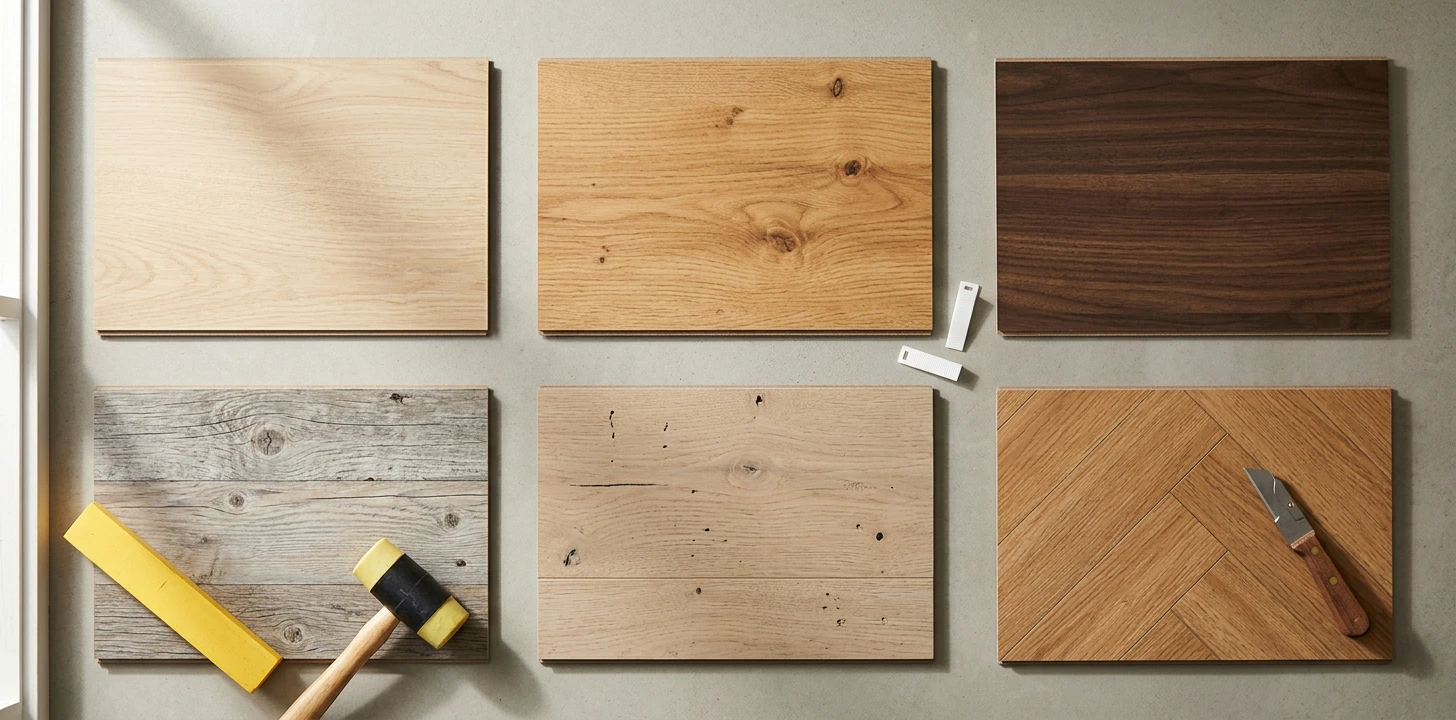 Best Cheap LVP Flooring Brands
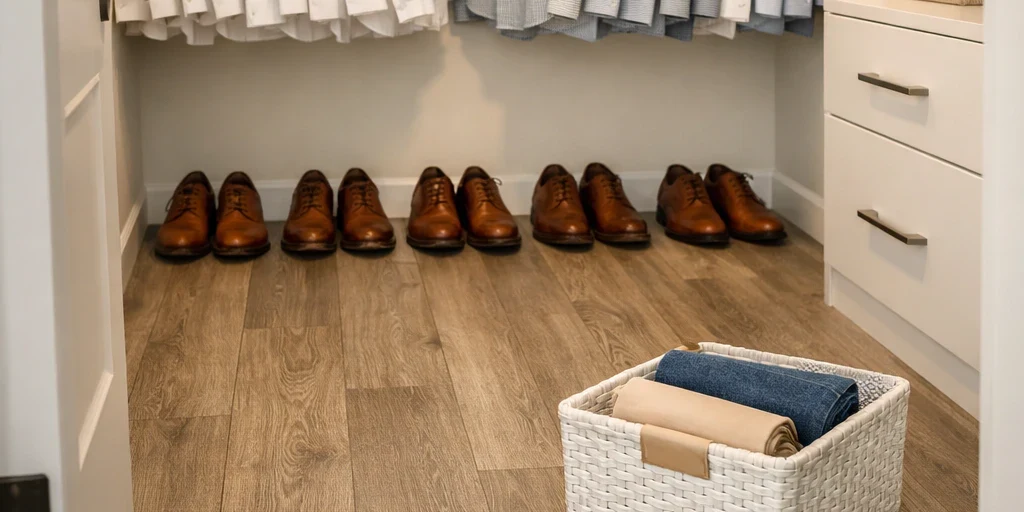 Full closet floor guide
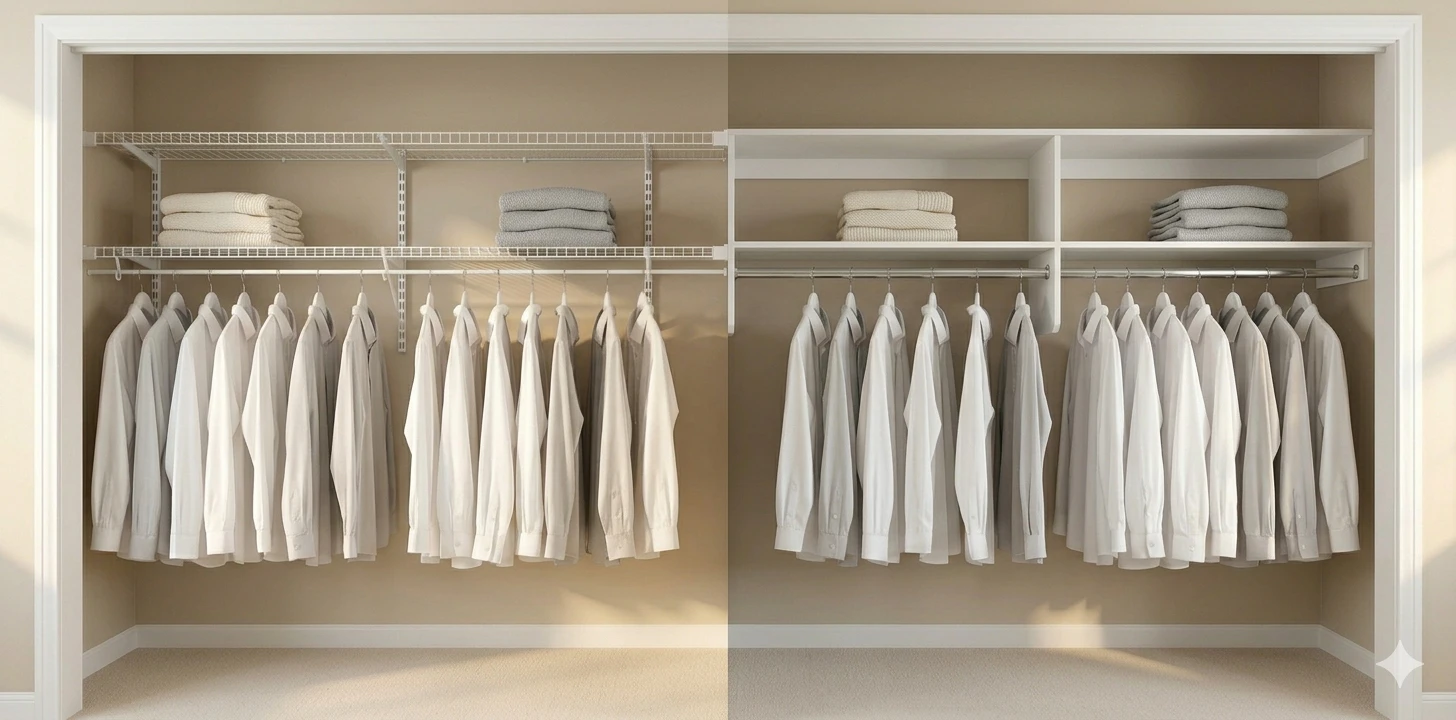 Closet Organization: Wire vs Wood Shelves
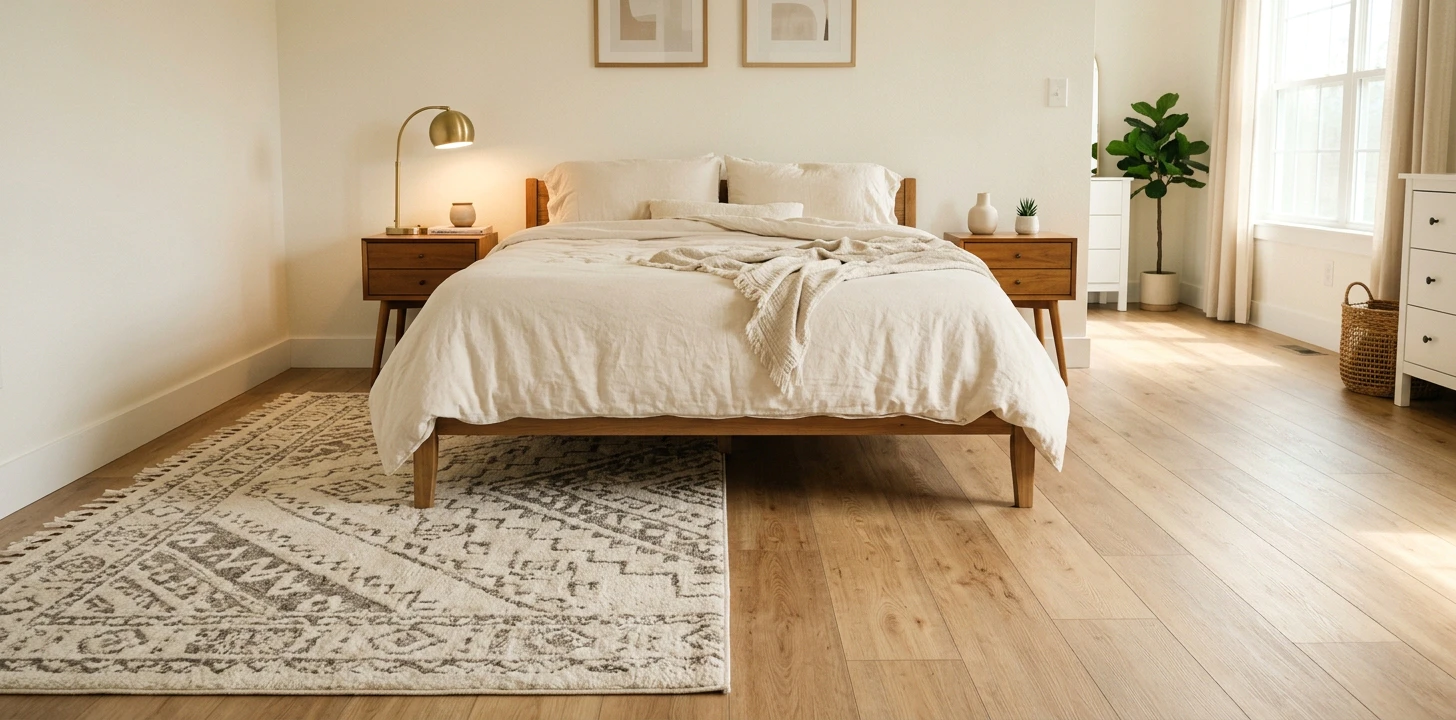 Bedroom Floor: Area Rug vs Vinyl Plank
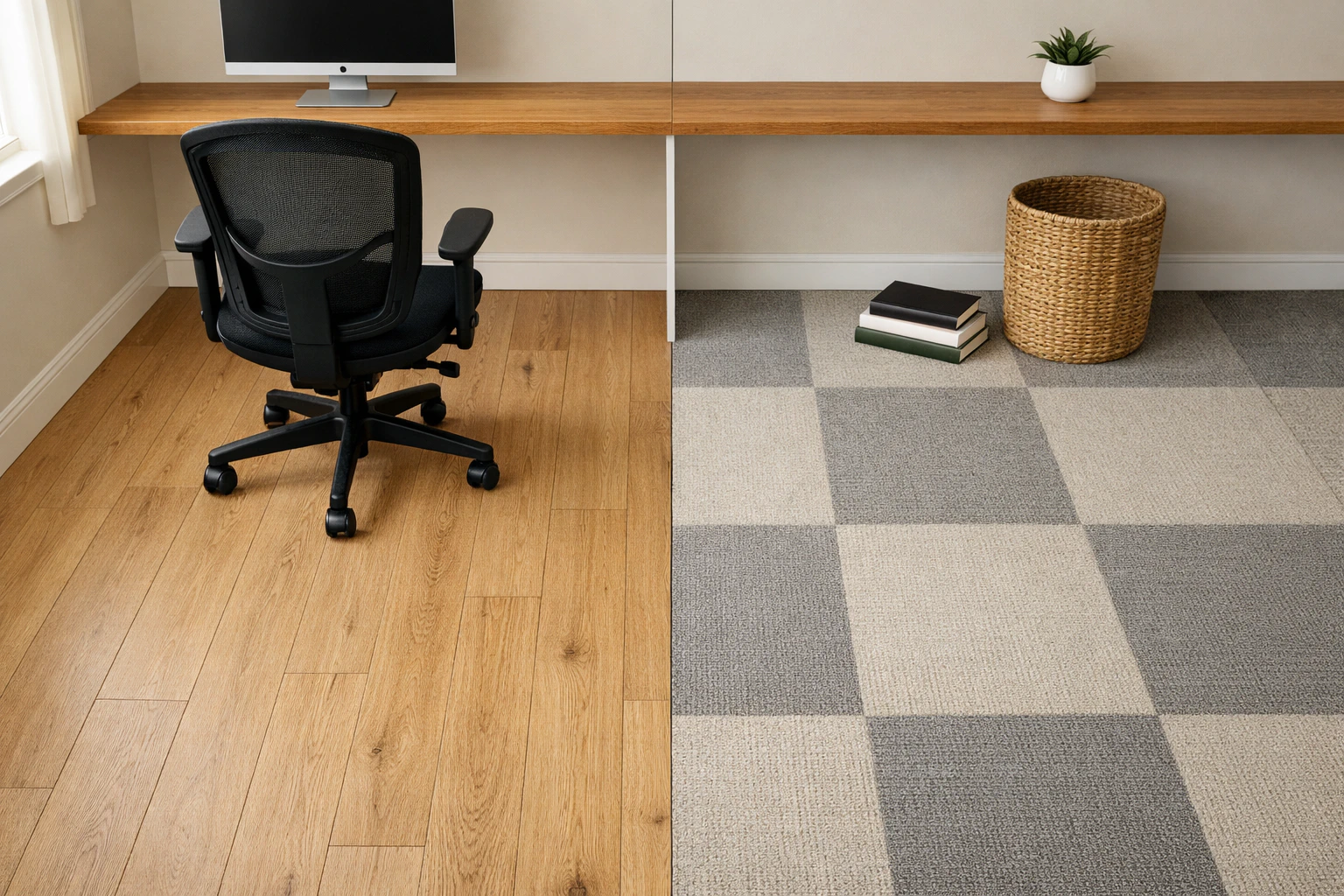 Home Office Floor: LVP vs Carpet Tiles