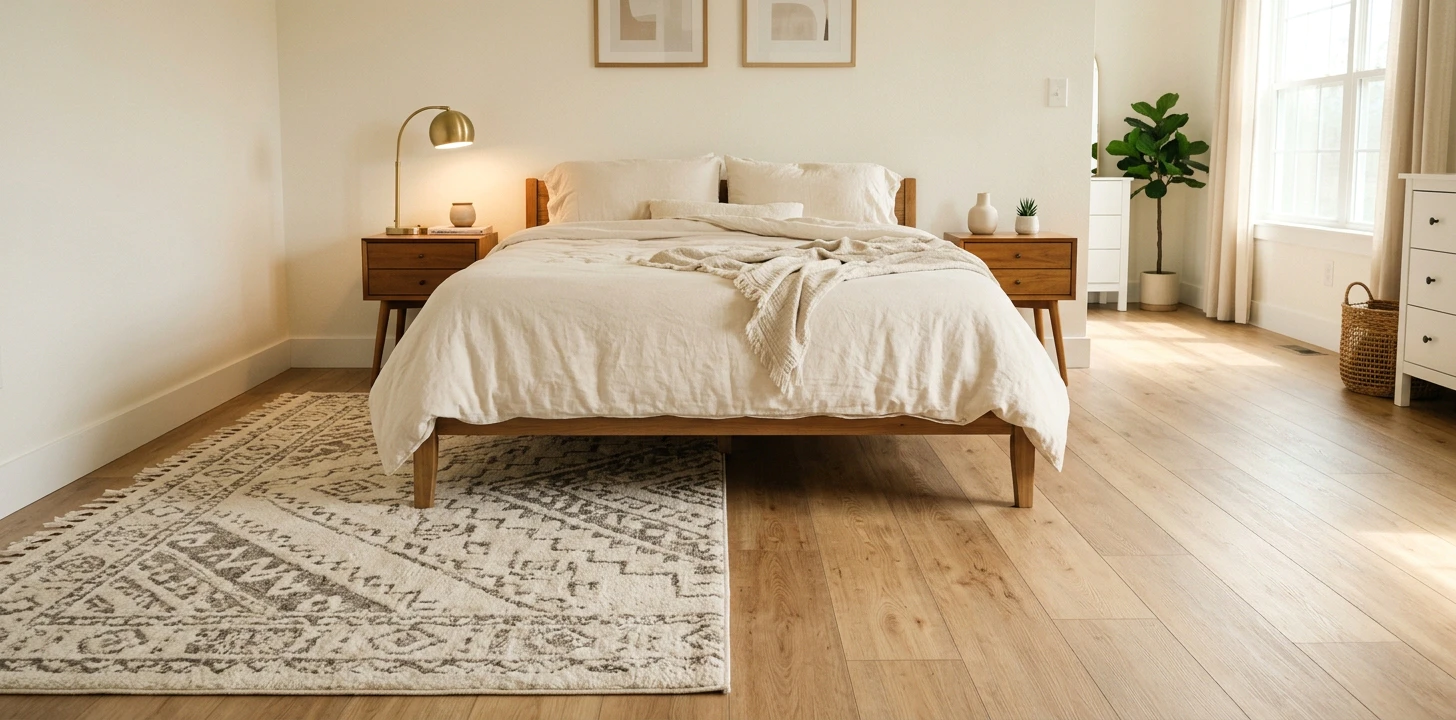
Updated July 2026. Prices reflect US market costs from Amazon, Home Depot and rug specialty retailers. All comparisons based on a typical 12x12 ft master bedroom (144 sq ft) with a queen bed.
The bedroom floor decision most people get wrong
"Should I replace my bedroom floor with LVP, or just throw a rug down?" is a question that hits every renter and budget-conscious owner sooner or later. The wrong answer is to assume you need the full floor replacement. The bedroom is the one room where an area rug genuinely competes with full flooring — because you only walk on a small portion of the floor (around the bed and to the closet), and that small portion is exactly what a properly sized rug covers.
The short version: an 8x10 ft area rug costs $120 and covers exactly where you walk — the smart-money move for renters, short-term stays, or bedrooms with acceptable-but-ugly existing floors. Click-lock LVP costs $400-500 for a typical bedroom and replaces the entire floor — the right answer when the existing floor is genuinely failing (stained carpet, damaged hardwood, allergens) and you're staying long-term.
Below: side-by-side table, when each one wins, the smart-money math that decides it for most people, when the right answer is actually "do both" (LVP under, rug on top), and FAQs.
Side-by-side comparison
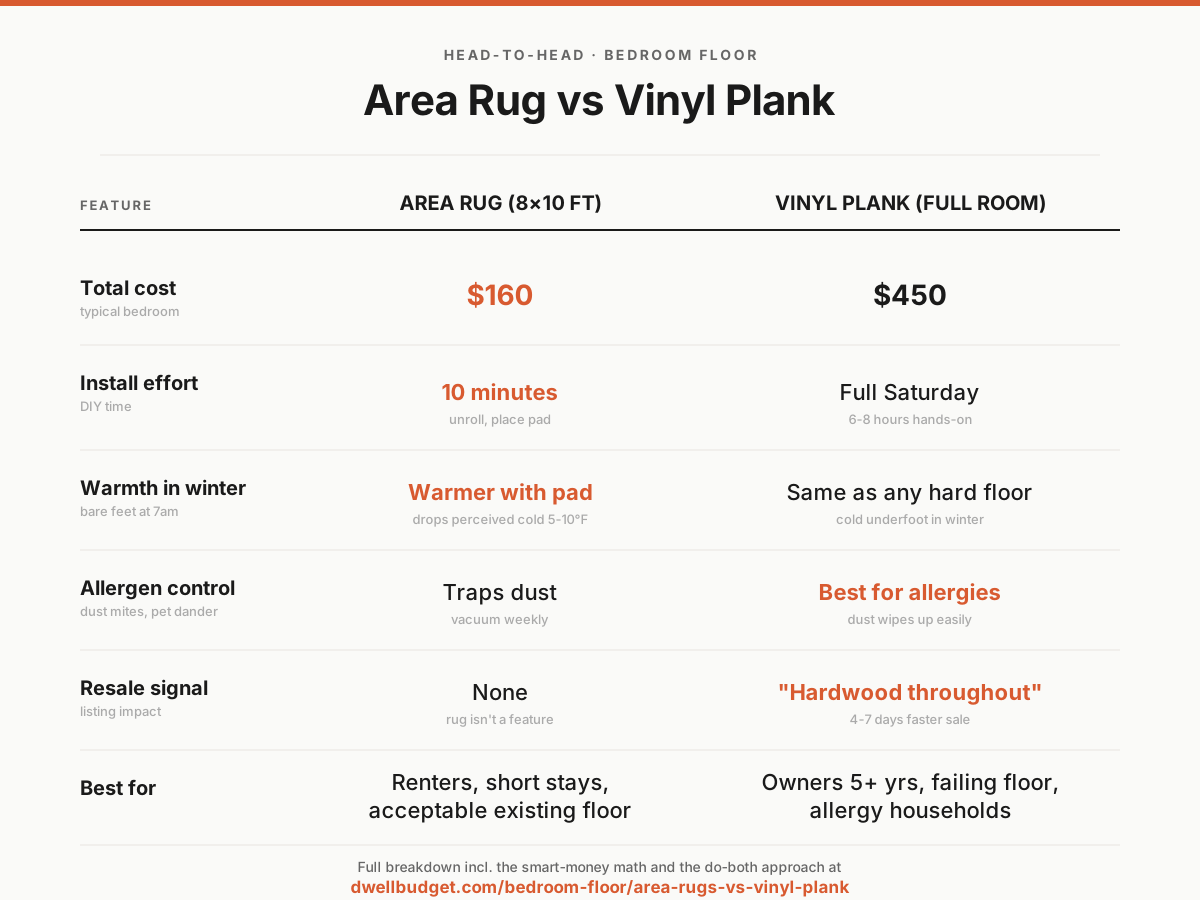
| 8x10 ft area rug + pad | Click-lock LVP (whole bedroom) | |
|---|---|---|
| Cost | $120 rug + $40 pad = $160 | $400-500 (144 sq ft at $2.80) |
| Install effort | 10 minutes — unroll + place pad | One full Saturday — measure, cut, click-lock |
| Renter-safe? | Yes — fully reversible | Yes — floats over existing floor, pops apart |
| Warmth in winter | Adds warmth on hard floors | Neutral — same as any hard floor |
| Sound dampening | Good with thick pad (felt-rubber) | Limited — needs underlayment, still louder than carpet |
| Allergens | Traps some dust; vacuum weekly | Best for allergies — dust wipes up |
| Lifespan | 8-10 years (wool); 5-7 (polypropylene) | 10-15 years (quality LVP) |
| What it solves | Cold floor, ugly floor (under rug), define room visually | Failing floor, allergens, resale signal |
| Best for | Renters, short stays, acceptable-existing-floor | Owners 5+ years, failing floor, allergy households |
When to pick an area rug
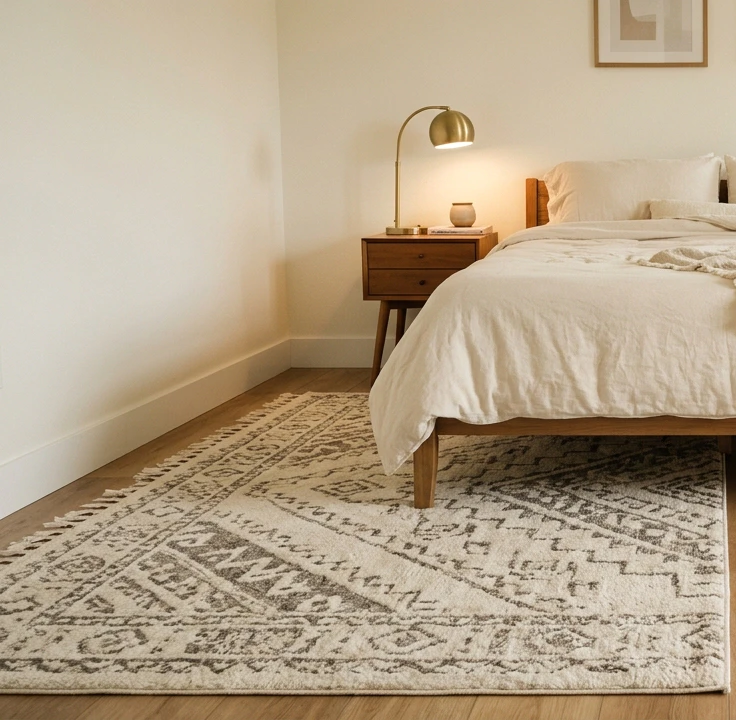
Pick an area rug if at least three of these are true:
- You rent — and any floor change beyond a rug is off the table
- Total budget under $200 for the whole bedroom floor situation
- The existing floor is acceptable in condition (just ugly, not damaged)
- You'll be in the apartment under 3 years
- You want a quick visual reset without weekend-long install
An 8x10 ft area rug from nuLOOM or Safavieh at $80-180, paired with a felt-and-rubber rug pad at $40, lands at $120-220 total. The install is genuinely 10 minutes: lay the pad first (rubber side down), center the rug on top, position so 18-24 inches of rug extends past each side of the bed.
The honest case for an area rug in 2026: it's the right answer for every rental bedroom and for any owner who isn't dealing with a genuinely failing floor. The "smart-money" framing isn't marketing — it's math. Why spend $500 to replace a floor that's mostly hidden under furniture when $160 covers the part you actually walk on?
What you give up: floor uniformity (you'll see the existing floor at the edges of the rug — pick rug size carefully so the reveal looks intentional), allergen control (rugs trap some dust regardless of how often you vacuum), and resale signal (a rug doesn't add real estate listing value the way "hardwood floors throughout" does).
When to pick vinyl plank
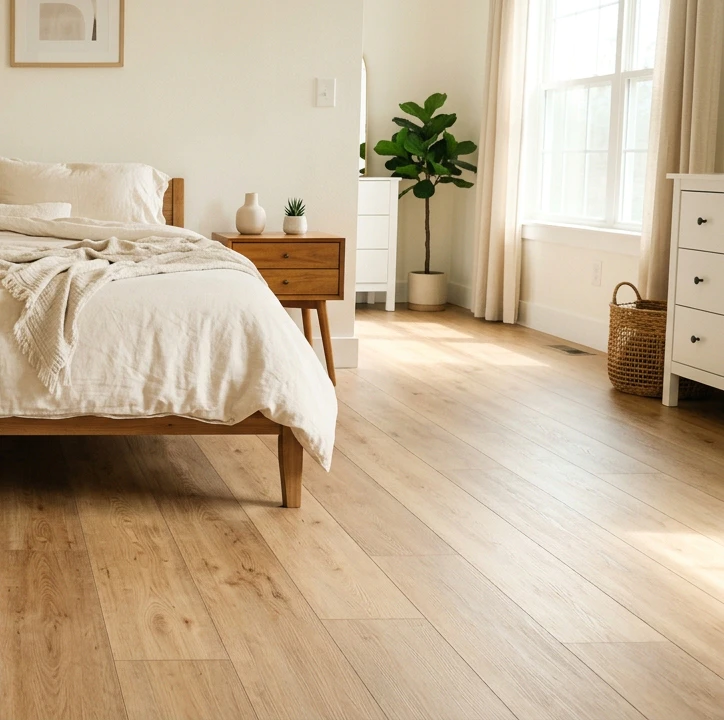
Pick click-lock LVP if at least three of these are true:
- The existing floor is genuinely failing — stained carpet, deeply damaged hardwood, smelly subfloor
- You own the home and plan to stay 5+ years
- Someone in the household has dust mite or pet dander allergies
- You want a uniform "hardwood throughout" look for resale appeal
- Budget allows $400-500 for the whole bedroom
Click-lock LVP from LifeProof or Smartcore at $2.80/sq ft works out to $400-500 for a typical 144 sq ft bedroom. The install is a full Saturday: measure, dry-fit the layout (avoid narrow slivers at walls), click planks together row by row, cut around door jambs and closet thresholds with a utility knife or jigsaw.
The honest case for LVP: it's the right answer when the existing floor has problems money won't easily solve. Allergens trapped in old carpet, water-damaged hardwood, smelly subfloor pet stains from previous tenants — all of those are fixed by lifting the old floor and floating LVP over a fresh substrate. For homeowners specifically, the uniform "hardwood throughout" listing line at resale time is real value (4-7 days faster sale in most US markets).
What you give up: 2.5-3x higher upfront cost, full weekend of install work, sound dampening (LVP is meaningfully louder than carpet — upstairs apartments need IIC 50+ underlayment minimum), and winter warmth (LVP stays the same temperature as any hard floor — cold bare feet in January are real).
The smart-money math: rug-only vs full-floor
This is the section that decides the question for most people. Let's run the numbers honestly on a typical 12x12 ft (144 sq ft) bedroom with a queen bed.
Area rug approach (8x10 ft rug + 8x10 ft pad):
- Rug: $120 (mid-range polypropylene from nuLOOM/Safavieh)
- Pad: $40 (felt-and-rubber, 8mm)
- Install: 10 minutes, zero tools
- Total: $160
- What you cover: 80 sq ft (the rug) — exactly the walking lane around the bed plus 18-24 inch reveal each side
- What you don't cover: 64 sq ft of existing floor at the edges (which is fine if the floor is acceptable)
- Lifespan: 8 years average
- Cost per year: $20
LVP approach (full 144 sq ft replacement):
- LVP material: 144 sq ft × $2.80 = $403
- Transitions, underlayment, baseboards: $50
- Install: 6-8 hours hands-on work
- Total: $453
- What you cover: 144 sq ft — the entire floor uniformly
- Lifespan: 12 years average
- Cost per year: $38
The honest comparison: the LVP is 2.8x more expensive both upfront AND per-year. It covers 1.8x more floor, but most of that extra coverage is under furniture or in dead zones you don't actually walk on. The cost per actually-walked-on square foot heavily favors the rug.
That math only changes if the existing floor is failing — at which point you're not really paying $453 for LVP, you're paying $453 to fix a $0 problem that would otherwise compound (mildew in damaged carpet, stained subfloor pulling buyer offers down at resale). When the existing floor is fine, rug wins on every dimension; when it's failing, LVP wins because it's solving a real problem.
When to do both: LVP plus area rug
For owners with budget and a 5+ year stay, the actual best move is often both: install LVP across the whole room AND add a large area rug under the bed. Total $580-680.
Why both:
- LVP gives you the uniform "hardwood floors throughout" listing signal at resale
- LVP makes the room future-proof against allergen issues or floor damage
- Area rug on top adds the warmth, sound dampening, and visual definition that LVP alone lacks
- You can swap the rug pattern every few years without redoing the floor — flexibility that pure-LVP loses
This is the bedroom approach Studio McGee and most interior design Pinterest boards converge on: LVP or hardwood floor across the whole room, with a large area rug centered under the bed. It's not always the cheapest, but it's often the most-flexible long-term setup.
The short verdict
Pick an area rug if you rent, your budget is under $200, the existing floor is acceptable, or you're staying under 3 years. Pick click-lock LVP if the existing floor is genuinely failing, you own and stay 5+ years, allergies matter, or you want the resale signal of "hardwood floors throughout."
For most US renters in 2026, the area rug is the correct answer — and that's not a budget compromise, it's the smart-money decision. For owners with failing floors or 5+ year stays, LVP earns its 2.8x cost premium by solving real problems. For owners with budget who want maximum comfort and design flexibility, do both.
Comparing more bedroom floor options? The full bedroom floor guide also covers peel-and-stick wood-look vinyl — and explicitly warns against using it over hardwood (the adhesive damages finish on removal). Worth reading before any DIY install over an existing wood floor.
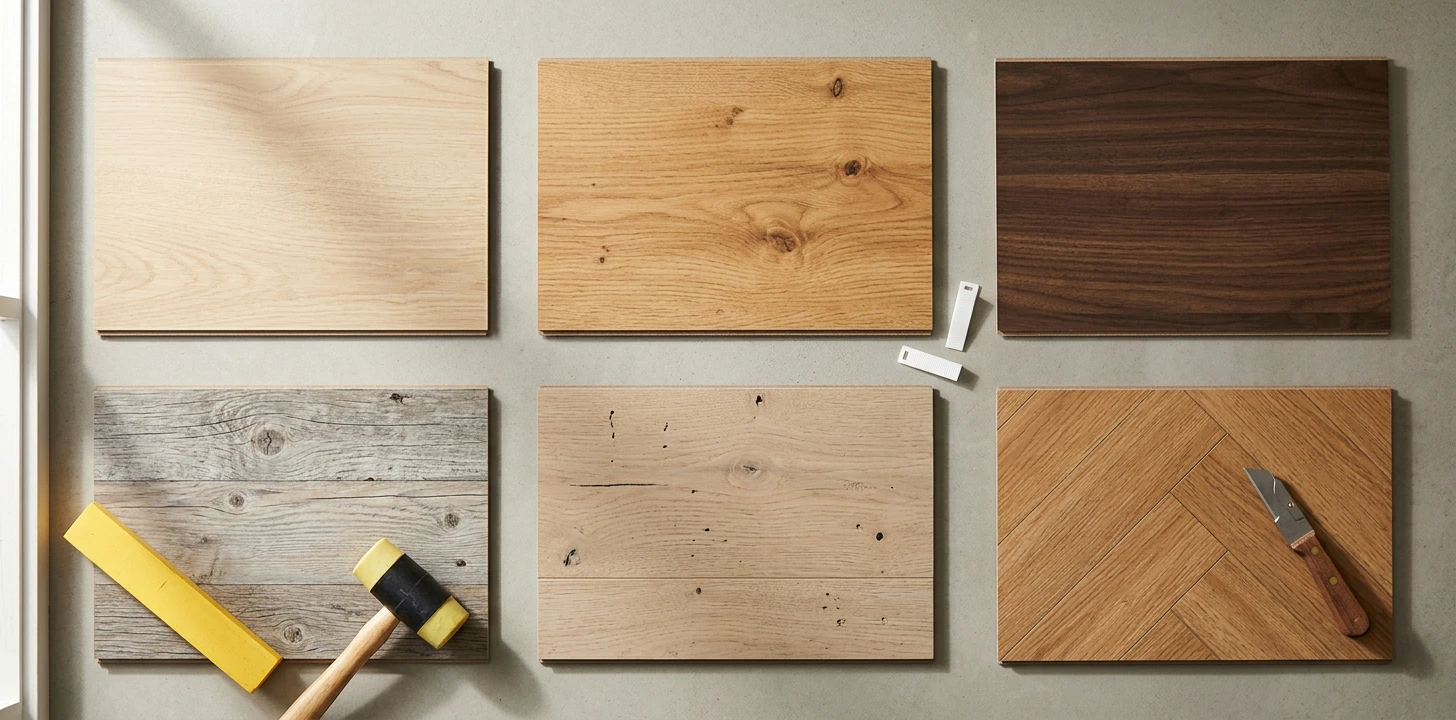 11 Best LVP Brands 2026
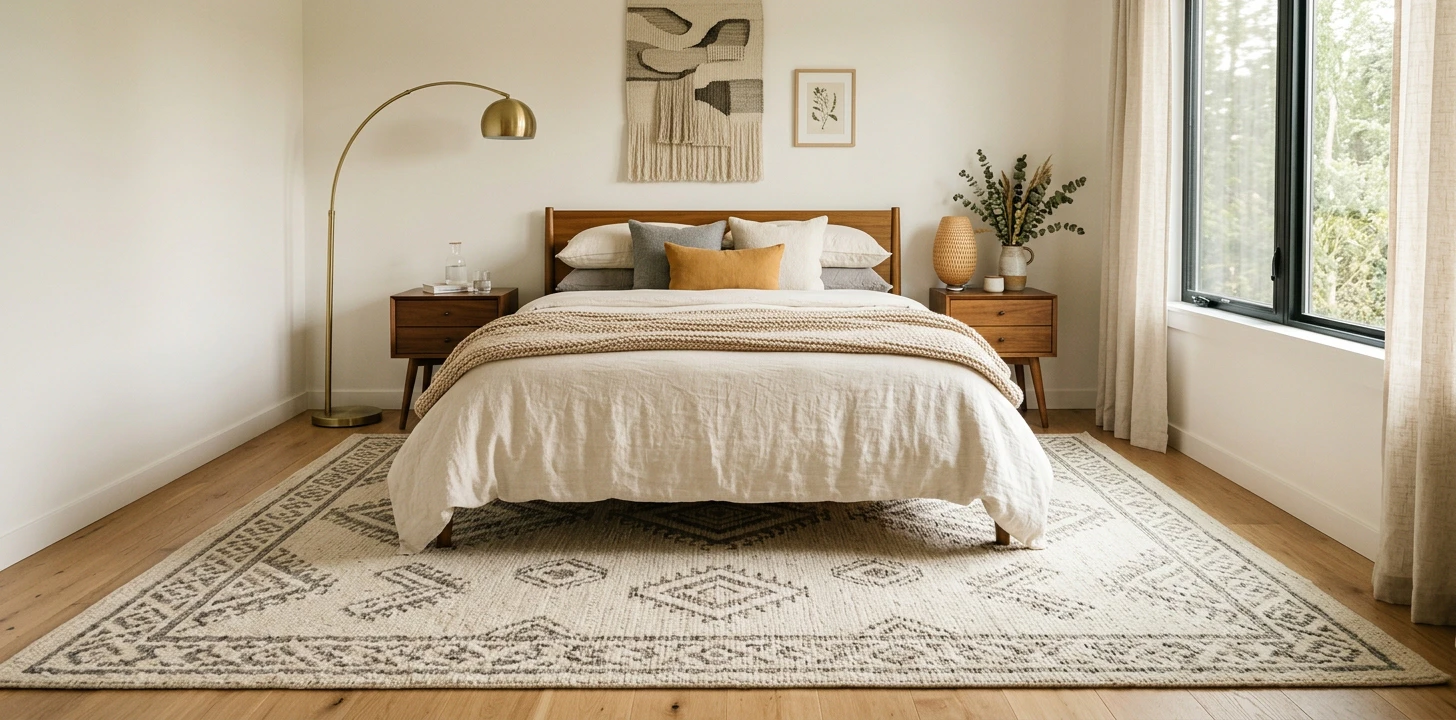 Full bedroom floor guide
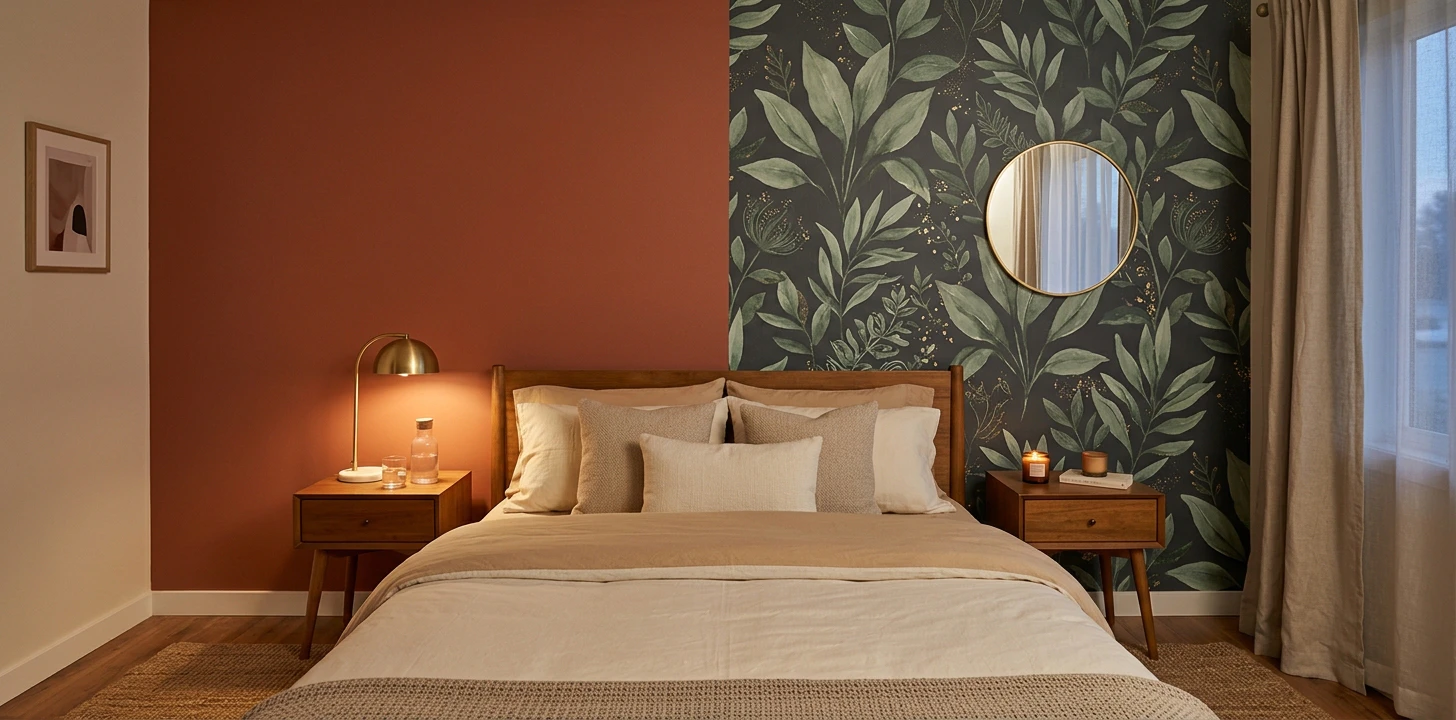 Bedroom Walls: Wallpaper vs Paint
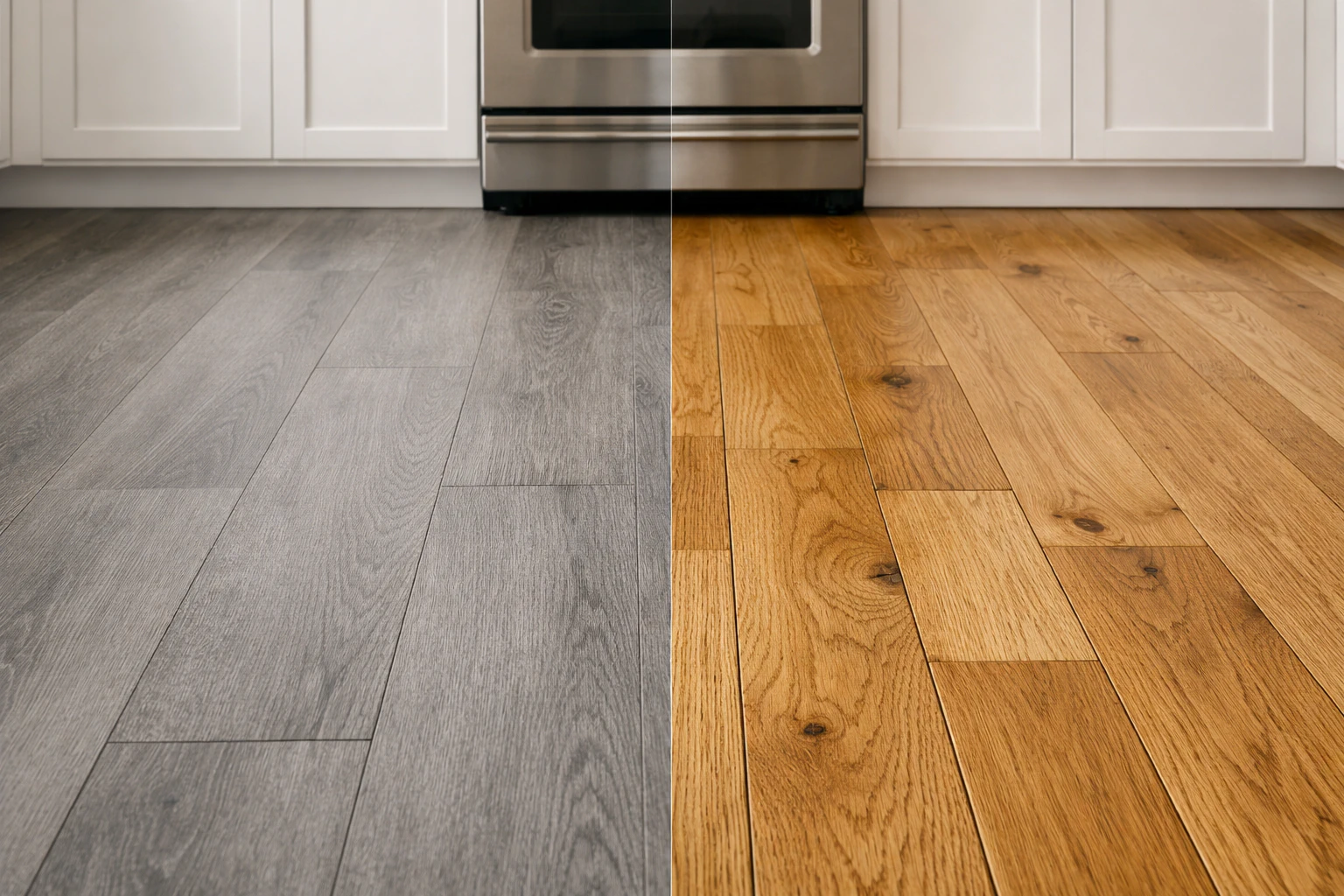 Kitchen Floor: Vinyl Plank vs Hardwood
 Bathroom Floor: LVP vs Ceramic Tile