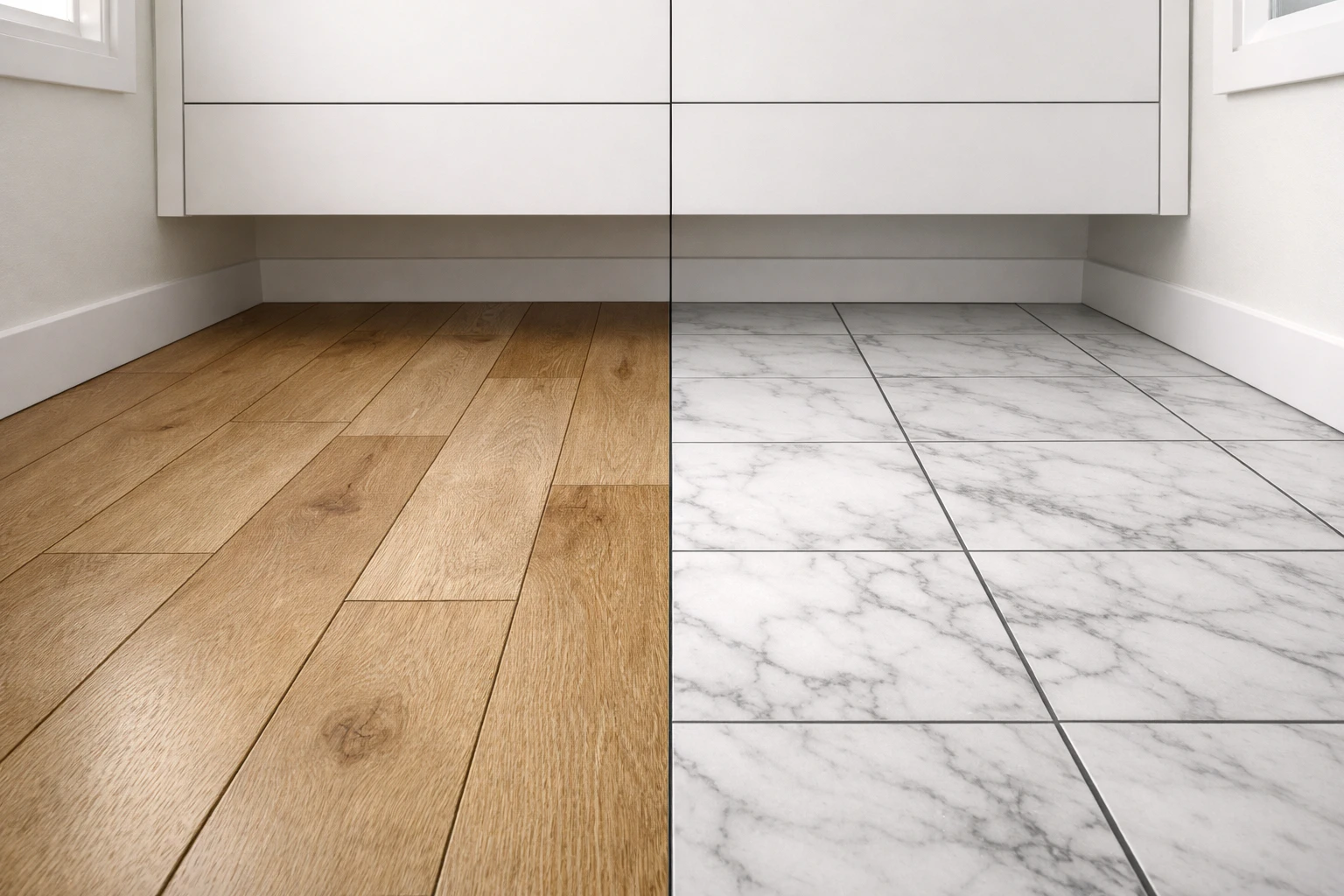
Updated July 2026. Prices reflect US market installed costs from Home Depot, Lowe's and local tile suppliers. All comparisons based on a typical 40 sq ft bathroom floor.
The two grown-up bathroom floors
In a bathroom specifically, the flooring decision rarely comes down to vinyl plank versus solid hardwood — hardwood is the wrong answer for wet rooms. It comes down to LVP vs tile in a bathroom — luxury vinyl plank against ceramic or porcelain, the two grown-up options that actually survive the room for years.
Both handle splashes. Both stay flat under a wet bath mat. Both come in dozens of styles. But they sit at opposite ends of three axes that matter in a bathroom: upfront cost, install difficulty, and how long they last.
The short version: LVP is cheaper, DIY-friendly, click-locks together in a weekend, and a renter can take it with them. Ceramic tile costs 60% more, needs a wet saw and two days of work, but lasts decades and adds real resale value. The decision is mostly about how long you'll own the bathroom and how much weekend time you're willing to spend on a floor.
Below: side-by-side table, when each one wins, the bathroom-specific water-and-grout problem that decides it for many people, slip safety, and FAQs.
Side-by-side comparison
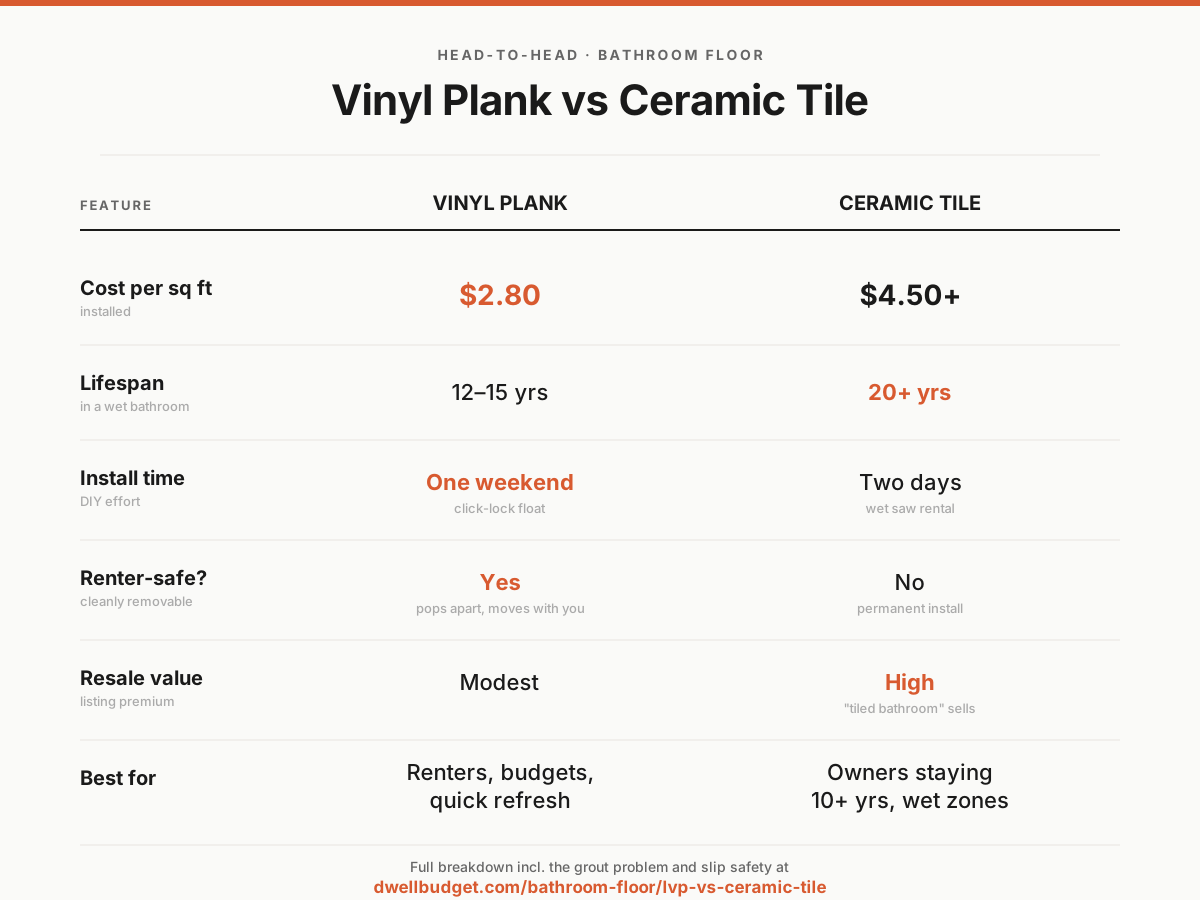
| Luxury vinyl plank (LVP) | Ceramic / porcelain tile | |
|---|---|---|
| Cost per sq ft (installed) | $2.80 | $4.50+ (plus thinset, grout, saw rental) |
| 40 sq ft bathroom total | ~$112 | ~$240+ |
| Lifespan | 12–15 years | 20+ years |
| Install time | One weekend (click-lock float) | Two days + cure time (wet saw, thinset, grout) |
| DIY-friendly? | Yes — utility knife, tapping block | Limited — wet saw rental, real skill needed |
| Renter-safe? | Yes — pops apart, moves with you | No — permanent install |
| Underfoot temperature | Warm to neutral | Cold (unless paired with radiant heat) |
| Resale value | Modest | High — tiled bathrooms sell faster |
| Best for | Renters, budgets, quick refresh | Owners staying 10+ years, wet zones |
When to pick vinyl plank
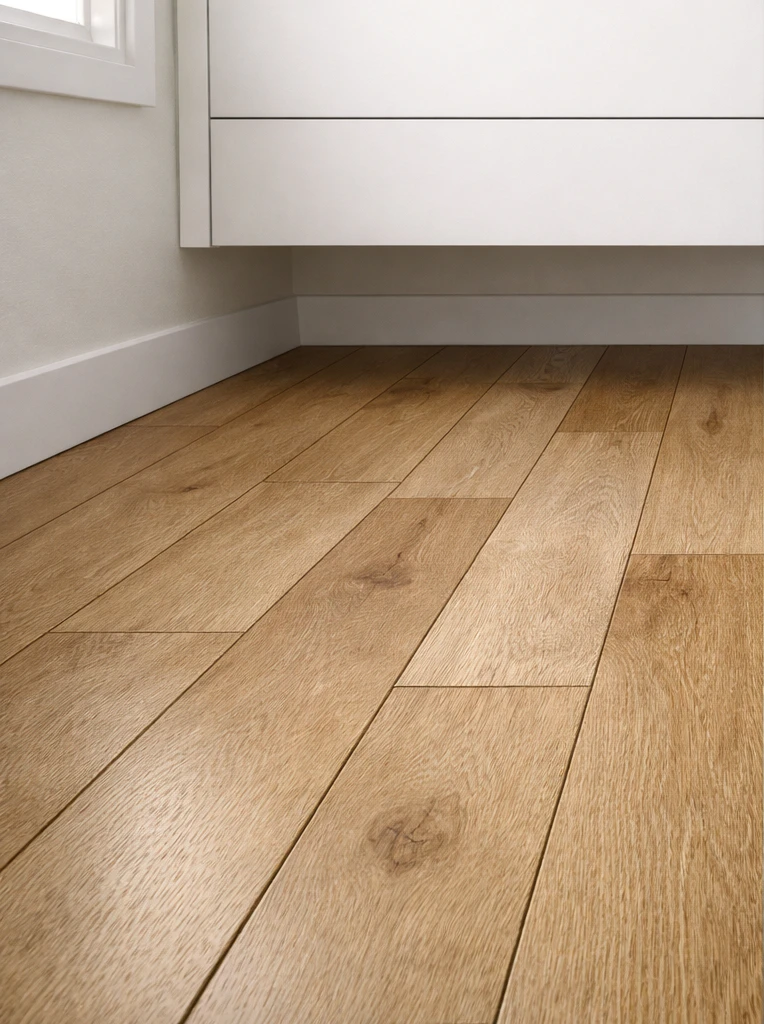
Pick LVP if at least three of these are true:
- You rent — and want it gone cleanly on move-out
- Budget is under $200 for a small bathroom floor
- You want install done in a weekend with no pro help
- Your subfloor is OK but not perfect — LVP floats over minor unevenness
- You want warmer underfoot, especially in winter
Click-lock LVP from LifeProof or Smartcore at $2.80/sq ft is the practical default for most bathrooms in 2026 — fully waterproof through the body, click-locks without glue or nails, and floats over almost any flat subfloor. For a 40 sq ft bathroom you're at $112 in material and one Saturday afternoon, including the awkward toilet-flange cut.
The lifespan-to-cost math is genuinely strong: $112 over 12 years is about $9 per year — the same per-year cost as ceramic tile, but with a fraction of the upfront commitment.
What you give up: no resale signal (LVP doesn't show up in listing descriptions the way "tiled bathroom" does), shorter lifespan (12–15 years vs decades for tile), and the seams at the perimeter (toilet, tub, vanity) are the weak point — bead them with silicone caulk on install day or expect water under the planks within 3 years.
When to pick ceramic tile
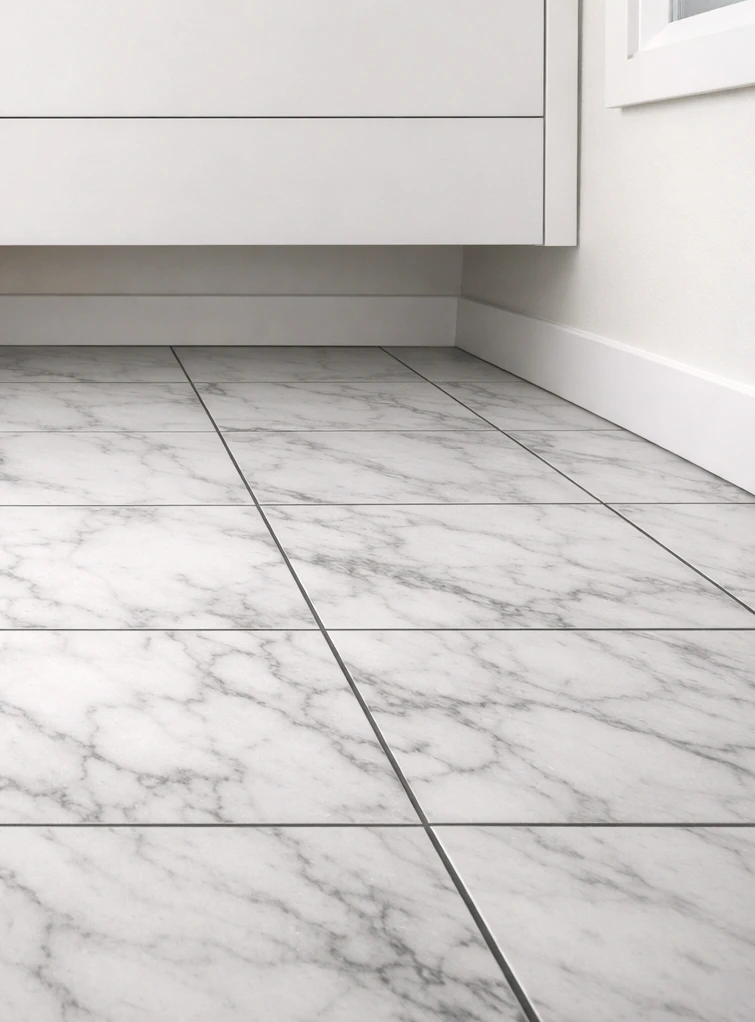
Pick ceramic or porcelain tile if at least three of these are true:
- You own the home and plan to stay 10+ years
- You want the bathroom to add real resale value
- You have a wet zone with standing water (shower-floor adjacent, no shower curtain)
- You're OK hiring a tiler or willing to invest a full weekend learning
- You're adding radiant floor heating — tile is the perfect partner
Ceramic tile at $4.50/sq ft plus another $1–2/sq ft for thinset, grout, spacers, and a weekend wet-saw rental hits roughly $240 installed for a 40 sq ft bathroom. Porcelain (the denser, more water-resistant subtype) runs slightly higher but is the smarter buy for bathrooms — water absorption under 0.5% versus 3–7% for standard ceramic.
The 20+ year lifespan and the resale-listing premium ("tiled bathroom") are the two reasons tile keeps winning despite the higher cost. After 15 years, ceramic still looks like new while LVP is showing wear; after 20 years, ceramic is on year 1 of its second life and LVP needs replacement.
What you give up: 60%+ higher upfront cost, 2-day install with a learning curve, cold underfoot (unless paired with radiant heat), and permanence — renters can't do it, and if you ever want a different look, the floor comes up with a sledgehammer.
The bathroom water and grout problem
Both materials are waterproof through the body. The difference is in the joints — and in a bathroom, the joints are where water actually sits.
LVP weak point: the perimeter. The click-lock seams between planks are tight enough that splash water doesn't get through. But at the edges — where LVP meets the toilet flange, the tub, the vanity, or the wall — water can wick in over time. The fix is non-negotiable: run a thin bead of clear silicone caulk along every perimeter seam on install day. Skip this step and you'll have wet subfloor within 2–3 years.
Tile weak point: the grout. Grout is porous. Unsealed grout absorbs water, discolors, and grows mildew in the lines. Modern epoxy grouts (Mapei Flexcolor, Custom Building Pre-Mixed) are non-porous but cost $30–50 more for a small bathroom — worth it if you're tiling once and never want to think about grout again. With standard cement-based grout, plan to reseal with penetrating sealer every 1–2 years — a $15 bottle and 30 minutes of work.
In practice, water resistance comes down to maintenance discipline. LVP is more forgiving (one caulk bead on install day, then nothing). Tile is more bulletproof if you keep up with grout sealing — and a slow disaster if you don't.
Slip safety: it's about texture, not material
Both materials come in slippery and grippy versions. Skip the material question — pick the texture:
- Matte or textured surface: safe wet, either material works.
- Glossy or polished surface: slippery when wet, regardless of material. Pretty in photos, dangerous in real life.
For elderly residents or small kids, look for tile with a DCOF (dynamic coefficient of friction) rating of 0.42 or higher — it'll be printed on the box or spec sheet for any reputable tile. For LVP, look for "textured" or "embossed-in-register" finishes; they grip wet feet meaningfully better than the cheaper smooth-print versions.
The short verdict
Pick vinyl plank if you rent, your budget is under $200, you want install done in a weekend, or you're not staying in the bathroom long enough for tile to pay back. Pick ceramic or porcelain tile if you own long-term, want resale value, have wet zones with standing water, or you're adding radiant floor heat. Cost-per-year is roughly equal after 10+ years — about $9/year either way — but only if you stay long enough on tile to amortize it.
Comparing more bathroom floor options? The full bathroom floor guide also covers peel-and-stick vinyl tile — the renter shortcut for under-$60 bathroom floors.
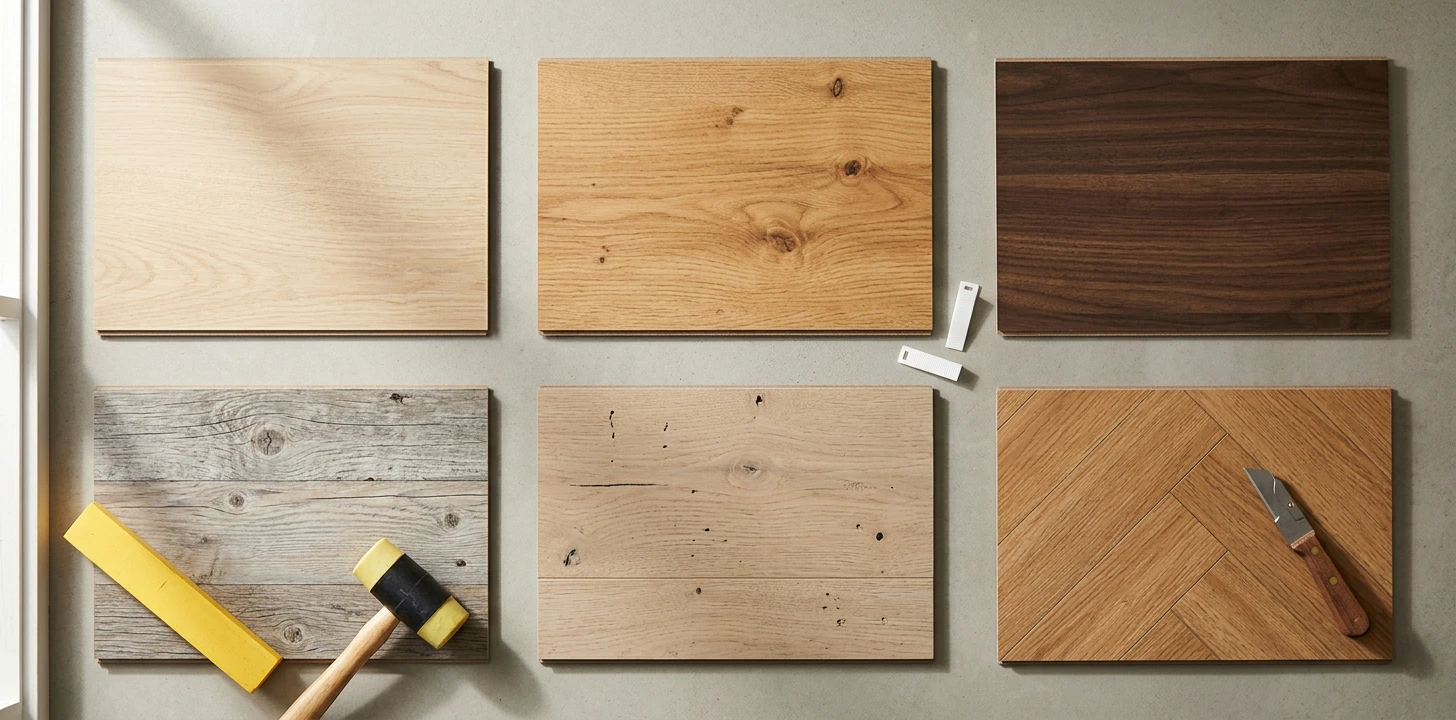 11 Best LVP Brands 2026
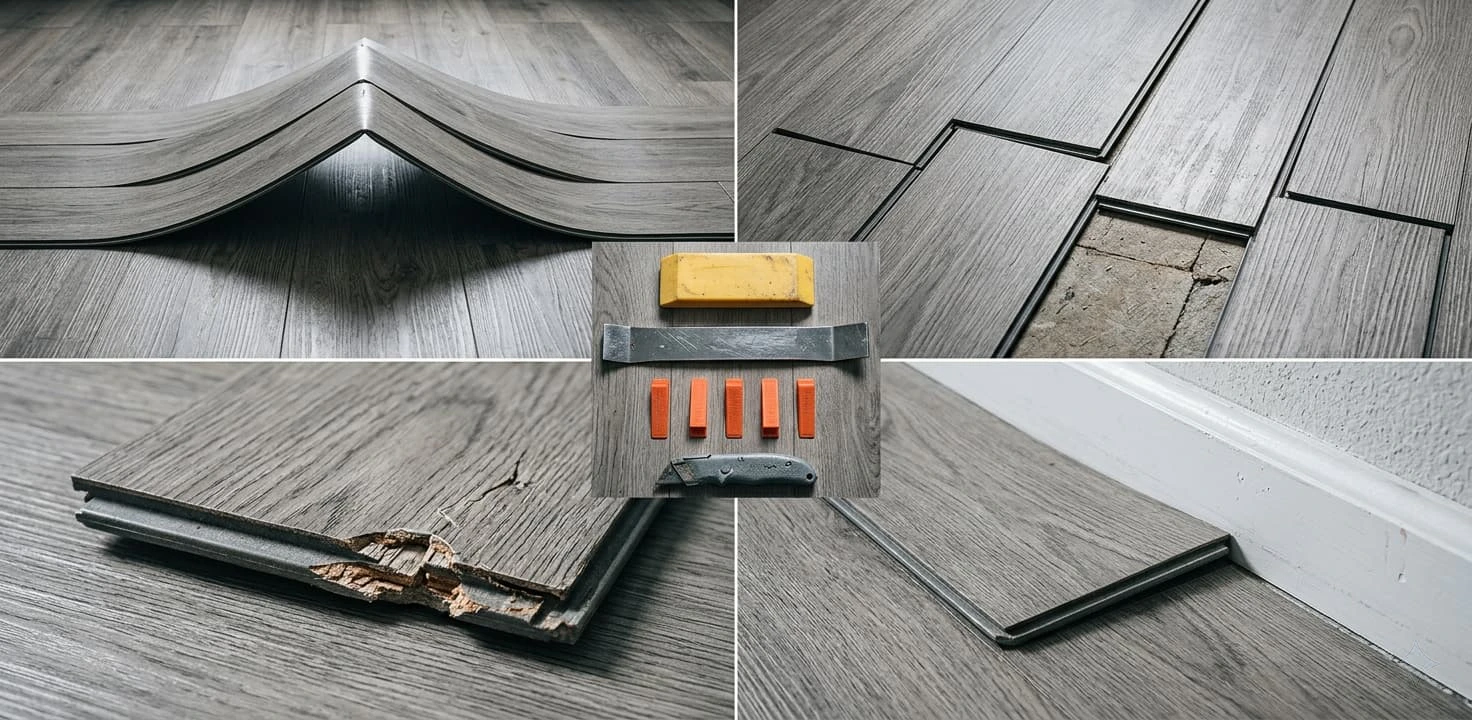 7 Vinyl Plank Mistakes That Cause Buckling
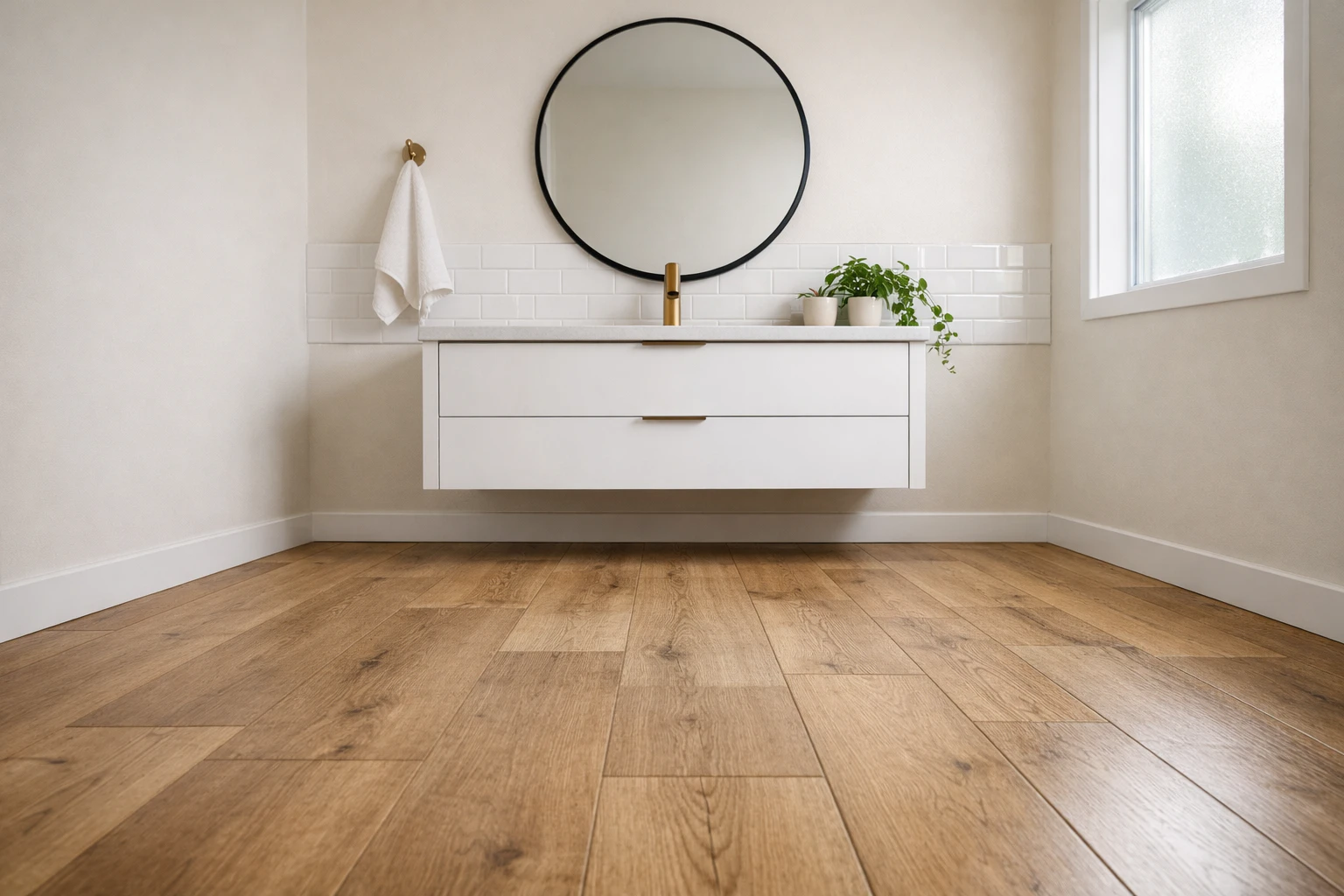 Full bathroom floor guide
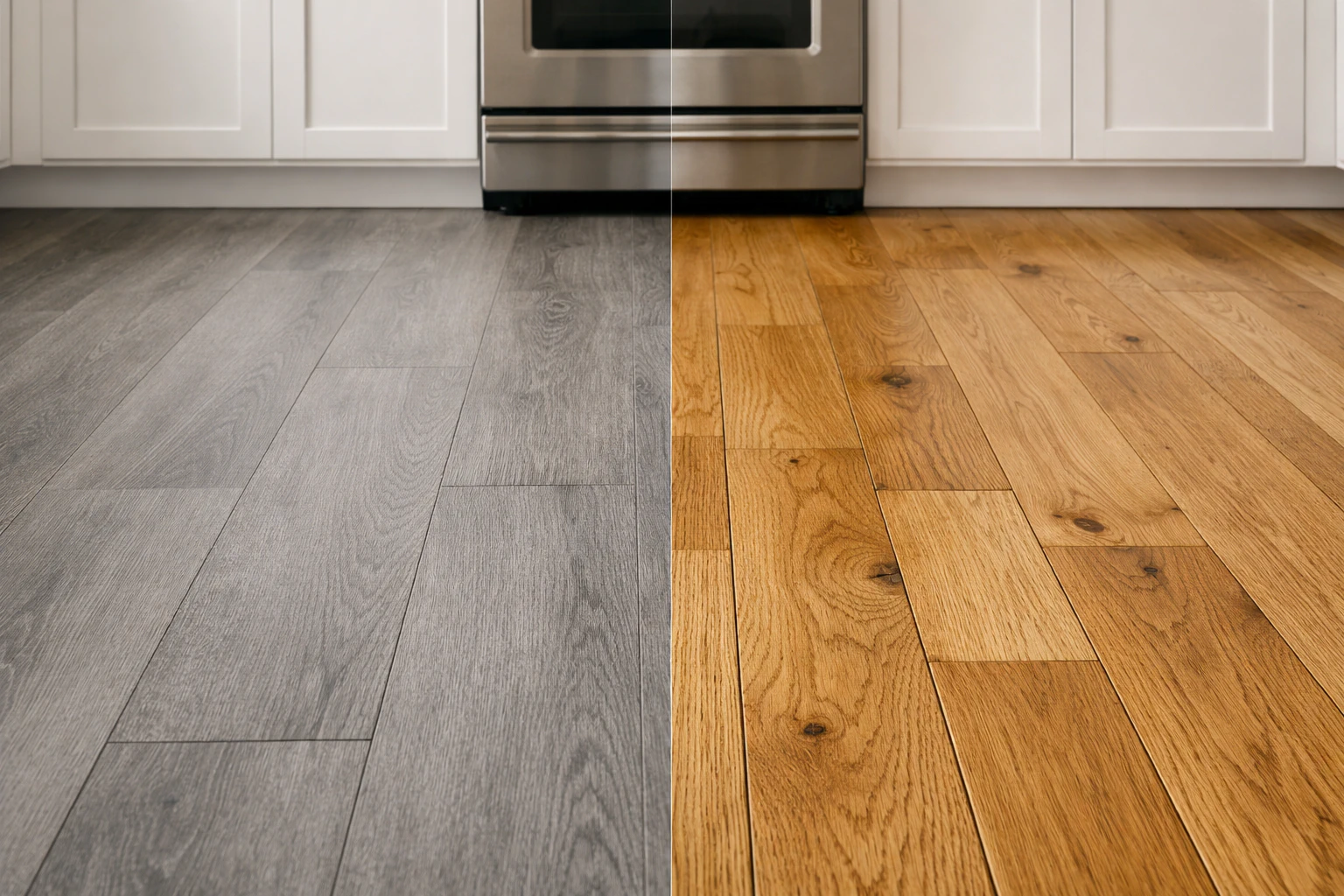 Kitchen Floor: Vinyl Plank vs Hardwood
 Bathroom Walls
 Bathroom Cabinets