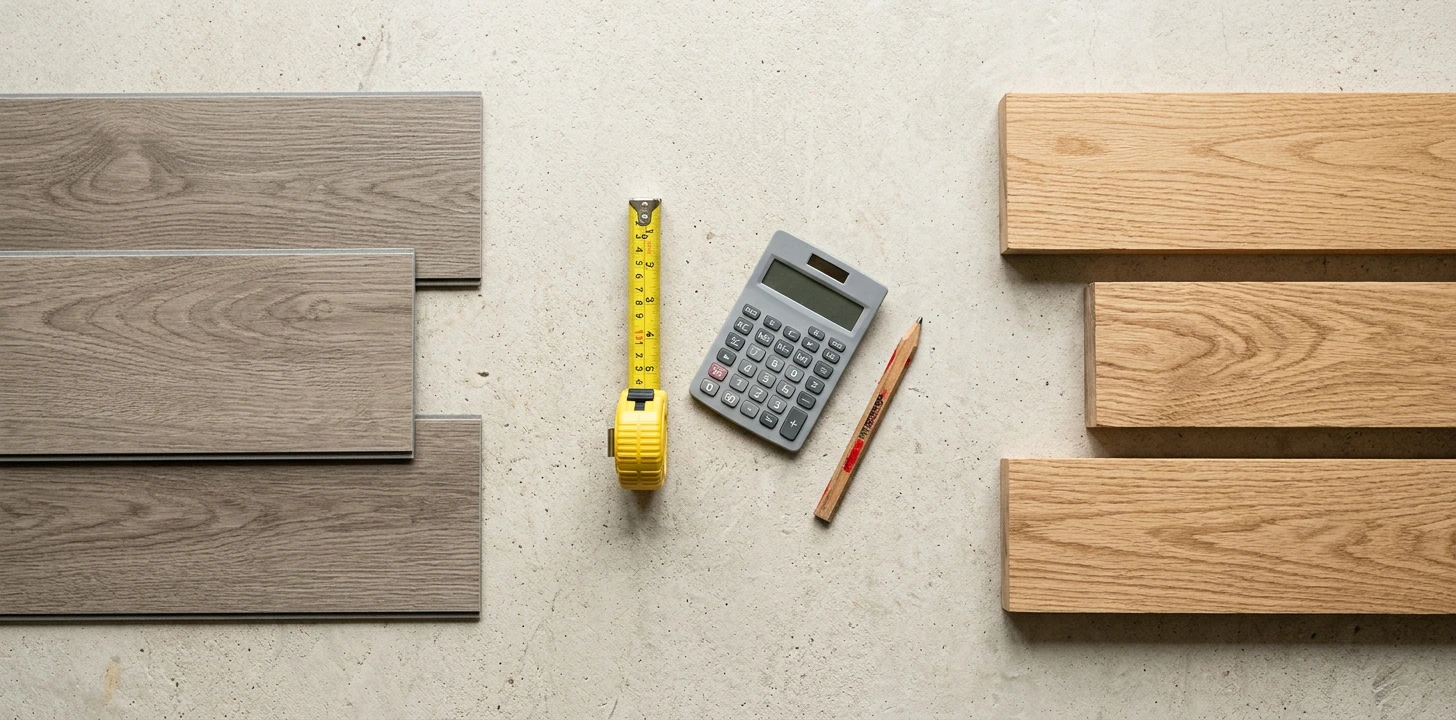
Updated July 2026. All material prices reflect US retail from Home Depot, Lowe's, Floor & Decor and Amazon. This guide deliberately shows DIY material-and-tool math, not contractor-installed package prices — installer labor varies wildly by market, so we flag where it applies and keep the numbers you can actually verify on a shelf.
The 30-second answer
| Luxury vinyl plank | Solid hardwood | |
|---|---|---|
| Material, mainstream tier | $2.80/sq ft | $8/sq ft |
| Material, full range | $1.50–7/sq ft | $6–12+/sq ft |
| Tools (DIY) | $60–115, mostly reusable | $150–300 in rentals + consumables |
| DIY-realistic? | Yes — the default | Skilled DIY only; most hire out |
| 120 sq ft bedroom, DIY | ~$400 | ~$1,100 + skill (or labor $$) |
| Lifespan path | 10–25 yrs, then replace | 50+ yrs with refinish cycles |
| Water rooms (kitchen/bath) | Fine | Risky to disqualified |
Shorthand: hardwood costs roughly 3× more upfront before labor, and the gap widens if you hire the install. LVP wins every 10-15-year scenario on cost; hardwood's case is built on refinish cycles, resale language and decades of ownership — the sections below show where each argument actually lands.
Material cost by tier
LVP pricing is a three-tier market. The budget tier ($1.50-2/sq ft — NuCore, Pergo Extreme, entry Lifeproof) delivers full waterproofness with thinner wear layers; the mainstream tier ($2.50-3.50 — Lifeproof, Smartcore, Shaw) is where most homes land and where our sitewide $2.80 reference lives; the designer tier ($5-7 — COREtec, Karndean) buys thicker wear layers and more convincing textures. The tier anatomy, brand by brand, is in our LVP brands roundup.
Compare LVP by tier on Amazon →
Hardwood pricing moves on species and cut. Red oak — the American default — runs $6-8/sq ft; maple and hickory similar to slightly higher; white oak $8-10; wide-plank, rift-sawn or character grades push past $12. Unfinished wood costs less per box but adds sanding and site-finishing to the job; prefinished costs more and installs ready. Either way, order 10% overage for cuts and culls — on hardwood prices, the overage line item alone can exceed an entire LVP tool kit.
Check current oak hardwood prices on Amazon →
The tool gap nobody budgets
Material prices get all the attention, but the tool lists are where the two floors stop being comparable projects.
- LVP needs almost nothing: a $15-25 install kit (tapping block, pull bar, spacers), a utility knife, and ideally an oscillating tool for undercutting door jambs. Total $60-115, half of it tools you keep forever. No saw is strictly required — planks score-and-snap.
- Hardwood needs a small site setup: flooring nailer or stapler (rental $40-60/day — and a first-timer needs 2-3 days), often a compressor, a miter saw for end cuts, underlayment paper, cleats or staples. Budget $150-300 even before mistakes — and blind-nailing tongue-and-groove at a consistent angle is a genuine skill, not a YouTube afternoon.
This gap is why the honest framing isn't "LVP vs hardwood DIY costs" — it's "LVP DIY vs hardwood probably-hired." The floors sit in different effort categories, and the budget should reflect it.
The LVP side of that list is the one worth owning rather than renting: vinyl plank install kits run $15-25, and an oscillating multi-tool is the one purchase that makes door jambs painless on either floor.
If you hire it out
We keep installer labor out of our headline numbers because it swings hugely by market — but the shape is consistent: LVP install is cheap labor (fast, no fasteners, low skill premium) when people hire it at all, while hardwood install is skilled-trade labor billed accordingly, and typically adds an amount comparable to or exceeding the wood itself. Get local quotes for real numbers — installed hardwood quotes routinely come back at a multiple of what the wood itself cost, and the multiple is what varies by market. The practical takeaway: hiring converts hardwood's 3× material premium into a 3-5× total premium — and converts LVP's biggest advantage (DIY-ability) into money you didn't spend.
Per-room totals — the numbers people actually plan with
| Room | LVP (mainstream, DIY) | Hardwood (oak, DIY-capable) |
|---|---|---|
| Closet, 25 sq ft | ~$70 + leftover planks | ~$200 + tool overhead makes no sense — use leftovers |
| Bedroom, 120 sq ft | ~$340 planks + $60 tools ≈ $400 | ~$960 wood + $150+ rentals ≈ $1,100+ |
| Kitchen, 150 sq ft | ~$420 + tools ≈ $480 | ~$1,200+ — and see the water warning below |
| Main floor, 800 sq ft | ≈ $2,400 all-in DIY | ≈ $6,700 committed DIY; five figures hired |
One non-cost fact belongs in every kitchen row: solid hardwood in a room with a dishwasher or refrigerator ice line is a water-damage bet — when the leak comes, wood floors swell and cup where LVP shrugs. The full argument is in our kitchen vinyl plank vs hardwood head-to-head; cost aside, wet-adjacent rooms are LVP's home turf.
Cost per year: where hardwood claws back
Divide by lifespan and the 3× gap compresses. Mainstream LVP at $400 for a bedroom over a realistic 15 years is about $27/year. Oak at $1,100 DIY over a 50-year horizon — with, say, two refinishes along the way at a few hundred dollars each in materials — lands near $35-45/year, and the floor at year 50 is still wood, still refinishable, still saying "hardwood floors" in the listing. That's the honest long-game case for hardwood: not cheaper, but far closer than the sticker gap suggests, if you hold the asset long enough to use the refinish cycles. The equally honest counterpoint: most people don't. Average ownership tenures make the 10-15-year window the realistic planning horizon, and inside that window LVP wins the math in every room.
The verdict by situation
- Renting, or owning under 10 years: LVP, no contest — the cost gap never has time to amortize.
- Kitchens, baths, laundries, entryways: LVP on merit, not just cost — water disqualifies solid wood before price enters.
- Forever home, dry rooms, comps have hardwood: hardwood's premium is defensible — you're buying refinish cycles and the listing phrase.
- Old carpet with original hardwood underneath: refinish what's there — a fraction of either new floor's cost and the best value move on this page.
- Want wood but DIY install: engineered hardwood click-lock is the middle path (see FAQ) — real veneer, LVP-style install, $4-9/sq ft — see click-lock engineered lines.
Going the LVP route? The best LVP brands roundup → maps the budget-to-premium tiers brand by brand, and the 7 vinyl plank mistakes guide protects the install from the errors that cost more than the price gap you just saved.
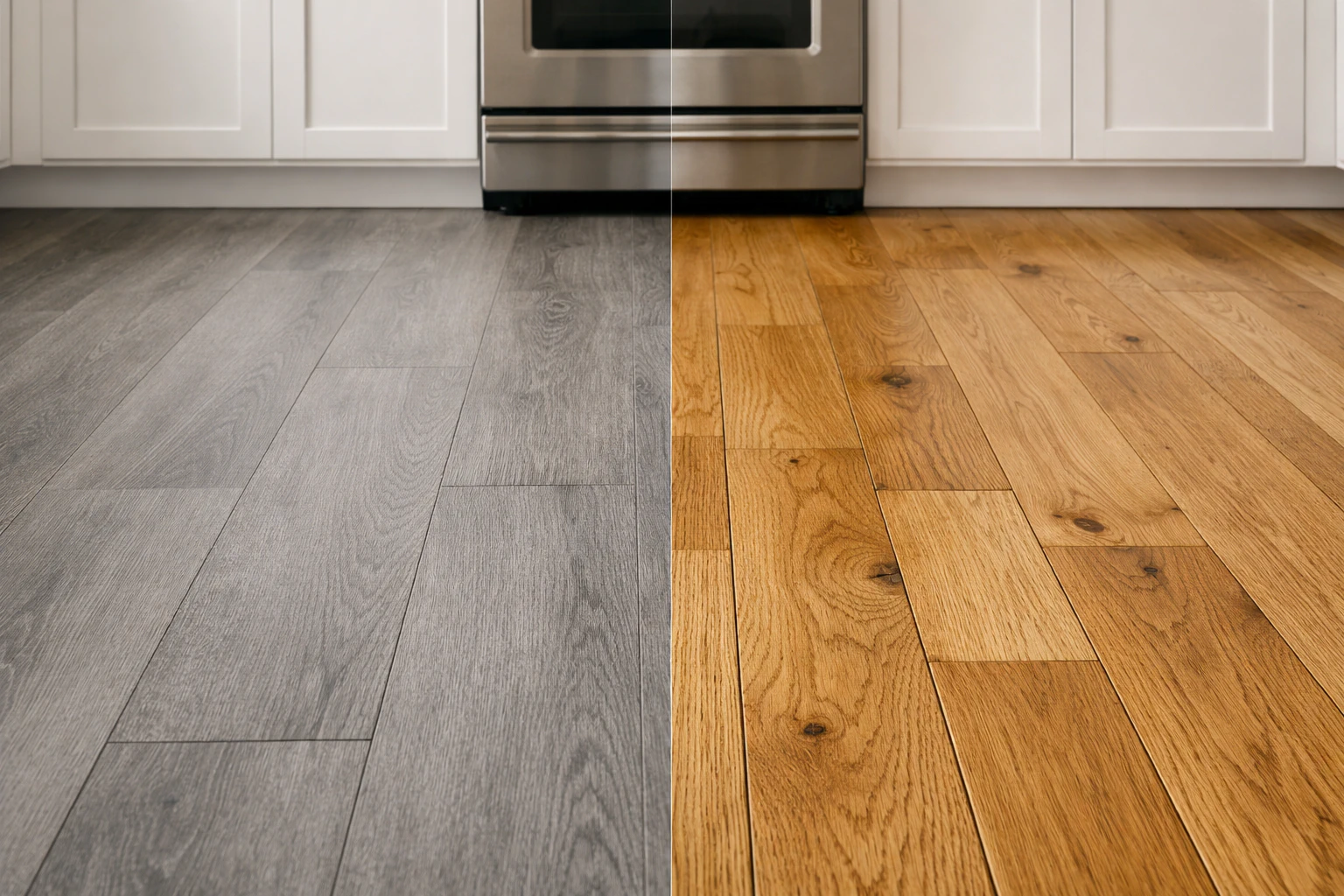 Kitchen Floor: Vinyl Plank vs Hardwood
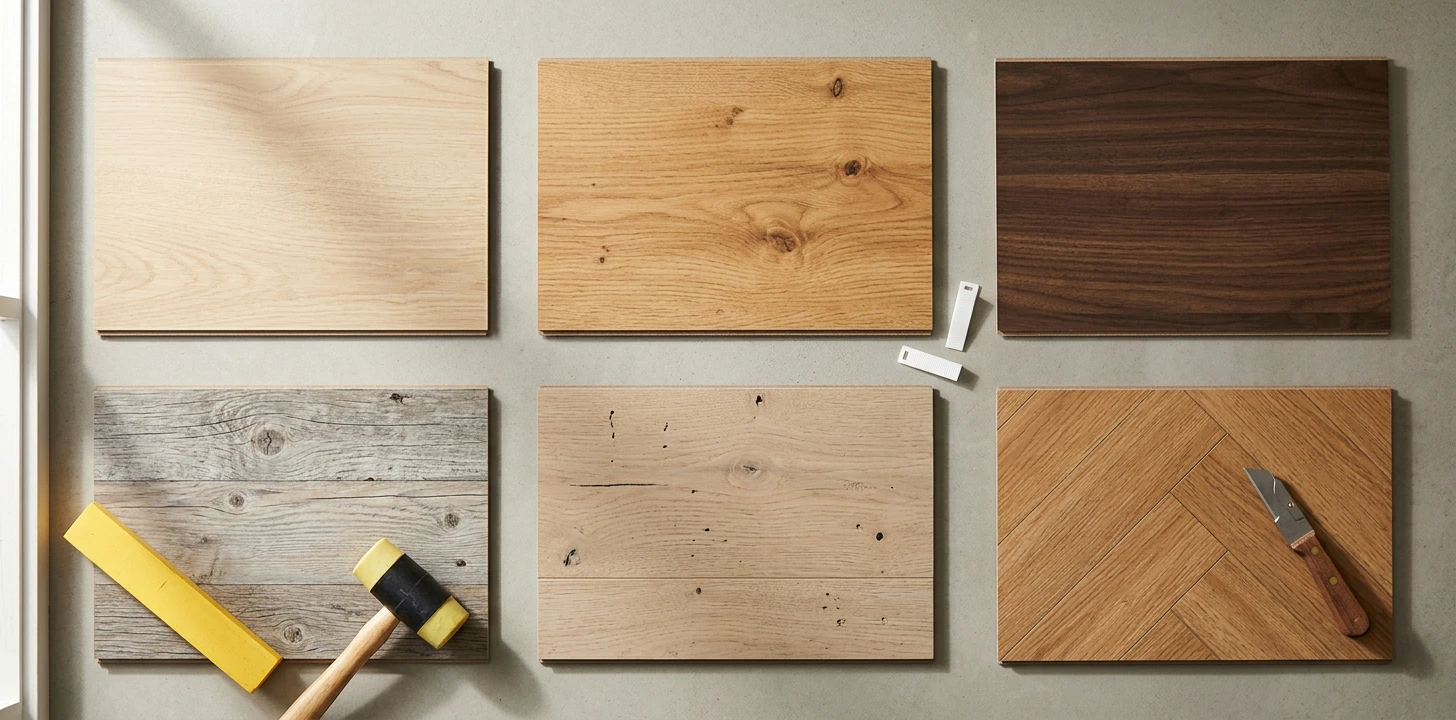 Best Cheap LVP Flooring Brands
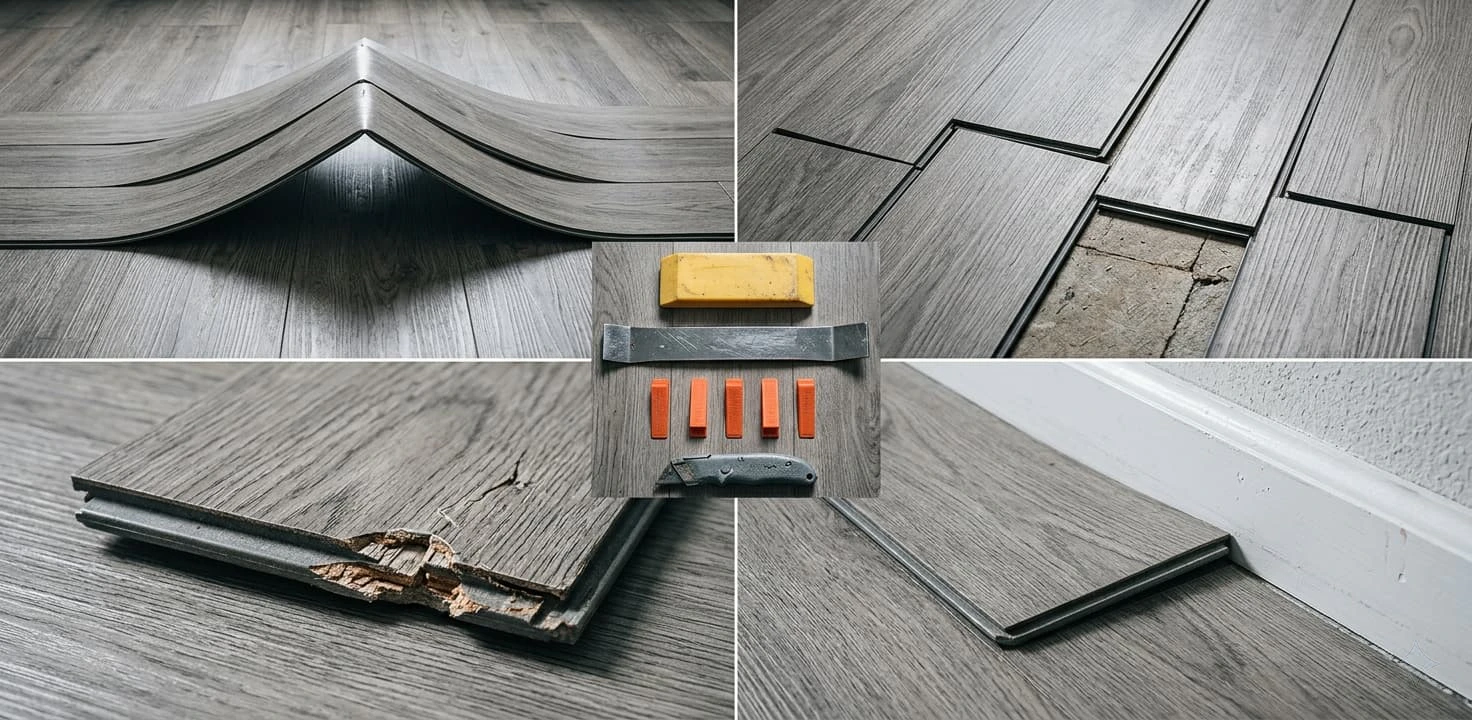 7 Vinyl Plank Mistakes That Cause Buckling
 Full kitchen floor guide