Updated July 2026. Based on our 11-brand deck stain testing and the failure patterns behind reader-submitted new-deck staining problems. Timing guidance cross-referenced against application instructions from Cabot, Penofin, Ready Seal and Defy — all of which require the wood to pass an absorption check before staining.
Why you can't stain a new deck this weekend
Can you stain pressure-treated wood? Yes — but not yet, and the "yet" is the whole story. The instinct is completely reasonable: the deck is brand new, the wood is clean, protect it now before anything happens to it. And with almost any other outdoor project, "seal it immediately" would be right. New pressure-treated decking is the exception, and the reason is in the name — the boards were pressure-soaked in preservative solution at the treatment plant, and they arrive at the lumber yard (and then your deck frame) still holding much of that liquid.
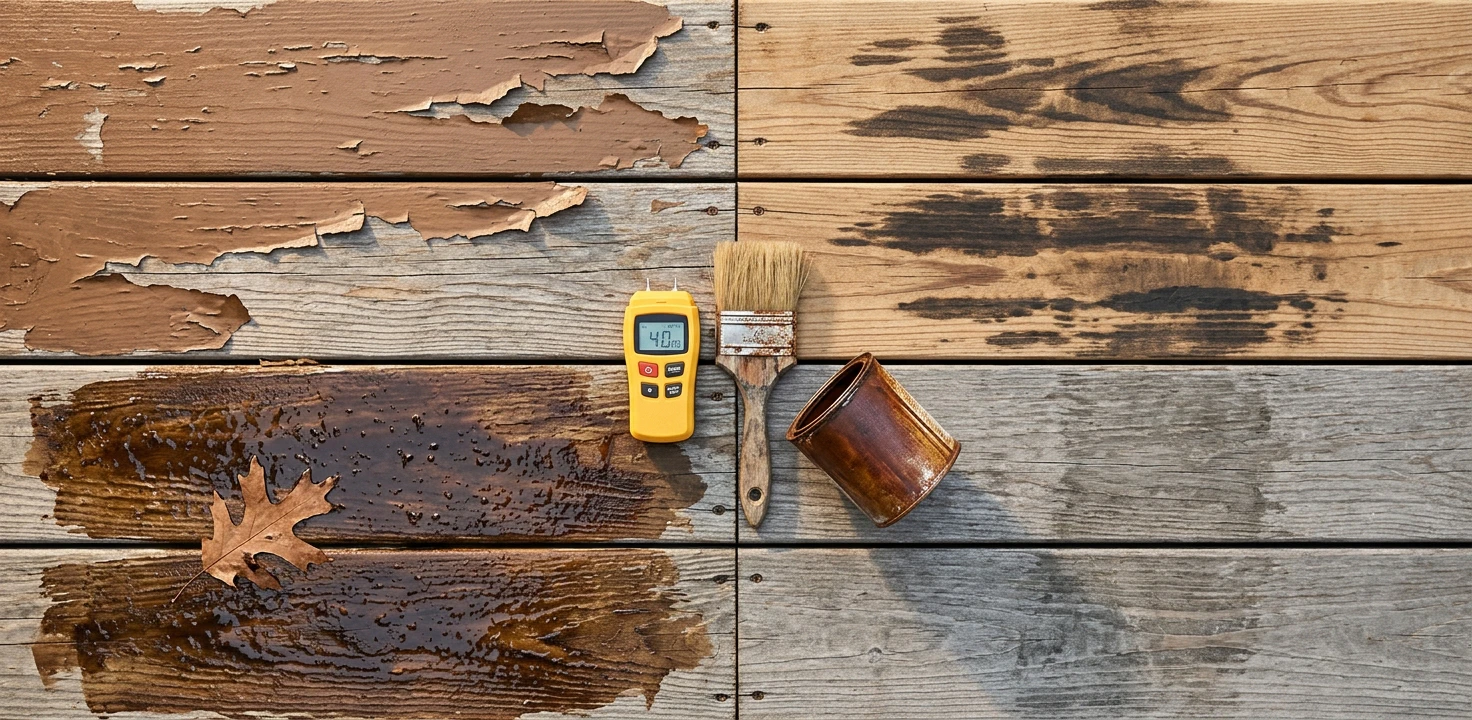
Stain needs to penetrate wood pores to protect them. Pores that are full of water can't take anything in. Stain a wet PT deck and the finish sits on the surface, dries into a weak film, and starts peeling and blotching within months — often faster than the bare wood would have greyed. It's the single most common new-deck mistake, and it turns a $60 weekend into a strip-and-redo project the following spring.
So the first staining decision on a new deck isn't a product — it's a date. And the date isn't on a calendar; it's in the wood.
The sprinkle test — when it's actually ready
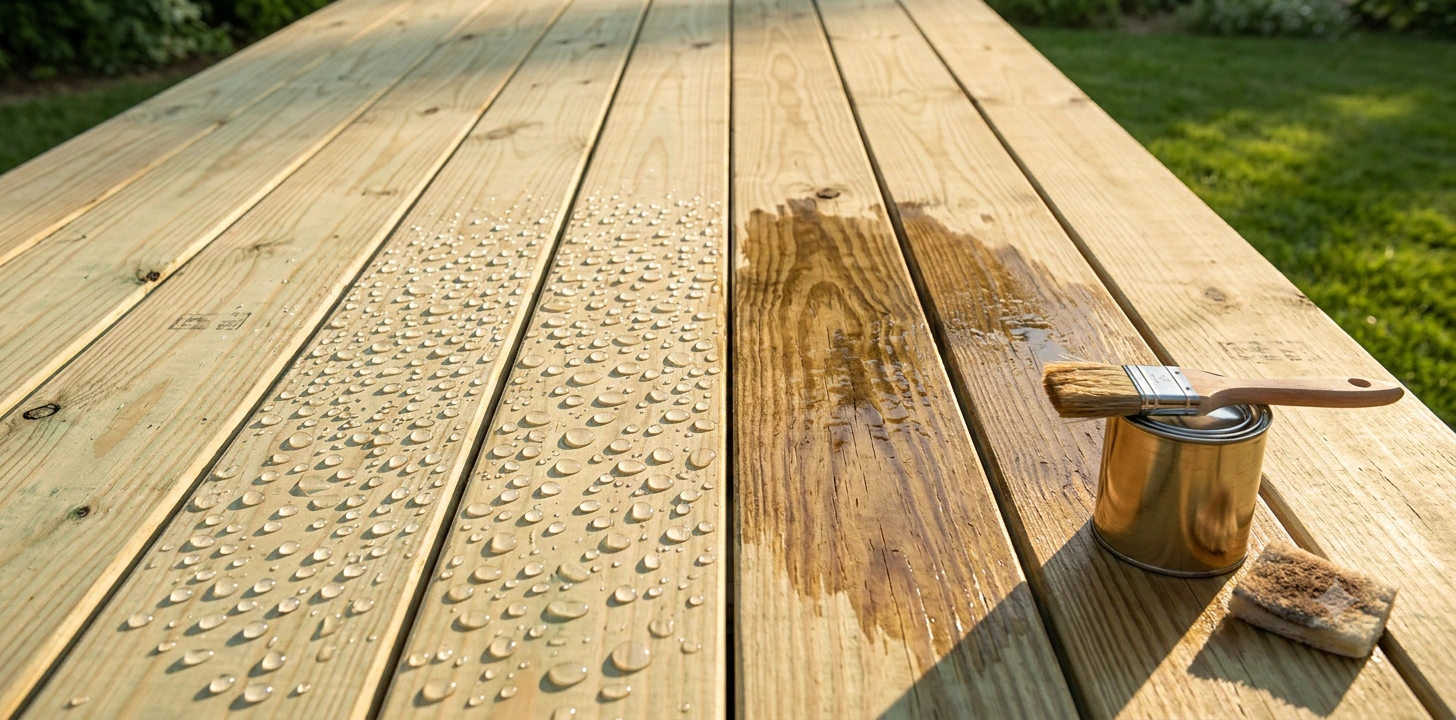
Forget the folklore ("wait six months," "wait a year," "stain before winter no matter what"). The test is free and takes ten seconds:
- Flick water onto the boards — a few tablespoons from a cup, in at least four spots across the deck, including the shadiest corner.
- If it beads up and sits, the wood is still too wet inside. Wait, and re-test every week or two.
- If it soaks in within a minute or two, the pores are open and the deck is ready for stain.
In a dry, sunny summer, standard PT decking typically passes at 4-8 weeks after the build. Humid climates, spring rains, or shaded decks stretch that to 3-4 months. Boards dry at different rates — sun exposure, thickness, even which end of the treatment batch they came from — which is why you test several spots and go with the slowest one.
Don't overshoot either. The old "wait a full year" advice costs you: unprotected wood starts greying within a couple of months and surface-checking within a season or two. The window you want is "passes the sprinkle test, hasn't weathered grey yet." Miss it and the deck isn't ruined — it just needs the cleaner-and-brightener prep first (see the FAQ below).
The KDAT exception
KDAT — kiln-dried after treatment — is PT lumber that's dried back down in a kiln after the preservative bath. It ships at stain-ready moisture and can be coated the same week the deck is built. The upcharge is typically 20-30% over standard PT, and for a deck you plan to stain it buys three real things: you stain before the furniture and planters arrive, before railings make the edges awkward, and before UV has touched the wood at all.
If your deck is still on paper, ask the lumber yard for KDAT and this whole waiting chapter disappears. If the deck is already built, check the lumber tags — KDAT is stamped. No stamp, assume wet, run the sprinkle test.
What new wood needs before stain (less than you think, not nothing)
A new deck skips the heavy restoration prep an old one needs, but "new" doesn't mean "ready":
- Sweep and wash. Construction leaves sawdust, footprints and yard grime. A garden-hose rinse with a deck brush is usually enough on new wood; let it dry 48 hours after (yes, the sprinkle-test clock resets after washing).
- New cedar: kill the mill glaze. Fresh-planed cedar has a burnished surface layer that sheds stain. Scuff-sand with 60-80 grit on a pole sander (an hour, not a day), sweep, done. PT decking is rougher-sawn and usually doesn't need this.
- Already grey? Add the two-step. If the deck sat past the window and greyed, a cleaner + brightener kit ($30-45) restores it to near fresh-cut before staining.
- Set the weather window: 50-90°F, boards out of direct midday sun, no rain in the 48-hour forecast, morning dew burned off. Same rules as any stain job — the full checklist is in our deck staining mistakes guide.
Picking the first stain: penetrating, semi-transparent, pigmented
The first coat a deck ever gets sets its maintenance path for a decade, so the product choice matters more here than on a re-coat:
- Go penetrating, not film-forming. Penetrating oil or hybrid stains soak into the wood and wear by fading — maintenance is clean-and-recoat. Film-formers (and solid stains) sit on top and wear by peeling — maintenance eventually means stripping. On brand-new wood with zero surface damage to hide, there is no reason to start down the film path.
- Semi-transparent is the sweet spot. New decking is the best-looking wood the deck will ever have — semi-transparent shows the grain while carrying enough pigment to actually block UV. Skip clear/transparent sealers in any sunny climate: without pigment, UV protection fades in about a year and the wood greys under the "protection."
- Skip solid color on new wood. Solid stain is the right call for hiding a beat-up old surface. Using it on day one throws away the wood you just paid for and commits you to film maintenance forever.
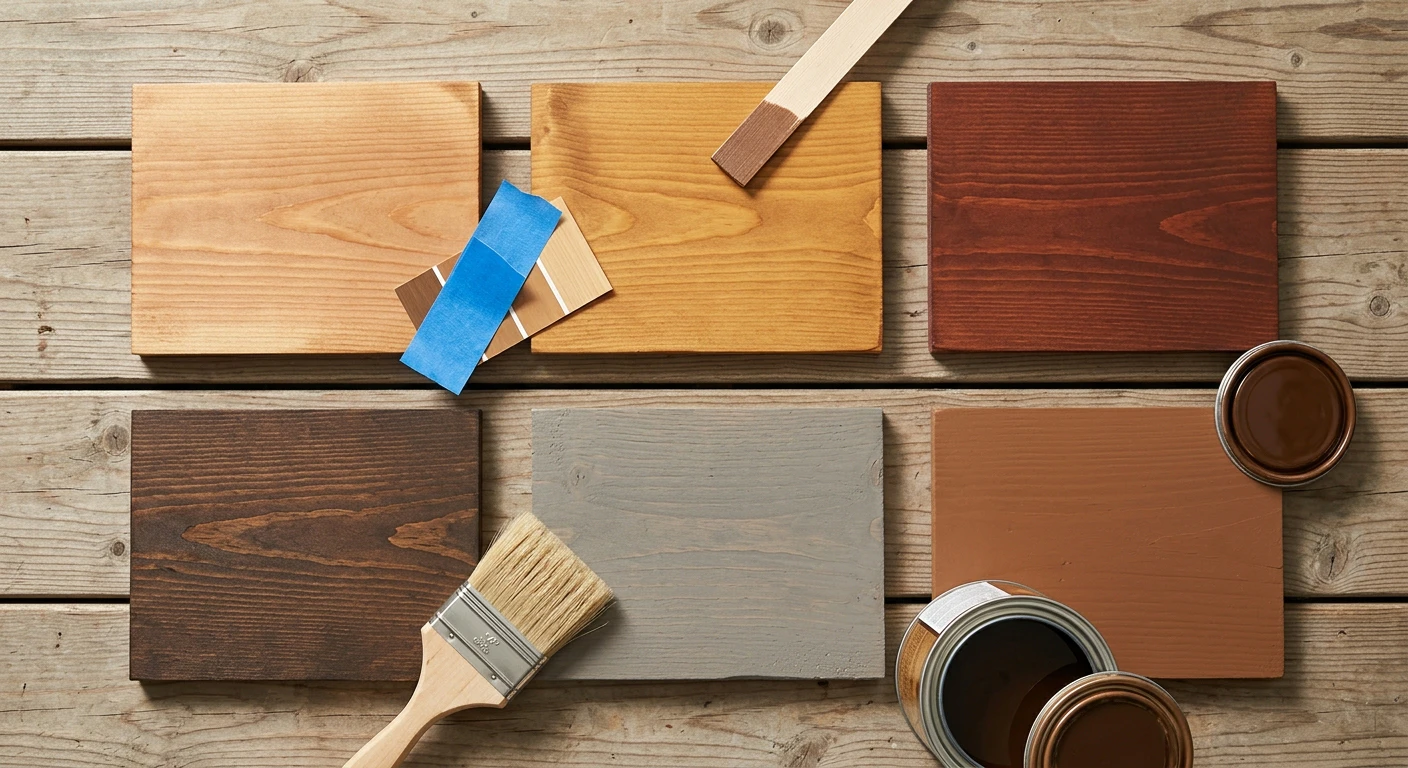
Brand-wise, this is exactly what our 11 Best Deck Stain Brands roundup ranks in depth. The short version for a first-time stain on new wood: Cabot semi-transparent oil is the best-overall default, Ready Seal is the most goof-proof for first-timers (its back-wipe application method makes over-application nearly impossible), and Defy Extreme is the pick for high-UV and hot climates. All three are penetrating products that keep the easy maintenance path open.
Application day, done right
New wood forgives less over-application than thirsty old wood, so technique matters:
- Thin working coat with a stain pad on a pole for the field, a 4-inch brush for gaps, ends and railings.
- Work 2-3 boards at a time, full length, keeping a wet edge — never stop mid-board, or the overlap dries into a lap mark.
- Back-wipe at 15-20 minutes: anything still glistening on the surface gets wiped off with a dry pad or rag. This one habit prevents the sticky-deck failure entirely.
- Hit every cut end — end grain drinks water fastest and fails first. Five extra minutes with the brush.
- Second pass only if the wood asks for it — absorbed the first coat in minutes, wet-on-wet is fine. Surface still satin? It's done.
Verticals (railings, balusters) take stain slower and need less — one thin coat, wiped, is nearly always enough there.
The first-year plan
The first coat on new wood is partly a primer for reality: fresh boards absorb unevenly, and the first winter tells you which boards took less than they needed. Next spring, run the water-drop test — water soaking straight into the traffic paths means those areas want a refresh pass (clean, dry, one thin coat — half a day). After that, the deck settles into the normal cycle: horizontal surfaces every 2-3 years, verticals every 4-6, always refreshing before visible failure. Write the brand, color and date somewhere permanent (inside a deck-box lid is traditional) — future-you will thank you at re-coat time.
Choosing the actual can? Our 11 Best Deck Stain Brands 2026 roundup → ranks Cabot, Penofin, Ready Seal, Defy and 7 more by chemistry, UV durability and price per gallon — including which products forgive a first-time application. Pair it with the 7 deck staining mistakes guide and the new deck gets its four good years from coat one.
 11 Best Deck Stain Brands 2026
 7 Deck Staining Mistakes That Make It Peel
 Outdoor Deck: Pressure-Treated vs Composite
 Full outdoor deck guide