Updated July 2026. Prices reflect US market installed costs from Home Depot, Lowe's and local lumber yards. All comparisons based on a typical 300 sq ft residential deck.
The decking dilemma that splits every family thread
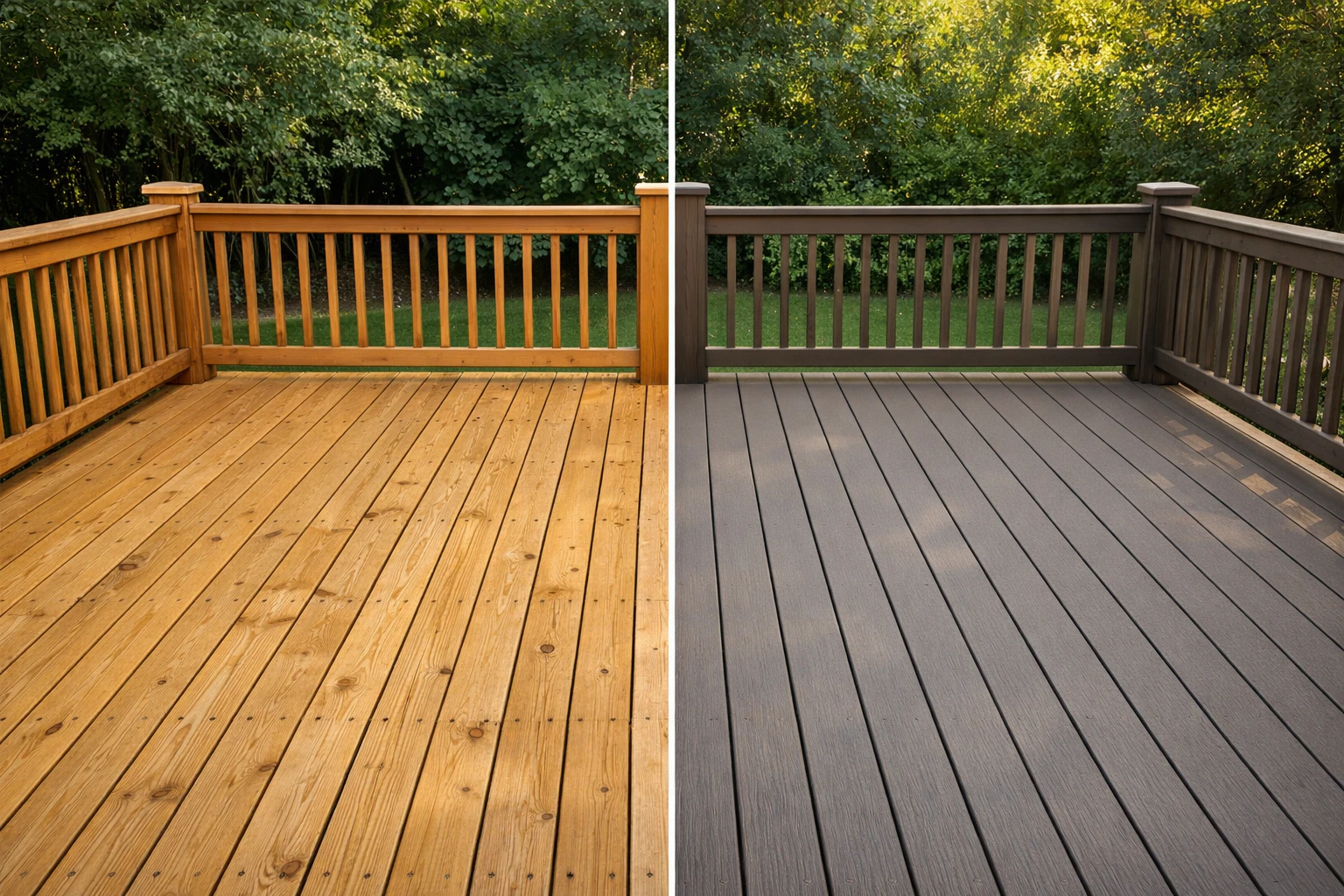
The decking decision that splits Reddit threads and family arguments is almost always the same: pressure-treated lumber or composite decking? Both will hold the family barbecue and the kids' pool party. Both come in dozens of colors and profiles. But they sit at opposite ends of the cost-and-maintenance tradeoff — one is half the upfront price but asks for a weekend of work every spring, the other is double the price and asks nothing of you for the next 25 years.
The short version: pressure-treated wins on upfront cost; composite wins on total cost over 10+ years. The break-even sits around year 6. If you're planning to sell in the next five years, pressure-treated is the right math. If you're staying long-term — or just want to never think about deck stain again — composite is.
Below: a side-by-side table, scenarios for picking each, the maintenance math that decides for most people, and the install gotchas that actually wreck decks (which, surprisingly, are usually structural — not surface-level).
Side-by-side comparison
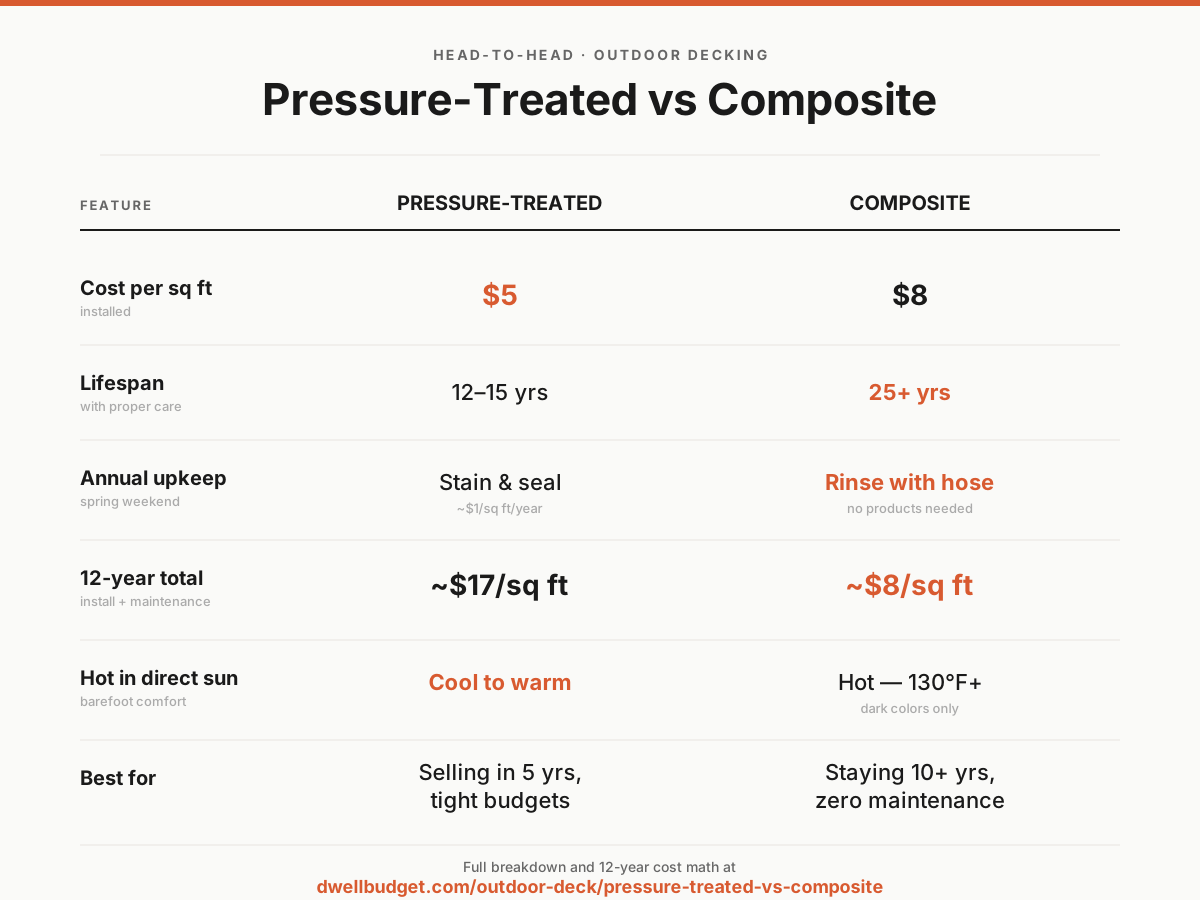
| Pressure-treated lumber | Composite decking | |
|---|---|---|
| Cost per sq ft (installed) | $5 | $8 |
| 300 sq ft deck total | $1,500 | $2,400 |
| Lifespan | 12–15 years | 25+ years (most have 25-yr warranty) |
| Annual maintenance | Stain & seal every 1–2 years (~$1/sq ft/yr) | Rinse with garden hose |
| 12-year total cost | ~$17/sq ft ($5 + $12 maintenance) | ~$8/sq ft (no maintenance) |
| Look at year 5 | Grey patina unless stained yearly | Same as install day |
| Splinter risk | Yes — real concern with kids and pets | None |
| Surface temp in sun | Cool to warm | Hot — darker colors can hit 130°F+ |
| Best for | Short-term residents, tight budgets | Long-term homeowners, zero maintenance |
When to pick pressure-treated
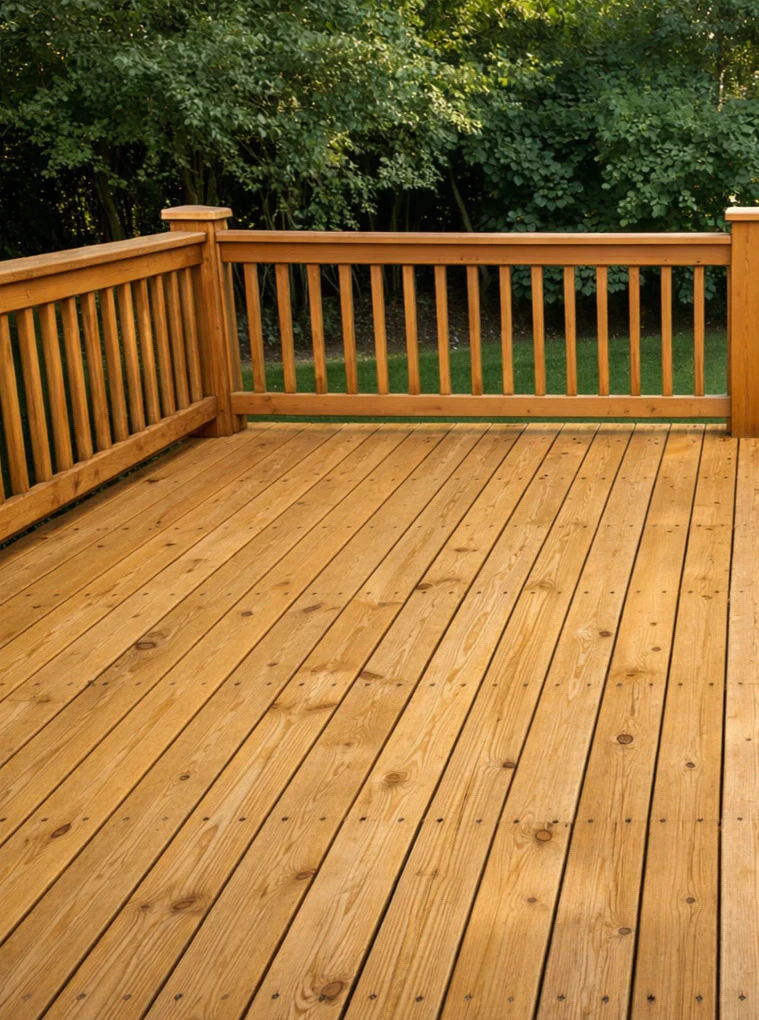
Pick pressure-treated lumber if at least three of these are true:
- You're planning to sell the house in the next 5 years
- Total budget is under $1,800 for a 300 sq ft deck
- You're OK with one stain weekend every spring
- The deck gets significant sun and you want it cooler underfoot
- You want easy on-site repairs — replace one board for $20 in lumber
Standard 2×6 pressure-treated deck boards at $5/sq ft installed work out to $1,500 for a 300 sq ft deck. Add $300 (~$1/sq ft) for the first round of stain and sealant, and you're at $1,800 for a finished deck that's good for 5–7 years of stained look. After that, ongoing maintenance is roughly Cabot Australian Timber Oil or Thompson's WaterSeal at $40–60/year for a small deck.
The honest case for PT in 2026: it's the right choice when you genuinely won't be in the house long enough to hit the composite break-even. The math works for renters of long-term rentals, military families on 3-year rotations, and homes already on the market. For everyone else, the maintenance burden compounds faster than the upfront savings.
What you give up: your spring weekends. Annual stain is real work — pressure-wash, dry 48 hours, two coats of sealer with overnight cure between. Plan one full Saturday every year, plus the dollars in product. Skip a year and the boards start to grey; skip three years and the boards start to splinter.
When to pick composite decking
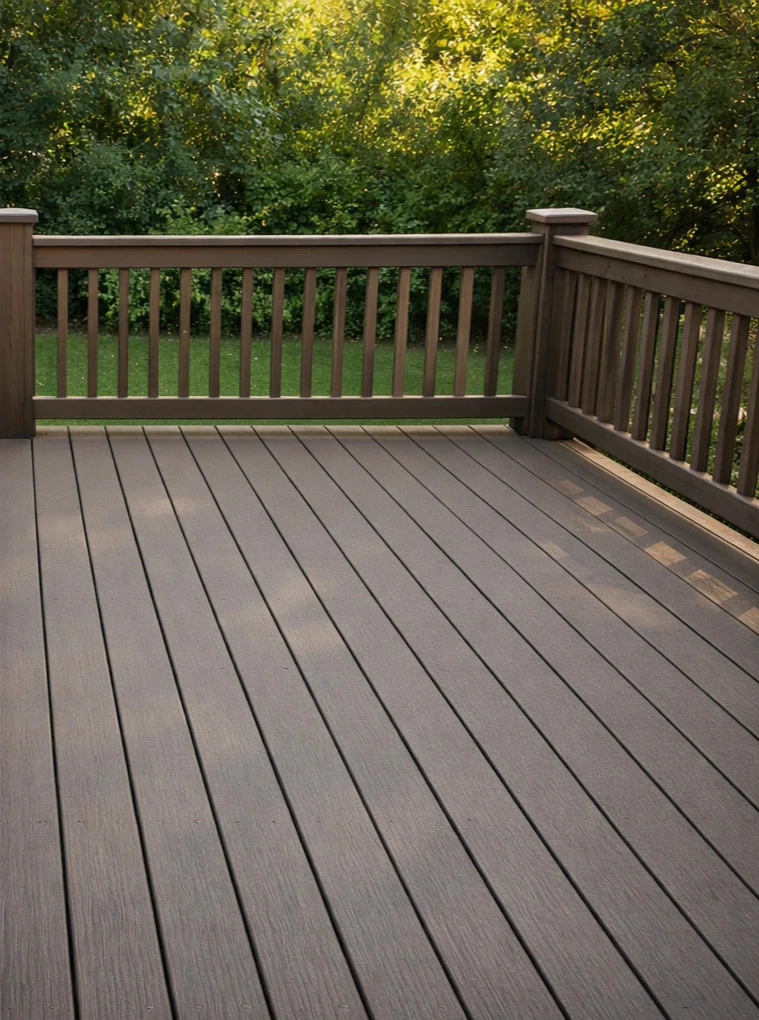
Pick composite if at least three of these are true:
- You're staying in the house 10+ years
- You hate yard chores (composite asks for none)
- Kids or pets are on the deck barefoot and splinter risk matters
- You want consistent appearance year-round, not weathered grey
- You live in a humid or coastal climate (composite doesn't rot)
Trex, TimberTech AZEK, and Fiberon are the three brands that show up in 90%+ of installed composite decks. Installed pricing runs $7–10/sq ft depending on the line — the entry-level products (Trex Enhance, TimberTech EDGE) hit $7/sq ft, the premium capped composites (Trex Transcend, TimberTech AZEK Vintage) push $10–12/sq ft. For most decks, the mid-tier (Trex Select at ~$8/sq ft) is the right balance.
Most current-generation composites carry a 25-year residential fade-and-stain warranty in addition to the standard structural warranty. Trex's warranty specifically covers fading beyond 5 Delta E units and staining from food or beverages — meaningful coverage that makes the higher upfront price feel like insurance.
What you give up: upfront cost (60% more than pressure-treated), heat in direct sun (dark composites can be 20°F hotter than wood), and repairability (you can't easily replace one composite board mid-deck — color matching is hit-or-miss after a few years of UV exposure).
The 12-year maintenance math
This is where the composite price premium pays back. Both decks at 300 sq ft, full 12-year ownership:
| Year | Pressure-treated running cost | Composite running cost |
|---|---|---|
| Year 0 (install) | $1,500 | $2,400 |
| Year 1 (first stain) | $1,800 | $2,400 |
| Year 6 (break-even) | ~$2,400 | $2,400 |
| Year 12 | ~$3,300 | $2,400 |
By year 6 the two decks have cost roughly the same money. By year 12 the composite deck is a third cheaper than the pressure-treated one — and the pressure-treated deck is approaching end-of-life while the composite is half-way through its warranty.
The honest disclaimer: this assumes you actually keep up with PT maintenance. Most homeowners don't — skip 2-3 years of stain and the deck looks rough faster, drops resale value, and may need full board replacement years sooner. In the real world the gap between PT and composite is often larger than this table suggests, because PT maintenance gets skipped.
Install reality check: the structure usually fails first
Both decking materials sit on top of the same hidden infrastructure: joists, posts, ledger board, and footings. The structure usually fails before the boards do — regardless of which surface material you picked. Before you spend $2,400 on composite over old joists, inspect the structure:
- Ledger board flashing — the #1 cause of deck collapse. Where the deck attaches to the house, water sneaks behind the ledger and rots both the deck and the rim joist of the house. Inspect for soft wood or staining behind the ledger.
- Joist condition — push a screwdriver into joists near the ledger and near posts. Soft spots = replace before re-decking.
- Post bases — if posts sit directly in concrete (no metal post base), they're rotting from the bottom up. Whether you can see it or not.
- Joist spacing for composite — most composites need 12" on-center for picture-frame patterns or 16" o.c. for straight install with a 90° board angle. PT can usually span the same.
Replacing rotted joists before installing composite is the single biggest hidden cost of a "deck refresh" project. Budget $800–1,500 for joist work on a 15-year-old deck before adding the surface material cost.
The short verdict
Pick pressure-treated if you're moving in five years, your budget is under $1,800 for a 300 sq ft deck, or your deck is in significant sun and barefoot use matters. Pick composite if you're staying 10+ years, want zero spring maintenance, have kids or pets on the deck barefoot, or live somewhere humid where PT rots faster. There's no wrong answer between these two — only a right answer for your specific situation and stay-length.
Comparing more decking options? The full outdoor deck guide also covers outdoor rugs and interlocking deck tiles — useful for balcony spaces under 100 sq ft or renter situations where any permanent install is off the table.
 11 Best Deck Stain Brands 2026
 7 Deck Staining Mistakes That Make It Peel
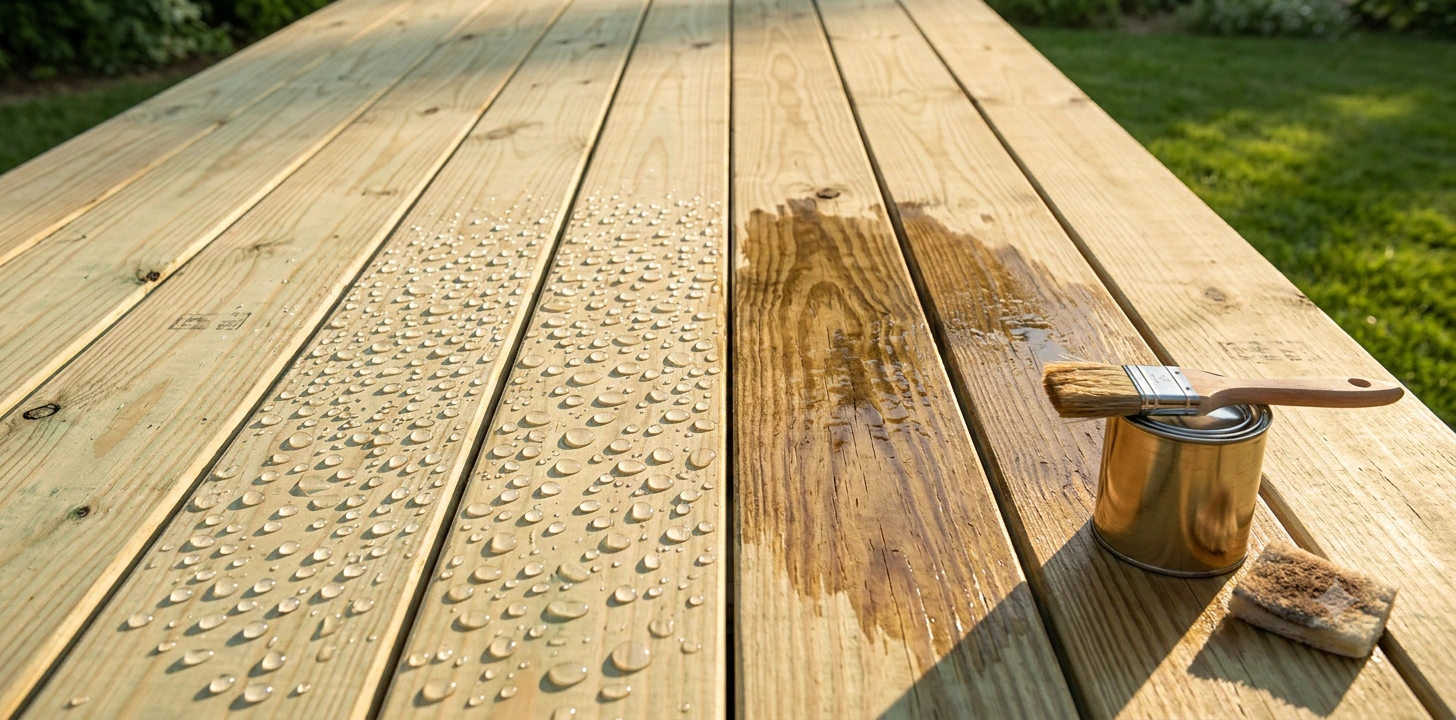 When and How to Stain a Brand-New Deck
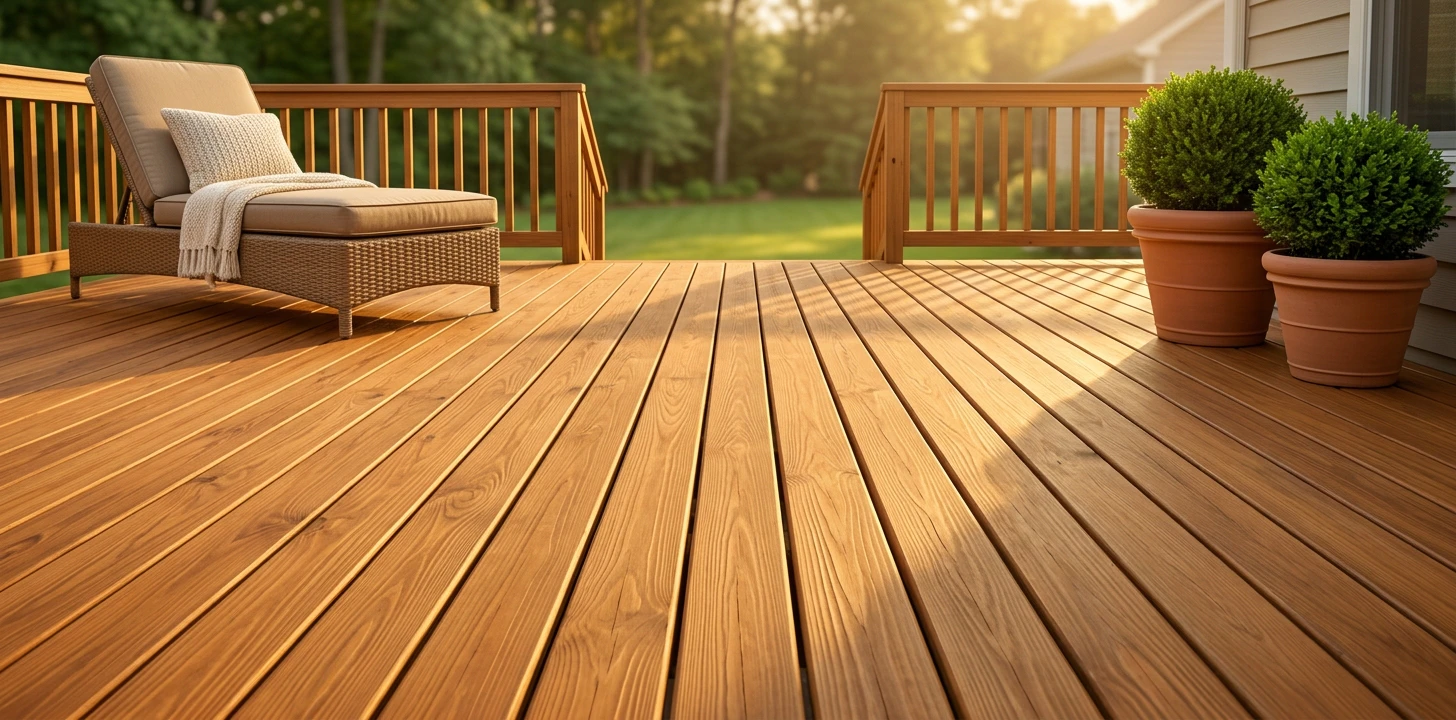 Full outdoor deck guide
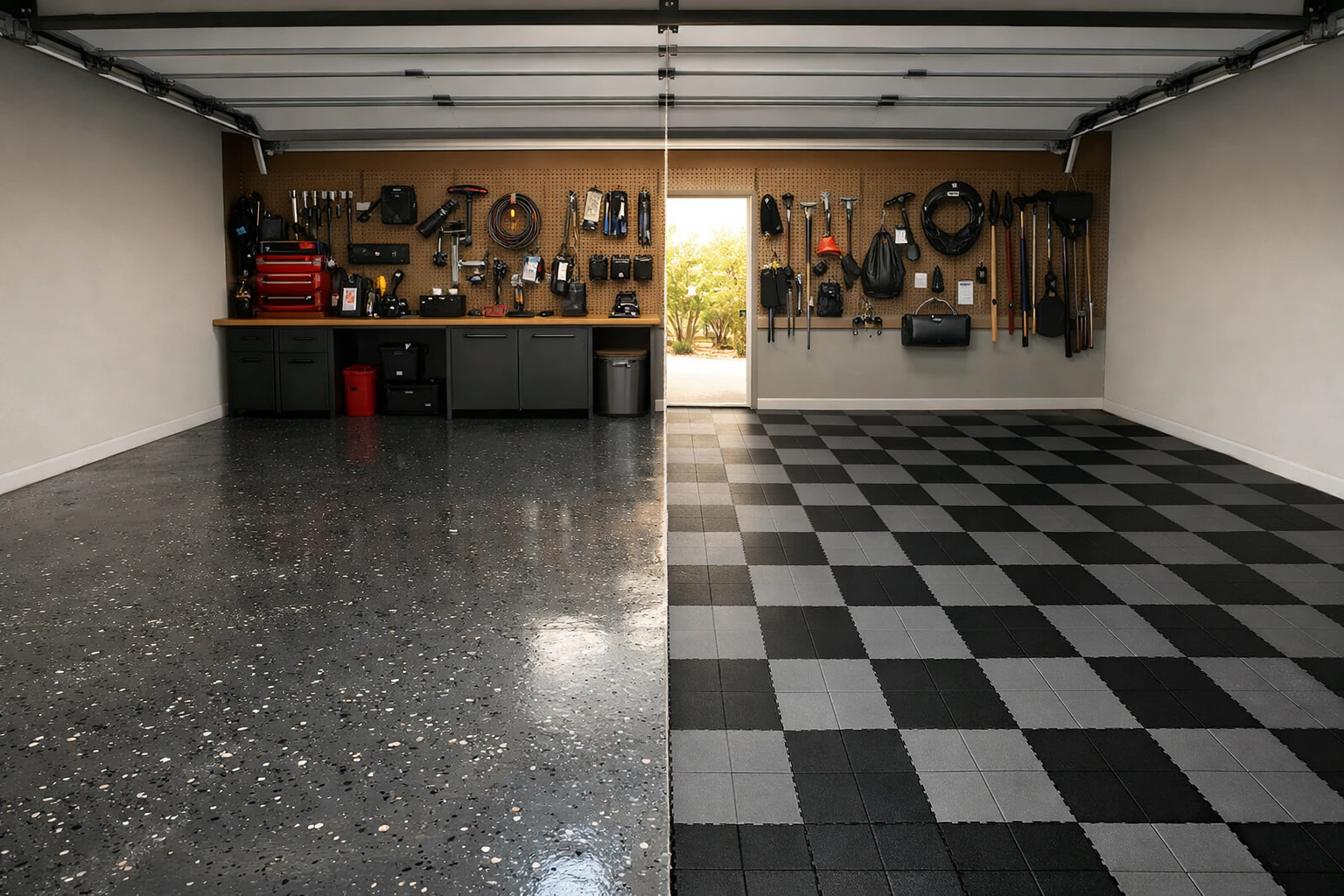 Garage Floor: Epoxy vs PVC
 Entryway Floor