Updated July 2026. Prices reflect US market kit costs from Amazon, Home Depot and Lowe's. All comparisons based on real two-car garage installations (400 sq ft).
The two finishes everyone compares
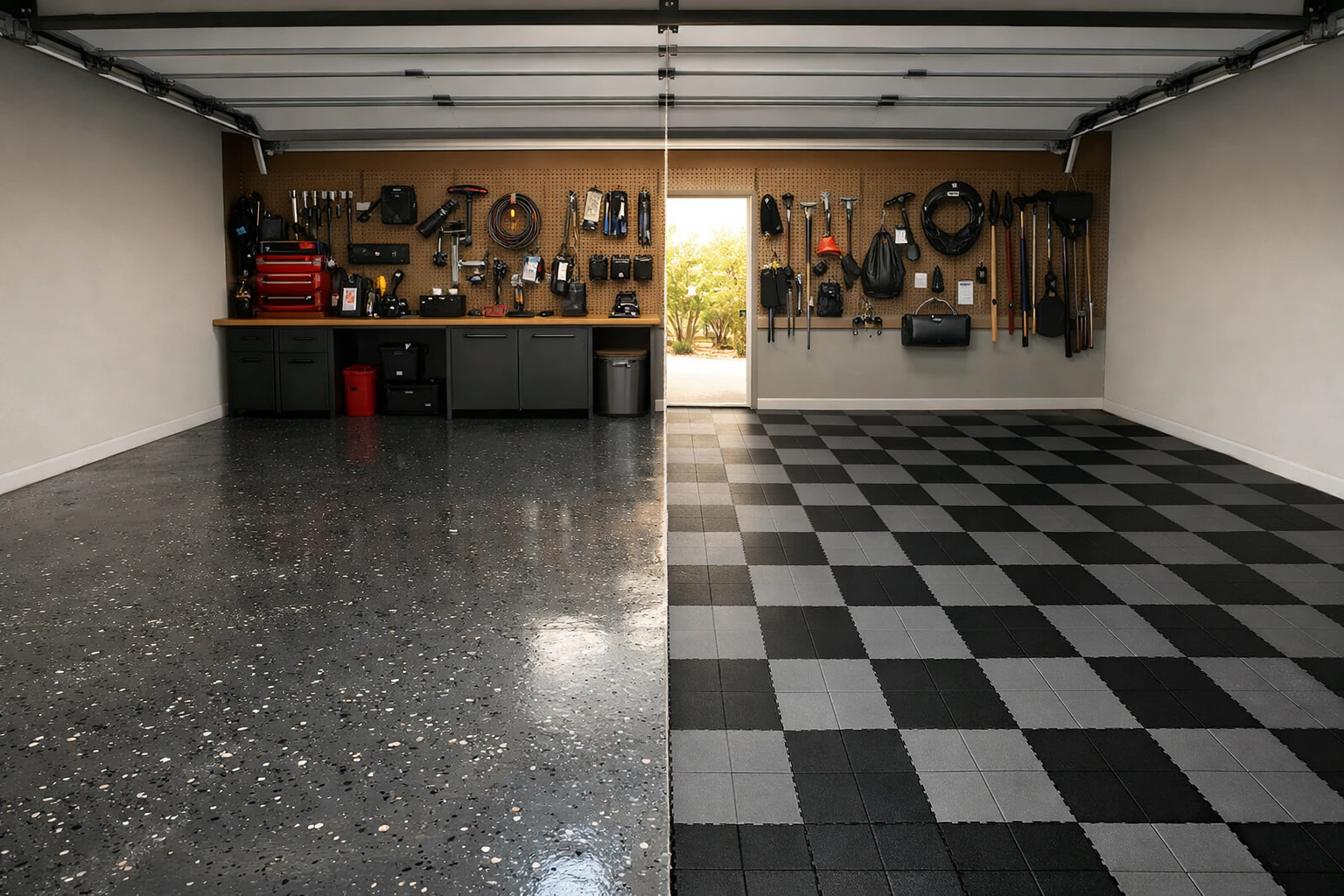
The two garage floor finishes that show up in every Reddit thread, forum post, and "how to upgrade my garage" video are epoxy coatings and interlocking PVC tiles. Both jump past painted concrete in durability and past rubber mats in looks, but they sit at opposite ends of the install spectrum — one is a chemical bond you commit to for the next decade, the other clicks together in an afternoon and pops apart when you move.
The short version: epoxy is cheaper upfront but locks you in. PVC tiles cost roughly double per square foot but pay back in flexibility, faster install, and better cold-climate performance. If you're choosing between these two specifically, the answer depends on five things — your climate, your slab condition, how long you'll stay in the house, whether you can shut the garage down for three days, and how much you care about looks versus performance.
Below: a side-by-side table, scenarios for picking each, then the install gotchas that decide which one is right for your garage.
Side-by-side comparison
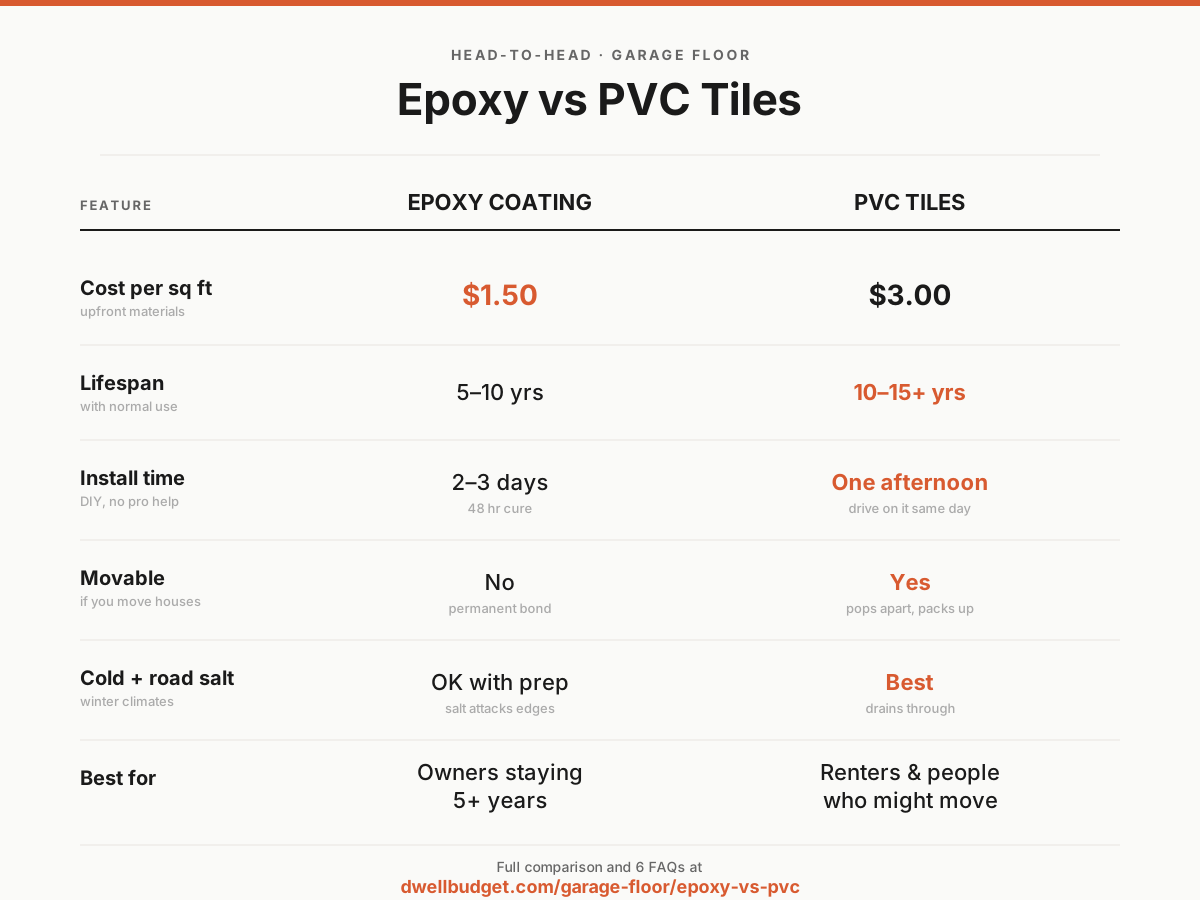
| Epoxy coating | Interlocking PVC tiles | |
|---|---|---|
| Cost | $1.50/sq ft | $3/sq ft |
| Two-car garage (400 sq ft) | $600 total | $1,200 total |
| Lifespan | 5–10 years | 10–15+ years |
| Install time | 2–3 days (48 hr cure) | One afternoon |
| Removable? | No — permanent chemical bond | Yes — pops apart, moves with you |
| Cold climate & road salt | Fine with proper prep; salt attacks edges over time | Best — salt can't penetrate, drainage built in |
| Slab condition needed | Clean, dry, level (moisture test critical) | Bridges minor cracks and dips up to 1/4" |
| Look | Seamless high-gloss with decorative chips | Snap-together panels with visible seams |
| Cost per year | ~$0.20/sq ft | ~$0.25/sq ft |
When to pick epoxy coating
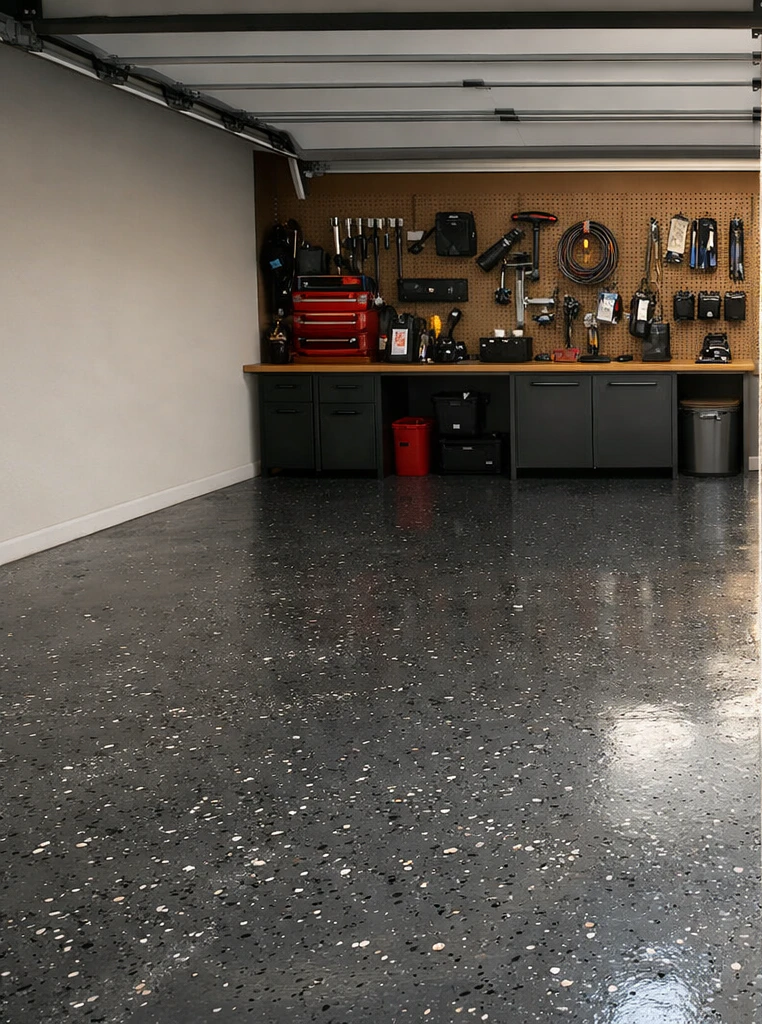
Pick epoxy if at least three of these are true:
- You own the house and plan to stay 5+ years
- Your concrete slab is in solid condition — no major cracks, dips, or moisture wicking
- You can shut the garage down for 48–72 hours (cars out, contents covered, ventilation running)
- You want a seamless cleanable surface with no edges for dirt to hide under
- Upfront cost is a primary driver
The Rust-Oleum EpoxyShield kit at $130–180 for a two-car garage (~400 sq ft) lands around $0.35–0.45/sq ft including the decorative chip topcoat. Polyaspartic upgrades (Rust-Oleum RockSolid, ArmorPoxy) double the per-square-foot price but push lifespan from 5–8 years to 10–15+ and cure in 24 hours instead of 72. For most homeowners the basic kit is enough; polyaspartic is for people who've already decided coating is right for them and want the longer warranty.
The install is straightforward but unforgiving. The single biggest reason epoxy jobs fail at the 6-month mark is skipping the moisture test and bonding primer. Apply over a slab that wicks moisture and the coating delaminates from below — no fix except grinding back to bare concrete and starting over. Budget the prep time, not just the coating time.
What you give up: removability and forgiveness. The bond is chemical and permanent. If you decide in year three you want a different look, you're grinding down a coating that costs more to remove than it did to install. And if your slab has any unevenness, epoxy shows it — there's no leveling action.
When to pick interlocking PVC tiles
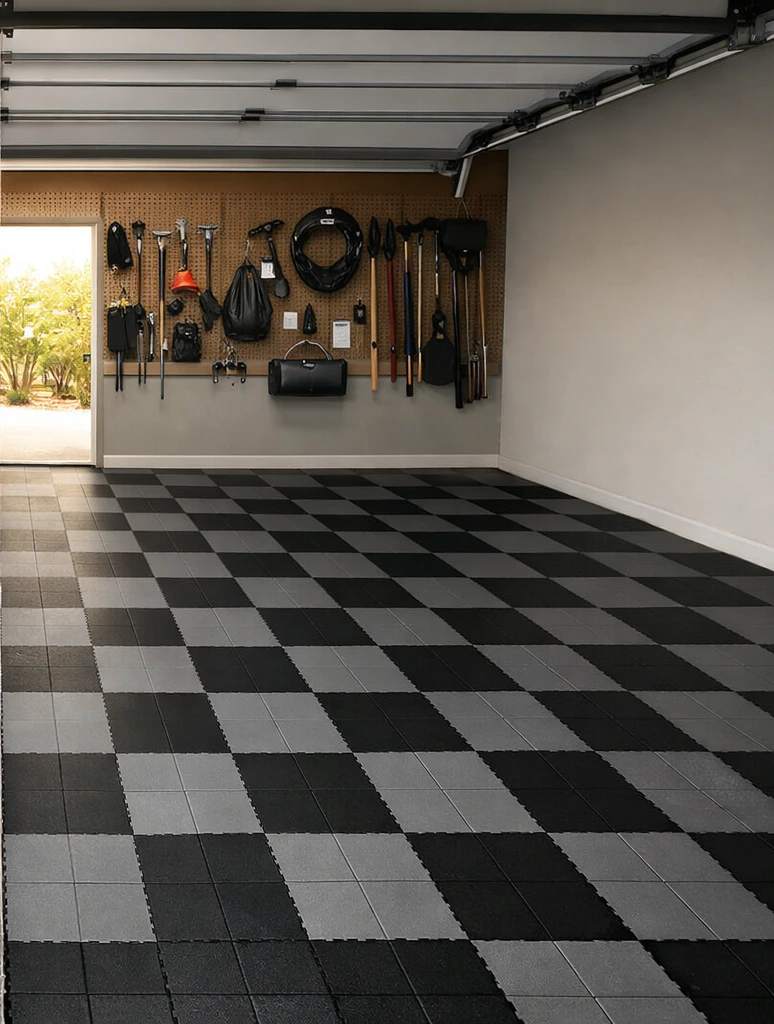
Pick PVC tiles if at least three of these are true:
- You might move within 5–7 years — these come with you
- Your slab has cracks, dips, or unevenness up to about 1/4" over a 2-ft span
- You want it installed in one afternoon with no cure time
- You live in a salt-heavy winter climate
- You want under-floor drainage so melted snow and spills don't pool on top
RaceDeck and SwissTrax PVC tiles at $2.50–3.50/sq ft work out to $1,000–1,400 for a typical two-car garage. Cost-per-year over a 12-year average lifespan comes out roughly even with epoxy after factoring in epoxy's higher maintenance and shorter resurface cycle.
Install is genuinely one afternoon. The tiles snap together like oversized Lego over your existing concrete — no prep, no primer, no cure time. You can drive on them as soon as they're down. The drainage channels underneath let road salt, melted snow, and minor fluid spills drain through to the slab, which you can sweep clean by pulling up a section of tiles.
What you give up: looks (PVC tiles always look like PVC tiles — no high-gloss epoxy shine), seams (visible between every tile — some find it industrial-cool, others find it busy), and you'll need edge ramps where the tile floor meets a doorway, especially if you drive over the edge daily.
Install reality check: what actually goes wrong
Both products fail the same way: by getting installed over a problem slab. Before you order either, do a 24-hour moisture test — tape a 2×2 ft sheet of plastic to your concrete and check the underside the next day. Condensation means the slab is wicking moisture from below.
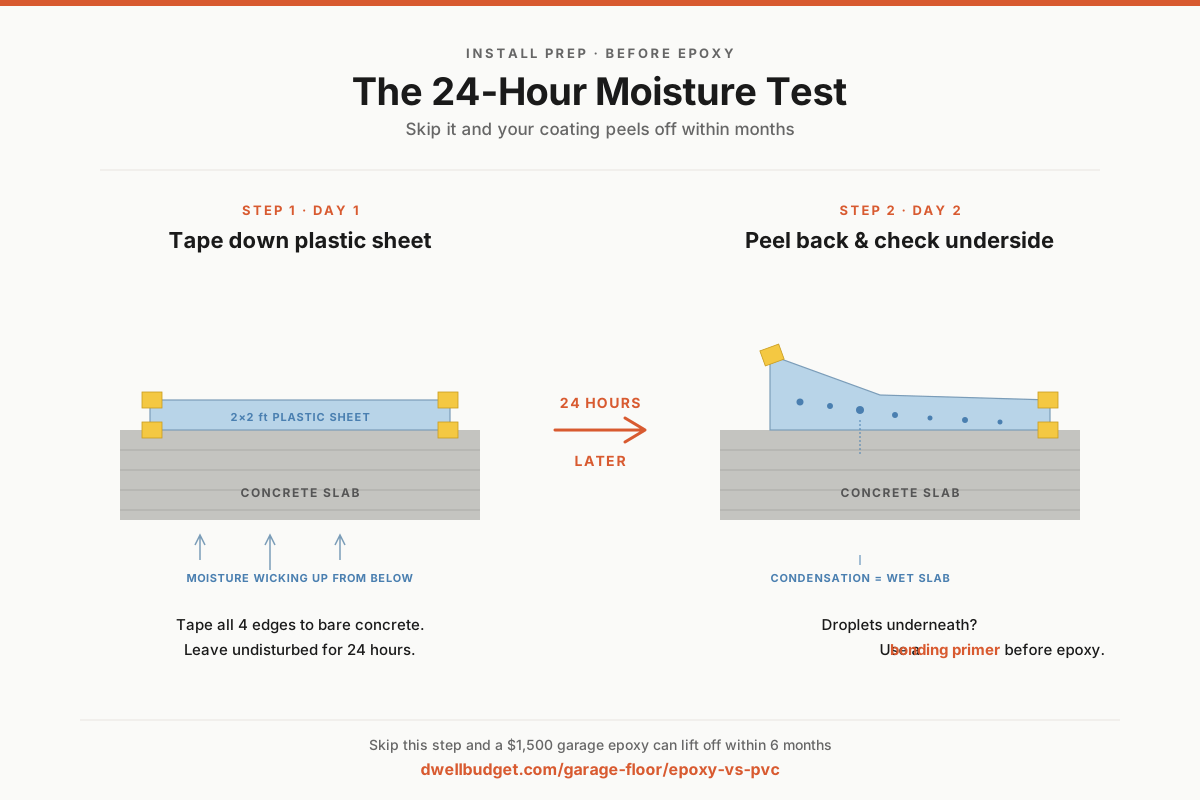
If the slab passes, you're free to choose on preference. If it fails, the decision branches:
- For epoxy: fix the slab first with a moisture-blocking primer (Rust-Oleum Concrete Bonding Primer) or accept a coating that will fail within months.
- For PVC tiles: you can install directly — the tiles trap moisture against the concrete, which is fine for concrete, less fine for any wood structure or stored equipment below.
Real install timelines, including every step:
- Epoxy: Day 1 — cleaning + etching + bonding primer (3–4 hours hands-on). Day 2 — base coat + decorative chip throw + cure overnight (1–2 hours hands-on, 24 hours waiting). Day 3 — topcoat (1 hour) + 48–72 hours of foot/vehicle cure. Total elapsed: 4–5 days. Total hands-on: 6–8 hours.
- PVC tiles: lay out + snap together + cut edges with a circular saw or jigsaw — 2–3 hours for 400 sq ft. Total elapsed: one afternoon.
The Reddit-favorite mistake is starting an epoxy project on a Sunday and discovering the garage has to be closed until Wednesday. If your daily life depends on garage access, plan around your schedule before you order the kit — or skip to PVC.
The short verdict
Pick epoxy if you want a clean seamless look on a solid slab, plan to stay in the house 5+ years, can shut the garage down for half a week, and cost matters more than removability. Pick PVC tiles if you want it done today, your slab is imperfect, you deal with road salt every winter, or you might move within five years. Both beat painted concrete and rubber mats for long-term value — there's no wrong answer between these two, just a right answer for your specific situation.
Comparing all four garage floor options? The full garage floor guide also covers painted concrete and rubber roll mats — useful if your budget is under $300 or you need something temporary.
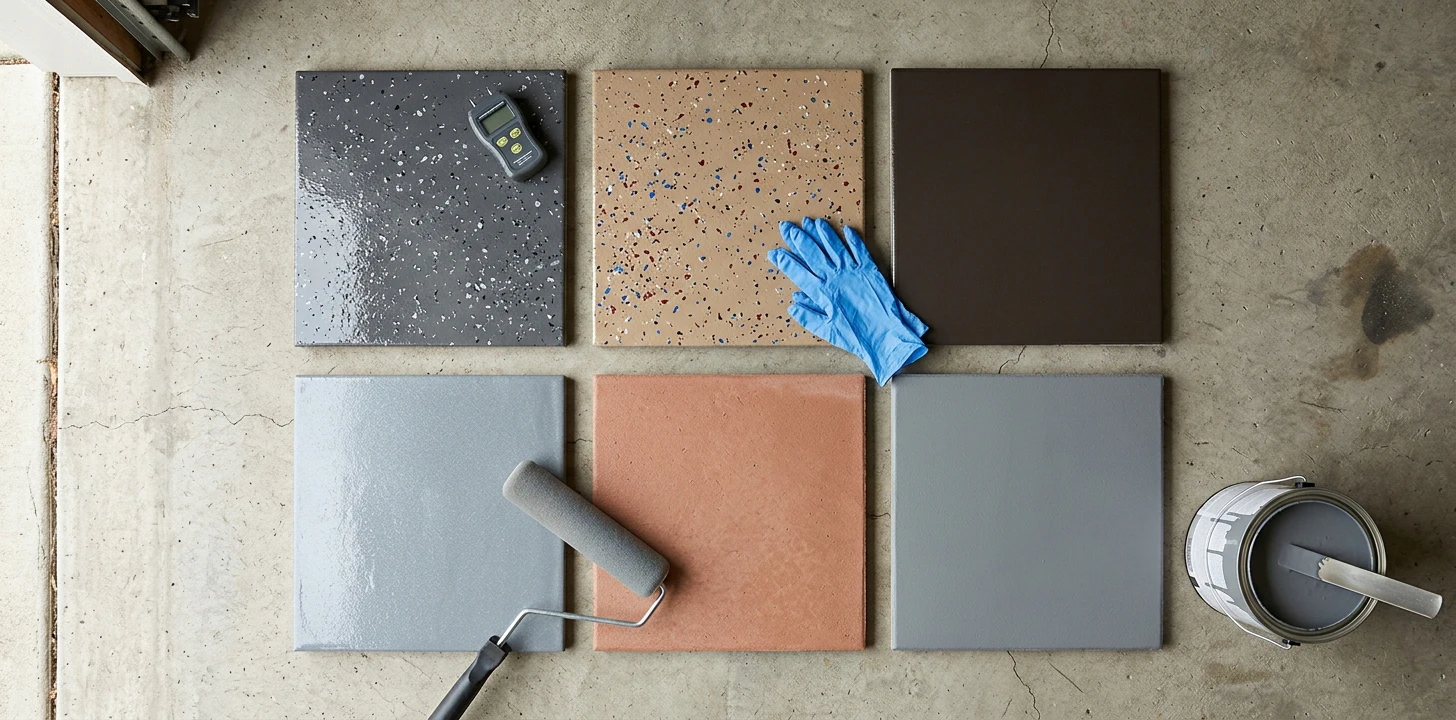 11 Best Garage Floor Coatings 2026
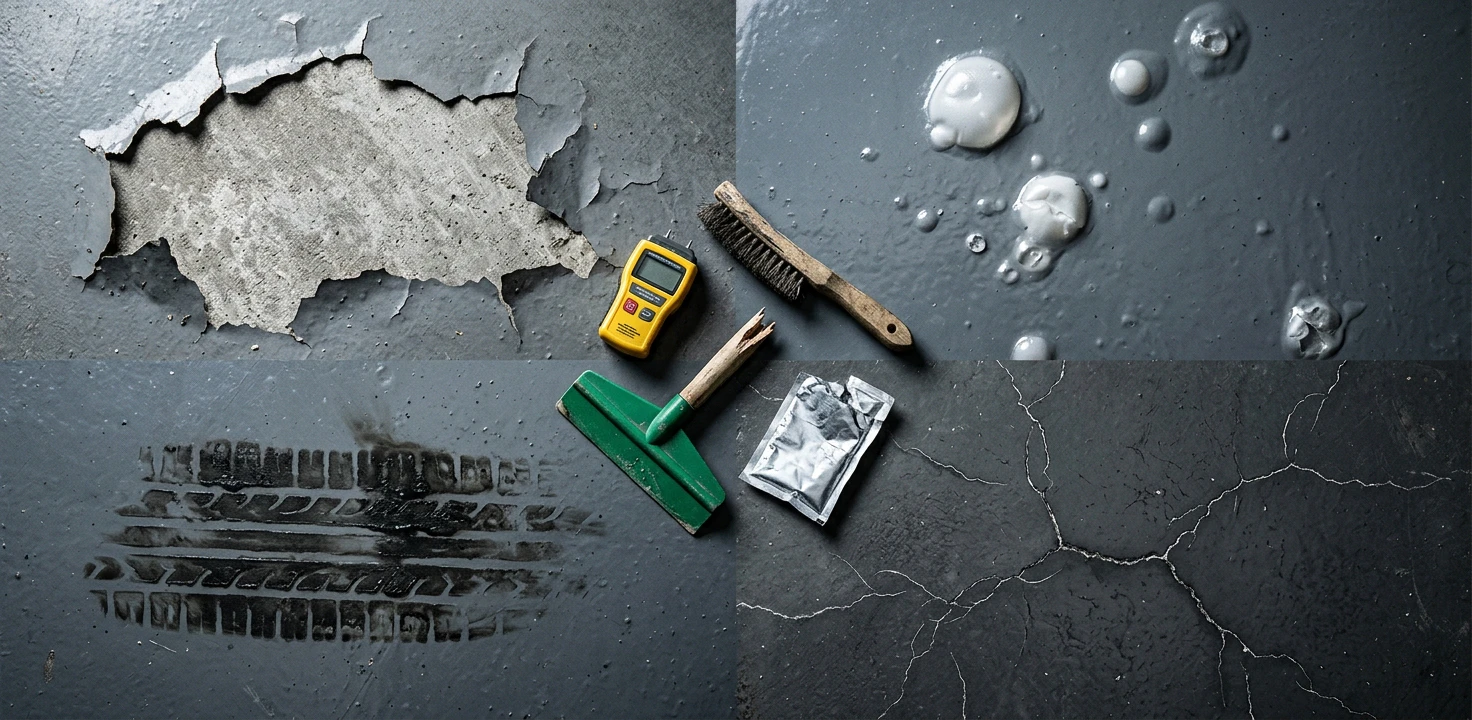 7 Garage Epoxy Mistakes That Make It Peel
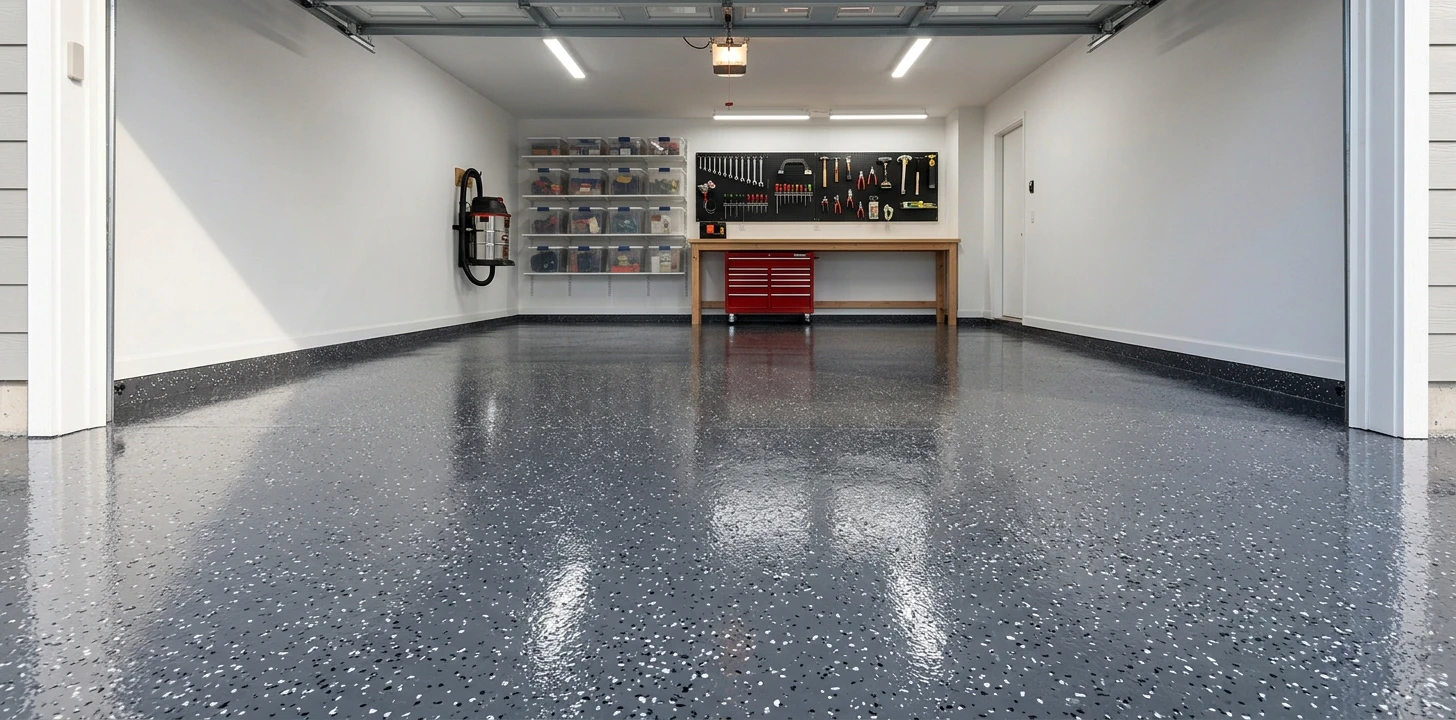 Full garage floor guide
 Laundry Room Floor
 Outdoor Deck