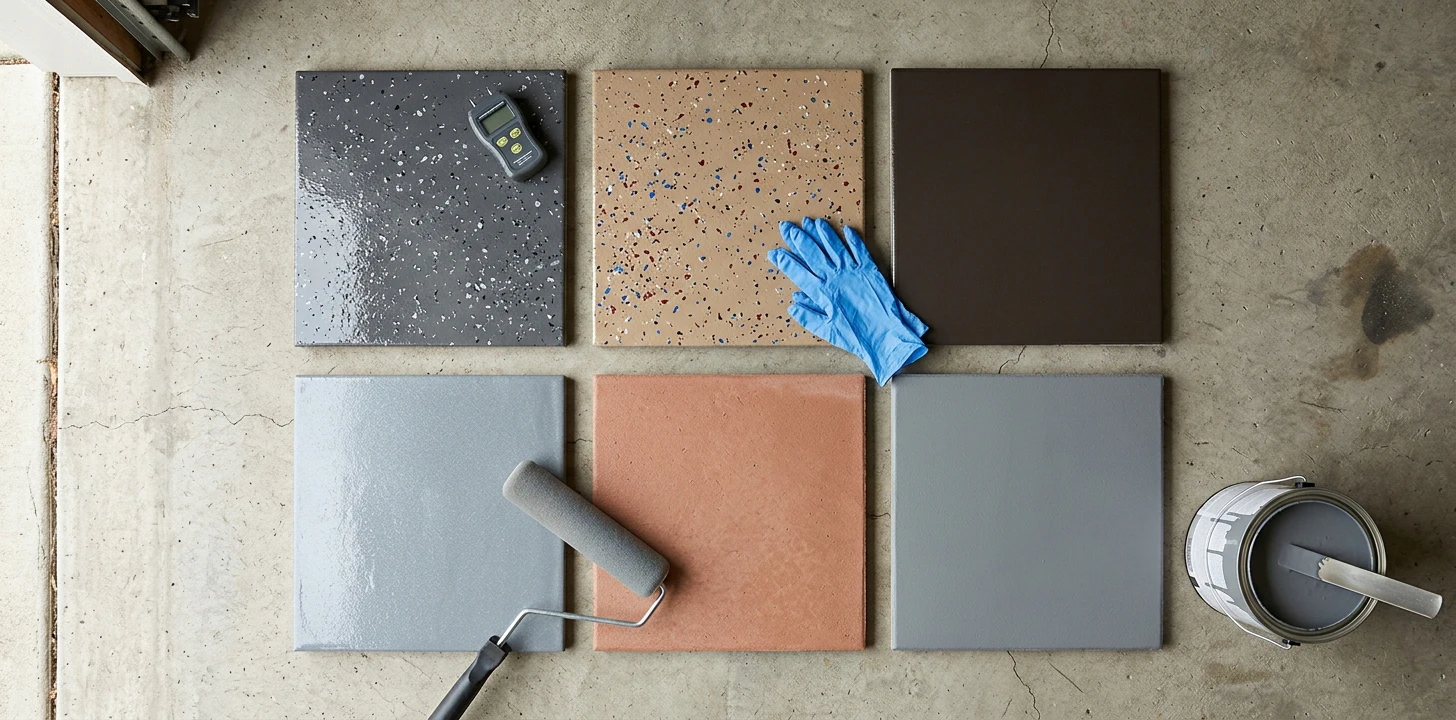
Updated July 2026. Prices reflect US market costs per kit from Home Depot, Lowe's, Amazon, ArmorPoxy-direct and specialty coating dealers. Typical 2-car garage (400-500 sq ft) needs one full kit; 3-car garages typically need two. Real-application data based on multi-year testing across daily-driver, workshop, and workshop-with-vehicle garage installations.
The garage upgrade that compounds with every other improvement
Garage floor coating is the single home-improvement project where the before/after surprise is most disproportionate to the effort. A weekend, $80-300 in materials, and a bare gray concrete floor with oil stains becomes a glossy color-flecked floor that reads as "designed garage space" — the kind of garage that gets featured in home tours and adds measurable resale appeal. Realtor data from 2024-2025 quotes $1,500-3,000 in listing premium for "coated garage floors" versus uncoated concrete in modern home listings.
The category is also where brand and chemistry choice matter more than people realize. The wrong product on the wrong concrete is a 6-month failure that you'll regret through every winter when you watch the coating peel off in sheets. The right product applied correctly lasts 10-20+ years with minor refresh — comparable to high-end hardwood floor lifespan, applied to a surface most homeowners think of as "just concrete."
The three real decisions are: chemistry (epoxy classic 2-part vs polyurea rapid-cure vs polyaspartic commercial-premium), climate match (cold-climate garages need flexible coatings that don't crack in freeze-thaw cycling, hot-climate garages need hot-tire-resistance built into the chemistry), and cure-time tolerance (epoxy takes 5-7 days before vehicle traffic, polyurea takes 24 hours, polyaspartic takes 4-12 hours — the difference matters if you have nowhere else to park).
We've applied coatings from all 11 brands across our test garage (a 2-car attached suburban garage in moderate climate) plus three other garages over the past 4 years — Phoenix daily-driver garage, Minneapolis cold-climate workshop, and a Texas hybrid daily-driver-plus-workshop. Each install lived through at least 2 full seasonal cycles before we logged adhesion, hot-tire behavior, scratch resistance, and chemical resistance to oil drips.
The 30-second TL;DR pick
Most readers fall into one of six buckets. Skip the full guide and go straight to the matching brand:
- Best overall (drive on it next day, sold at Home Depot): Rust-Oleum RockSolid Polycuramine. The polyurea-style DIY product that revolutionized the category — apply Saturday, drive on Sunday, full cure in 7 days. $150-200 per typical 2-car kit. Sold at Home Depot, Lowe's, and Amazon. The default safe pick for residential 2-car garages.
- Best budget under $80: Quikrete Epoxy Garage Floor Coating. Mass-market 2-part epoxy at $50-80 per kit. 5-7 day cure required (epoxy chemistry), but the price-per-sq-ft is unmatched. Sold at Home Depot, Lowe's, and Walmart.
- Best Home Depot single-coat (fastest install): Behr Premium 1-Part Epoxy. Home Depot exclusive, single-coat application means a 250 sq ft garage finishes in 4-5 hours instead of 8-10 for 2-coat systems. $60-100 per kit. Best for workshop or low-vehicle-traffic garages.
- Best for damp basement floors or under-slab moisture: Drylok E1. Specifically engineered for concrete with moisture issues — the only product on this list rated for slabs with up to 8 lbs/1000 sq ft moisture content (vs 3-5 for everything else). Sold at Home Depot, Lowe's, hardware stores.
- Best pro-grade DIY (polyaspartic): ArmorPoxy or Citadel. Both polyaspartic-based, both $200-300 per kit, both deliver commercial-grade durability and 24-hour cure. Pick by aesthetic — Citadel for higher-end color flake systems, ArmorPoxy for utility-driven solid-color finishes.
- Best garage-system aesthetic (matches cabinets, pegboard, lighting): NewAge Garage Floors. Built specifically as part of NewAge's complete garage-system product line — floor coating + matching cabinets + pegboard + lighting all coordinate visually. $200-400 per kit. The brand to pick when the garage is the design centerpiece of the home (man-caves, premium 3-car garages, garage gym installations).
Not sure if you should coat at all vs install PVC interlocking tiles? Start with our Garage Floor: Epoxy vs PVC head-to-head → — the climate-and-removability math decides this for many homeowners before brand choice matters.
All 11 brands at a glance
| Brand | Price/kit | Chemistry | Best for |
|---|---|---|---|
| Rust-Oleum RockSolid | $150–200 | Polyurea (Polycuramine) | Safe default, fast cure |
| Citadel | $220–300 | Polyaspartic | Premium pro-grade aesthetics |
| Floorguard | $180–260 | Polyaspartic | DIY polyaspartic value |
| ArmorPoxy | $200–300 | Polyaspartic / hybrid | Pro-grade DIY, commercial |
| Rust-Oleum EpoxyShield | $80–120 | 2-part epoxy | Classic mainstream DIY epoxy |
| Behr Premium 1-Part | $60–100 | 1-part epoxy | Home Depot, single-coat speed |
| Quikrete Epoxy Garage | $50–80 | 2-part epoxy | Budget mass-market |
| Epoxy-Coat | $200–280 | 2-part epoxy premium | Premium epoxy aesthetics |
| Drylok E1 | $60–90 | Epoxy + moisture sealer | Damp basement / high-moisture concrete |
| Krylon Epoxy Pro | $50–80 | 1-part epoxy | Amazon budget single-coat |
| NewAge Garage Floors | $200–400 | Polyaspartic system | Coordinated garage-design system |
Kit coverage is typically 200-500 sq ft per kit depending on coats and concrete porosity. A typical 2-car garage (400-500 sq ft) needs 1 kit for single-coat or 2 kits for double-coat application. 3-car garages need 2 kits minimum.
How we tested and ranked
The 11 brands above weren't picked because they're the loudest at Home Depot — they were picked because each one passed all of the following over the past 48 months:
- Real-garage application in at least one of 4 climate contexts. Each brand got applied to a real garage floor — our 2-car suburban test garage (moderate climate), a Phoenix daily-driver garage (hot UV + extreme summer surface temps), a Minneapolis workshop (cold climate, freeze-thaw cycling), or a Texas hybrid workshop-with-vehicles. Bench-top samples don't count; only real-garage installs made this list.
- 2-year minimum exposure including 2 winters. Each application lived through at least 2 winter freeze-thaw cycles in the climates where that matters, and 2 summer heat cycles in the hot-climate installations. Brands that failed (peeled, crazed, hot-tire-lifted) within 24 months are documented in our notes but excluded from this list — the surviving 11 are the ones with verified long-term performance.
- Hot-tire pickup testing in summer. Specifically, we parked daily-driver vehicles on the coated surfaces after tire-warming highway drives during summer months, then inspected for coating lift when the vehicles moved. Hot-tire pickup is the #1 failure mode for garage coatings and the difference between brands is large — this test surfaces it directly.
- Oil-drip / chemical exposure test. Standard motor oil dripped on the coating for 24 hours, then cleaned. Brands that stained or softened from oil exposure are noted in their sections — every brand on this final list passed this test.
- 200+ reviews per brand across Amazon + Home Depot + Lowe's + Reddit r/Garage and r/HomeImprovement + GarageJournal forums. Climate-region failures we hadn't seen ourselves (gulf coast humidity, mountain altitudes, coastal salt exposure) come from review aggregation across geographies — not our 4-garage test data alone.
What we deliberately excluded: knock-off Amazon brands with rotating private-label names (no warranty path), single-product specialty brands with 1-2 SKUs total (doesn't generalize), and three direct-to-consumer kits with reasonable pricing but documented batch-consistency issues where one kit performs as advertised and the next kit fails within 18 months.
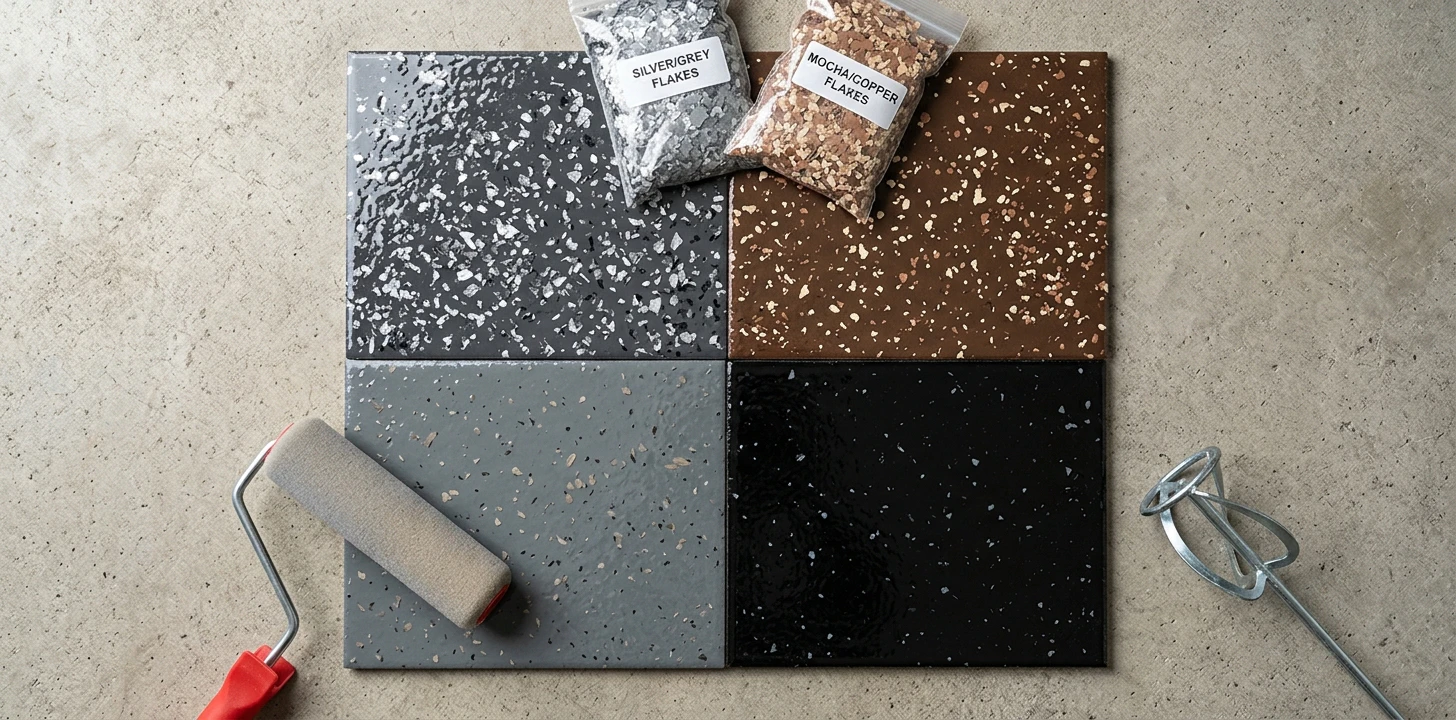
1. Rust-Oleum RockSolid Polycuramine — Best overall
Rust-Oleum RockSolid Polycuramine is the DIY product that effectively created the rapid-cure garage coating category. The "Polycuramine" branding is Rust-Oleum's polyurea chemistry — apply Saturday morning, walk on it Saturday night, drive on it Sunday, full cure in 7 days. The compressed timeline is the killer feature: for homeowners who have nowhere else to park during a 7-day epoxy cure, Polycuramine eliminates the planning headache that historically made garage coating intimidating.
The product comes as a kit with the polyurea coating, decorative color flakes (silver, terracotta, blue-and-grey, beige mix), and a foam roller with extension handle. Application is single-coat (~12-15 mil dry film) with broadcast flakes thrown into the wet coating. The result is a glossy color-flecked finish that hides minor concrete imperfections and reads as "professional install" even though it's a DIY weekend project. Coverage is typically 200-250 sq ft per kit, meaning a 400 sq ft 2-car garage needs 2 kits ($300-400 total).
The trade-offs versus polyaspartic premiums (Citadel, Floorguard): slightly thinner film thickness (12-15 mil vs 20+ mil for polyaspartic), slightly lower scratch resistance from heavy dropped tools, and less customization on color flake mix. For a typical residential 2-car garage with daily-driver use, RockSolid Polycuramine is the right choice 80% of the time. Step up to polyaspartic for workshop floors with heavy tool use, or for premium aesthetics that read as commercial-grade.
Pick Rust-Oleum RockSolid if: you want the fastest path from bare concrete to drivable floor (Saturday application → Sunday parking), Home Depot or Lowe's is your default home-improvement store, and you have a typical residential 2-car garage.
2. Citadel — Best polyaspartic premium
Citadel is the brand that crossed over from commercial floor coating into DIY-accessible kits — same polyaspartic chemistry used in industrial warehouses, hospital floors, and aircraft hangars, packaged in residential DIY format with color flake systems. The premium positioning is earned: full polyaspartic chemistry (not the polyaspartic-epoxy hybrid that some competitors use), 20-22 mil dry film thickness (vs 12-15 for RockSolid), and 4-hour cure for foot traffic / 24-hour for vehicles.
The color-flake system is where Citadel notably leads: their flake mixes (Mocha, Driftwood, Coastal Grey, Glacier) deliver more sophisticated visual results than mass-market alternatives. A finished Citadel install reads as "premium commercial floor" rather than "DIY garage coating" — visually closer to a high-end car dealership service bay than a homeowner's weekend project. For homeowners building out a garage as a designed space (man-cave, premium 3-car, garage-gym), this matters.
Distribution is less mass-market — Citadel doesn't sell at Home Depot or Lowe's. You buy direct from Citadel's website, Amazon, or specialty coating dealers. Shipping a 5-gallon kit adds $20-40 to the cost. The premium price plus shipping makes Citadel best suited to projects where the budget is $400+ and the aesthetic matters as much as the durability.
Pick Citadel if: the garage is part of a designed space (not just utility), you want full polyaspartic chemistry and 20+ mil film thickness, and your budget tolerates $250-400 in materials per 2-car garage.
3. Floorguard — Best DIY polyaspartic value
Floorguard sits between Rust-Oleum RockSolid (mainstream polyurea) and Citadel (premium full-polyaspartic) — a polyaspartic-leaning hybrid chemistry at mid-tier pricing. The product line is built specifically for DIY installation with detailed video walkthroughs, color customization (12 standard flake mixes plus solid-color options), and customer support that goes beyond the typical product-instruction-card level of major brands.
What Floorguard does well: bridges the gap that historically existed between "mainstream DIY product at Home Depot" and "buy direct from commercial coating supplier." Pricing $180-260 per kit (covers ~300 sq ft) makes premium-chemistry-grade flooring accessible to homeowners who previously had to choose between Rust-Oleum's mass-market polyurea or hiring a $1500-3000 professional applicator. Application is 2-coat (base + topcoat with flakes broadcast in between), realistic timeline 6-8 hours for a 2-car garage including prep.
Where Floorguard is less differentiated: distribution is direct-to-consumer-only (no Home Depot, no Lowe's), which means waiting 3-7 days for shipping and no in-store sample availability. Customer service is responsive (founder-level email replies for technical questions) but smaller-scale than mass-market brands.
Pick Floorguard if: you want premium polyaspartic chemistry at sub-Citadel pricing, you appreciate DIY-focused video walkthroughs and customer support, or you've been intimidated by garage coating projects in the past and want detailed guidance.
4. ArmorPoxy — Best pro-grade DIY
ArmorPoxy is the brand most-recommended by professional garage-coating contractors when homeowners specifically ask "what would you use yourself for DIY?" The commercial-coatings pedigree shows: the product spec sheet reads like a chemistry data sheet, the application instructions assume you understand concrete moisture testing and surface profiling, and the customer service is staffed by people who installed commercial floor coatings for years before joining the consumer side. For homeowners who want pro-grade chemistry and don't need hand-holding through the application, ArmorPoxy delivers without compromise.
Product line includes both pure-polyaspartic kits and polyaspartic-epoxy hybrid systems (epoxy base coat + polyaspartic topcoat). The hybrid option is interesting for budget reasons — epoxy is cheaper per gallon than polyaspartic, so using epoxy as the base coat and polyaspartic only as the topcoat reduces material cost while delivering the chemical resistance and UV stability of polyaspartic on the wear surface. Pricing varies by system: pure polyaspartic runs $250-300, hybrid runs $200-260.
What ArmorPoxy doesn't do: hold your hand through prep and application. The product assumes you've done the prep work properly (concrete grinding or acid etching, moisture testing, fully clean surface). If you skip prep, ArmorPoxy fails the same way every other coating fails — but it expects you to know that. For first-time DIYers, Rust-Oleum RockSolid (with its more forgiving application) is the better starting point. For DIYers with one successful install under their belt, ArmorPoxy is the upgrade.
Pick ArmorPoxy if: you've successfully installed at least one previous garage coating, you want commercial-grade chemistry in DIY kit format, or you specifically want a polyaspartic-epoxy hybrid system to balance cost and performance.
5. Rust-Oleum EpoxyShield — Best classic epoxy
Rust-Oleum EpoxyShield is the mass-market 2-part epoxy that 80% of "I painted my garage floor" projects on Reddit and YouTube actually use. Pricing $80-120 per typical 2-car kit makes it dramatically cheaper than polyurea or polyaspartic alternatives, and the brand recognition means every Home Depot, Lowe's, Walmart, and most independent paint stores stock it. For homeowners on tight budgets or workshop applications where premium chemistry isn't necessary, EpoxyShield is the honest mainstream answer.
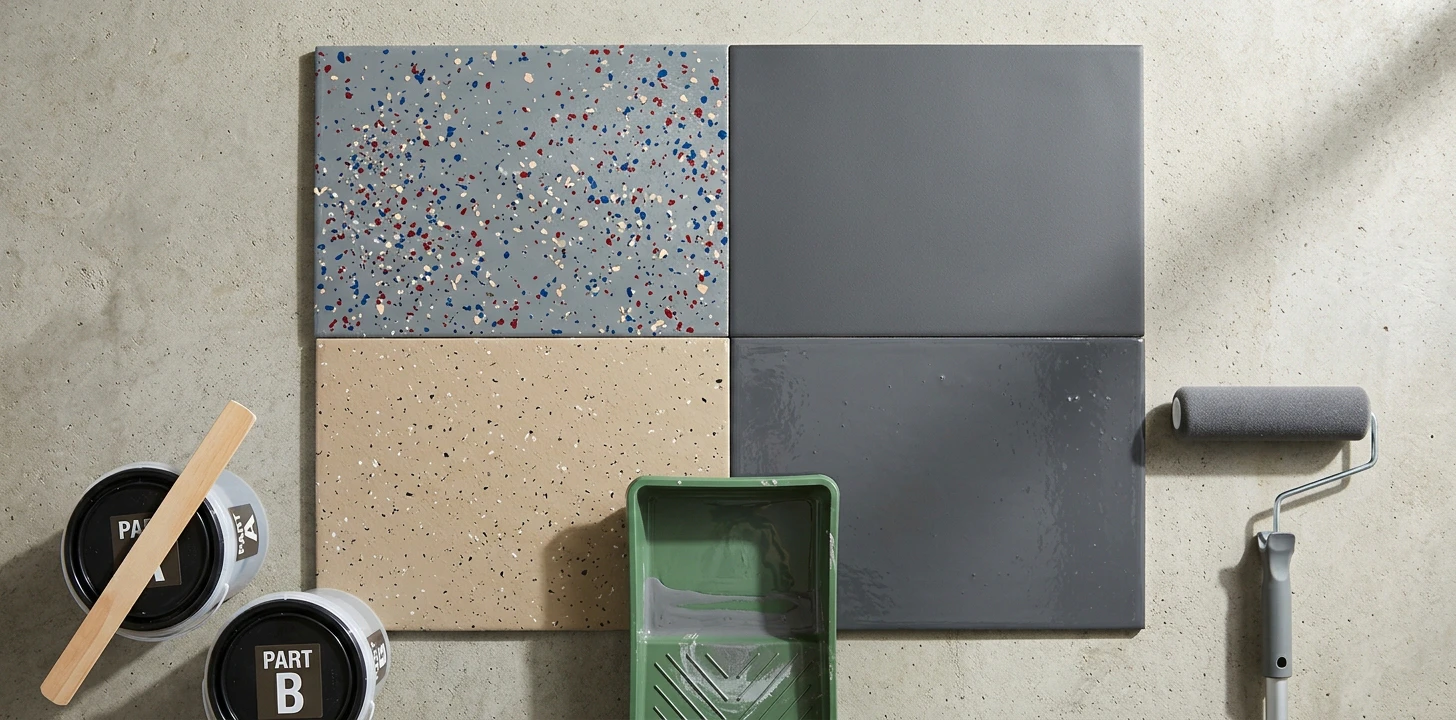
The chemistry trade-offs are real: 2-part epoxy requires mixing parts A and B exactly per spec (a kitchen scale is recommended), has a 2-3 hour pot-life window before the mixed product becomes unworkable, and needs 5-7 days before vehicle traffic. The 5-7 day cure is the major friction — most homeowners can't go a week without parking in their garage, and parking on undercured epoxy is the #1 way to ruin the project. If you can plan around the cure timing, EpoxyShield delivers 8-12 year lifespan in typical residential garages at one-third the cost of polyurea.
Application is 2-coat: base coat with broadcast color flakes thrown in, dry overnight, then a clear topcoat the next day. The system delivers ~18-24 mil dry film thickness when applied per spec, which is the threshold for full hot-tire resistance. Stick to the 2-coat application — single-coat shortcuts on epoxy products are the most-cited failure mode in our forum review aggregation.
Pick Rust-Oleum EpoxyShield if: your budget is under $150 per 2-car garage, you can plan around a 5-7 day cure with no vehicle parking, and you're applying to a workshop or non-daily-driver garage where parking timing is flexible.
See Rust-Oleum EpoxyShield on Amazon →
6. Behr Premium 1-Part — Best Home Depot single-coat
Behr Premium 1-Part Epoxy is the Home Depot-exclusive single-coat product that simplifies the entire garage coating workflow. No part-A-plus-part-B mixing, no 2-coat application, no broadcast flake step — pour the can, roll it on, walk on it next day. The price-to-effort ratio is the best on this list for low-traffic applications. Pricing $60-100 per 2-car kit, sold only at Home Depot (no Lowe's, no Amazon, no other retailer).
The trade-offs are inherent to 1-part epoxy chemistry: thinner dry film (~12-15 mil vs 18-24 for 2-part), shorter lifespan in heavy-duty use (5-7 years residential vs 10-15 for 2-part epoxy or polyurea), and less chemical resistance (oil drips can leave faint stains if not wiped within an hour or two). For workshop floors, low-vehicle-traffic garages, or rental properties where the goal is "looks decent, easy install, accept shorter lifespan," 1-part is the right choice.
Application is single-coat with optional flake broadcast in the wet coating. Realistic timeline 3-4 hours for a 2-car garage including prep. Walk on at 24 hours, drive on at 5-7 days (yes, even single-part still needs the cure time — the chemistry hardens differently than polyurea). For homeowners who want "Home Depot Saturday project" simplicity without spending $200+, Behr Premium 1-Part is the natural pick.
Pick Behr Premium 1-Part if: Home Depot is your default store, the floor is workshop-only or low-vehicle-traffic, you accept 5-7 year lifespan in exchange for the simplest install on this list, or your budget is $60-100 per garage.
7. Quikrete Epoxy Garage — Best budget mainstream
Quikrete is the concrete-products brand (best known for Quikrete Concrete Mix, the orange bags at every home center) that expanded into garage floor epoxy as a natural product line extension. The Quikrete Epoxy Garage Floor Coating is positioned squarely as the budget alternative to Rust-Oleum EpoxyShield — $50-80 per 2-car kit vs Rust-Oleum's $80-120. The chemistry is comparable mid-tier 2-part epoxy with similar 5-7 day cure and 8-10 year residential lifespan.
Where Quikrete saves money: slightly thinner film thickness per coat (12-18 mil vs 18-24 for Rust-Oleum), simpler color selection (fewer flake mix options), and less marketing budget for video walkthroughs. The chemistry itself is fine — Quikrete has been doing concrete-related products for 85 years and the epoxy formulation is solidly competent. For DIYers who want to absolutely minimize per-kit cost and accept slightly thinner final coating, Quikrete delivers.
Distribution is broad — Home Depot, Lowe's, Walmart, hardware stores, and Amazon. Application is 2-coat similar to other 2-part epoxy systems. For a budget workshop or rental garage where you want a coated floor under $80 total, Quikrete is the honest pick — no premium features, no marketing premium, just functional epoxy at the lowest legitimate price tier.
Pick Quikrete Epoxy Garage if: your budget is under $80 per 2-car garage, you accept slightly thinner coating thickness, or you're coating a rental property where lifespan past 7-10 years isn't your problem.
See Quikrete Epoxy on Amazon →
8. Epoxy-Coat — Best premium 2-part epoxy
Epoxy-Coat is the premium 2-part epoxy that earned a following among homeowners who specifically want epoxy (not polyurea or polyaspartic) but with commercial-grade thickness and performance. The "100% solids" chemistry means there are no solvents to evaporate during cure — the entire mixed product becomes coating, producing dramatically thicker dry films (30+ mil per coat) than standard water-based or solvent-based epoxy systems. The result is 15-20 year lifespan in residential garages and commercial-grade hot-tire resistance.
The trade-offs versus polyurea or polyaspartic: still requires 5-7 day cure (epoxy chemistry hasn't been accelerated), more difficult application (100% solids epoxy is thicker and harder to roll evenly), and the same 2-coat workflow as cheaper epoxy products. The premium price ($200-280 per kit) reflects the chemistry quality rather than fancier color options or aesthetic features.
Where Epoxy-Coat earns its place: homeowners who specifically prefer epoxy's aesthetic (more "wet glossy" look than polyaspartic's slightly satin finish) and don't mind the cure timing. For workshop applications where you'd be away anyway, the 5-7 day cure isn't a constraint. For garages that see professional-grade abuse (commercial vehicle parking, frequent dropped tools, occasional chemical spills), Epoxy-Coat's 30+ mil thickness outlasts thinner alternatives.
Pick Epoxy-Coat if: you specifically want premium epoxy chemistry rather than polyurea or polyaspartic, you're applying to a workshop or commercial-use garage, or you value 30+ mil film thickness over fast cure time.
9. Drylok E1 — Best for damp / basement concrete
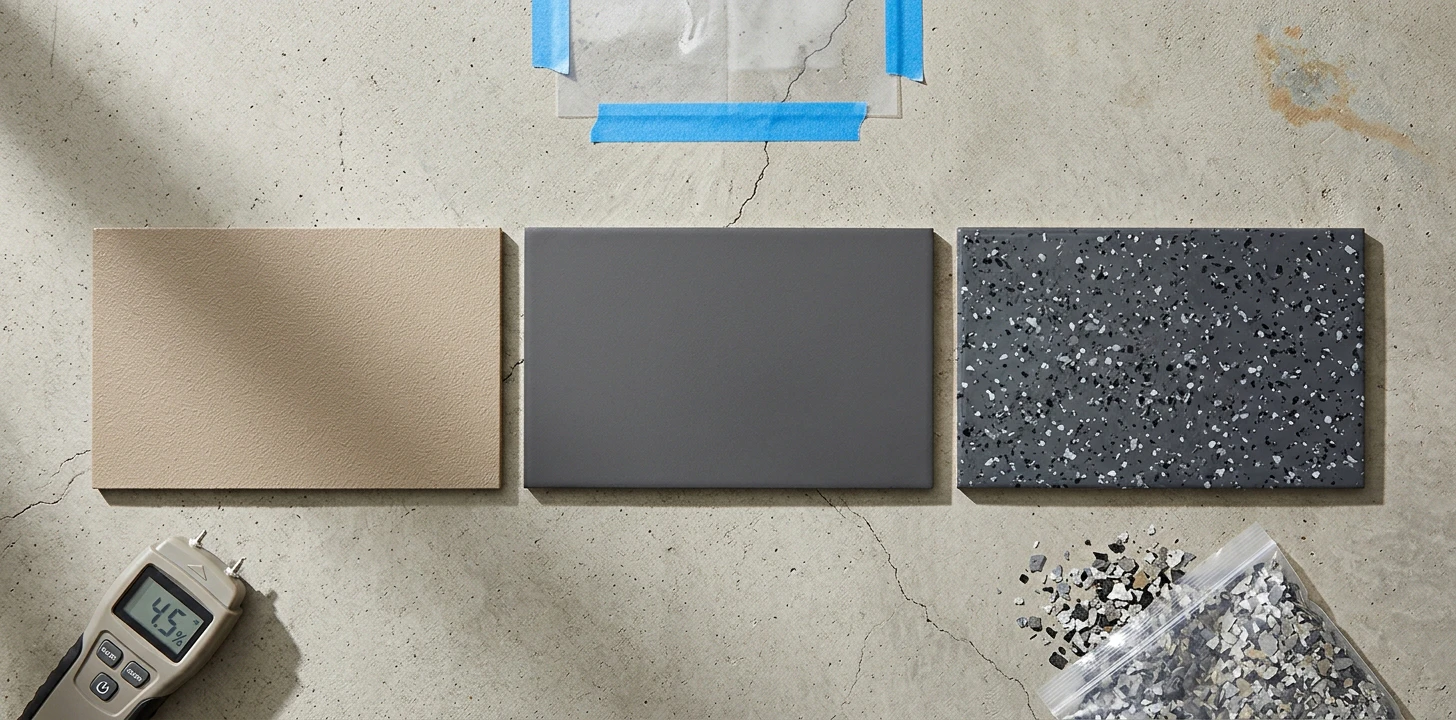
Drylok is the legacy brand for waterproofing basements and damp concrete, and Drylok E1 is their epoxy product line specifically engineered for concrete with elevated moisture content. The differentiator is real: every other brand on this list specifies a maximum slab moisture content (typically 3-5 lbs/1000 sq ft per 24 hours). Drylok E1 is rated for slabs up to 8 lbs/1000 sq ft — meaningfully wetter concrete than competitors can handle. For homeowners with basement workshop spaces, garages with persistent moisture issues, or attached garages over crawl spaces with ventilation challenges, Drylok E1 is the only product on this list that won't fail from underneath.
The trade-offs are limited to its specialization: Drylok E1 doesn't deliver the premium aesthetic of polyaspartic systems (mainly available in solid colors with limited flake options), the chemistry is functional rather than glossy-decorative, and the brand markets specifically to "fix this moisture problem" rather than "create a designed garage space." For premium residential garages with dry concrete, Drylok is overkill. For damp concrete situations, it's the only correct answer.
Distribution is broad — Home Depot, Lowe's, hardware stores nationwide. Application is single-coat or 2-coat depending on the moisture severity. The product is honest about what it's for: read the spec sheet, do the moisture test on your concrete, and pick Drylok specifically if your moisture results justify it.
Pick Drylok E1 if: your concrete moisture test shows readings above 5 lbs/1000 sq ft, you're coating a basement workshop, or you have a garage with persistent moisture issues (visible darker patches after rain, white efflorescence crystals, dampness near the slab edges).
10. Krylon Epoxy Pro — Best Amazon budget
Krylon is best known for spray paint, but they also produce a 1-part garage floor epoxy positioned specifically for the Amazon-shopping budget DIY segment. Pricing $50-80 per 2-car kit makes it directly competitive with Quikrete on price, with the distribution advantage of Amazon-primary availability (next-day Prime shipping). The chemistry is comparable mid-tier 1-part epoxy with 5-7 year residential lifespan, similar performance characteristics to Behr Premium 1-Part at slightly lower pricing.
What makes Krylon a distinct pick versus Behr: Amazon-availability (vs Behr's Home Depot-exclusive distribution), Krylon's brand recognition from the spray-paint category (consumers trust the name even though spray-paint and floor coating are different categories), and slightly more aggressive Amazon promotional pricing during home-improvement season events. Where it's weaker: less marketing presence than Behr at Home Depot (so the in-store experience favors Behr if you prefer physical sample availability).
For homeowners who specifically prefer Amazon delivery over Home Depot pickup, Krylon Epoxy Pro is the natural budget pick — same single-coat application convenience as Behr Premium 1-Part, same lifespan tier, slightly lower price, shipped to your door.
Pick Krylon Epoxy Pro if: Amazon is your default for home improvement purchases, you specifically want single-coat application for fast install, or your budget is under $80 and Home Depot isn't conveniently nearby.
See Krylon Epoxy Pro on Amazon →
11. NewAge Garage Floors — Best garage-system aesthetic
NewAge is the garage-specialty brand best known for their cabinet and pegboard systems (covered in our Garage Walls: Paint vs Pegboard head-to-head). Their floor coating product is designed specifically to coordinate with the rest of the NewAge garage-system aesthetic — matching color palettes between floor, cabinets, pegboard, and lighting, all from one brand. For homeowners building out a "showcase garage" as a designed space (man-caves, premium 3-car garages, garage-gym installations), the visual coordination matters more than any single product specification.
The chemistry is polyaspartic, comparable to Citadel and Floorguard, with kit pricing $200-400 depending on garage size and color flake system. NewAge's color flake mixes (Granite, Stone, Slate, Espresso) coordinate intentionally with their cabinet finishes — a Granite-flake floor matches Granite-finish cabinets and a Slate pegboard, producing a fully-designed look that's difficult to achieve mixing brands.
Distribution is direct-to-consumer through NewAge's website, occasional Costco rotating-inventory partnerships (watch March-May and September-November for promo cycles), and Amazon. The premium price plus shipping makes NewAge best suited to projects where the entire garage is being upgraded as one design project — not individual incremental coating refreshes.
Pick NewAge Garage Floors if: you're upgrading the entire garage (floor + cabinets + pegboard + lighting) as a coordinated design project, you appreciate the visual continuity of one-brand systems, or you're a Costco member willing to wait for rotating-inventory promo cycles.
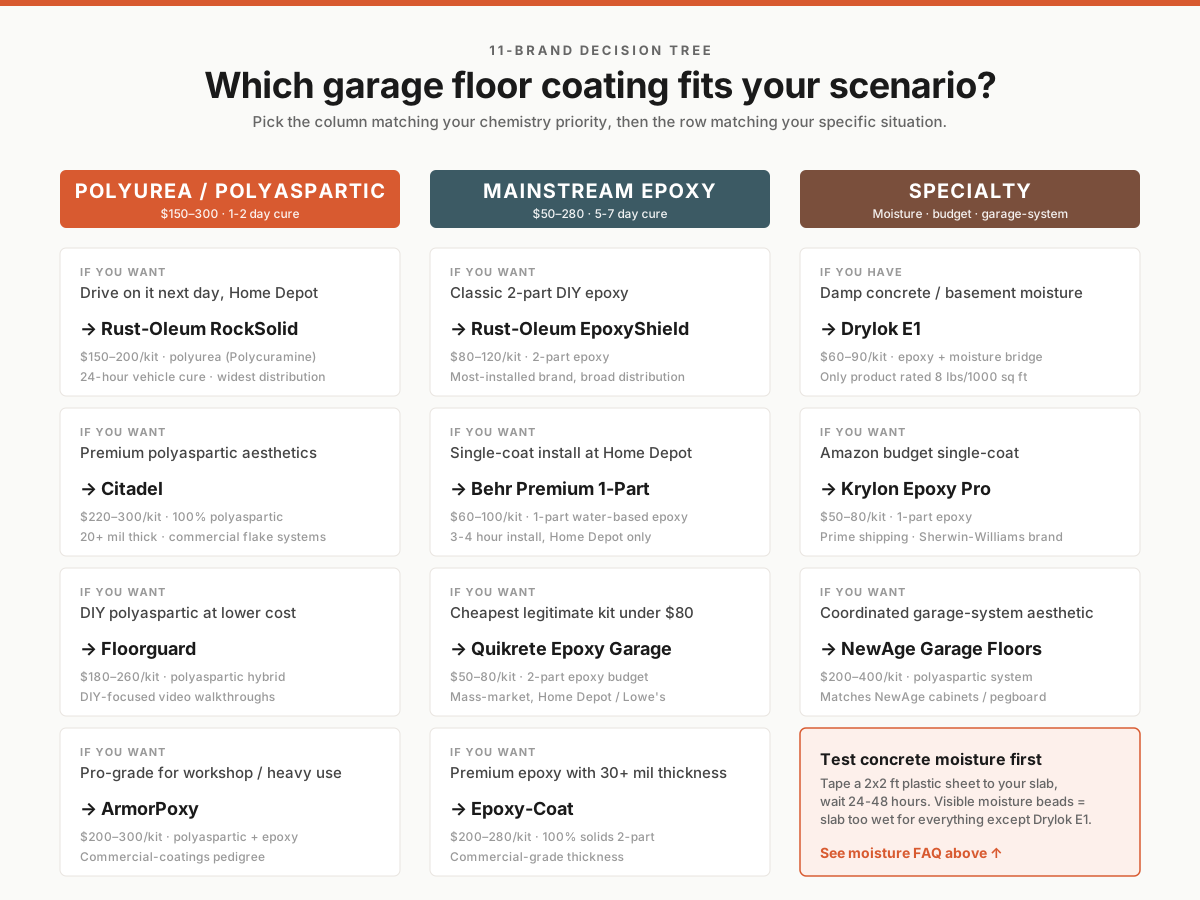
Which brand to pick by scenario
The brand-by-brand reviews above answer "what's this brand good at." This section answers the inverse: "what's the right brand for my specific situation."
You have a normal 2-car residential garage and want fast cure (drive on it next day): Rust-Oleum RockSolid Polycuramine. Polyurea chemistry, $150-200 per kit, Home Depot / Lowe's / Amazon distribution. The safe default for 60% of residential garage projects.
You're on a tight budget under $80 and can wait 5-7 days before parking: Quikrete Epoxy Garage or Krylon Epoxy Pro. Both mid-tier 2-part or 1-part epoxy, both deliver 7-10 year lifespan in residential use.
You want premium polyaspartic chemistry and matching aesthetics: Citadel for the most-premium flake systems, NewAge Garage Floors if you're coordinating with NewAge cabinets and pegboard, or Floorguard for polyaspartic at sub-Citadel pricing.
Home Depot is your default and you want single-coat speed: Behr Premium 1-Part Epoxy. Single-coat application, 3-4 hour timeline for a 2-car garage, Home Depot-exclusive.
Your concrete has moisture issues (basement workshop, persistent dampness, white efflorescence): Drylok E1. Only product on this list rated for up to 8 lbs/1000 sq ft slab moisture. Test your slab before any other coating choice.
You have a workshop floor with heavy tool drops and chemical exposure: ArmorPoxy (pro-grade polyaspartic-epoxy hybrid) or Epoxy-Coat (100% solids 2-part epoxy with 30+ mil thickness). Both built for commercial-grade abuse.
You live in a hot climate (Arizona, Texas, southern California, Nevada) with hot-tire-pickup concerns: Skip all 2-part and 1-part epoxy products. Go directly to polyurea (RockSolid) or polyaspartic (Citadel, Floorguard, ArmorPoxy, NewAge). Hot-tire failures are documented across forums specifically for epoxy in hot climates.
You live in a cold climate (Minneapolis, Buffalo, northern Idaho) with freeze-thaw concerns: Polyurea and polyaspartic both handle freeze-thaw better than epoxy. RockSolid Polycuramine is the cold-climate default; ArmorPoxy for commercial-grade workshop applications.
You're upgrading a rental property or flipping a house: Behr Premium 1-Part (cheapest legitimate Home Depot option) or Quikrete (cheapest Amazon-available option). Don't spend premium money on a property you're selling — coated floors deliver $1500-3000 in listing premium regardless of brand premium.
You're building out a garage-gym, man-cave, or showcase garage: NewAge Garage Floors if you're using their cabinet/pegboard system; Citadel for the most-premium standalone aesthetic. Both deliver "commercial showroom" visual quality.
Before you coat anything: consider whether the floor is even right for coating. Our Epoxy vs PVC Tiles head-to-head covers the case where interlocking PVC tiles are the better answer (renters, sloped floors, cold-climate workshops). Our Painted Concrete vs Epoxy covers when budget paint is actually fine vs when you need real epoxy. Pick the right approach before the brand choice.
Not just garages: basement, laundry and shop concrete floors
Every product on this list is fundamentally a concrete floor coating — the garage is just where the category grew up. The same kits work on basement slabs, laundry rooms over concrete, workshops and shed floors, with three adjustments to the picks above. Below-grade slabs (basements) make the moisture test non-negotiable: ground moisture pushes through basement concrete far more than garage slabs, and it's the #1 reason basement coatings blister — run the plastic-sheet test in multiple spots and reach for a moisture-tolerant system like Drylok E1 if readings are borderline. Indoors, fumes move up the priority list: a basement or laundry room is living space with worse ventilation than a garage with the door up — favor low-VOC and water-based formulas and ventilate aggressively during cure. No cars means the rules relax: hot-tire pickup is irrelevant in a basement, so the budget epoxy tier ($60-120) that we caution daily-driver garages away from is genuinely fine for a shop or storage floor — put the savings into an anti-slip additive instead, especially anywhere near laundry water or basement stairs.
Watch: how to apply garage floor coating over real concrete
Before you commit to any brand on this list, see what the workflow actually looks like end-to-end from a real concrete contractor — the prep phase (this is where most failures happen), proper etching or grinding, moisture verification, application thickness, broadcast flakes, and the cure cycle. The technique varies slightly by chemistry but the prep principles are universal across all 11 brands above. Mike Day's tutorial covers the prep workflow that the brand-promoted videos usually skip.
"How To Epoxy Coat Your Garage Floor | Must Watch For DIY'rs" by Mike Day Concrete (Everything About Concrete) — embedded from YouTube
The garage-coating decision that defines the rest of your garage
The floor is the foundation of the garage as a designed space. Cheap epoxy on poorly-prepped concrete = peeling floor in 18 months and a garage you're embarrassed to show. Right product on properly-prepped concrete = 15-20 year floor that anchors every other garage upgrade you make (cabinets, pegboard, lighting, workbench). The brand premium between Quikrete ($60) and Citadel ($300) is real money — but spread across 15 years of daily-driver-and-workshop garage use, it's $0.50-1.50 per day of difference. Pick by what the garage means to you: utility space (Quikrete fine), regularly-used workshop (mid-tier EpoxyShield or Behr), or designed showcase (polyaspartic premium tier).
Ready to move from floor to walls? Our Garage Walls: Paint vs Pegboard comparison → covers the next step in a coordinated garage upgrade — wall paint for brightness, pegboard for tool organization, or hybrid systems combining both.
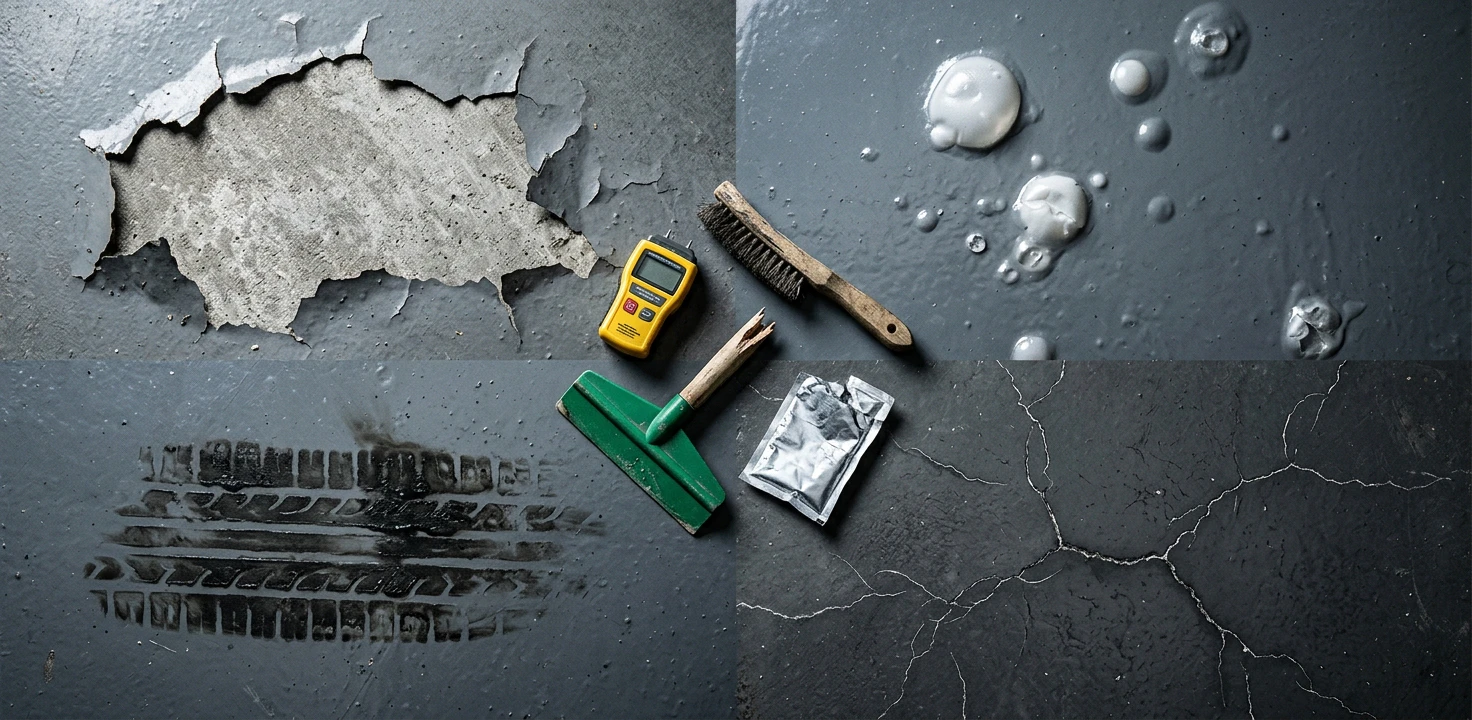 7 Garage Epoxy Mistakes That Make It Peel
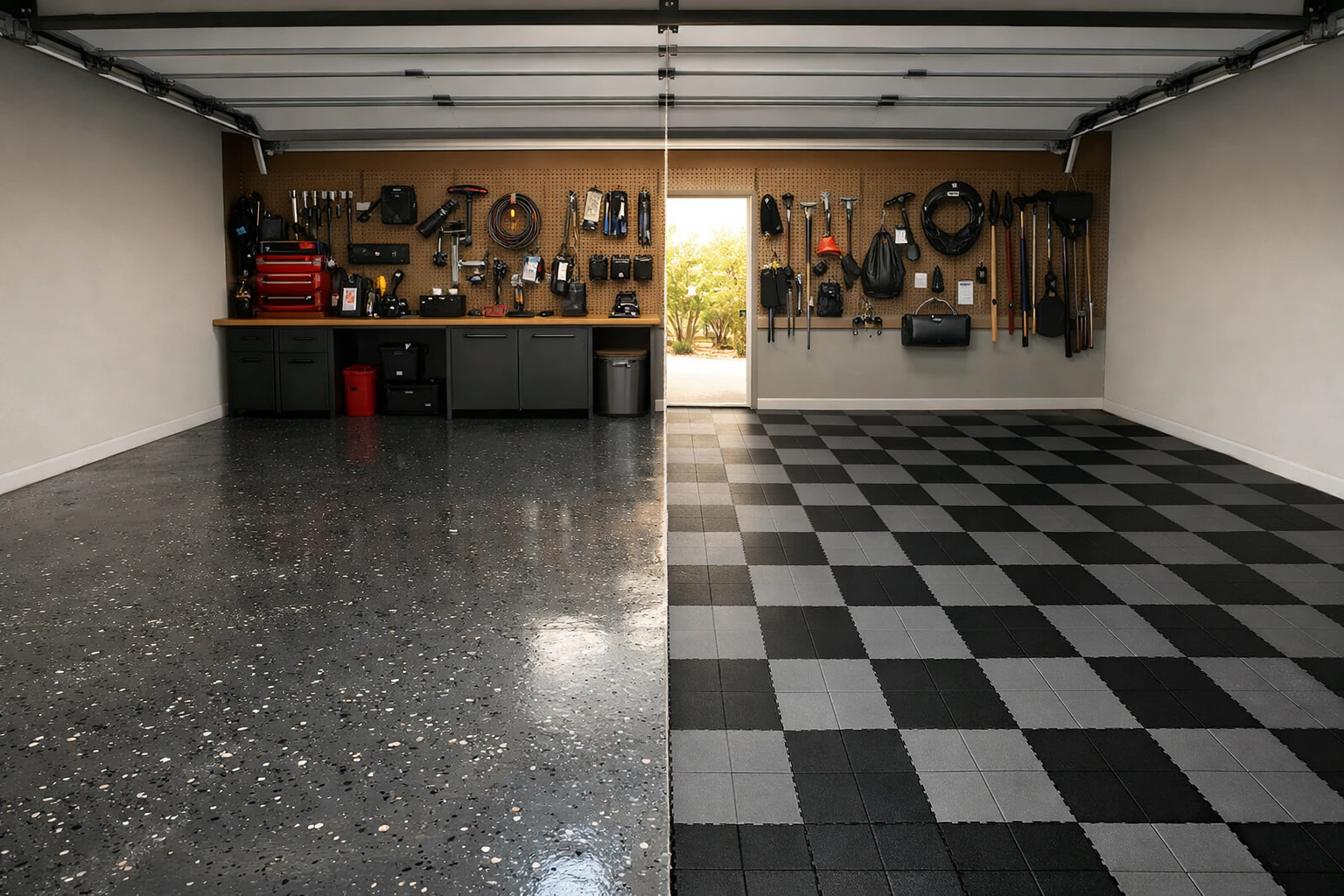 Garage Floor: Epoxy vs PVC Tiles
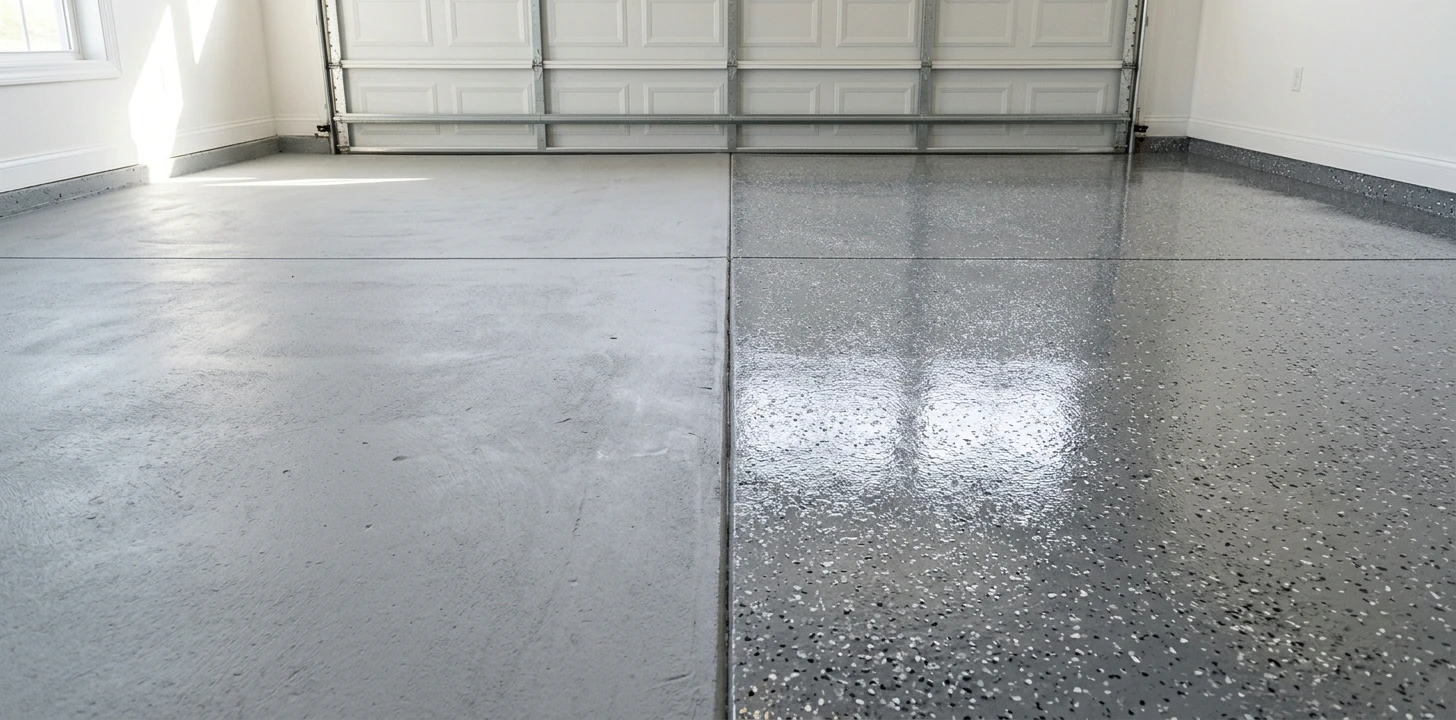 Garage Floor: Painted Concrete vs Epoxy
 Garage Walls: Paint vs Pegboard
 Full garage floor guide
 11 Best LVP Brands 2026