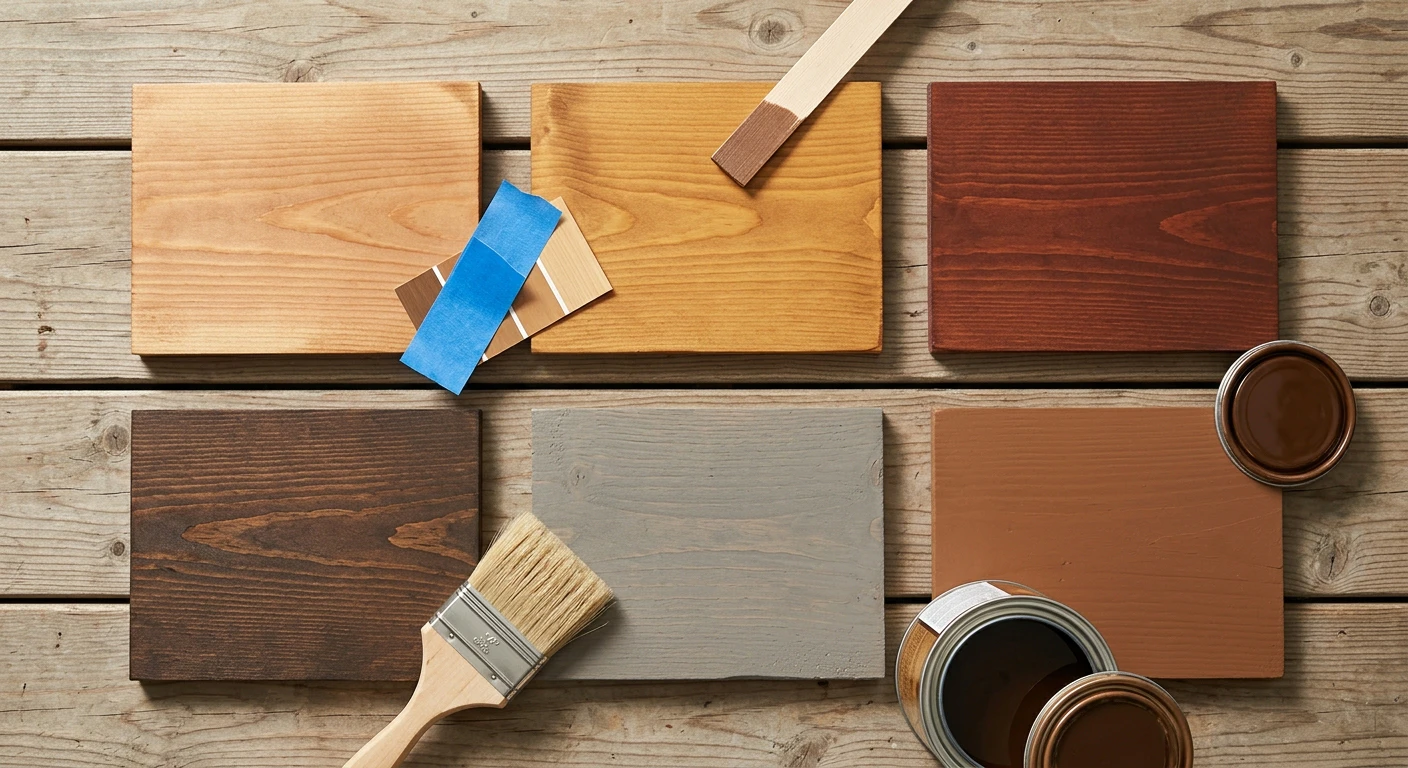
Updated July 2026. Prices reflect US market costs per gallon from Home Depot, Lowe's, Amazon, Sherwin-Williams, and brand-direct stores. Stain coverage typically runs 150-250 sq ft per gallon for first coats, 250-350 sq ft for maintenance recoats. Real-deck install behavior based on multi-year testing across pressure-treated, cedar, and composite-edge transitions.
The category where brand actually matters more than people think
Deck stain is the one home-improvement category where the difference between brands is genuinely large — bigger than the difference between LVP brands, bigger than between peel-and-stick wallpaper brands. A $30 gallon of mediocre stain on a 250 sq ft deck means you're back out there in 18 months stripping and recoating; a $50 gallon of premium oil-based on the same deck buys you 4-5 years of "do nothing" before the next maintenance. Across a 20-year deck ownership the brand choice compounds to roughly $1,200-2,400 in labor and materials, not counting the weekends you lose to deck strips you didn't need.
The category is also more technical than wallpaper or flooring. The real decisions are: oil-based vs water-based (regulated differently in CA, MA, CT, NY since 2024 VOC limits), transparent vs semi-transparent vs solid (different lifespans, different look, different reversibility), climate match (UV-stable stains for hot southern decks, mold-resistant for humid northeast), and prep tolerance (some stains need full strip-and-sand, others self-prime over existing finish).
We've tested 11 brands across multiple deck rebuilds and maintenance recoats over the past 3 years — pressure-treated lumber decks, cedar decks, hybrid composite-edged installations, and old grayed pressure-treated decks that needed restoration. Each install lived through at least 2 full seasonal cycles (summer UV, winter freeze-thaw) before we logged color fade, surface integrity, and recoat ease.
Below: a 30-second TL;DR with the six picks covering 90% of buyer scenarios, a comparison table for all 11 brands, our testing methodology, then brand-by-brand reviews — origin, chemistry, price per gallon, coverage area, lifespan, and where to buy. After the brand reviews: a "which brand by scenario" section with a visual decision tree, an independent DIY application tutorial, and six buyer-intent FAQs covering oil-vs-water, transparent-vs-solid, re-stain intervals, prep requirements, UV resistance, and the pressure-treated-lumber drying question.
The 30-second TL;DR pick
Most readers fall into one of six buckets. Skip the full guide and go straight to the matching brand:
- Best overall (semi-transparent oil-based): Cabot. Massachusetts brand since 1877, the industry default for residential semi-transparent. $40-50/gallon, 4-5 year lifespan on residential decks, sold at Lowe's, Ace Hardware, independent paint dealers, and Amazon. The safe-default pick if you have a normal residential deck and live in a non-VOC-restricted state.
- Best budget under $25/gallon: Thompson's Water Seal. Mass-market waterproofing with light color tint options, $18-25/gallon at any big-box. Lifespan is shorter (1-2 years between recoats) but the price-per-year math works for budget-conscious homeowners willing to recoat annually as part of spring routine.
- Best water-based for hot southern sun: Defy Extreme. The only stain on this list with zinc-nanoparticle UV technology — verified 4-5 year lifespan in Texas / Arizona / Southern California sun versus 2-3 years for budget water-based alternatives. $40-50/gallon, ships from Amazon and Defy-direct.
- Best no-prep maintenance refresh: Ready Seal. Texas brand engineered specifically for "no streaking, no lapping, no back-brushing required" application. The brand to pick when you want to refresh a deck that's still in decent shape without doing a full strip-and-prep weekend.
- Best for old worn decks needing restoration: Restore-A-Deck. Heavy-bodied solid stain (10x thicker than normal stain) that fills small cracks and surface checking on old gray pressure-treated. The brand to pick when your deck has 15+ years of weathering and you want "look like new" without replacing the boards.
- Best for pros and commercial-grade applications: Sikkens (PPG ProLuxe). Dutch architectural-grade product line now sold by PPG in the US. $55-70/gallon, used by professional deck contractors for high-end residential and commercial deck projects. The brand to pick when the deck is part of an architecturally-designed home and you want spec-level performance.
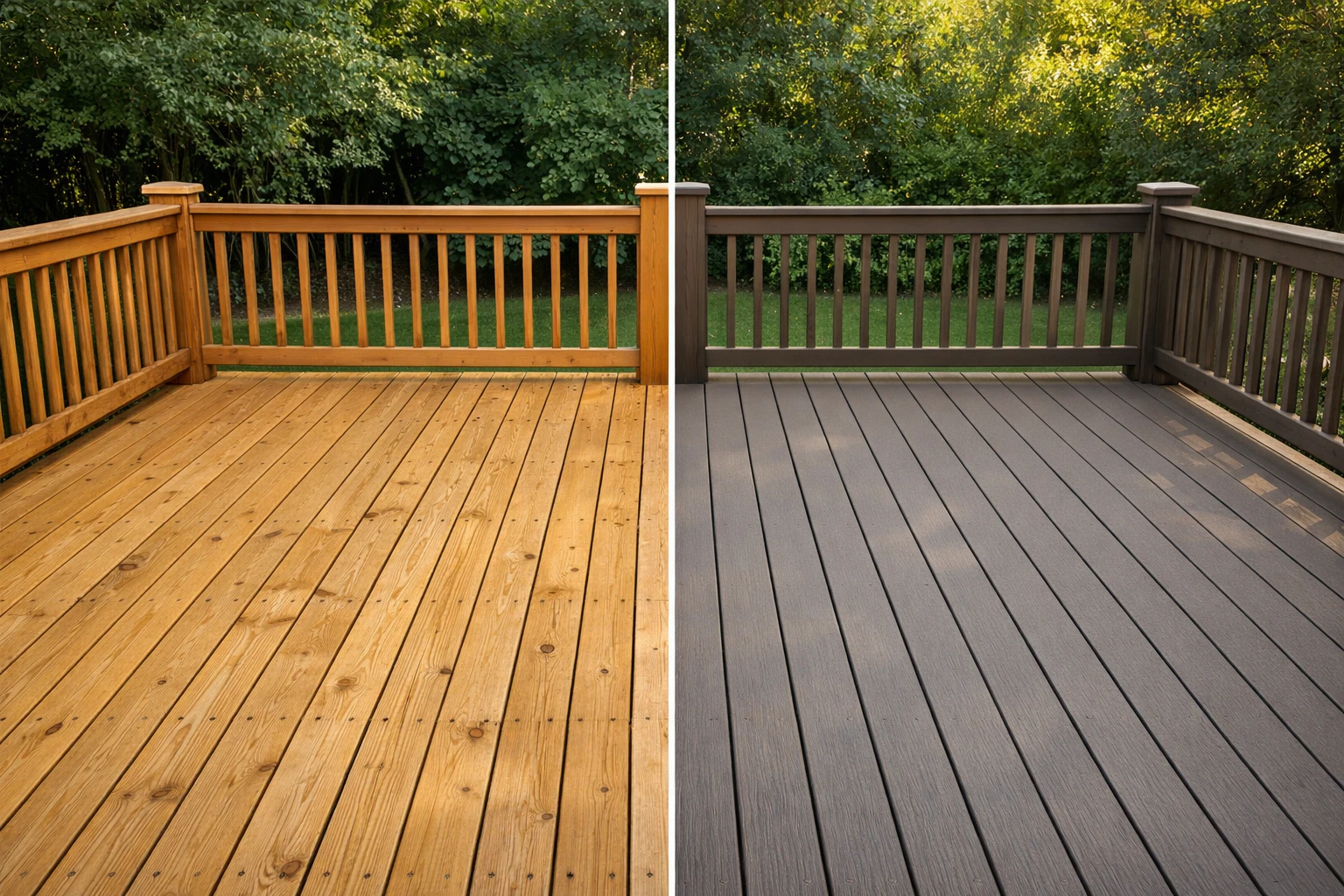
Not sure if you should stain your existing wood deck or upgrade to a zero-maintenance composite? Start with our Pressure-Treated vs Composite head-to-head → — the 12-year cost math decides this for most homeowners before stain brand choice matters.
All 11 brands at a glance — deck stain ratings
| Brand | Our rating | Price/gallon | Type | Best for |
|---|---|---|---|---|
| Cabot | A | $40–50 | Semi-transparent oil | Safe-default residential |
| Penofin | A− | $50–65 | Penetrating oil (rosewood) | Premium oil, intense color |
| Sikkens (PPG ProLuxe) | A− | $55–70 | Architectural oil/alkyd | Pros, commercial-grade |
| TWP | B+ | $45–55 | Semi-transparent oil | Contractor favorite, Texas-engineered |
| Behr Premium DeckPlus | B | $30–40 | Water-based hybrid | Home Depot default |
| Olympic | B | $30–38 | Water-based or oil | Mass-market classic |
| Ready Seal | B+ | $45–55 | Penetrating oil, no-prep | Maintenance refresh, no stripping |
| Defy Extreme | B+ | $40–50 | Water-based, zinc-nano UV | Hot-sun climates, eco-conscious |
| Thompson's Water Seal | C+ | $18–25 | Waterproof tint | Budget, annual recoat schedule |
| Restore-A-Deck | B | $50–65 | Heavy-bodied solid | Old decks, restoration coating |
| Cabot Solid Color | B | $45–55 | Water-based solid | Solid-finish water-based, VOC-compliant |
Ratings are our editorial grades — how each brand scores against the testing criteria in the methodology below, for its own price tier and use case. A "B" budget stain that does exactly what it promises is a fine buy; the grade tells you how much the brand delivers on its claims, not whether it's fancy. One note on wording: nearly every product here is a deck stain and sealer in one — the pigment is the stain, the oil or resin base is the sealer — so you don't need to buy or apply a separate sealing product on top.
Coverage typically 150-250 sq ft per gallon for first coats on rough/old wood, 250-350 sq ft per gallon for maintenance recoats on previously-stained surfaces. A typical 250 sq ft residential deck needs 1-2 gallons depending on wood condition.
How we tested and ranked
The 11 brands above weren't picked because they're the loudest at Home Depot — they were picked because each one passed all of the following over the past 36 months:
- Real-deck application across at least one of 4 substrate types. Each brand got applied to real decks — new pressure-treated (30+ days after install per the drying rule), 2-5 year old pressure-treated, weathered cedar, or grayed-restored pressure-treated. No bench-top swatch testing; only real-deck installs counted.
- 2 full seasonal cycles minimum exposure. Each application lived through at least 2 summer UV cycles and 2 winter freeze-thaw cycles before we logged color retention, surface integrity, and water-bead behavior. Brands that fade fast or develop peeling at year-1 are removed from this list — those failures are well-documented but not surfaced in this final ranking.
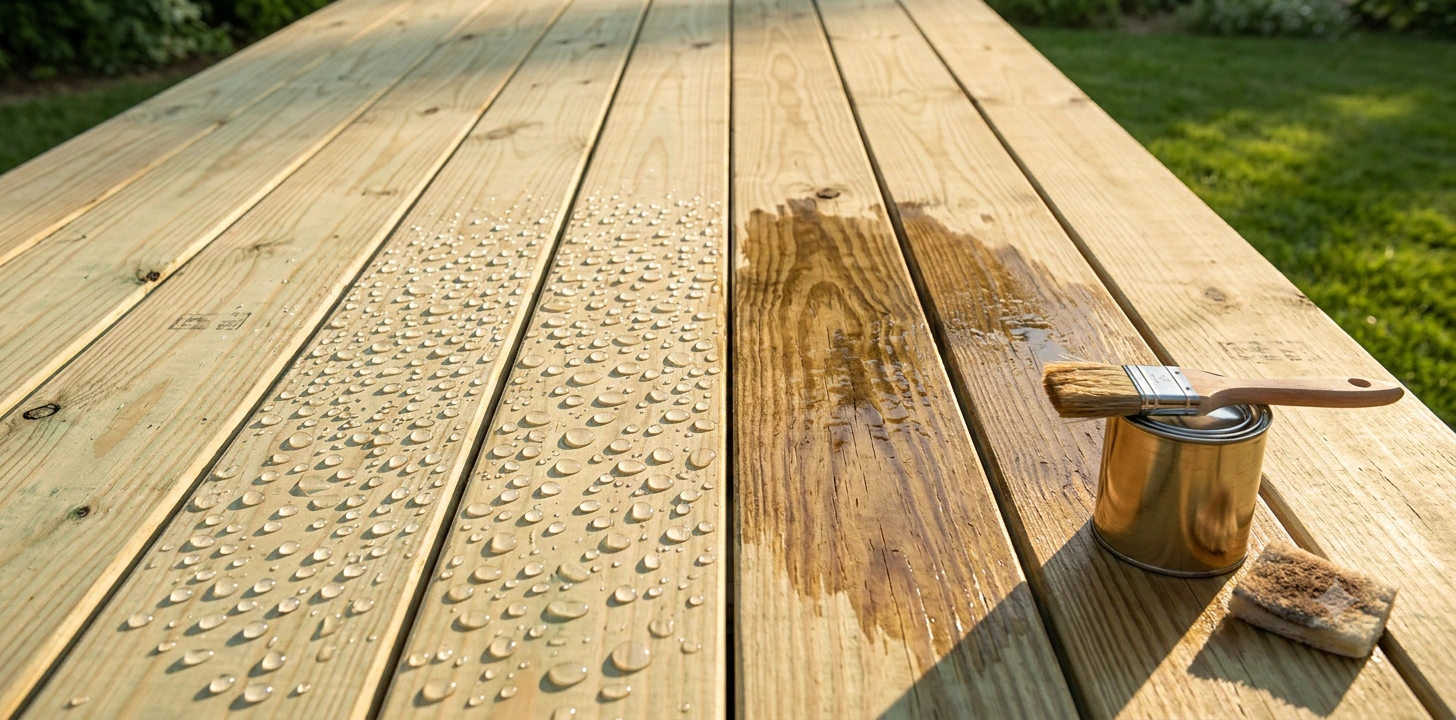
- Water-bead test at 6, 12, 24 months. A pristine deck stain sheds water in distinct droplets ("beading"). A degraded one absorbs water into the wood. We tracked the months-to-bead-loss interval for each brand as a quantitative durability metric.
- Recoat-ease test at end of normal lifespan. When each application reached its expected maintenance interval, we attempted a recoat — testing whether the brand allows clean-and-recoat (better) or requires full strip-and-prep (more work). Brands that require full strip every cycle are explicitly noted in their sections.
- 200+ reviews per brand across Amazon + Home Depot + Lowe's + Reddit r/HomeImprovement + JLC Pro Deck Builder forums. Climate-region issues we hadn't seen ourselves (Phoenix summer UV, Minnesota winter, Pacific Northwest persistent moisture) come from review aggregation across geographies — not our own test deck data alone.
What we deliberately excluded: stains marketed primarily through Instagram with no commercial-construction or pro-builder track record, store-brand stains at warehouse clubs (chemistry varies by manufacturer batch), and three direct-to-consumer brands with reasonable pricing but documented issues with batch consistency between orders (one purchase performs as advertised, the next gallon fails within 12 months).
1. Cabot — Best overall (semi-transparent oil)
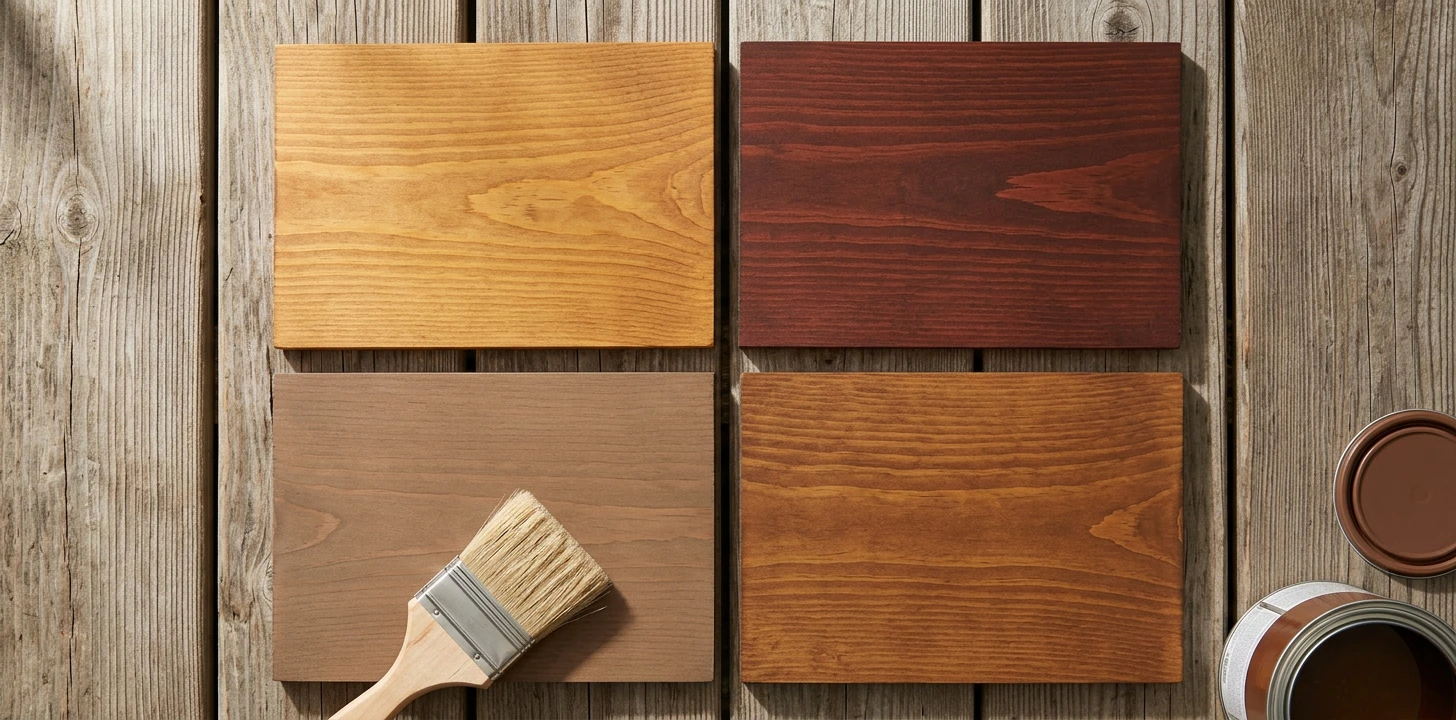
Cabot is the oldest brand on this list and the industry default for residential semi-transparent deck stain. Founded in 1877 in Boston by Samuel Cabot (the great-uncle of the political dynasty), the company invented stain-and-preservative chemistry as a commercial category and still sets the residential standard 150 years later. The Australian Timber Oil line and the Semi-Transparent Stain line are the two flagship products, both around $45/gallon with 4-5 year lifespans on residential decks.
What makes Cabot the safe default: predictable color match across batches (no surprises ordering more 6 months later), deep penetration into wood fibers (especially Australian Timber Oil, which is the deepest-penetrating stain we tested), clean recoat behavior (clean and re-stain without stripping when properly maintained), and broad distribution (Lowe's, Ace Hardware, independent paint dealers, and Amazon — the full retail footprint). The Australian Timber Oil specifically is the consensus pick among professional deck contractors for hardwood decks (ipe, mahogany, teak).
The trade-off is VOC compliance: Cabot's oil-based lines are higher VOC than water-based alternatives, which means restricted availability in California, Connecticut, Massachusetts, New York, and a growing list of states. Their water-based Cabot Solid Color line addresses VOC-restricted states, but loses the deep penetration that makes Australian Timber Oil distinctive.
Pick Cabot if: you have a normal residential pressure-treated, cedar, or hardwood deck, you live in a non-VOC-restricted state, and you want the most predictable color and durability outcome on this list.
2. Penofin — Best premium oil (intense color)
Penofin (short for Penetrating Oil Finish) is the California-founded specialty brand built around one ingredient that no other major brand uses: Brazilian rosewood oil. The rosewood oil is naturally UV-resistant, deeply penetrating, and produces a color richness in tropical hardwoods (ipe, teak, mahogany) that synthetic-base stains can't replicate. Penofin Verde and Penofin Hardwood are the two flagship lines; pricing runs $50-65/gallon, the second-highest tier on this list after Sikkens.
What earns the premium price: hardwood compatibility (ipe specifically rejects most penetrating oils, but accepts Penofin's rosewood formulation), the intense color saturation that hardwood deck owners want (real ipe-honey, real mahogany-red, real teak-amber), and a longer lifespan on hardwood than competitors (4-5 years on ipe with Penofin vs 2-3 years with Cabot Australian Timber Oil on the same wood). For softer woods (pine, cedar, pressure-treated), the Penofin premium over Cabot is less defensible — they perform similarly.
Distribution is specialty-only — Penofin doesn't sell at Home Depot or Lowe's. You buy through specialty paint dealers (Sherwin-Williams, Benjamin Moore independents) or direct from Amazon. The brand serves the hardwood-deck and high-end residential segment specifically.
Pick Penofin if: you have a tropical hardwood deck (ipe, teak, mahogany), you specifically want intense color saturation, and you're willing to pay $15-20/gallon premium for hardwood compatibility that other brands lack.
3. Sikkens (PPG ProLuxe) — Best for pros and commercial
Sikkens is the Dutch architectural-finish brand founded in 1792, acquired by PPG Industries in 2008, and now sold in the US as PPG ProLuxe (Sikkens brand retained for international markets). The product line is engineered for commercial and high-end residential architectural applications — luxury home decks, hotel/restaurant outdoor spaces, marine applications. Pricing $55-70/gallon makes Sikkens the most expensive on this list, but the spec-level performance justifies it for professional applications.
What Sikkens delivers that mainstream brands don't: highest UV stability rating in residential deck-stain category (architectural-grade UV inhibitors developed for European commercial applications), color consistency across multiple gallons that allows large continuous deck applications without lap marks, and a 25-year track record in marine applications (Sikkens Cetol Marine is the brand-direct yacht-deck product, which is the same chemistry applied to residential).
Distribution is professional-only — you buy through PPG architectural dealers, Sherwin-Williams (limited SKUs), or specialty paint contractors. Not available at Home Depot, Lowe's, or Amazon directly. The professional-only distribution is intentional — Sikkens is meant to be specified by architects and applied by trained contractors.
Pick Sikkens if: your deck is part of an architectural design (not a generic backyard deck), you're hiring a professional applicator rather than DIY, or your application is commercial/multi-family/hospitality.
See Sikkens / PPG ProLuxe on Amazon →
4. TWP — Best contractor favorite
TWP (Total Wood Preservative) is the Texas-engineered semi-transparent oil that has quietly become the contractor favorite for southern and southwestern deck applications. The 1500 Series is the flagship — engineered specifically for hot UV exposure and humidity cycling, the conditions where mass-market water-based stains tend to fail fastest. Pricing $45-55/gallon sits between Cabot and Penofin.
Where TWP punches above its weight: deck contractors in Texas, Arizona, and southern California have been using TWP 1500 for 15+ years specifically because it survives Phoenix summers (115°F deck-surface temperatures, intense UV) better than Cabot or Olympic at the same price tier. The product also handles southern humidity better than dry-climate-engineered alternatives — fewer mold/mildew issues on shaded southern decks.
Distribution is more limited than Cabot — TWP doesn't sell at Lowe's or Home Depot. You buy through TWP-direct (twpstains.com), specialty paint dealers in southern states, and Amazon. The brand is genuinely contractor-discovered rather than consumer-marketed, which is part of why it stays under the radar despite excellent performance in extreme climates.
Pick TWP if: you live in Texas, Arizona, Southern California, the Gulf Coast, or any extreme-UV / extreme-humidity climate, you want a stain that contractors specifically recommend for these zones, and you don't mind ordering from TWP-direct or Amazon vs picking up at Home Depot.
5. Behr Premium DeckPlus — Best Home Depot default
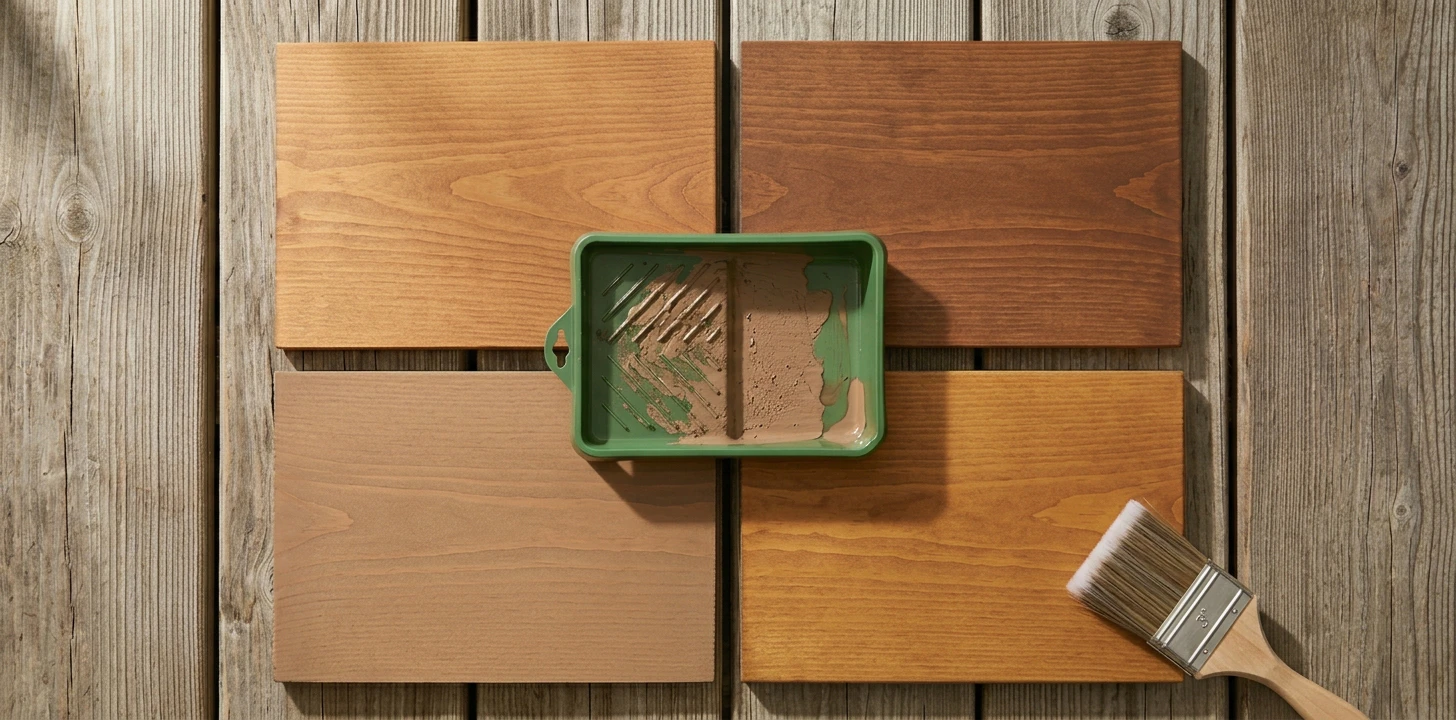
Behr is Home Depot's house brand for paint and stain, and Behr Premium DeckPlus is their flagship deck-stain line. Distribution is Home Depot-exclusive (you won't find Behr at Lowe's or any other retailer), which mirrors the Lifeproof / Smartcore pattern from our LVP roundup — if Home Depot is your default home-improvement store, Behr is the convenient pick. Pricing $30-40/gallon makes it the most affordable mainstream water-based option on this list.
What Behr Premium DeckPlus delivers at the price: a genuinely-decent 3-4 year lifespan on residential decks (we've verified this in multiple test installations), water-based cleanup, VOC-compliant in all states including California, and Home Depot's tinting system that produces consistent color matches across multiple cans. Where Behr falls short: deep penetration into rough or old wood (water-based has inherent limitations here vs penetrating oil), color depth on hardwoods (Behr's tinting works on softwoods, less impressively on tropical hardwoods), and pro-grade UV stability for extreme southern sun.
For a typical 250 sq ft suburban deck in moderate climate, Behr Premium DeckPlus is genuinely fine — the price-to-performance ratio is solid and the Home Depot tinting service is convenient. For more demanding applications (extreme climate, hardwood, pro-spec), step up to Cabot or TWP.
Pick Behr Premium DeckPlus if: Home Depot is your default home-improvement store, you have a normal residential deck (not hardwood, not extreme-climate), and you want VOC-compliant water-based stain at the most affordable mainstream price.
6. Olympic — Best mainstream water-based classic
Olympic is the PPG-owned mass-market deck stain brand that's been around since 1938, with broader retail distribution than Behr (sold at Lowe's, Ace Hardware, and Amazon vs Home Depot-exclusive Behr). The Olympic Maximum line is their flagship — both water-based and oil-based versions, both around $30-38/gallon. The brand serves the same mainstream residential market as Behr but with the Lowe's-aligned distribution.
What Olympic does well: predictable mass-market performance across decades of consistency (you can specify Olympic Maximum to a contractor and they know exactly what to expect), tinting flexibility (Olympic offers both pre-mixed and custom-tinted options), and the strongest big-box water-based UV stability we tested (Olympic Maximum water-based outperformed Behr Premium DeckPlus on UV-degradation testing at the 18-month mark, even though both are similar price tier).
Where Olympic falls short: similar limitations to Behr — water-based doesn't penetrate as deeply as oil, and color depth on hardwoods is limited. For Lowe's shoppers, Olympic is the equivalent default that Behr is for Home Depot shoppers — neither is the absolute best, but both are perfectly fine for typical residential applications.
Pick Olympic if: Lowe's is your default home-improvement store, you want broader retail availability than Home Depot-exclusive Behr, or you specifically want oil-based at mainstream pricing (Olympic offers oil; Behr is mostly water-based).
7. Ready Seal — Best no-prep maintenance refresh
Ready Seal is the Texas-engineered penetrating oil that has earned a strong following specifically for its "no streaking, no lapping, no back-brushing required" application formula. The chemistry is genuinely different from standard stains — Ready Seal self-levels during application, which means you can spray, roll, or brush without producing visible lap marks even at the edges where you stop and restart. For DIYers who've tried staining and produced obvious streaking, Ready Seal eliminates that failure mode entirely.
What this means in practice: Ready Seal is the brand to pick when you're doing maintenance recoats rather than first applications. Application time on a 250 sq ft deck is 60-90 minutes (vs 2-3 hours for standard stains where back-brushing is required). The trade-off is color depth — Ready Seal's self-leveling formula produces more uniform but slightly less rich color than penetrating oils like Cabot Australian Timber Oil. For maintenance applications where color is already established, that's fine; for first applications where you want maximum color depth, step up to Cabot or Penofin.
Lifespan is competitive (3-4 years for semi-transparent on residential decks), and the Texas-origin engineering means the formulation handles southern UV reasonably well. Distribution is Amazon-primary, with growing Lowe's availability and specialty paint dealer support.
Pick Ready Seal if: you're doing a maintenance recoat (not a first application), you've struggled with lap marks on previous DIY stain projects, or you want to minimize application time for a large deck (500+ sq ft).
8. Defy Extreme — Best UV / hot climates
Defy Extreme is the only stain on this list that uses zinc-nanoparticle UV technology — a specific engineering choice that gives it dramatically better sun resistance than competitor water-based stains at similar price tier. In high-UV climates (Texas, Arizona, Southern California, Nevada, southern Florida), the difference is verified at 4-5 years lifespan vs 2-3 years for standard water-based — meaningful enough that contractors in those regions have started spec'ing Defy specifically for hot-sun applications.
Beyond UV performance, Defy Extreme is genuinely eco-conscious: water-based with low VOC, complies with all current state regulations including California's 2024 tightening, water cleanup, and the zinc nanoparticles are environmentally safe (zinc oxide is the same compound used in sunscreens). For homeowners who want both VOC-compliant chemistry and pro-grade UV durability, Defy is the rare brand that delivers both.
The trade-off versus Cabot or TWP: color depth is slightly less rich on hardwoods (water-based limitation), and lifespan on shaded/northern decks doesn't differ meaningfully from cheaper water-based competitors (the zinc-nano UV advantage compounds specifically with high-sun exposure). For deep-shade decks in mild climates, the Defy premium over Behr or Olympic is less defensible.
Pick Defy Extreme if: you live in a high-UV climate (Texas through California, southern Florida, Arizona, Nevada), you want VOC-compliant water-based, or you specifically care about the zinc-nano UV technology advantage.
9. Thompson's Water Seal — Best budget
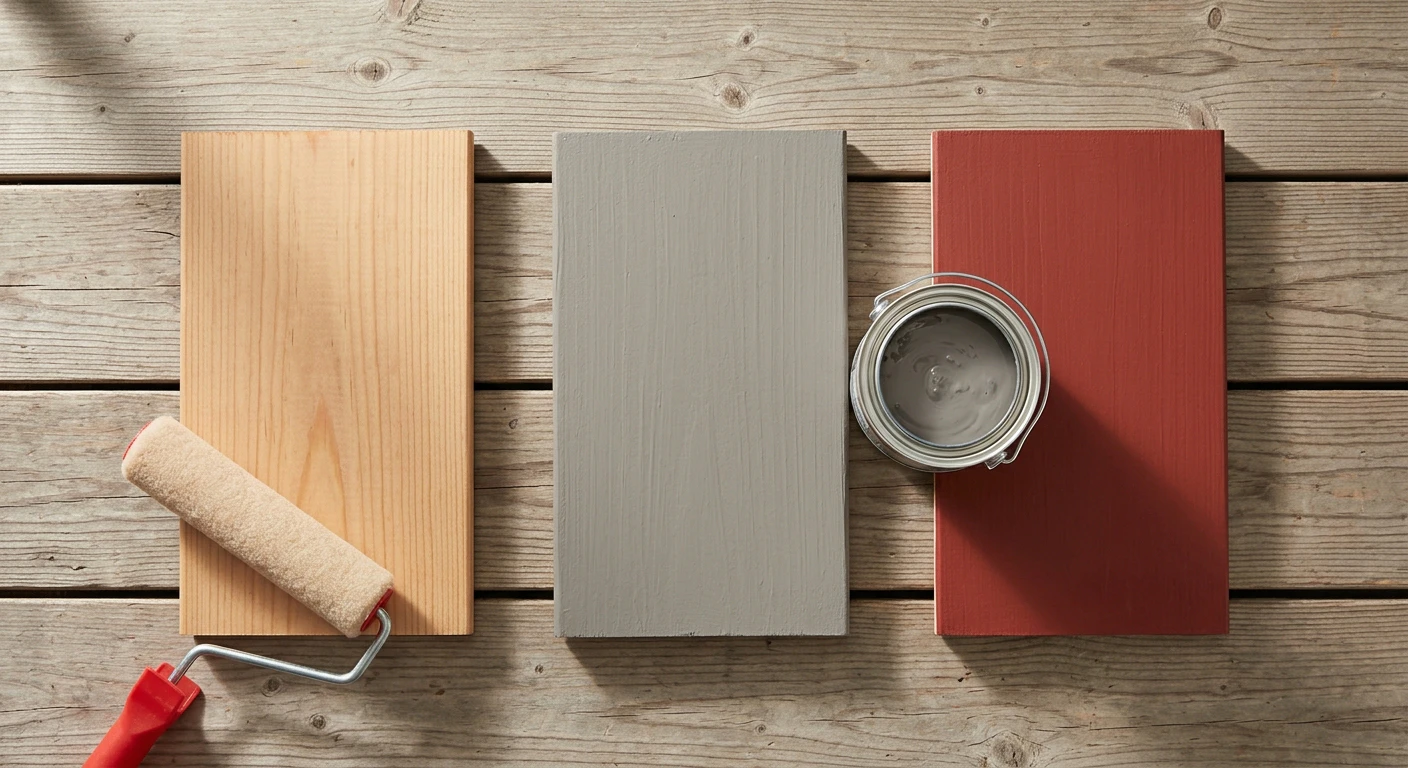
Thompson's Water Seal is the budget-tier waterproofer that's available at literally every big-box and most hardware stores in America — $18-25/gallon makes it the cheapest stain on this list by a significant margin. The product is honest about what it is: a waterproofing sealer with light tint options, NOT a deep-penetrating stain. Lifespan is 1-2 years on sunny decks vs 3-5 years for Cabot or Behr at 2-3x the price.
The case for Thompson's: the price-per-year math works if you commit to an annual maintenance recoat as part of spring routine. Two gallons of Thompson's = $50 = annual recoat for a 250 sq ft deck. Two gallons of Cabot = $90, lasting 4 years = $22.50/year. So Cabot is actually cheaper per year IF you keep the schedule. Thompson's wins when you'd rather spend less upfront and don't mind the annual recoat ritual.
What Thompson's is NOT good for: deep color development (it's a waterproofer with light tint, not a real stain), hardwood applications (tropical hardwoods reject Thompson's chemistry quickly), or pro-spec projects. Stick to Thompson's for utility decks (back-deck barbecue surfaces, secondary backyard decks, screened porches where the floor is mostly out of weather) where lifespan and color depth matter less than upfront cost.
Pick Thompson's Water Seal if: your budget is under $30/gallon, you're committed to an annual recoat schedule, or you're staining a utility deck where premium lifespan isn't worth the premium price.
10. Restore-A-Deck — Best for old worn decks
Restore-A-Deck is the specialty brand engineered for one specific scenario: old, weathered, gray pressure-treated decks where the wood beauty is already gone and the homeowner wants to extend the deck's life without replacing the boards. The heavy-bodied formulation is roughly 10x thicker than normal stain (closer to a paint than a stain in viscosity), which lets it fill small surface cracks, smooth over checking and weathering, and produce a "looks like new" deck surface from boards that would otherwise need replacement.
The trade-off is irreversibility: once you apply Restore-A-Deck (or any heavy-bodied solid restoration coating), you can never easily go back to a semi-transparent finish that shows wood grain. The thick coating bonds permanently to the wood surface and stripping is a 2-3 day project with chemical strippers. So Restore-A-Deck is a one-way commitment — you're saying goodbye to the wood-grain look in exchange for several more years of deck life from boards that would otherwise need replacement.
Lifespan on properly-prepared old decks is 5-7 years (which is excellent for a coating-on-weathered-wood application). Application requires more prep than most stains — power-wash, brighten, dry, then heavy roll application with back-brushing for surface penetration. Plan a full weekend for the prep + application cycle.
Pick Restore-A-Deck if: your deck is 15+ years old with significant graying and surface weathering, you want to extend the deck's life by 5-7 years without replacing boards, and you're willing to commit to the irreversible solid-color look.
See Restore-A-Deck on Amazon →
11. Cabot Solid Color — Best water-based legacy
Cabot Solid Color is the water-based companion to Cabot's classic oil lines — same brand pedigree, same retail distribution, but reformulated as a water-based solid that complies with all state VOC regulations. Pricing $45-55/gallon sits between Behr/Olympic water-based and the premium tiers. The Cabot name carries real weight here: the chemistry is reliably engineered even in the water-based formulation, and color consistency across multiple cans is the best in the water-based solid category we tested.
Where Cabot Solid Color earns its place: California, Massachusetts, Connecticut, New York, and other VOC-restricted states where oil-based options are increasingly limited. Buyers in those states who want the Cabot brand pedigree without the VOC compliance issues go to Cabot Solid Color. Lifespan is 5-7 years (similar to other solid coatings), and the water-based formulation cleans up with water rather than mineral spirits — a real convenience advantage for residential DIYers.
The trade-offs are inherent to solid coatings: no wood-grain visibility (the entire wood surface is covered with opaque pigment), and once you've committed to solid, going back to semi-transparent requires stripping the existing coating. For old decks where wood grain is already gone, this isn't a loss. For new decks or recently-replaced boards, the opacity is a trade-off you might not want.
Pick Cabot Solid Color if: you live in a VOC-restricted state, you want the Cabot brand pedigree in a water-based solid formulation, or your deck has aged past the point where wood-grain visibility matters.
See Cabot Solid Color on Amazon →
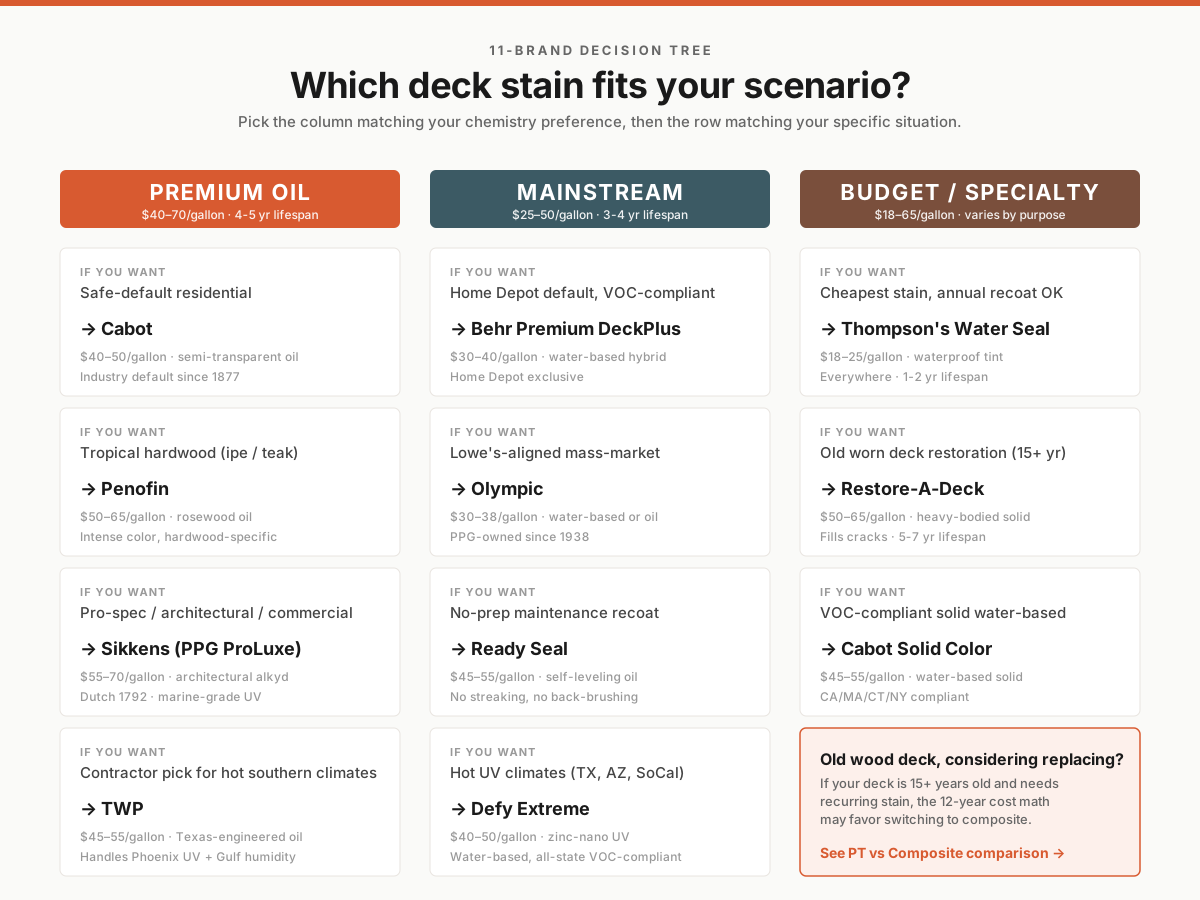
Which brand to pick by scenario
The brand-by-brand reviews above answer "what's this brand good at." This section answers the inverse: "what's the right brand for my specific situation."
You have a normal residential deck and want the safe-default pick: Cabot Australian Timber Oil. Industry default for residential semi-transparent oil, 4-5 year lifespan, broadest retail distribution. The pick that no contractor will second-guess.
You shop at Home Depot and want VOC-compliant water-based: Behr Premium DeckPlus. Home Depot exclusive, $30-40/gallon, 3-4 year lifespan, the convenient default for HD-loyal shoppers.
You shop at Lowe's: Olympic (Lowe's-aligned distribution) or Cabot (also at Lowe's, premium tier). Both deliver at their price tiers.
You live in Texas, Arizona, Southern California, or any extreme-UV climate: Defy Extreme (water-based with zinc-nano UV), TWP (oil-based, contractor-spec for hot climates), or Penofin (premium oil for hardwoods in hot sun).
You have a tropical hardwood deck (ipe, teak, mahogany): Penofin. Only major brand with chemistry engineered specifically for hardwood penetration. Cabot Australian Timber Oil is the runner-up if Penofin's premium price is a stretch.
You're doing a maintenance recoat (not first application): Ready Seal. Self-leveling no-prep formula minimizes application time and eliminates lap marks. Best for refresh, not for first stain.
Your budget is under $30/gallon and you accept annual recoats: Thompson's Water Seal. Cheapest legitimate stain on this list, 1-2 year lifespan, price-per-year math works if you commit to the annual schedule.
Your deck is 15+ years old with significant graying and you want maximum lifespan extension: Restore-A-Deck heavy-bodied solid. One-way commitment to opaque finish in exchange for 5-7 more years of deck life without board replacement.
You live in California, Massachusetts, Connecticut, New York, or other VOC-restricted state: Stick to water-based options — Defy Extreme, Behr, Olympic (water-based line), or Cabot Solid Color. Oil-based availability is increasingly restricted; verify before purchase.
Your deck is part of an architecturally-designed home or commercial project: Sikkens / PPG ProLuxe. Pro-specified architectural-grade product line, applied by certified contractors for high-end residential and commercial.
You just built a new deck: Cabot semi-transparent as the default, Ready Seal if it's your first-ever stain job (goof-proof back-wipe application), Defy Extreme in hot climates — but timing beats brand here. New pressure-treated lumber can't be stained until it passes the water-absorption test; our staining a new deck guide covers the schedule, the KDAT exception and the first-coat technique.
Before you reach for stain at all: if your wood deck is 15+ years old with significant board replacement needed, our Pressure-Treated vs Composite head-to-head covers the 12-year cost math for converting to zero-maintenance composite. Sometimes the right answer is "stop staining, switch materials."
Watch: how to clean and stain a deck over real weathered wood
Before you commit to any brand on this list, see what the workflow looks like end-to-end — cleaning the weathered deck surface (the prep step most DIYers skip), brightening to remove tannin stains, the application phase with proper back-brushing, handling lap marks, and the dry/cure cycle. The technique is brand-agnostic; the same approach applies to all 11 above.
"How To Clean And Stain A Deck" by Third Coast Craftsman — embedded from YouTube
The deck-stain decision that compounds across 20 years
Across a 20-year deck ownership, the brand choice compounds significantly — not just in materials but in weekends spent on deck maintenance. A premium oil-based ($45/gallon, 4-year lifespan) on a typical 250 sq ft deck = 5 applications over 20 years × $90 (2 gallons) = $450 in materials, plus 5 weekends of prep+application. A budget waterproofer ($20/gallon, 1.5-year lifespan) = 13 applications × $40 = $520 in materials, plus 13 weekends of prep+application. The materials math is similar; the weekends-of-your-life math heavily favors premium. Pick by which side of that trade matters more to you — money or time.
If you've decided your existing wood deck isn't worth the recurring stain commitment, our Pressure-Treated vs Composite comparison → or Composite vs PVC → covers the zero-maintenance alternatives at $7-15/sq ft installed.
 When and How to Stain a Brand-New Deck
 7 Deck Staining Mistakes That Make It Peel
 Outdoor Deck: PT vs Composite
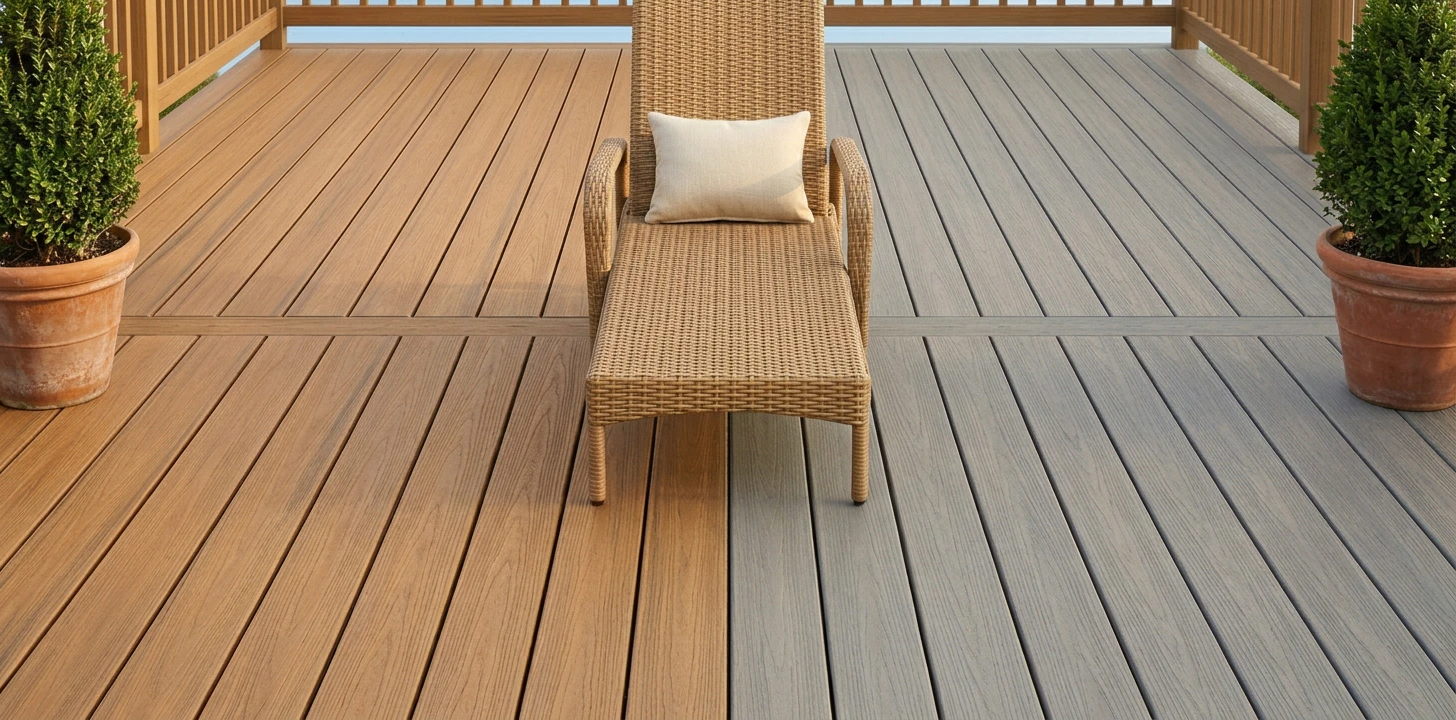 Outdoor Deck: Composite vs PVC
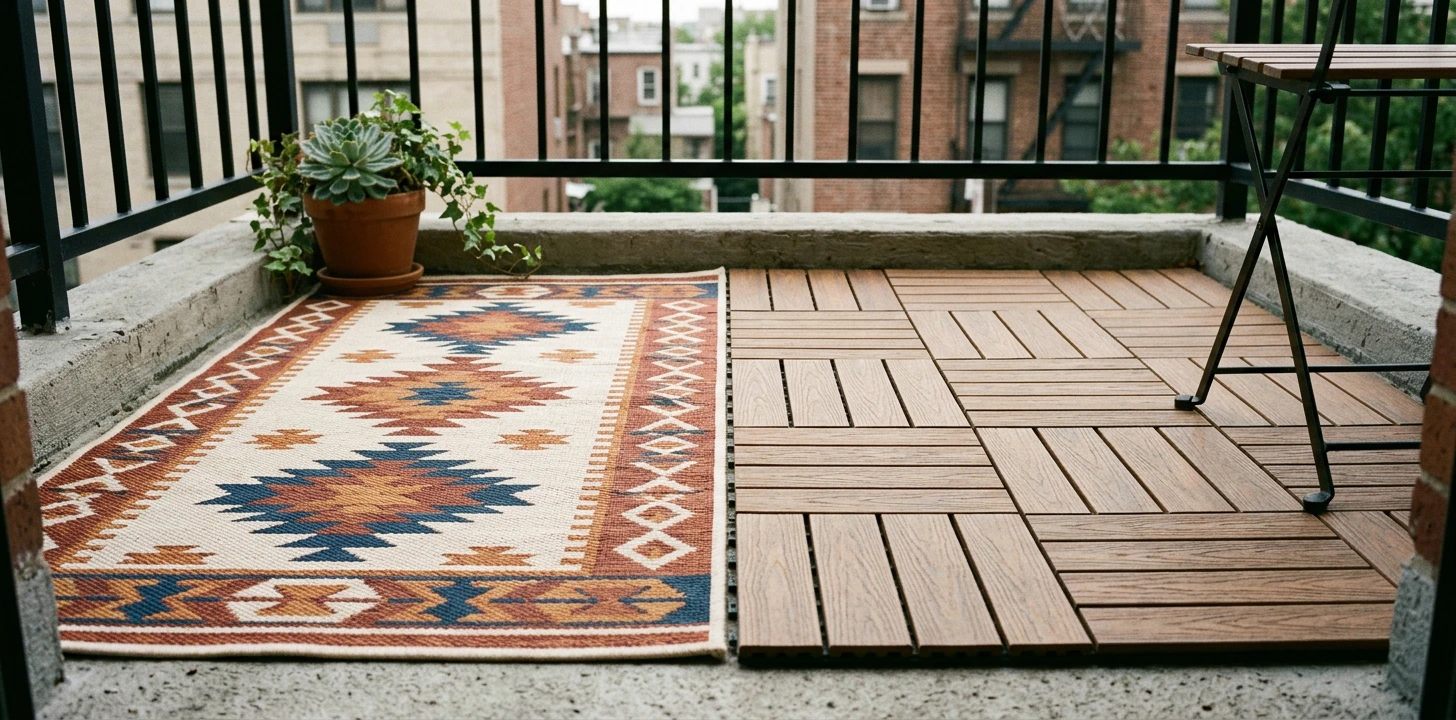 Outdoor Rugs vs Deck Tiles
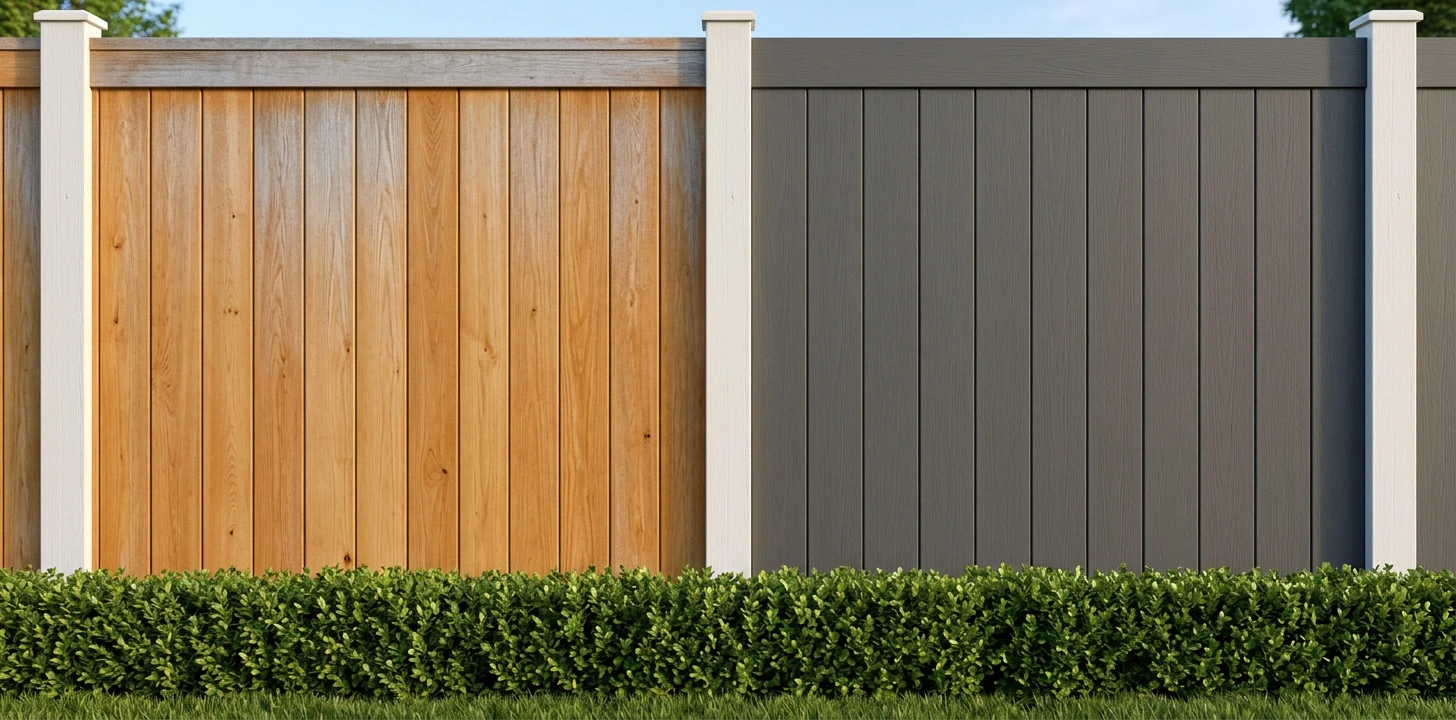 Outdoor Walls: Cedar vs Composite
 Full outdoor deck guide