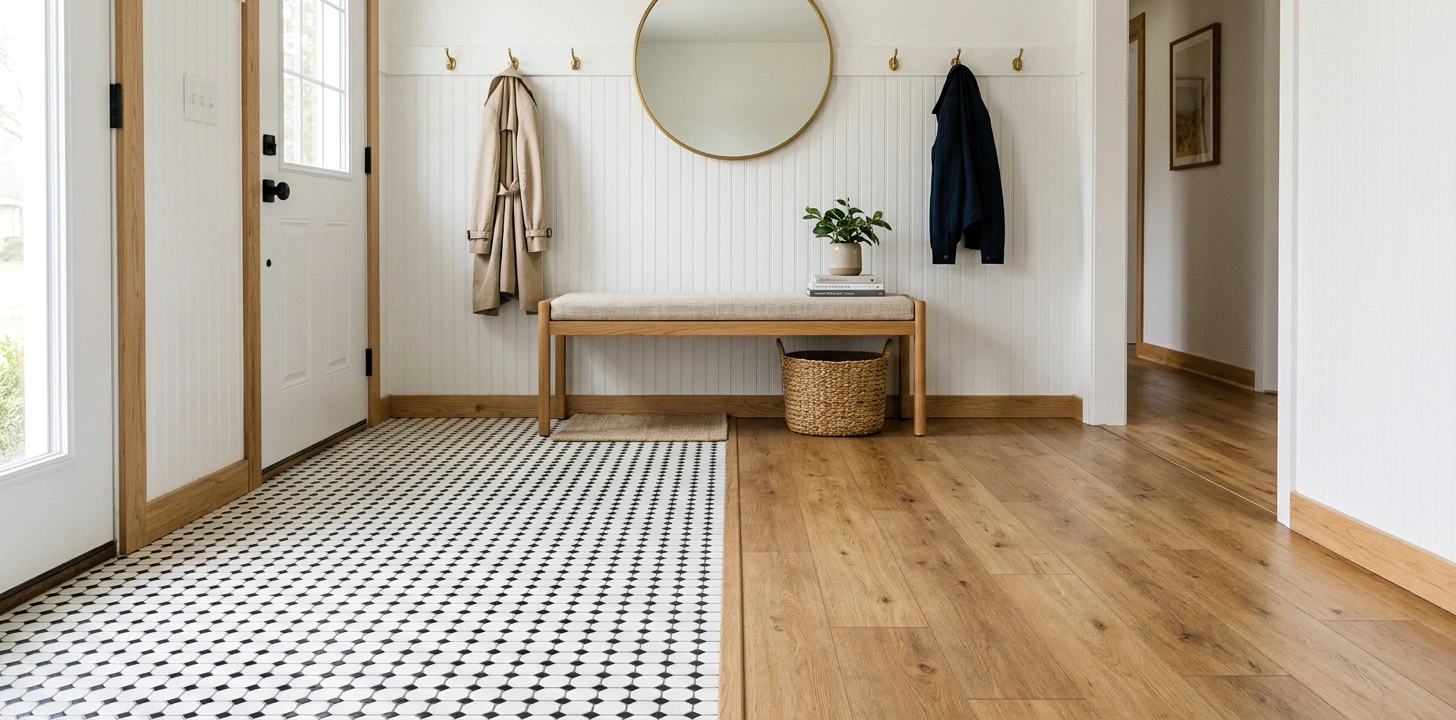
Updated July 2026. Prices reflect US market installed costs from Home Depot, Lowe's and local tile suppliers. All comparisons based on a typical 15-20 sq ft small entryway — most US apartment and condo entries fall in this range.
The highest-wear floor in the house
Per square foot, the entryway sees more abuse than any other floor in your home. Wet boots in winter. Muddy shoes in spring. Dragged luggage every trip. Dog claws every walk. Road salt every storm. Two materials genuinely survive that: luxury vinyl plank and porcelain (or ceramic) tile. The decision between them comes down to ownership length and whether you need it removable.
The short version: LVP is $2.80/sq ft and snaps over any flat subfloor in an afternoon — the renter answer, and the right call for short-term ownership. Porcelain tile is $4.50+/sq ft and lasts 20+ years through every winter and every dragged suitcase — the owner answer that also adds real resale value because entryways are the first impression buyers see.
Below: side-by-side table, when each one wins, the road-salt-and-winter-slush problem unique to entryways in cold climates, the first-impression resale factor, and FAQs.
Side-by-side comparison
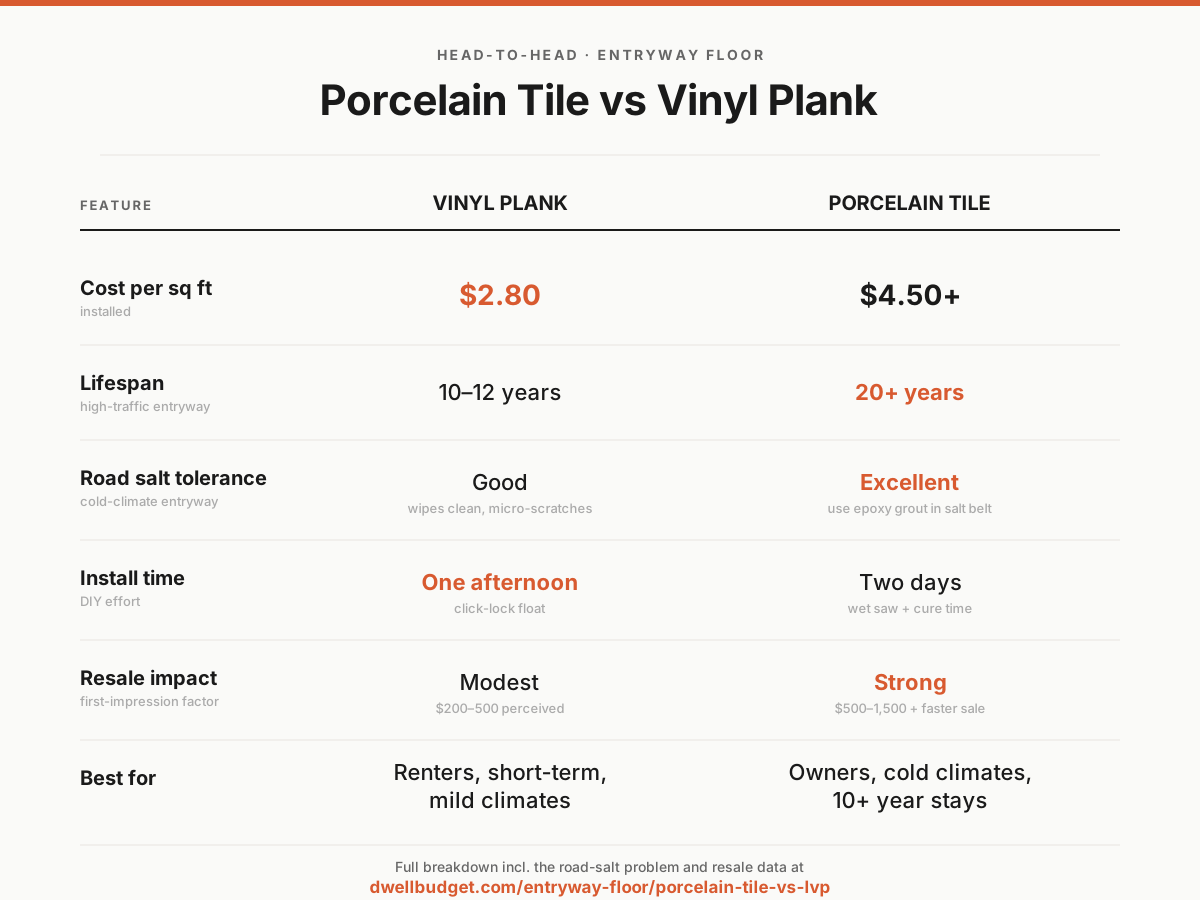
| Luxury vinyl plank (LVP) | Porcelain / ceramic tile | |
|---|---|---|
| Cost per sq ft (installed) | $2.80 | $4.50+ (with thinset + grout + saw rental) |
| Small entryway total (15-20 sq ft) | ~$45-60 | ~$110-150 |
| Lifespan (entryway use) | 10-12 years | 20+ years |
| Road salt tolerance | Good — wipes clean, no damage | Excellent (tile) — grout needs epoxy for salt belt |
| Heavy-impact resistance (dragged luggage) | Resists, can't repair gouges | Excellent — rated PEI 4-5 for floor use |
| Install time | One afternoon (click-lock) | Two days + cure time (wet saw, grout) |
| Renter-safe? | Yes — pops apart, moves with you | No — permanent install |
| Cold underfoot | Warm to neutral | Cold (unless paired with radiant heat) |
| Resale impact | Modest ($200-500 perceived value) | Strong ($500-1,500 + 4-7 days faster sale) |
| Best for | Renters, short-term, mild climates | Owners, cold climates, long-term |
When to pick vinyl plank
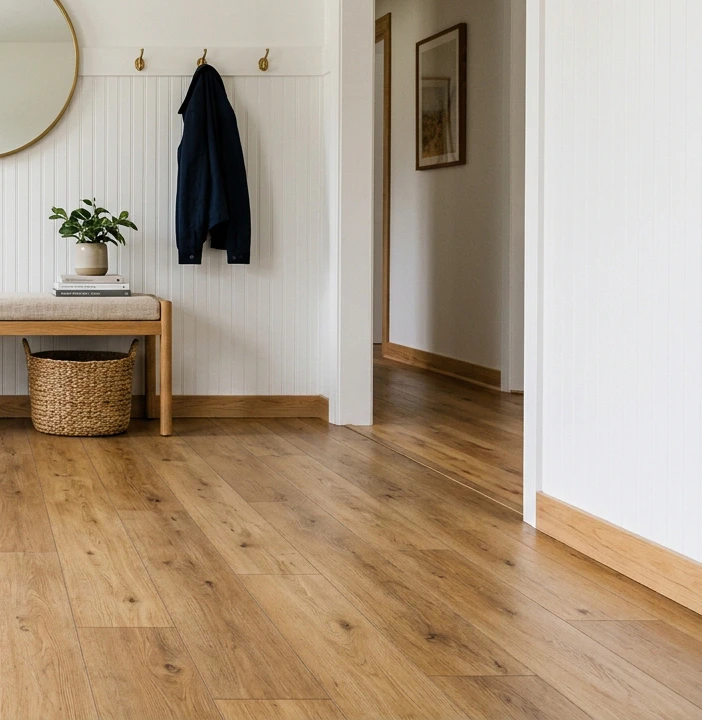
Pick LVP if at least three of these are true:
- You rent — and want zero damage on move-out
- You'll be in the home under 5 years
- Climate is mild — no significant road salt or winter slush
- Budget under $80 for the entry
- You want install done in an afternoon with no wet saw rental
Click-lock LVP from LifeProof or Smartcore at $2.80/sq ft works out to $45-60 for a typical 15-20 sq ft entryway. The aluminum-oxide wear layer handles dog claws, dragged luggage, and daily boot traffic. The 100% waterproof core ignores melting snow and rain. Install is a single afternoon — measure, click-lock together, cut edges with a utility knife, done.
The honest case for LVP in an entryway: it's the right answer for any rental, any short-term ownership, or any mild-climate entryway that doesn't see real winter slush. It's also the right answer when you want continuation — running the same LVP from entryway through to living room or kitchen for a unified visual flow.
What you give up: lifespan (10-12 years vs decades for tile in an entryway), gouge repair (LVP scratches can't be sanded — replace planks instead), radiant heat compatibility (LVP caps at 80-85°F, limiting the warm-floor benefit in cold climates), and the first-impression resale signal that tile genuinely carries.
When to pick porcelain tile
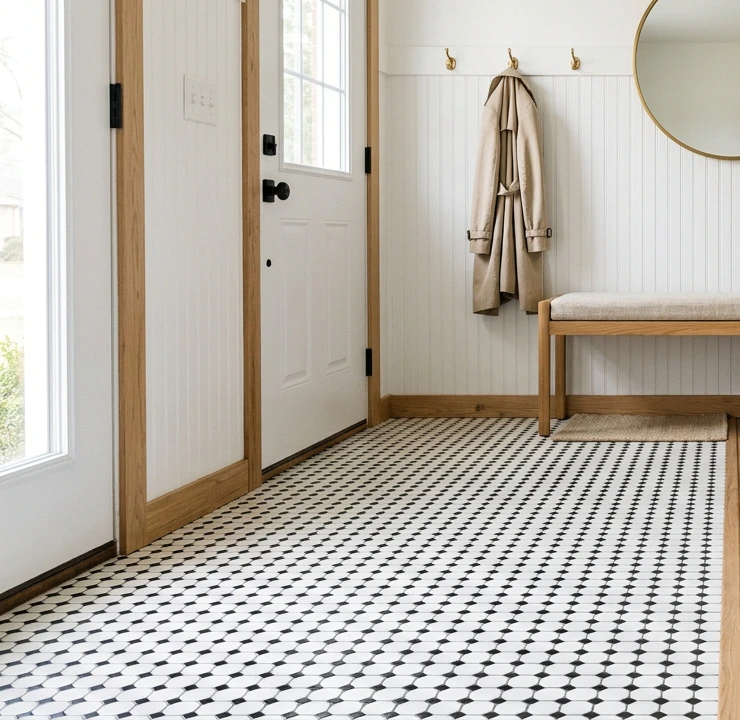
Pick porcelain or ceramic tile if at least three of these are true:
- You own the home and plan to stay 10+ years
- Climate has real winters — road salt, snow, slush every year
- The entryway opens directly to a public-facing area (no mudroom buffer)
- You're adding radiant floor heating (tile is the ideal pairing)
- You want the entryway to add resale value when you eventually sell
Porcelain hex tile or 12×12 inch porcelain from MSI or Daltile runs $4-6/sq ft for the tile, plus $1-2/sq ft for thinset, grout and a weekend wet-saw rental — total $110-150 installed for a small entryway. Porcelain specifically (denser than standard ceramic, water absorption under 0.5%) is the right subtype for salt-belt entryways; cement-grouted porcelain is the gold standard for cold-climate first impressions.
The 20+ year lifespan and the listing-photo premium ("tiled entryway") are the two reasons tile keeps winning for owners. A black-and-white hex tile entryway photographs beautifully in real estate listings, sells houses 4-7 days faster on average, and looks identical at year 20 as at install. After 12 years LVP needs replacement; tile is on year 1 of its second life.
What you give up: 60%+ higher upfront cost, 2-day install with a wet saw rental, cold underfoot (real problem in winter without radiant heat — bare feet on porcelain in January is harsh), permanence (renters can't, and if you ever want a different look, sledgehammer), and grout maintenance in salt-belt entryways (epoxy grout solves it for life, cement grout needs annual sealing).
The road salt & winter slush problem (cold-climate entryways)
This is the factor that genuinely flips many entryway decisions in northern US markets. Cold-climate entryways take more chemical abuse than any other floor in the house — and the materials handle it differently.
What road salt actually does: rock salt and ice-melt chemicals (calcium chloride, magnesium chloride) dragged in on boots dissolve into the moisture on the floor, leaving concentrated brine that's mildly corrosive. Over years, that brine attacks vulnerable materials in predictable ways:
- On LVP: the salt itself doesn't damage the vinyl, but salt-crystals can scratch the wear layer when dragged across by boot soles. Result: micro-scratches accumulate in the boot-traffic zone after 5-8 years. Still functional; visually shows wear faster than the rest of the floor.
- On porcelain tile: the tile is fully inert — salt has zero effect on porcelain itself. The vulnerable point is the grout. Standard cement-based grout absorbs the salt brine, and over years the salt crystals expanding inside the grout matrix slowly erode the grout lines. Visible damage after 10-12 years in a salt-belt entryway.
- Universal fix for tile: use epoxy grout (Mapei Flexcolor, Custom Building Pre-Mixed Epoxy) instead of cement grout. Adds $30-50 to project cost, is non-porous, ignores salt completely. With epoxy grout, a porcelain entryway in Buffalo or Minneapolis lasts 25+ years without grout maintenance.
- Universal fix for both: sweep loose salt off the entryway floor weekly during winter. Don't let salt sit in grout lines or on the wear layer for weeks. Five minutes of sweep time per week extends entryway floor life by years regardless of material.
The first-impression resale factor
This is the factor that often makes the difference for owners specifically. The entryway is literally the first thing buyers see when they walk into a home — and what they see in those first 10 seconds anchors their impression of the entire house.
Buyer perception data (from real estate listing analytics):
- Listings mentioning "tiled entryway" sell 4-7 days faster than equivalent homes with carpet or LVP entries
- Asking-price-to-sale-price ratio is 1-2% higher for homes with tiled entries (translates to $3,000-6,000 on a $300K home)
- Buyers spend longer in homes whose entryway "looks finished" — measurable on showing-time analytics from MLS data
None of this means LVP is wrong for an entryway — for renters and short-term owners it's clearly the right answer. But if you're 5+ years from selling, the porcelain-tile premium often pays back at resale via faster sale and higher asking-price-realization, on top of the 20+ year lifespan benefit. The math gets close, sometimes favors tile even on a pure dollar basis.
The short verdict
Pick LVP if you rent, you'll be in the home under 5 years, you live in a mild climate, or you want fast install and easy continuation into adjacent rooms. Pick porcelain tile if you own long-term, you live in a cold/salt-belt climate, you're adding radiant heat, or you want the entryway to do real work for resale value when you sell.
The pivot factor is almost always ownership length combined with climate. Short-term + mild climate → LVP every time. Long-term + cold climate → tile every time. The interesting middle is short-term + cold climate (renter in Chicago) — where LVP wins on flexibility even though tile would last longer; and long-term + mild climate (owner in San Diego) — where LVP saves money since the salt/slush problem doesn't apply and the resale premium is smaller.
Comparing more entryway options? The full entryway floor guide also covers peel-and-stick tile and the underrated $30 door mat upgrade — useful when budget is genuinely tight or you want a 1-hour refresh that handles 80% of the dirt problem.
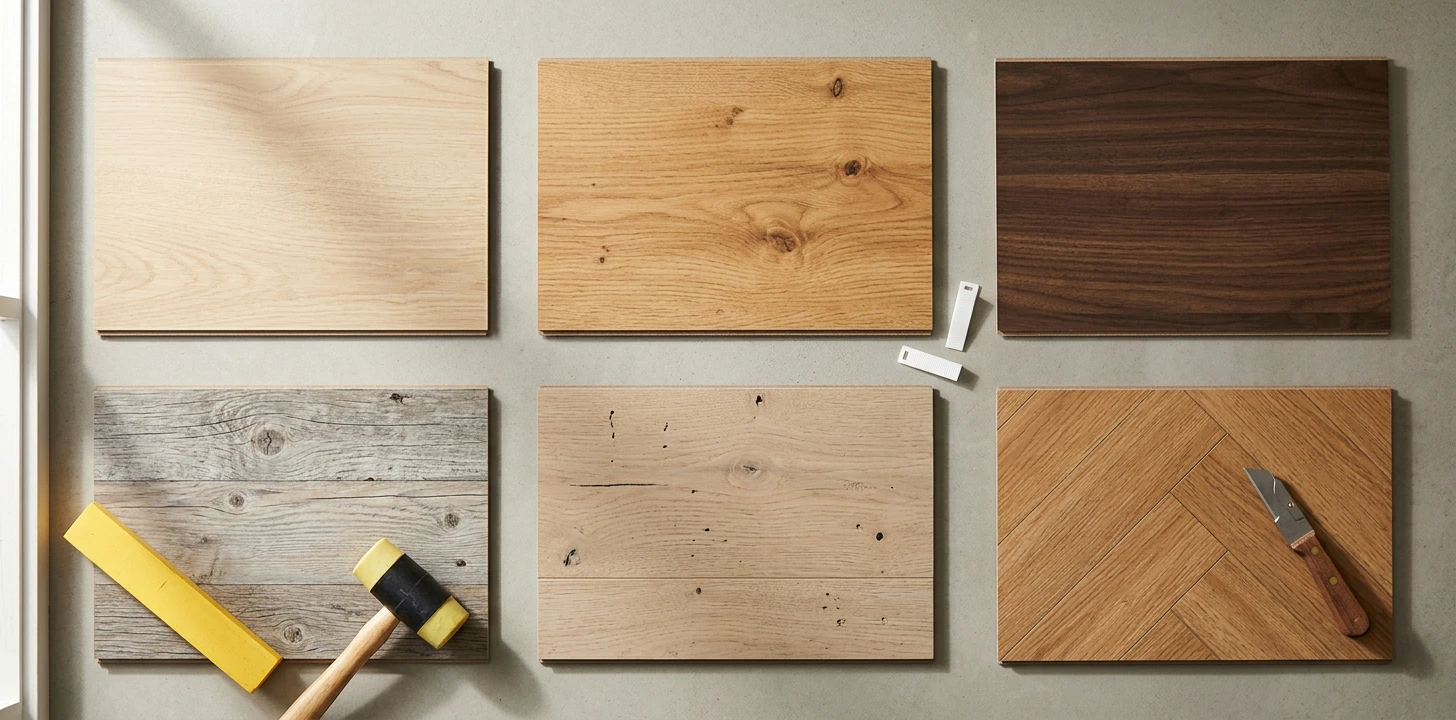 11 Best LVP Brands 2026
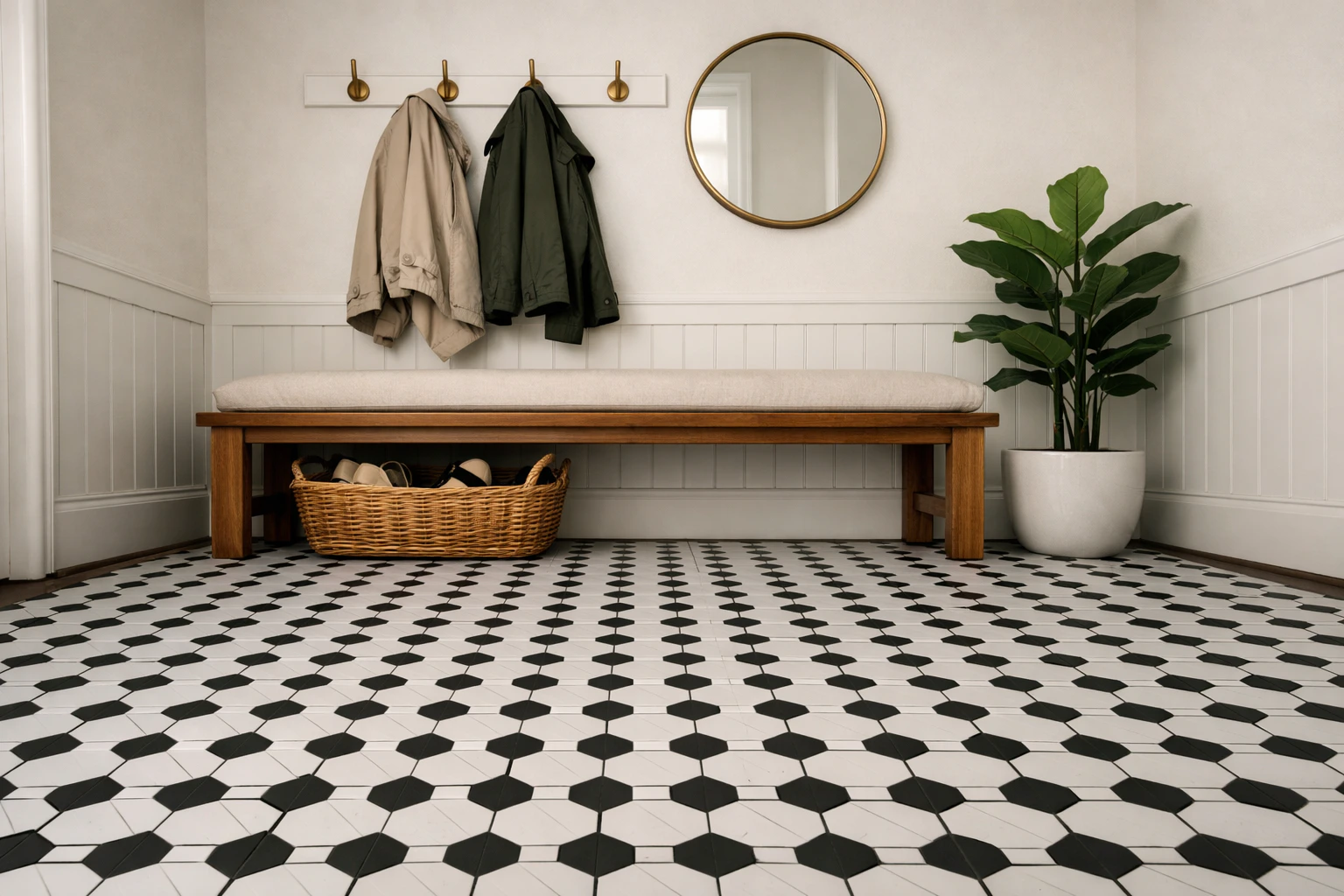 Full entryway floor guide
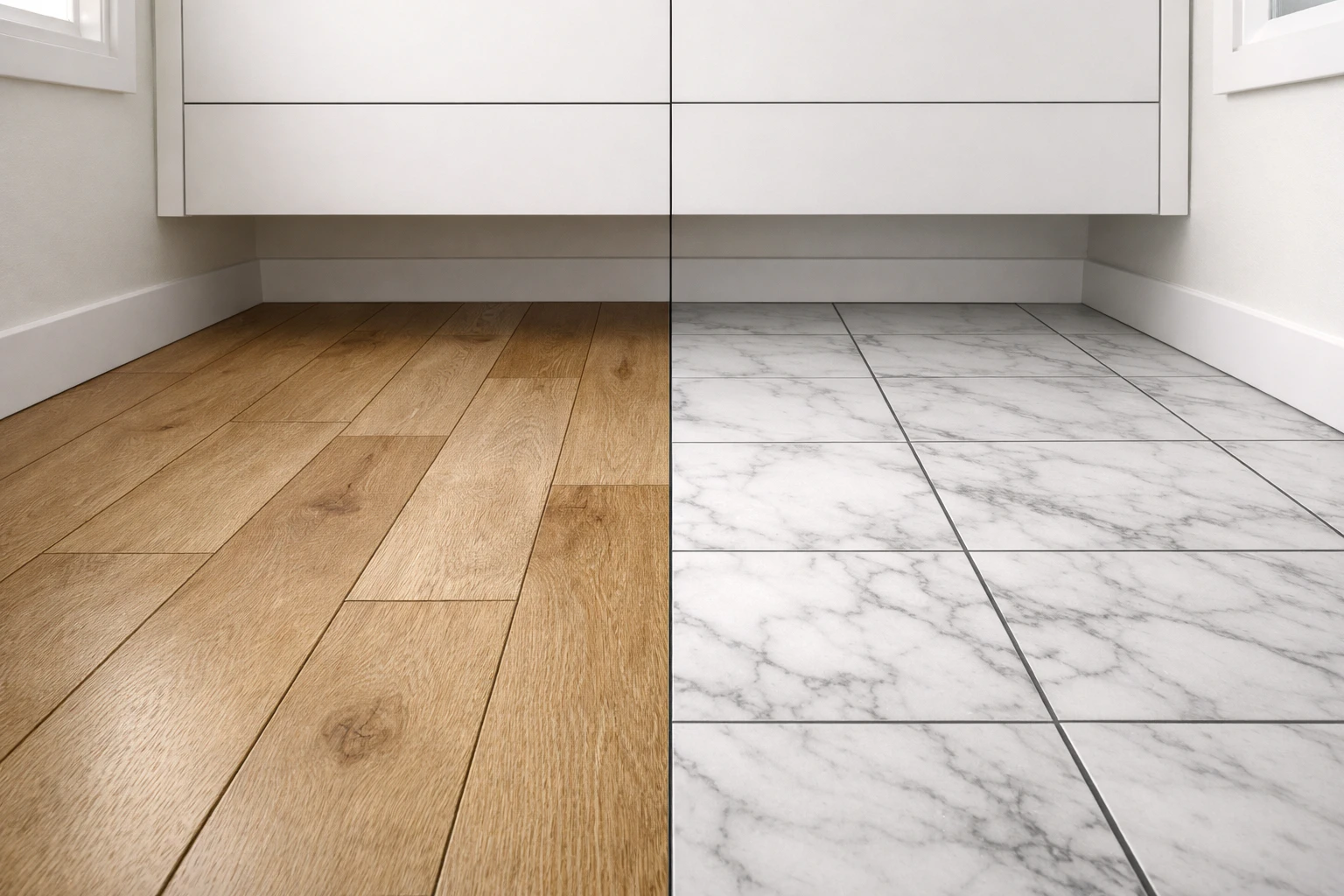 Bathroom Floor: LVP vs Ceramic Tile
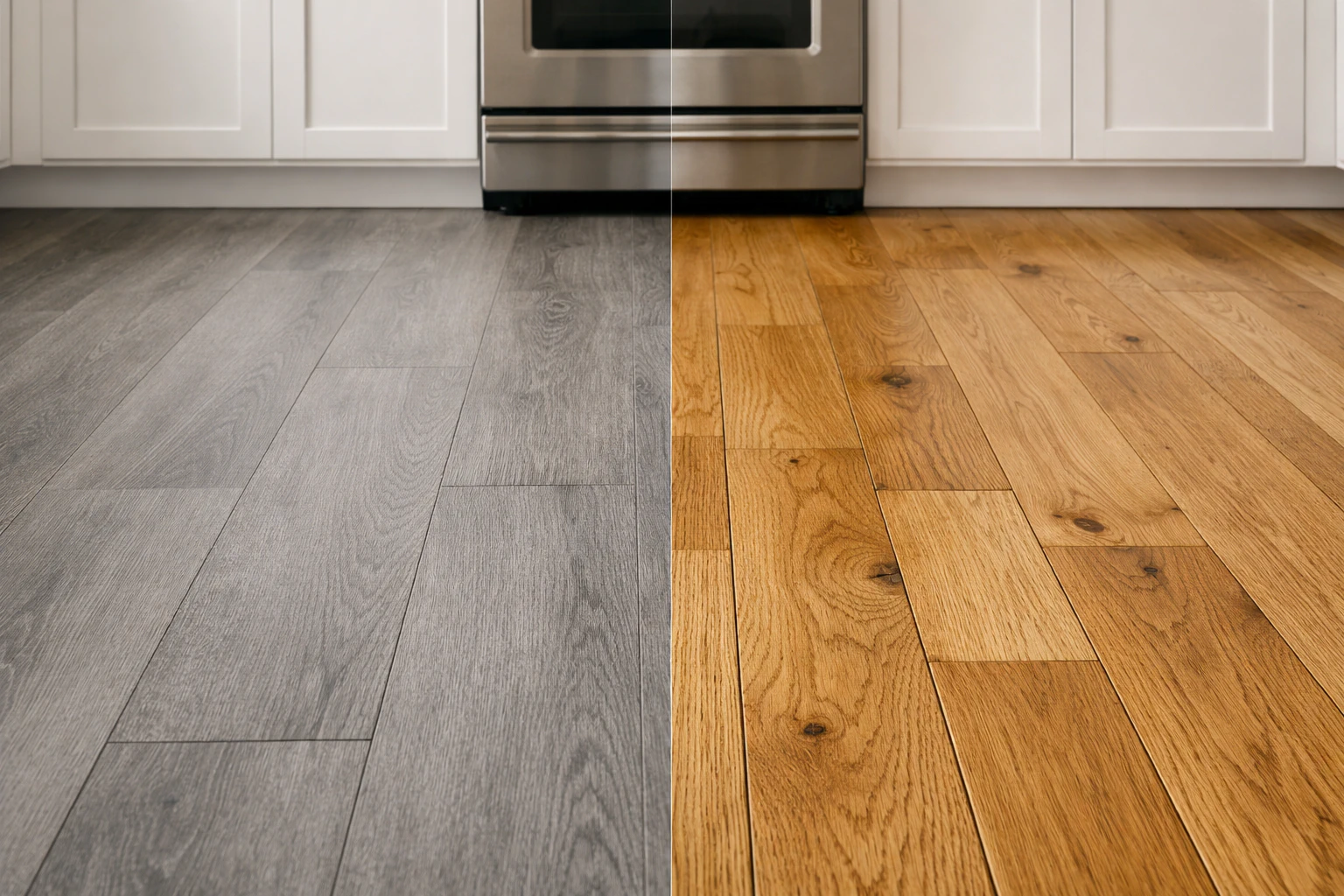 Kitchen Floor: Vinyl Plank vs Hardwood
 Bathroom Walls