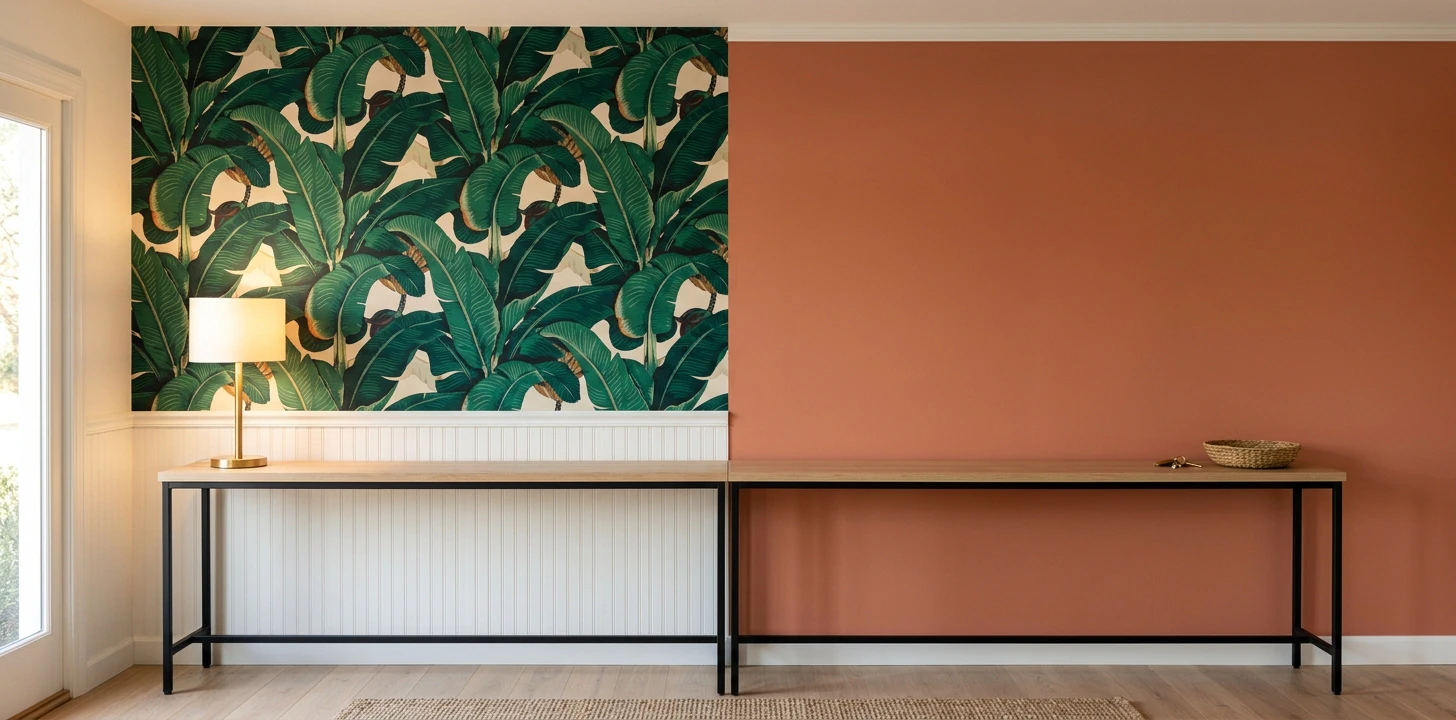
Updated July 2026. Prices reflect US market costs from Amazon, NuWallpaper, Tempaper, Behr and Sherwin-Williams. All comparisons based on a typical entryway accent wall — 60 sq ft of visible wall surface above wainscot or baseboard.
The wall every guest judges first
The wall facing your front door is the single highest-stakes wall in your house — every guest sees it within 3 seconds of entering, and forms an opinion of "you" (not your landlord, not your home's previous owners, you) before they take off their coat. For renters specifically, it's the highest-ROI wall refresh you can do; for owners, it's the first-impression line every real-estate listing photo flags.
The short version: peel-and-stick wallpaper at $80 reads "designed entrance" within 1 second of someone walking through the door — pattern-rich, instantly intentional, evergreen backdrop for seasonal decor. Paint at $40 wins on bag-strap scuff resistance, hides fingerprints with the right sheen, and visually deepens a narrow entryway when you pick a warm dark color — but needs accessories (console, lamp, mirror, art) to register as a design choice rather than the default builder white.
Below: side-by-side table, when each one wins, the 1-second first-impression timing that decides it for high-traffic entryways, the bag-strap-and-fingerprint wear factor unique to this room, the wainscot-plus-wallpaper recipe most "designed entryway" Pinterest boards quietly use, and FAQs specific to entryway use.
Side-by-side comparison
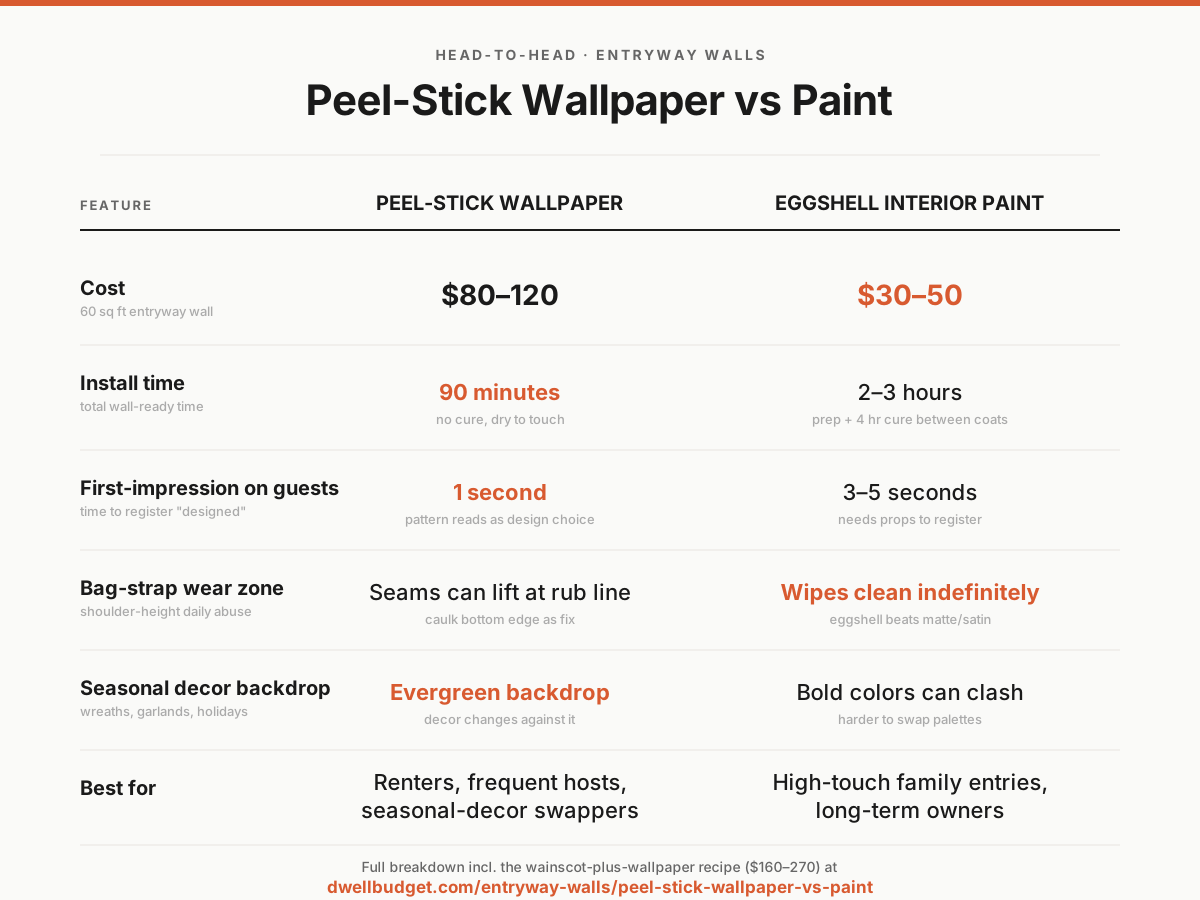
| Peel-and-stick wallpaper | Eggshell interior paint | |
|---|---|---|
| Cost (60 sq ft entry wall) | $80–120 (1 roll) | $30–50 (quart + roller + tape) |
| Install time | 90 min | 2–3 hrs incl. prep + 4 hr cure |
| Bag-strap scuff resistance | Edges can lift at shoulder-height seams | Wipes clean from strap marks; matte shows rub line |
| Fingerprint cleanup | Wipes with damp cloth | Eggshell wipes cleanest |
| First-impression speed (IRL) | 1 sec — reads "designed entrance" | 3–5 sec — needs props to register |
| Narrow-space depth perception | Large-scale pattern adds visual depth | Warm dark color visually deepens space |
| Seasonal decor compatibility | Neutral backdrop — wreaths, garlands work | Bold colors can clash with seasonal palettes |
| Renter-safe? | Yes — clean removal from cured paint | Yes — paint over on move-out |
| Lifespan / pattern fatigue | 3–5 years before bold pattern gets stale | 5+ years before color tires |
| Best for | Renters, first-impression focus, seasonal decor | High-touch family entries, owner long-term |
When to pick peel-and-stick wallpaper
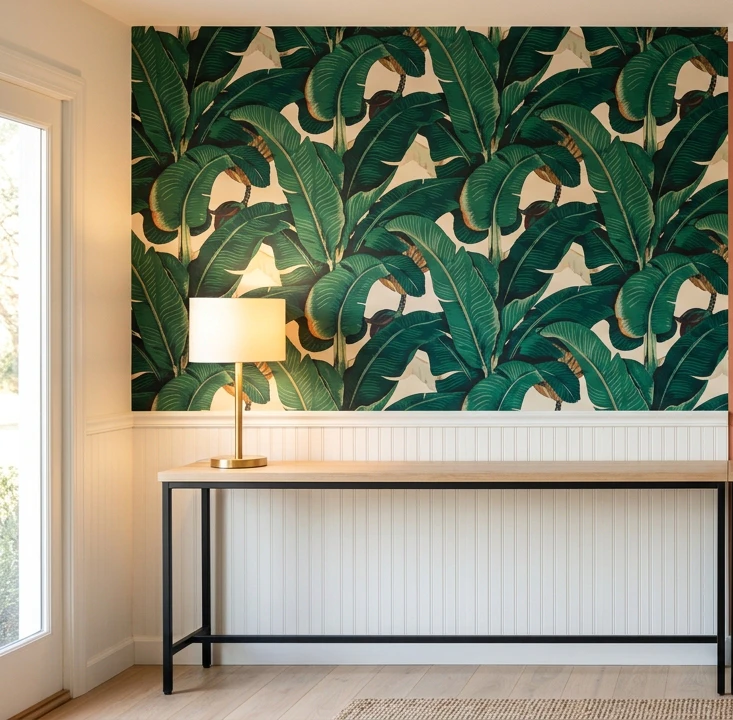
Pick peel-and-stick wallpaper if at least three of these are true:
- You rent and want the highest-leverage refresh visible from the front door
- You host frequently — first-impression on guests matters more than daily wipe-down
- Your entryway has wainscot below — wallpaper goes on the smaller upper-wall zone, cost-effective
- You change seasonal decor 4+ times a year (wreaths, garlands, holiday styling)
- Your "design voice" leans pattern-rich, maximalist, or Pinterest-curated
Removable wallpaper from NuWallpaper, Tempaper, or custom-printed Spoonflower at $80-120 covers a typical 60 sq ft entryway accent wall plus 90 minutes of install. The biggest single argument is first-impression speed: guests' brains register pattern-rich wallpaper as "this person decorated this space deliberately" within 1 second of opening the door — faster than they take in any furniture, art, or color choice.
The under-discussed advantage in entryways specifically is seasonal decor compatibility. Neutral or muted-pattern wallpaper reads as evergreen "backdrop" against which fall wreaths, winter garlands, spring florals, and summer minimalism all photograph well. A bold paint color (especially navy or hunter green) actively fights seasonal palettes — a Christmas wreath on a hunter-green wall reads cluttered; on a botanical wallpaper, it reads styled.
What you give up: bag-strap edge-lift risk at shoulder-height seams (silicone-caulk bottom edge fix mandatory for high-traffic entries), 3-5 year pattern fatigue on bold prints in daily-view zones, and zero resale value — buyers will remove anything previous owners chose.
When to pick paint
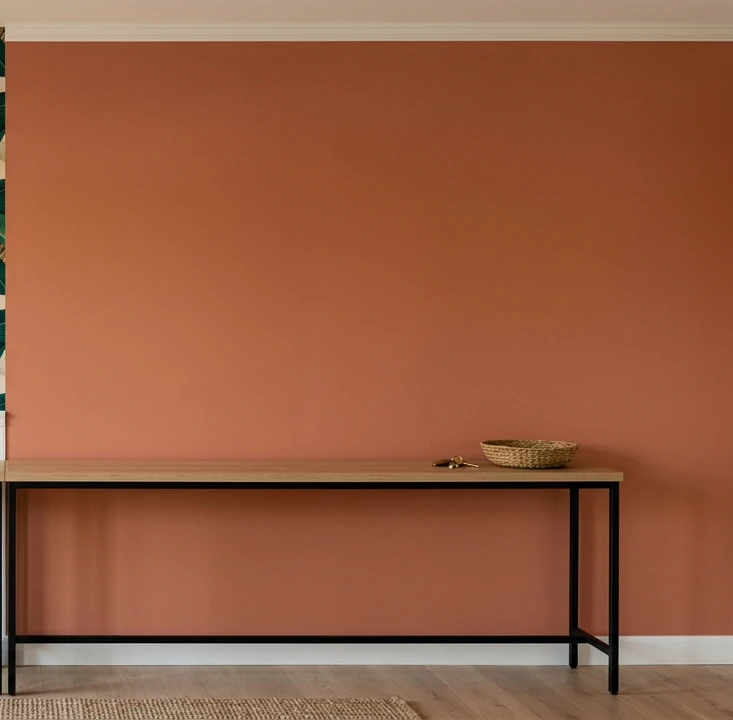
Pick paint if at least three of these are true:
- Your entryway is the daily-use family entry — kids, dogs, muddy boots, wet umbrellas
- You own long-term — the wall ages with eggshell paint better than with peel-stick wallpaper
- You have visual props in the entry (console, lamp, mirror, art) that help solid color register as intentional
- Your design voice leans minimalist, modern, or year-round consistent
- You want the wall to take daily abuse without seam-lift or edge-curl repair
Eggshell paint from Behr Premium Plus Eggshell or Sherwin-Williams Emerald Eggshell at $30-50 for a quart (plenty for a single entryway wall) plus roller, tray, and painter's tape lands at $40-55 total. The two main advantages over wallpaper in entryways specifically: scuff-clean wipeability (eggshell wipes clean from bag-strap marks, kid fingerprints, dog nose smudges with a damp cloth — no edges to lift) and narrow-space depth perception when you pick a warm dark color.
The counter-intuitive entryway design rule: warm dark colors make narrow entryways feel bigger, not smaller. A navy, terra-cotta, hunter green, or warm charcoal accent on the wall facing the front door pulls the eye forward into the space and adds visual depth. Reliable picks: Benjamin Moore Hale Navy, Behr Cracked Pepper, Sherwin-Williams Cavern Clay, Farrow & Ball Studio Green. Avoid pure black (absorbs light), pure white (washes out), and cool greys/blues (feel cold by the front door).
What you give up: 3-5 second first-impression delay compared to wallpaper's instant pattern read, requires accessories (a console, lamp, framed art, or mirror) to help paint register as a design choice rather than default white, 4-hour cure time between coats, and the custom-print and pattern flexibility only wallpaper offers.
The 1-second first-impression test
This is the entryway-specific factor that decides the wallpaper-vs-paint question for households that host frequently, and almost no home decor content discusses it in the timing terms it actually plays out in.
What happens in the first 3 seconds of a guest entering your home: their brain processes the entryway as a single visual scene and forms a default judgment of "your taste" before they consciously think about it. Pattern in their peripheral vision = "this person decorated this space deliberately." Solid color = neutral default, brain skips to the next visual element (console, art, lighting) to form the same judgment.
Wallpaper registers as designed in 1 second. Large-scale pattern is processed by the brain's "intentional design" mental shortcut almost instantly. Even before the guest's eyes track around the room, they've registered "this entry was decorated on purpose."
Paint takes 3-5 seconds to register as designed — and only does so when there's a visual cue (a framed piece of art, a styled console arrangement, a mirror, a lamp) that helps the wall color read as a choice rather than the default white that came with the apartment. Without those accessories, painted walls register as "they haven't done anything in here yet."
The implication: if you host frequently — friends over weekly, dinner parties monthly, AirBnB-style turnover — wallpaper's instant first-impression read compounds across hundreds of "first walks through your door" moments per year. For households that rarely host (immediate family only, work-from-home schedules), the first-impression advantage matters less and the wear-resistance arguments for paint dominate.
The bag-strap and fingerprint wear factor
The second entryway-specific factor: how each wall finish handles the daily abuse that only entryway walls take.
The bag-strap rub zone is the horizontal band 4-5 ft up the wall where shoulder bags, backpacks, and tote handles repeatedly brush as people set them down or take them off. Over months, this creates a visible streak. Wallpaper handles bag-strap surface rubbing fine (the plastic-coated pattern layer doesn't transfer color), but the seams between panels at the rub-line height can lift fractionally with each touch — over 6-12 months you'll see edges peeling. Eggshell paint wipes clean from bag-strap leather transfer with a damp cloth and shows no streaking; matte and flat paints develop a permanent shiny rub line from skin-oil transfer that touch-ups can't erase.
The fingerprint and palm-print zone is the area 3-4 ft up from the floor where kids drag fingers along the wall, dogs nose-print at chest height, and adults touch the wall for balance when removing shoes. Eggshell paint wipes cleanest of any wall finish, including most wallpapers. Non-woven matte wallpaper wipes with a damp cloth but the seams in the wipe zone can lift over time. Vinyl-finish wallpaper (rare in peel-stick lines, common in commercial-grade) is the most fingerprint-resistant but reads as "office building" on residential walls.
For high-touch family entries with kids, dogs, and daily bag traffic, eggshell paint is the more durable long-term choice — fewer 12-month touch-up moments. For lower-touch adult-only households, the wear-resistance gap doesn't compound enough to override wallpaper's first-impression advantage.
The wainscot-plus-wallpaper recipe pros use
The highest-impact entryway look on the site, and a real design move most renovation budgets skip because it sounds more complicated than it is.
The recipe:
- Adhesive-back beadboard wainscoting from the baseboard up to about 3.5 feet (just above chair-rail height), capped with a thin white-painted trim strip
- Peel-stick wallpaper from the cap rail to the ceiling — bold botanical, geometric, or custom-printed pattern in the visual-impact zone
The math: $80-150 in beadboard panels + $80-120 in wallpaper = $160-270 total for a typical entryway, one weekend of work. Renter-safe with peel-and-stick variants of both materials. The wainscot takes the daily abuse from bag straps, dog noses, and muddy boots (durable PVC surface, wipes clean instantly); the wallpaper above sits in the eye-level visual-impact zone where it actually registers as design.
The aesthetic logic: when a guest walks in, their eye lands at face-height on the wallpapered upper wall — that's where the "designed entrance" judgment forms. The wainscot below takes the punishment without disrupting the visual impression. This is the look most "designed entryway" Pinterest boards quietly use without explaining the budget split or the durability trade-off.
The short verdict
Pick peel-and-stick wallpaper if you host frequently, you rent, your entryway has existing wainscot below, you change seasonal decor often, or your design voice leans pattern-rich. The 1-second first-impression read on guests is the headline advantage. Pick eggshell paint if your entryway is a daily-use family entry with kids, dogs, and muddy boots, you own long-term, you have accessories (console, lamp, art, mirror) that help solid color register as intentional, or you want the wall to take daily abuse without seam-lift repairs. A warm dark color (Hale Navy, Cavern Clay, Studio Green) visually deepens a narrow entryway when paint is the right answer. For most "designed entryway" Pinterest looks, do both — beadboard wainscot below for durability + wallpaper above for visual impact, $160-270 total.
Comparing more entryway wall options? The full entryway walls guide also covers full-room beadboard wainscoting (the architectural move), gallery walls with Command strips (the no-paint, no-wallpaper renter option), and the "hooks-as-art" trick for functional wall styling.
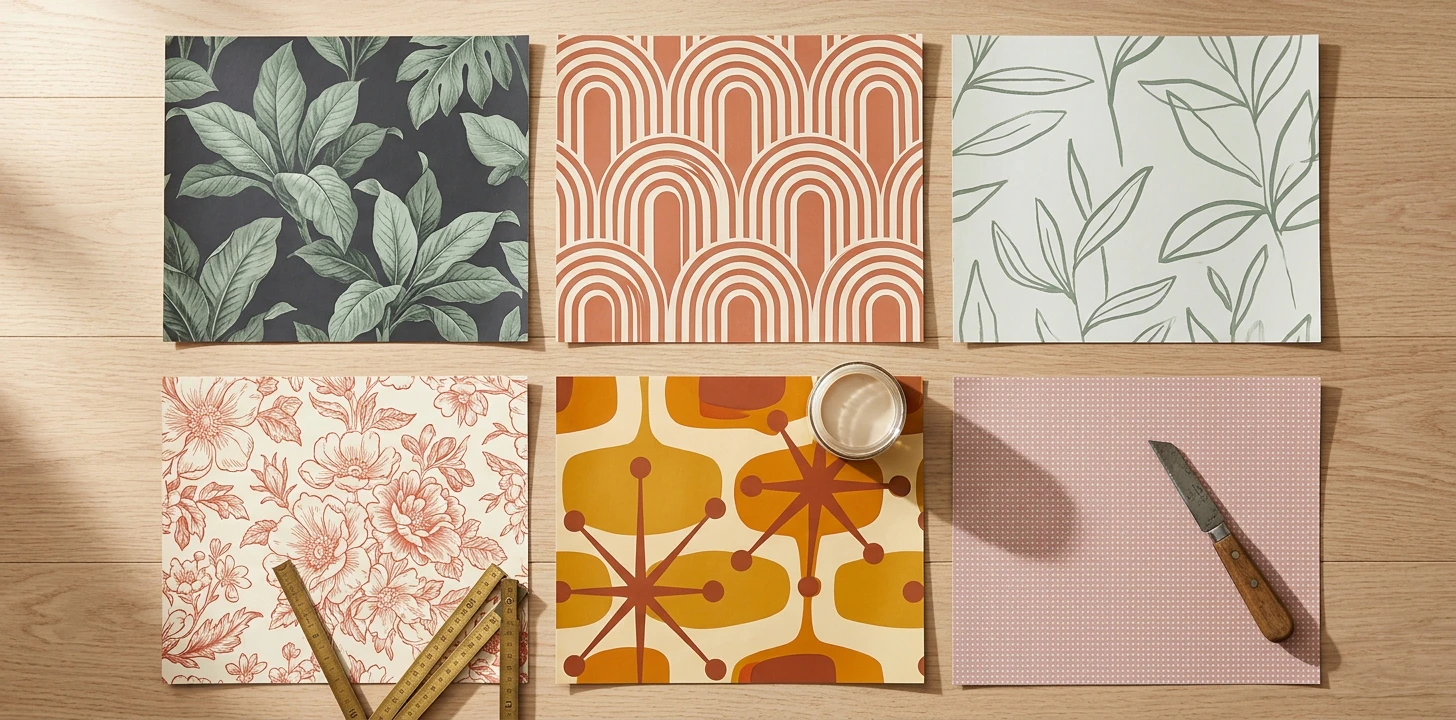 11 Best Peel-Stick Wallpaper Brands
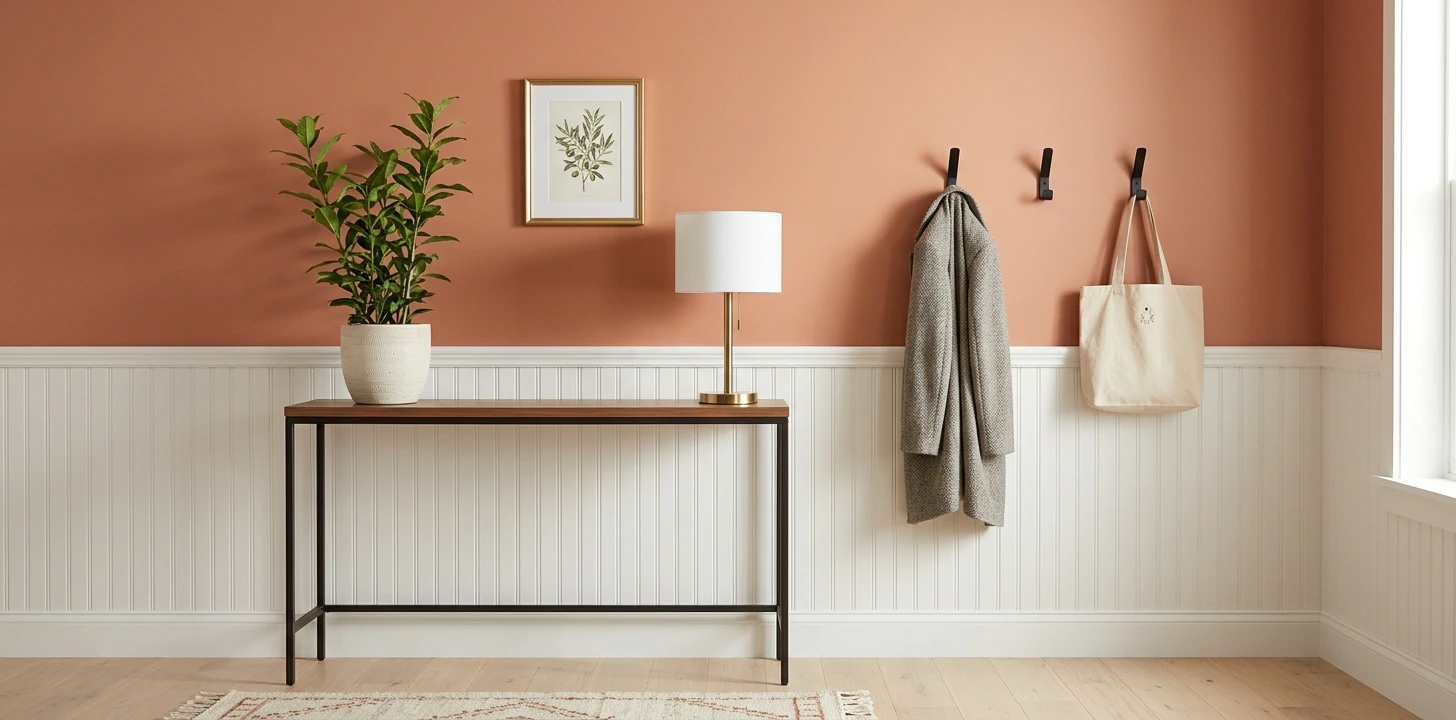 Full entryway walls guide
 Entryway Floor: Porcelain Tile vs LVP
 Bedroom Walls: Wallpaper vs Paint
 Home Office Walls: Wallpaper vs Paint