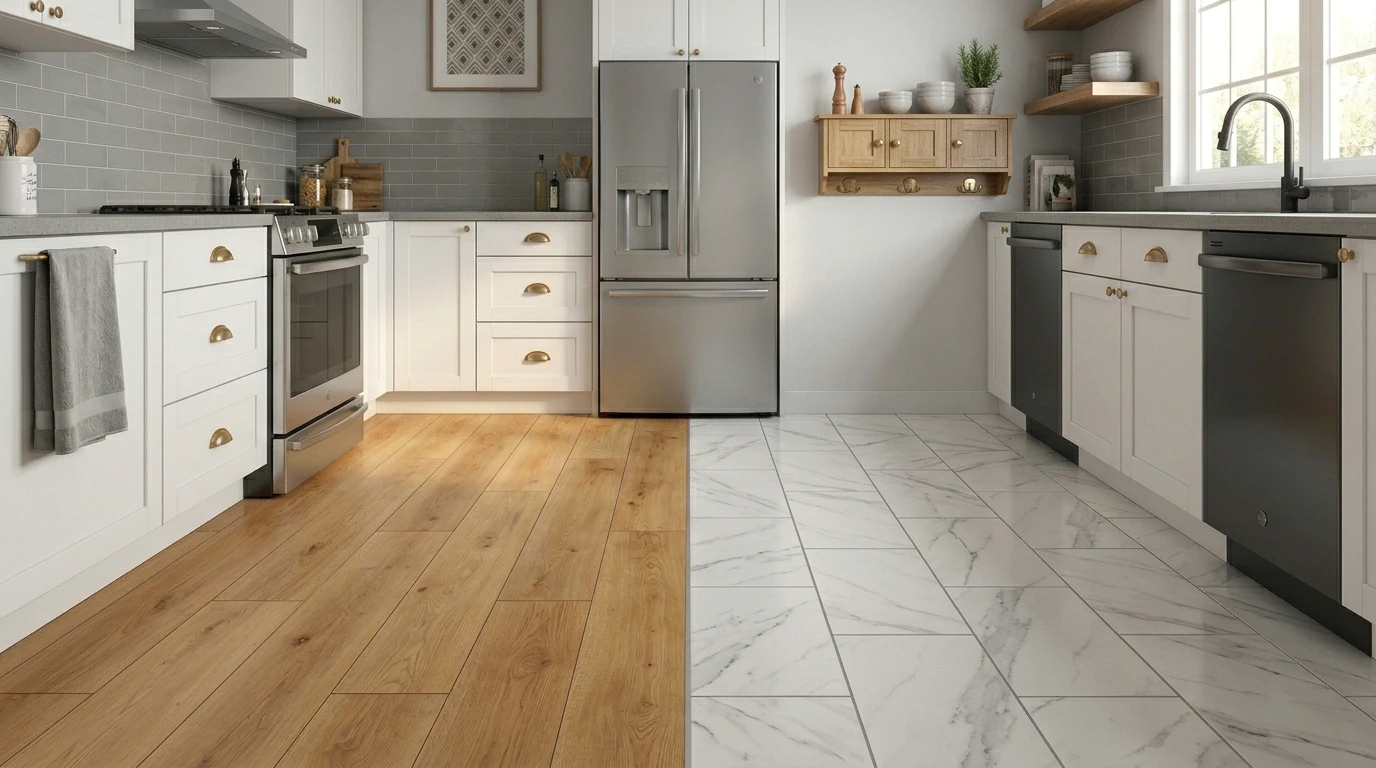
Updated July 2026. Prices reflect US market installed costs from Home Depot, Lowe's, and local tile suppliers. All comparisons based on a typical 100 sq ft kitchen floor (a 10×10 ft galley or small U-shape — the size where the cost difference actually matters).
Same materials, very different kitchen problem
This is the same LVP-vs-tile decision we cover for bathrooms — but the kitchen tilts the answer dramatically, because the problems kitchens have are not the problems bathrooms have. Bathrooms argue water, grout, resale. Kitchens argue foot fatigue, dropped dishes, and open-floor continuity.
The short version: LVP at $2.80/sq ft is softer under standing-cook feet, doesn't shatter dropped plates, and flows visually into the dining room. Porcelain tile at $5+/sq ft is bulletproof near the oven, lasts 20+ years, and never indents under a 350 lb fridge. The decision comes down to how much you cook, whether the kitchen is open to the rest of the house, and how long you plan to own it.
Below: side-by-side table, when each one wins, the under-discussed foot-fatigue problem that catches most homeowners, the open-floor flow design decision, and FAQs specific to kitchen use.
Side-by-side comparison
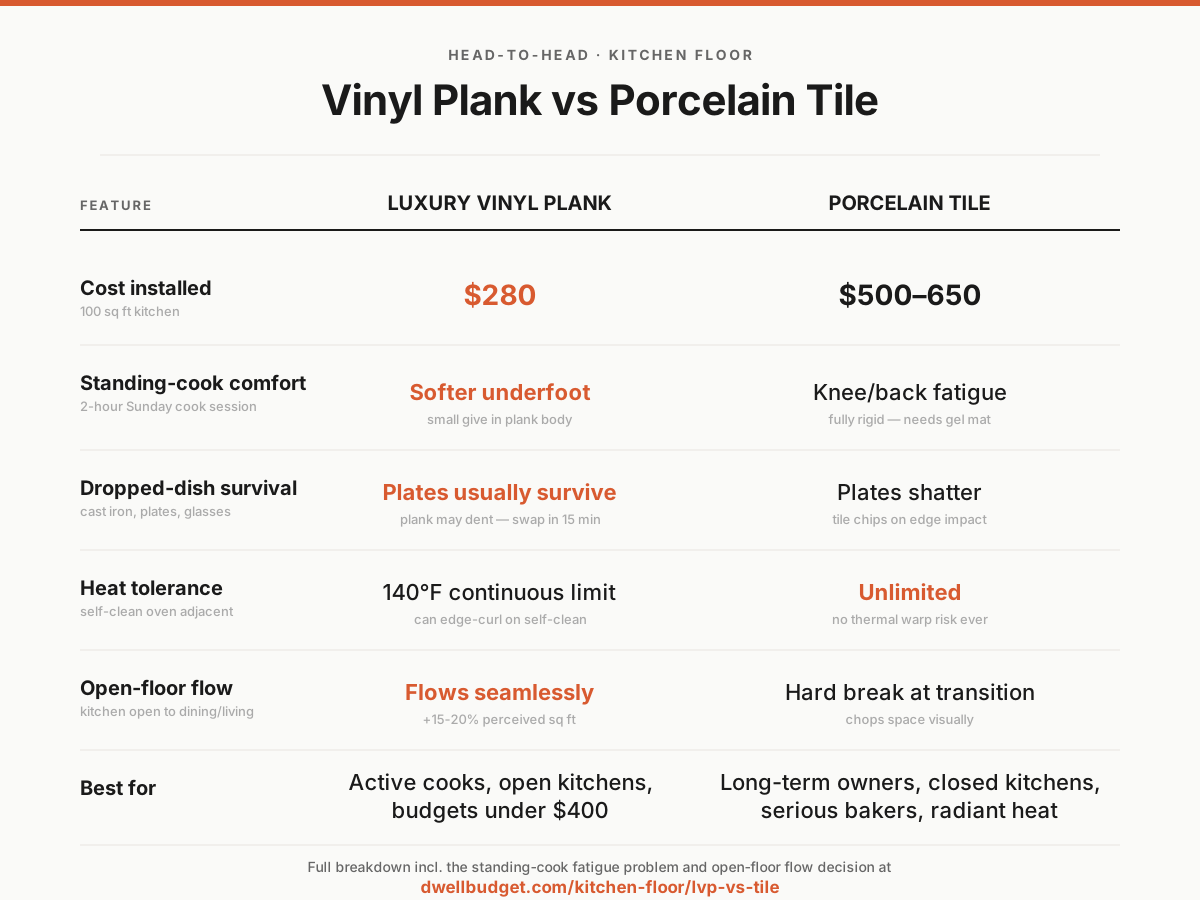
| Luxury vinyl plank (LVP) | Porcelain / ceramic tile | |
|---|---|---|
| Cost per sq ft (installed) | $2.80 | $5.00+ (plus thinset, grout, saw rental) |
| 100 sq ft kitchen total | ~$280 | ~$500–650 |
| Lifespan | 12–15 years | 20+ years |
| Standing-cook comfort | Softer — small give in plank body | Rigid — knee/back fatigue after 90 min |
| Dropped-dish survival | Plates usually survive | Plates shatter; tile can chip on edge |
| Heat tolerance near oven | 140°F continuous — can warp on self-clean | Unlimited — no thermal risk ever |
| Open-floor continuity | Flows into dining/living seamlessly | Breaks at the transition — chops space |
| Heavy-appliance indent | 5–10 yrs under fridge/dishwasher feet | None — no plastic deformation |
| Grease cleanup | Wipes off — no porous grout | Grout near range yellows by year 3 |
| Best for | Cooks, open kitchens, budgets under $400 | Long-term owners, closed kitchens, serious bakers |
When to pick vinyl plank
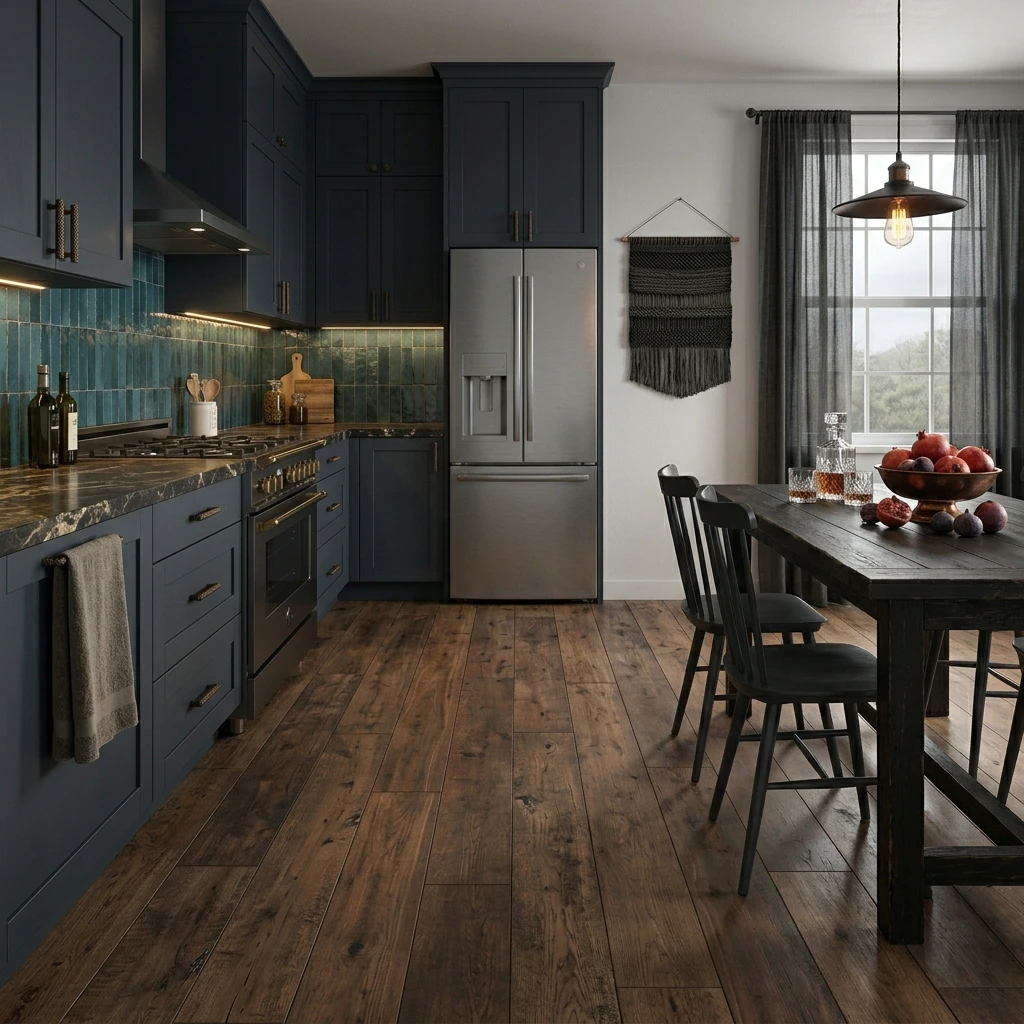
Pick LVP if at least three of these are true:
- You cook actively (4+ days a week, 1+ hour sessions) — foot fatigue is the daily problem
- Your kitchen opens into the dining or living room (open-concept)
- Budget for the whole kitchen floor is under $400
- You want install done in a weekend without a wet saw
- You drop dishes regularly enough that "will the plate survive" is a real question
Click-lock LVP from LifeProof, Smartcore, or Shaw at $2.80/sq ft hits $280 in material for a 100 sq ft kitchen plus a Saturday of install. The plank body has a tiny amount of give that softens standing-cook fatigue without making the floor feel "spongy," and the wood-look finish flows visually into adjacent rooms in a way tile physically cannot.
For active cooks specifically, the foot-fatigue gap between LVP and tile is bigger than most product reviews acknowledge. After a 2-hour Sunday cooking session on tile, your knees and lower back will tell you. LVP isn't carpet — it's still a hard floor — but the cumulative impact over a year of cooking is meaningfully lower.
What you give up: 5–10 year fridge/dishwasher indent (cheap fix with appliance pads on install day), self-clean oven thermal risk (just open a window during the cycle), shorter lifespan (12–15 years vs 20+ for tile), and no real resale "wow" — listings still mention "tiled kitchen" as a quality signal in some markets, while wood-look LVP reads as standard-issue 2026 spec.
When to pick porcelain tile
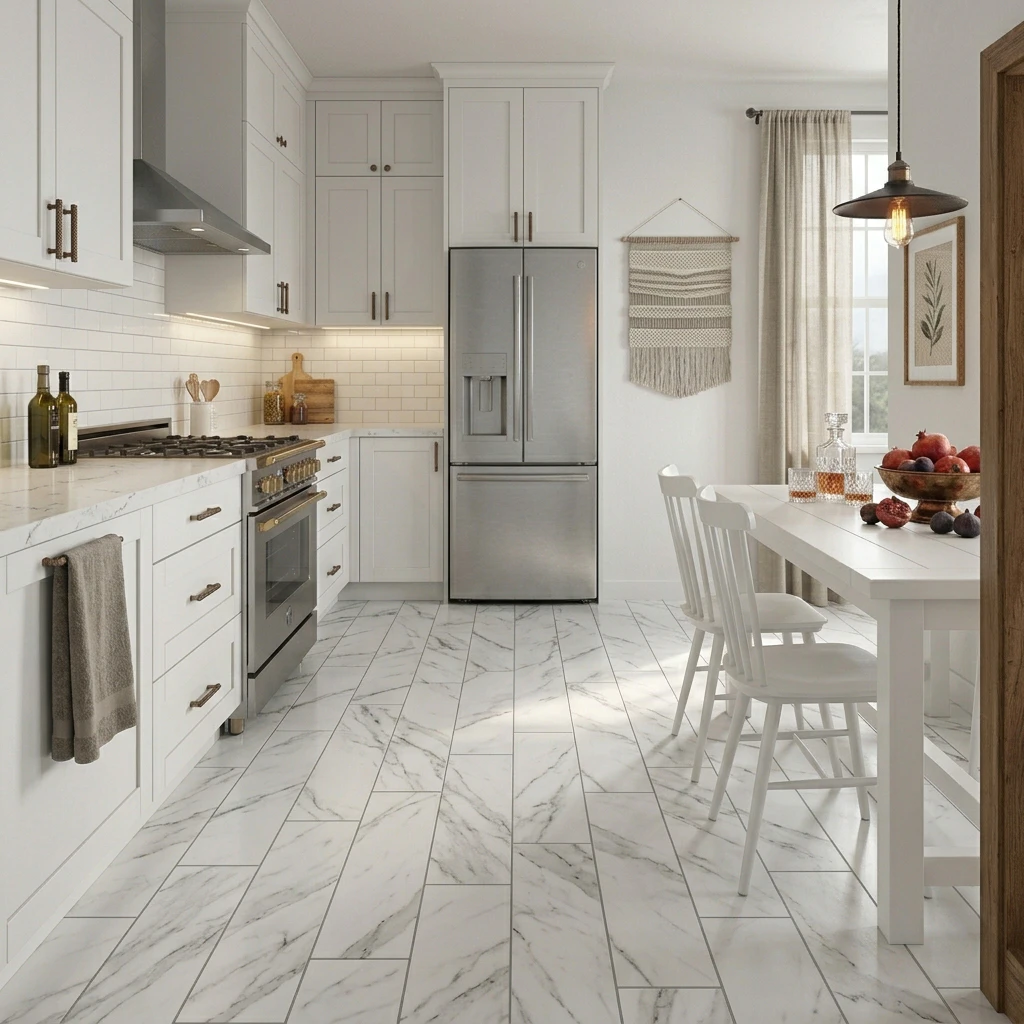
Pick porcelain or ceramic tile if at least three of these are true:
- You own the home and plan to stay 10+ years
- Your kitchen is walled off from the rest of the house (no open-concept continuity to lose)
- You're a serious baker or home cook running the oven hot for hours
- You're adding radiant floor heating — tile is the perfect partner
- You have a 350+ lb commercial-style fridge that would slowly indent LVP
Porcelain tile at $5/sq ft (denser, lower water absorption than standard ceramic — the right choice for kitchens) plus another $1–2/sq ft for thinset, grout, spacers, and weekend wet-saw rental hits $500–650 installed for 100 sq ft. Large-format porcelain (24×24 or 24×48) reads as premium and minimizes grout lines, which is the right move in any kitchen — fewer grout lines means less of the surface vulnerable to grease yellowing.
The 20+ year lifespan and unlimited heat tolerance are the two reasons serious cooks and long-term owners still pick tile over LVP. After 15 years, ceramic still looks new while LVP is showing wear in the high-traffic stove-to-sink lane; after 20 years, tile is on year 1 of its second life. For a kitchen you'll own for 20 years, tile's per-year cost ($25–32) is actually lower than LVP's ($19–23) once you factor in the LVP replacement at year 13.
What you give up: standing-cook foot fatigue (anti-fatigue mats are the workaround — plan to buy two day one), dropped plates shatter on impact, perceived kitchen size shrinks if your kitchen opens to other rooms (tile transition chops the space), and 60%+ higher upfront cost.
The standing-cook foot-fatigue problem
This is the kitchen-specific factor that decides the LVP-vs-tile question for many active cooks, and almost no flooring sales material talks about it.
Tile is completely rigid. Every footstep transmits the full impact directly through your knees, hips, and lower back. Over a 90-minute Sunday cook session, the cumulative impact is meaningful — most home cooks who switch from LVP to tile notice the difference within the first month, and the complaint is consistent: "my knees hurt after cooking now."
LVP has a small amount of give. Both the wear layer and the floating click-lock system absorb a small fraction of footfall impact. It's not carpet — you'll still feel a hard floor — but the cumulative fatigue over a year of cooking is measurably less.
The anti-fatigue mat workaround works on either floor and is the right move regardless: a 3/4 inch GelPro or Sky Solutions gel mat ($60–90) at the sink, another at the stove. Two mats covers the two spots you actually stand for sustained periods. If you're picking tile and you cook frequently, factor the mats into the install budget — they're not optional gear, they're the fix.
For households where cooking is occasional (a 30-minute weeknight meal, takeout most evenings), the foot-fatigue argument is much weaker — tile is fine. The decision tilts hard on how much standing-and-cooking actually happens in the kitchen.
Open-floor continuity: the design decision
The single most underrated argument for LVP in modern kitchens is the open-concept floor flow. In a kitchen that opens to a dining area, living room, or great room, the flooring choice doesn't end at the kitchen — it sets the visual baseline for the entire connected zone.
LVP flows. A wood-look LVP installed continuously across kitchen, dining, and living areas reads as one large space. Put a tile-to-wood transition at the kitchen entrance and the eye registers two smaller rooms; run one floor through and it registers a single big one — which is exactly why home stagers push continuous flooring in open plans. The continuous run also makes furniture placement easier — no transition strip telling you where the "kitchen zone" ends.
Tile breaks. A tile-to-wood (or tile-to-LVP) transition at the kitchen doorway hard-stops the visual flow. The result reads as "kitchen is a separate room" even when the floor plan is genuinely open. In a galley kitchen with a doorway opening to a separate dining room, the break is fine — that's how the rooms actually relate. In an open-concept floor plan where the kitchen island is the only thing separating cooking from living space, the tile transition fights the architecture.
The decision rule: if you can stand at the sink and see the couch or dining table without a closed doorway between them, LVP wins on continuity alone. If a closed doorway separates the kitchen from everything else, the continuity argument disappears and you can pick freely on cost, lifespan, and cooking intensity.
LVP vs tile cost: the full budget breakdown
The prices scattered through this page, gathered into one honest budget for a typical 150 sq ft kitchen floor:
| Vinyl plank (LVP) | Porcelain tile | |
|---|---|---|
| Material per sq ft | $2.80 | $5.00 |
| Material, 150 sq ft | ~$420 | ~$750 |
| Consumables | underlayment if no attached pad (~$30) | thinset, grout, spacers (~$150-250) |
| Tools | $60 install kit (mostly reusable) | wet saw rental $50-80 + trowels, level |
| DIY total | ~$480-510 | ~$1,000-1,100 |
| If hiring install | modest add — fast low-skill labor | skilled-trade labor, often ≥ material cost |
| Lifespan | 10-15 yrs | 25+ yrs |
| Cost per year (DIY) | ~$35-50 | ~$40-45 |
The shape of the answer: tile costs roughly double upfront in a DIY kitchen, and hiring widens it — but on a 25-year horizon the per-year numbers nearly converge. Which is why the real decision usually isn't money: it's the ownership-length, cooking-habit and open-floor questions covered above. If cost math is your whole lens across materials, our hardwood vs LVP cost guide runs the same style of breakdown for the other big kitchen-floor pairing.
The short verdict
Pick LVP if you cook actively, your kitchen is open to the rest of the house, your budget is under $400, or dropped plates need to survive. Pick porcelain tile if you own long-term, your kitchen is closed off from the rest of the house, you're a serious baker running the oven hot, or you're adding radiant floor heating. For a 20-year homeowner with a closed kitchen and a serious cooking habit, tile's per-year cost actually beats LVP because you're not replacing the floor at year 13.
Comparing more kitchen floor options? The full kitchen floor guide also covers solid hardwood (the resale-premium option for dry kitchens) and peel-and-stick vinyl tile (the under-$130 renter shortcut). The LVP vs hardwood head-to-head covers the dry-kitchen vs wet-kitchen decision specifically.
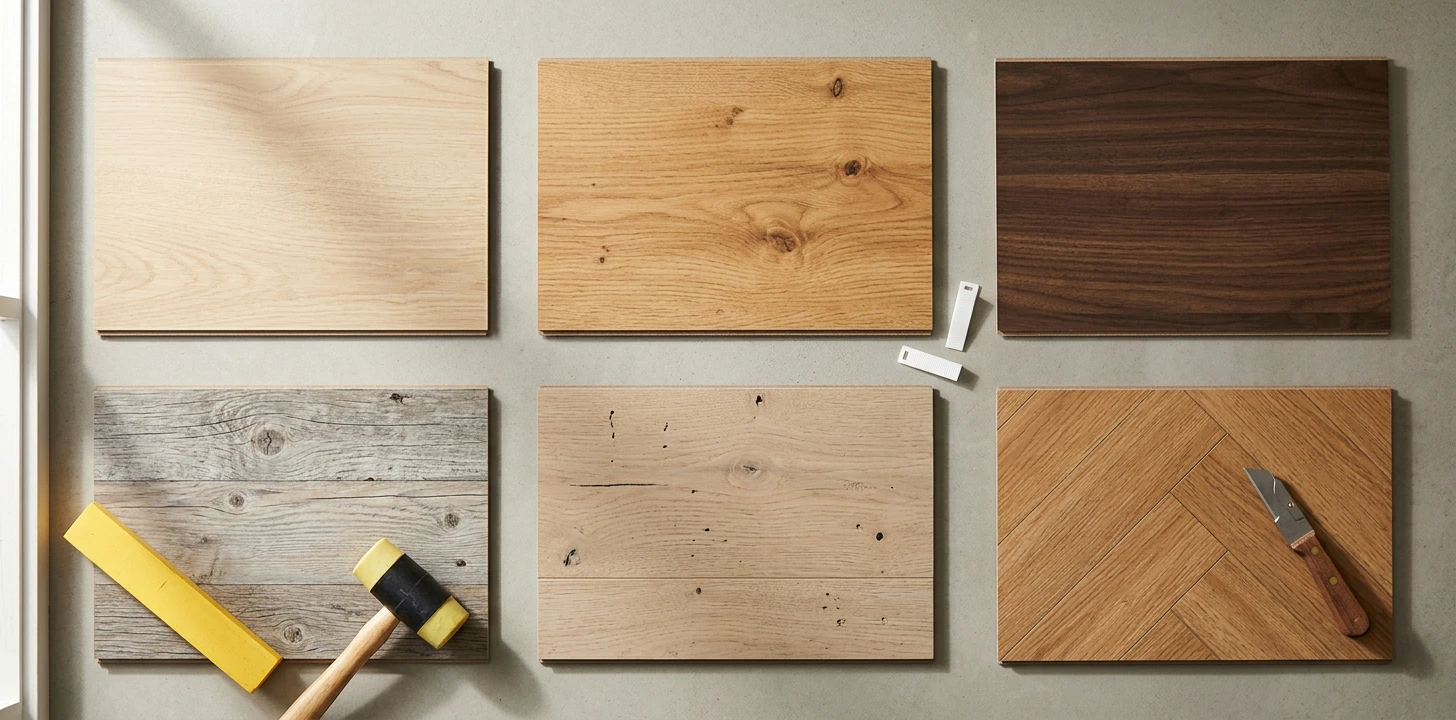 11 Best LVP Brands 2026
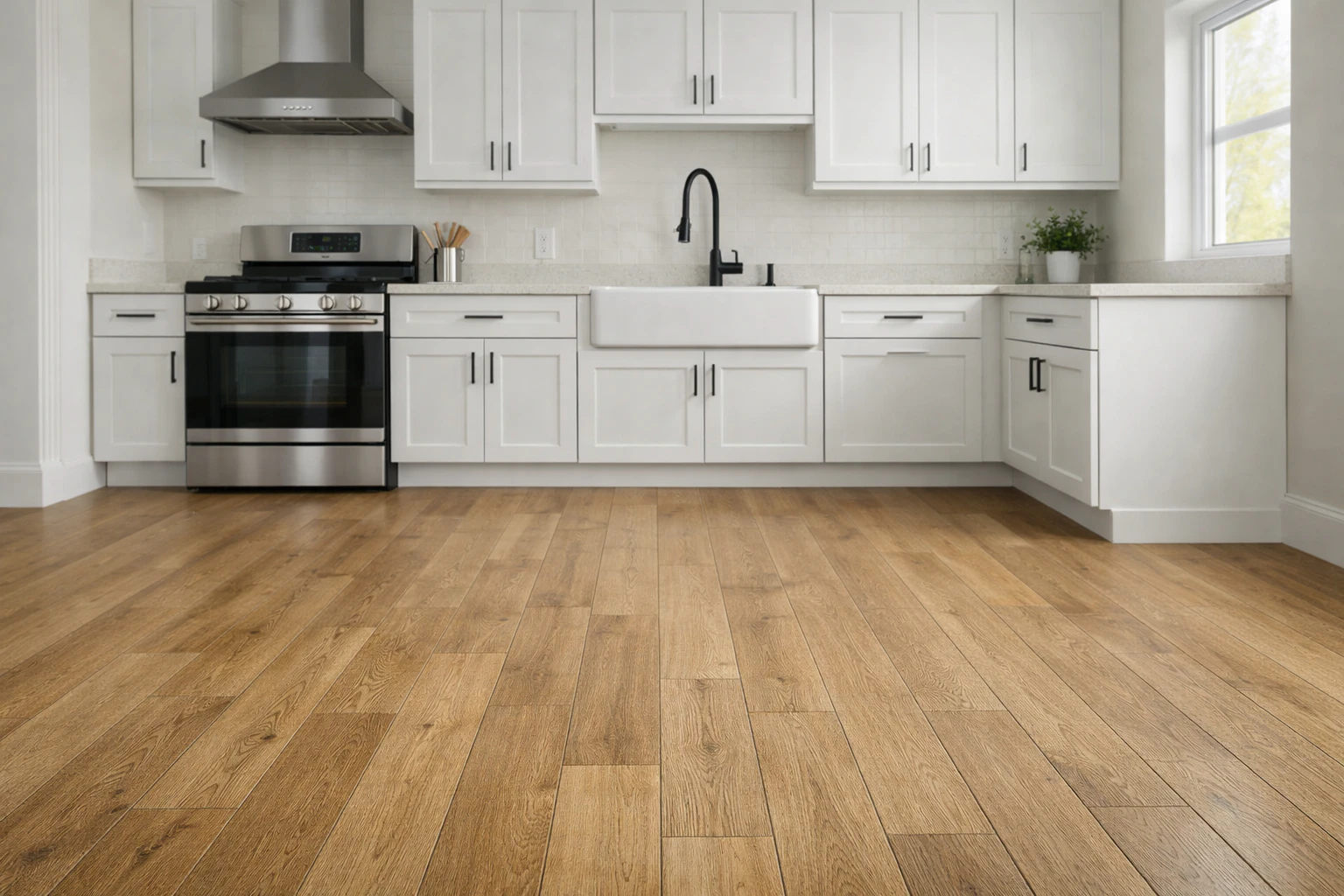 Full kitchen floor guide
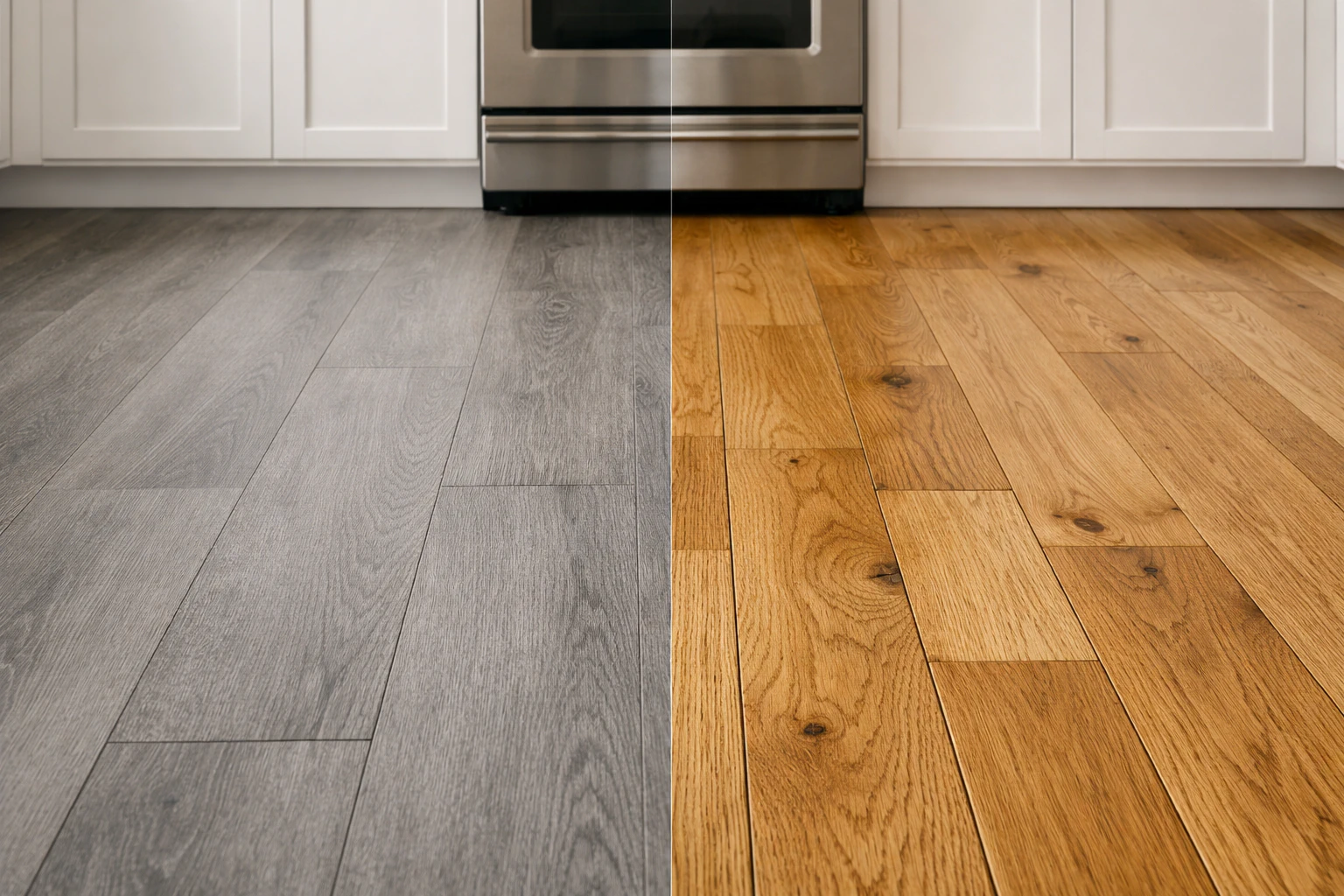 Vinyl Plank vs Hardwood
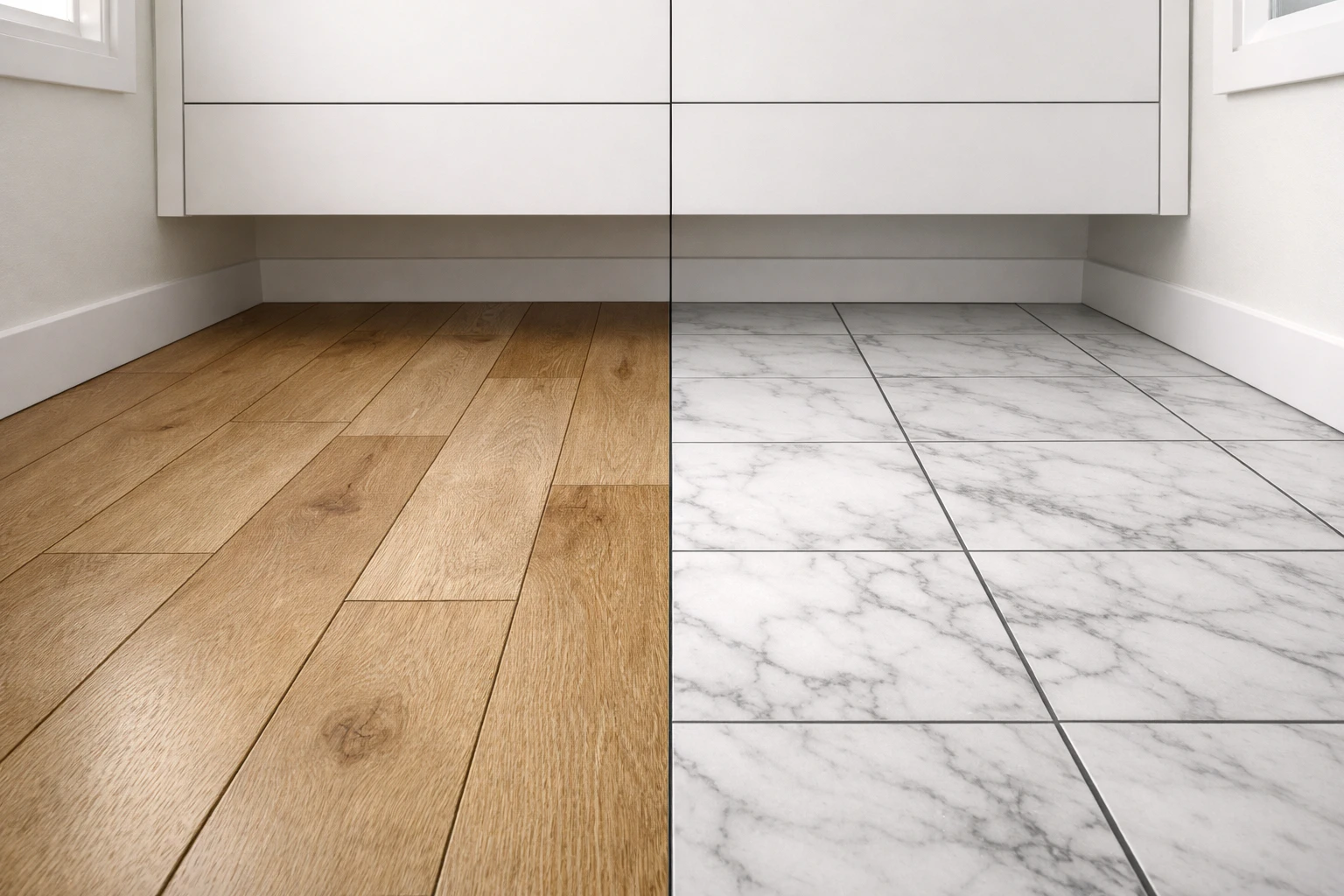 Bathroom Floor: LVP vs Ceramic Tile
 Kitchen Backsplash