Updated July 2026. Prices reflect US market frame and paint costs from Amazon, Home Depot and IKEA. All comparisons based on a standard 10–12 ft living room accent wall.
The most-saved living room decision on Pinterest
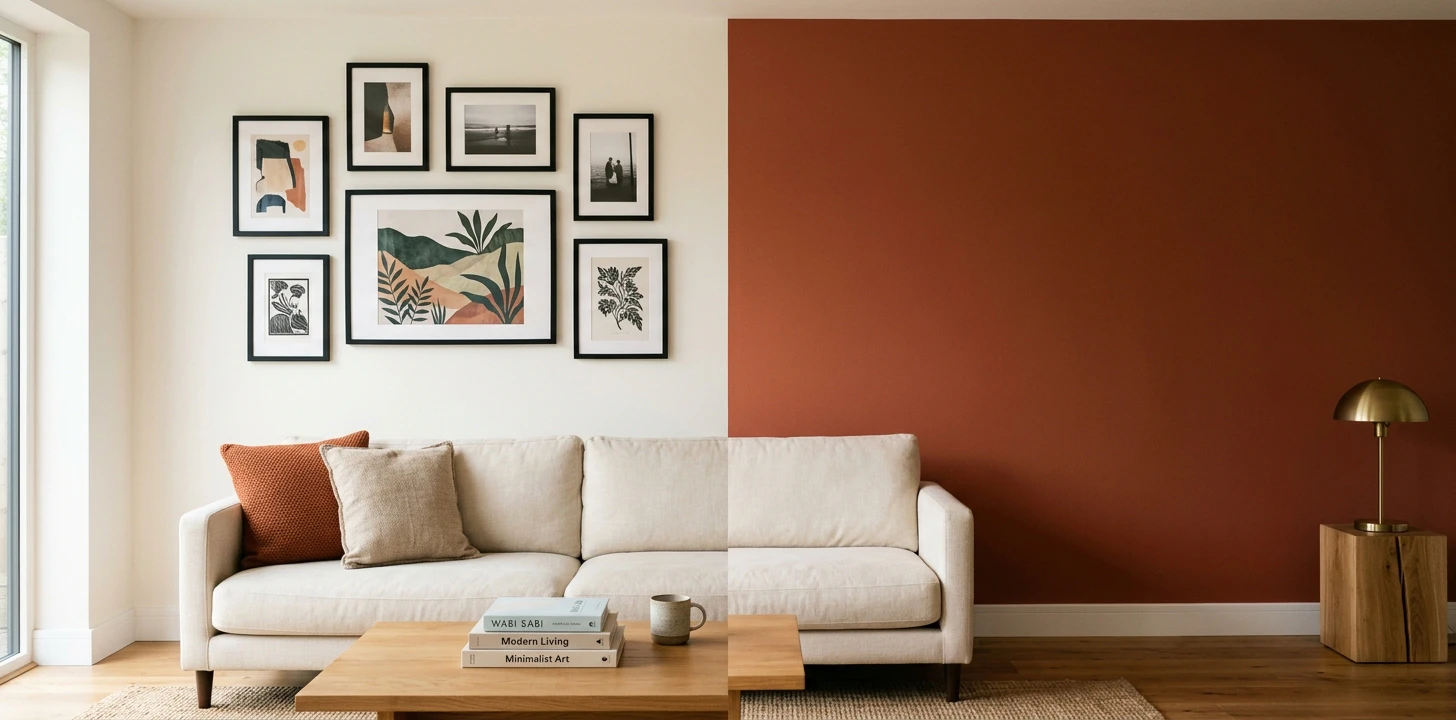
"Should I paint an accent wall or do a gallery wall?" is one of the most-pinned living room decisions on the internet. Both transform the wall behind the couch (the single most-photographed wall in your apartment). Both can be done by anyone in a weekend. But they sit at opposite ends of two axes: cost-and-effort on one side, and visual-style on the other.
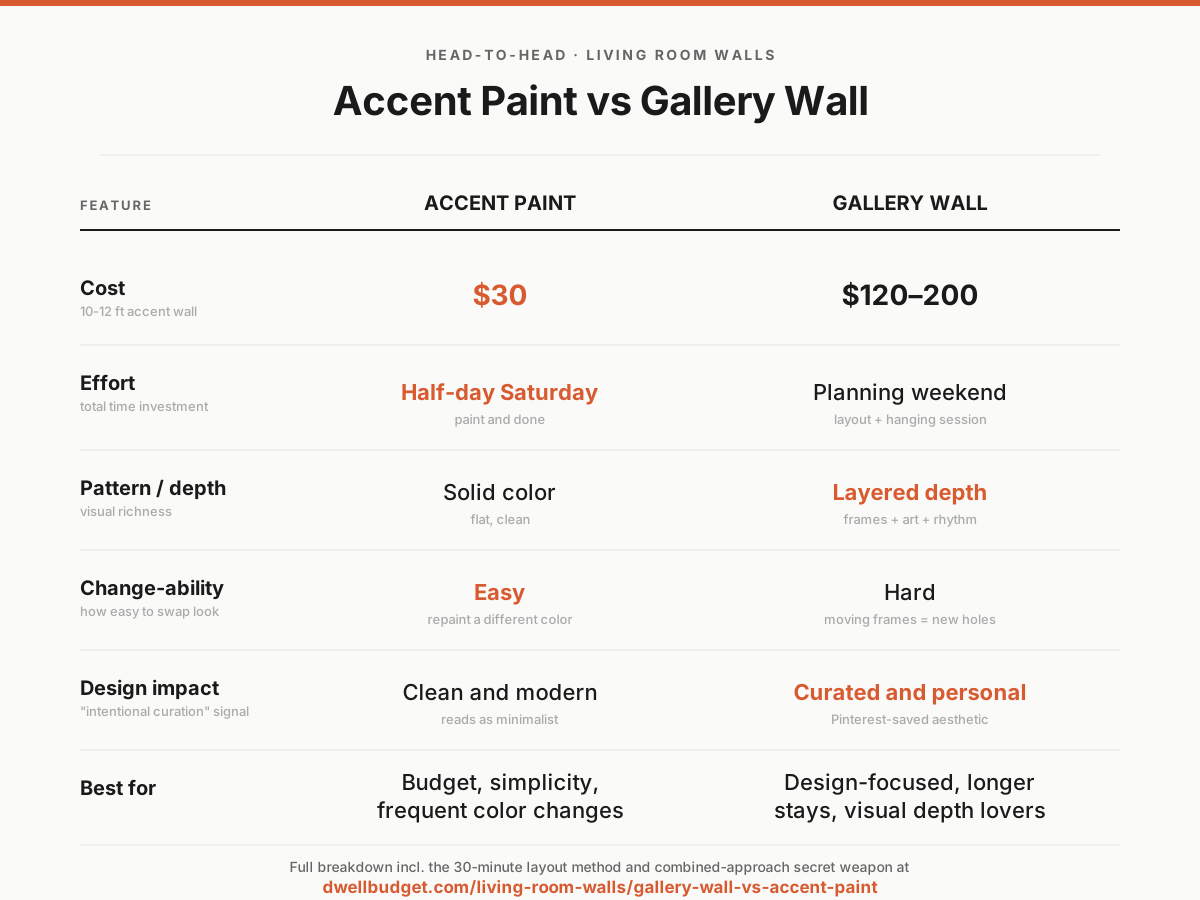
The short version: accent paint is the simple, reversible, budget answer — $30 in materials, one Saturday, and you can change your mind in three years. A curated gallery wall is the high-effort, high-reward, design-focused answer — $120-200 in frames and prints, a planning weekend, and it stays up for years because the layout becomes part of how the room reads.
Below: side-by-side table, when each one wins, the 30-minute planning move that prevents most gallery-wall disasters, the combined approach that does both at once (the actual best move for most owners), and FAQs.
Side-by-side comparison
| Accent paint wall | Curated gallery wall | |
|---|---|---|
| Total cost (10–12 ft wall) | $30 (one gallon + supplies) | $120–200 (8–12 frames + prints) |
| Effort | Half-day Saturday — paint and done | Planning weekend + hanging session |
| Tools required | Roller, brush, drop cloth, painter's tape | Level, hammer, paper templates, picture wire |
| Permanence | Permanent until repaint (small effort) | Permanent — many nail holes to patch on removal |
| Pattern / depth | Solid color only — flat visual | Layered visual depth — frames + art + spacing rhythm |
| Change-ability | Easy — repaint a different color anytime | Hard — moving frames creates new hole problem |
| Resale impact | Modest — neutral colors safe, bold polarizing | Modest — depends on art style and frame finish |
| Renter-safe? | Sometimes (with landlord permission) | Sometimes (Command strips for sub-2lb frames) |
| Best for | Budget, simplicity, frequent color changes | Design-focused, longer stays, visual depth lovers |
When to pick accent paint
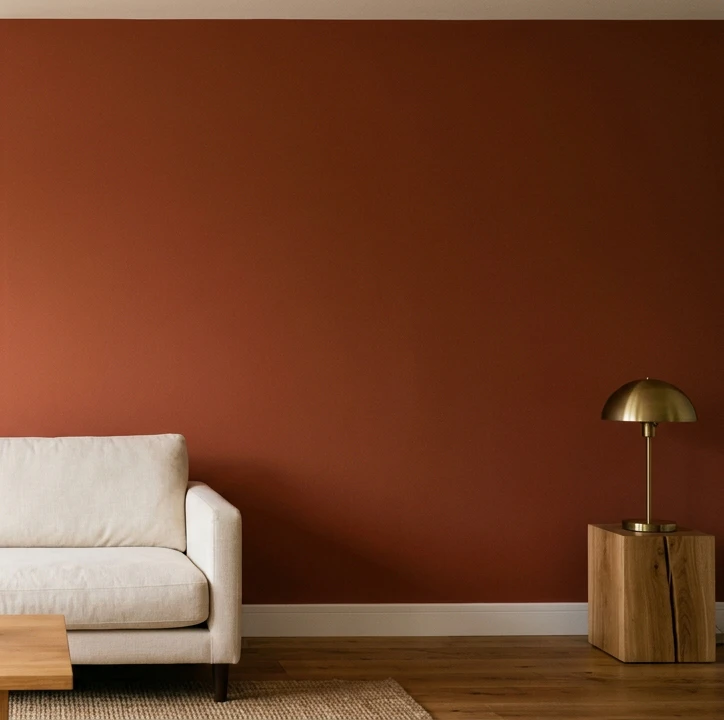
Pick accent paint if at least three of these are true:
- Total budget under $50 for the whole wall
- You want it done in one Saturday with no planning required
- You change your color preferences every 2–3 years
- The wall behind the couch is small or has windows/doors that limit gallery space
- Your style is minimalist — solid color reads as intentional, not bare
A single gallon of quality interior paint (Behr Marquee, Benjamin Moore Regal Select, Sherwin-Williams Cashmere) covers 100-120 sq ft with two coats for $30-45. The install is genuinely beginner-friendly — patch nail holes from previous owners, light sand smooth, cut in with a brush, roll the field, second coat after the first dries. Done by Saturday afternoon.
The honest case for accent paint: it's the right answer if you want a clean, intentional visual change without committing to a curatorial project. Pinterest favorites (Hale Navy, Iron Ore, Cavern Clay) photograph beautifully and read as "designed" without requiring you to source art, mat anything, or plan a layout.
What you give up: visual depth (a single color is flat; gallery walls have rhythm, dimension, and storytelling), changeability without effort (repainting requires a Saturday; swapping a single gallery print takes 10 minutes), and the Pinterest "intentional curation" signal that strongly-edited gallery walls carry better than paint.
When to pick a curated gallery wall
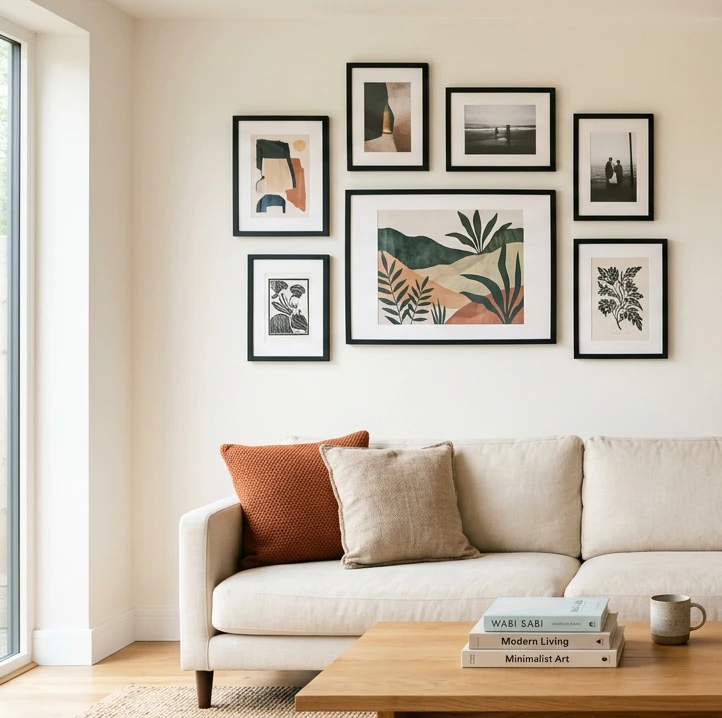
Pick a curated gallery wall if at least three of these are true:
- You want a designed-looking living room that reads as "thoughtful" rather than "budget"
- You're willing to invest a planning weekend (the most important step)
- You'd prefer to swap individual pieces over time rather than redo everything at once
- You've collected art, photography, or prints that deserve display
- Your wall behind the couch is large enough (8+ feet wide, 6+ feet tall) to support 8-12 framed pieces
A curated gallery from Americanflat or Frametory frames at $8-15 per piece × 8-12 pieces lands at $80-180 for frames, plus $20-40 for prints (Society6, Etsy printable downloads). Total $100-220 for a complete designed gallery.
The honest case for a gallery wall: it's the highest design-impact-per-dollar move in any apartment when executed properly. A well-planned gallery wall with consistent frame finish, mixed sizes, and a clear anchor piece reads as professionally designed — better than any single piece of art or any paint color. The planning is what separates a designer-looking gallery wall from a haphazard collection.
What you give up: upfront effort (planning is half the project — see the dedicated section below), commitment (you'll be living with this layout for years; moving frames creates new hole problems), budget (4-7x more than paint), and renter flexibility in some cases (heavy frames over 2 lbs need real nails, which create real holes).
The 30-minute planning move that decides it
This is the single technique that separates a designer-quality gallery wall from a haphazard mess. Skip it and you'll have a wall full of nail holes in slightly wrong places.
The three-step layout method:
- Floor layout first. Clear floor space the same shape as your wall (approximate the dimensions with painter's tape on the floor). Lay every frame face-up in the rough composition you imagine. Move pieces around until the spacing, sizes, and orientation feel balanced. Take a phone photo for reference.
- Paper templates. Trace each frame onto craft paper or newspaper, cut to actual size, label which frame goes where. Tape templates to the wall with painter's tape, exactly where you want the real frames. Step back, live with the layout for a full day, adjust paper positions until you're sure.
- Hang one frame at a time. Take down ONE paper template, mark the nail position through the template, hammer the nail, hang the frame. Repeat for each piece. The paper templates prevent the "I'll just eyeball it" disaster that wrecks most first gallery walls.
This method takes about 30 extra minutes versus eyeballing — and it's the single most important step. The frame finish, the prints, the spacing — none of it matters if the layout is off. Studio McGee and every other designer-quality gallery wall on Pinterest follows this layout method.
Combining both: the secret-weapon approach
For owners willing to invest 2-3 weekends and $150-230 total, the best-of-both move is real: accent paint + gallery wall on the same wall.
The recipe:
- Weekend 1: paint the wall in a deep moody color (Hale Navy, Iron Ore, Cavern Clay)
- Wait 30 days for paint to fully cure (otherwise Command strips pull paint off the wall)
- Weekend 2: plan gallery layout using the 30-minute method above
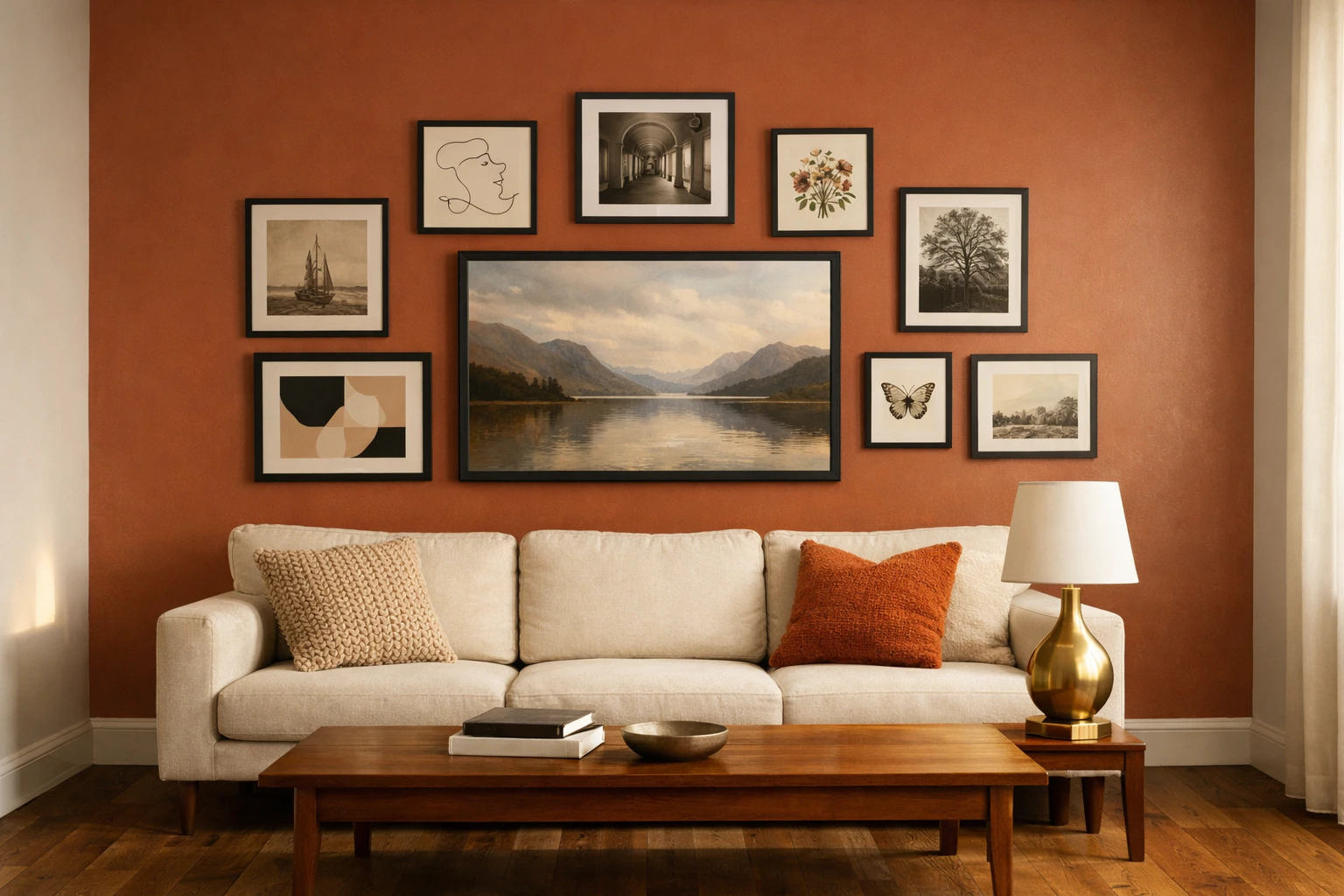
- Weekend 3 (or finish of Weekend 2): hang the gallery — frames in matte black look stunning against dark warm paint
This combined approach is the most-Pinterest-saved living room composition for a reason: the dark accent paint creates depth, the matte-black frames create contrast, the gallery layout creates rhythm. None of the three elements alone delivers what all three combined do.
Total cost: $30 paint + $120-180 frames + $20-30 prints = $170-240 for a wall that looks like a $500 design project. This is the move if you can afford both the time and the budget.
The short verdict
Pick accent paint if budget is under $50, you want it done in one Saturday with no planning, you change your mind on colors periodically, or your wall is small. Pick a curated gallery wall if you want a designed-looking living room, you have art or photography that deserves display, your wall is large enough (8+ ft wide), and you're willing to invest a planning weekend.
For owners staying 5+ years with a meaningful budget, do both — accent paint AND gallery wall together is the secret-weapon move that delivers a wall that punches well above its $200 budget. The planning weekend pays off for years.
Comparing more wall options? The full living room walls guide also covers peel-and-stick wallpaper and shiplap paneling — useful when you want pattern (wallpaper) or texture (shiplap) beyond what paint and frames offer.
 Full living room walls guide
 Bedroom Walls: Wallpaper vs Paint
 Bathroom Walls
 Kitchen Backsplash: Peel-Stick vs Real Tile