Updated July 2026. Prices reflect US market kit costs from Amazon, Home Depot and rug specialty stores. All comparisons based on a typical 13-step residential staircase — the standard US single-flight count.
The most-photographed floor in the house
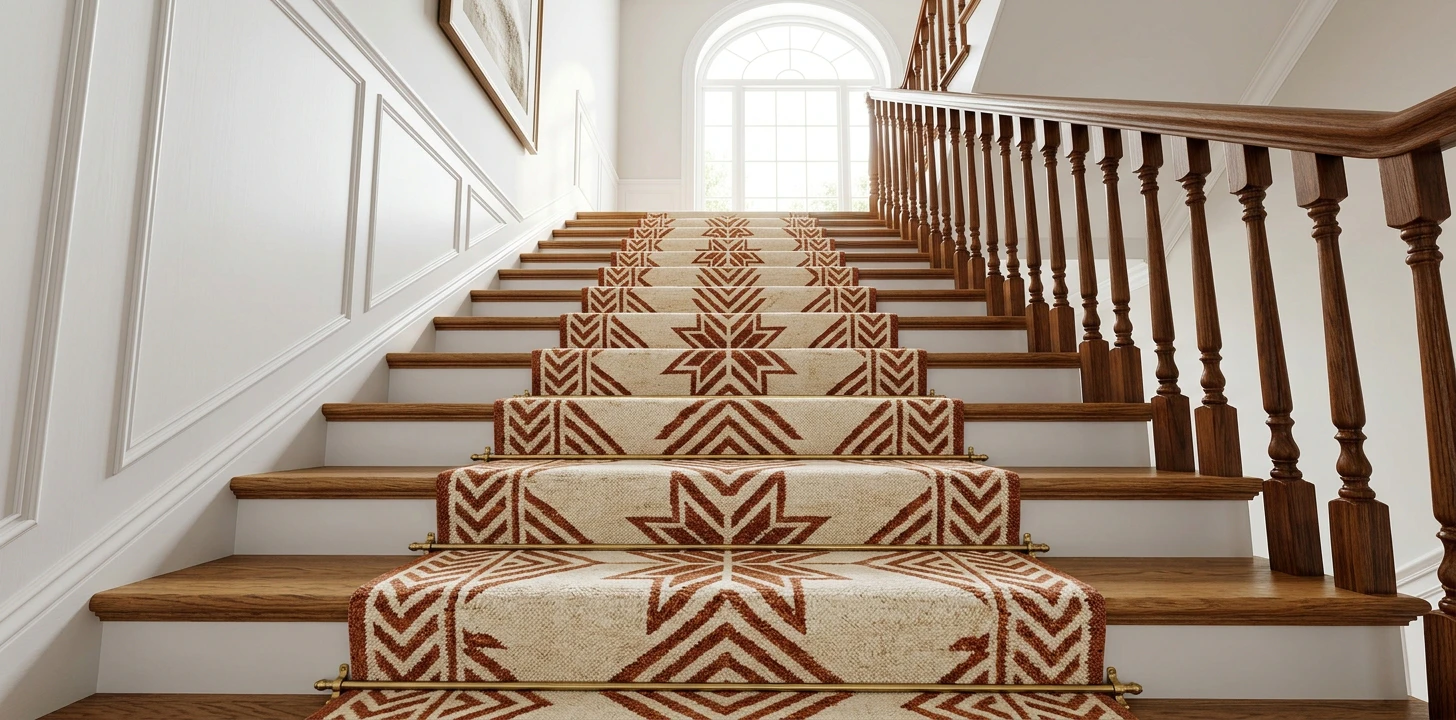
Stairs are the most-photographed floor in any home — they sit dead-center in the typical apartment, you walk past them every day, and they show up in every real estate listing photo. Yet most stair floors are neglected, which makes a refresh one of the highest-leverage projects you can do. Two approaches do almost all the work: a wool stair runner with brass rods, or paint with anti-slip grit.
The short version: a stair runner is the design-magazine answer ($110-250, install in an afternoon, unhooks in seconds for renters, adds traction safety automatically). Painted stairs are the budget answer ($30-60, lasts 5-7 years, requires anti-slip grit additive to be safe, locks you in for owners only). The choice splits cleanly between rental flexibility and budget commitment.
Below: side-by-side table, when each one wins, the slip-safety problem unique to stairs (painted stairs without grit are genuinely dangerous), the pets-and-kids question, and FAQs.
Side-by-side comparison
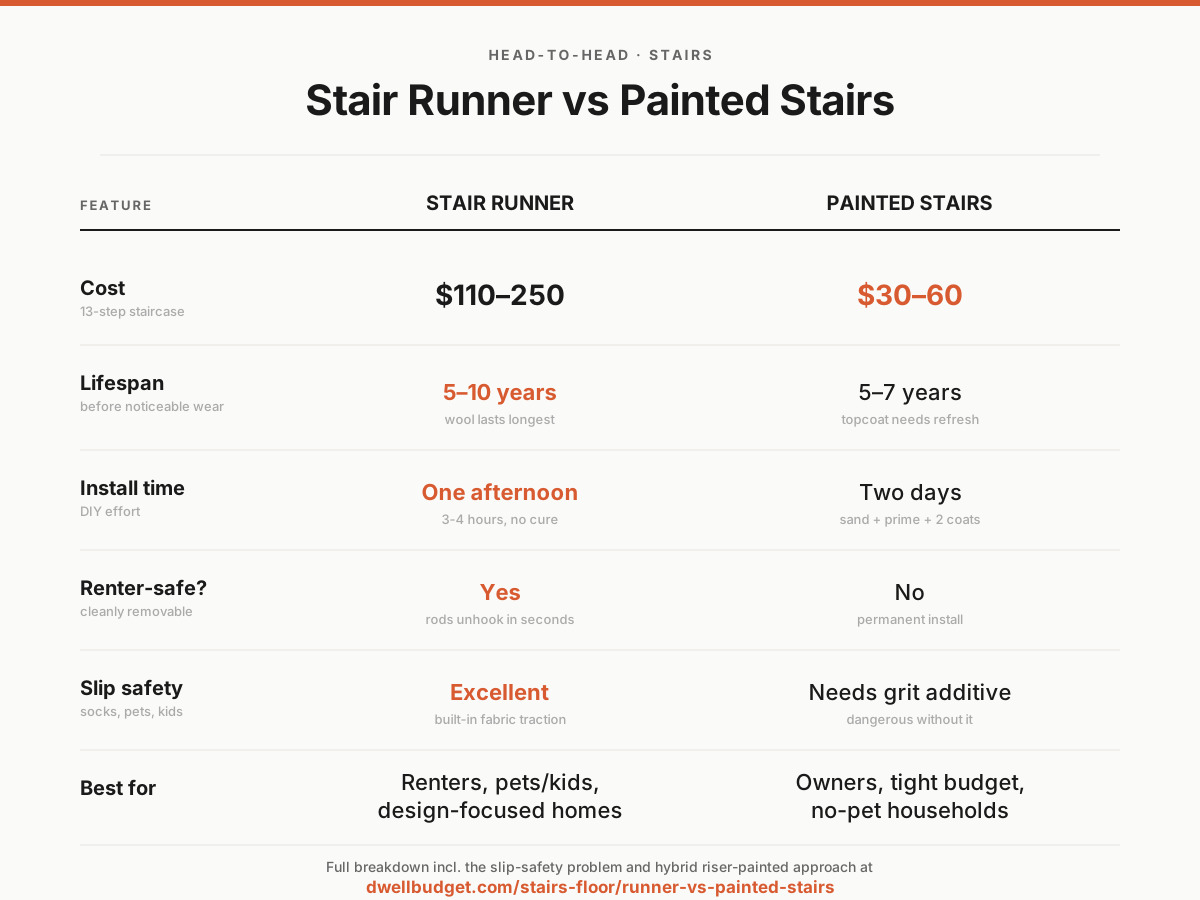
| Stair runner with brass rods | Painted stairs (with anti-slip) | |
|---|---|---|
| Cost (13 steps) | $110–250 total | $30–60 total |
| Material breakdown | $80–200 runner + $30–50 brass rods | $25–45 paint + $5–15 anti-slip additive |
| Lifespan | 5–10 years (wool); 4–6 years (polypropylene) | 5–7 years before topcoat wear |
| Install time | One afternoon (3–4 hours) | Two days (sand + prime + two coats + topcoat cure) |
| Renter-safe? | Yes — rods unhook in 60 seconds | No — permanent surface change |
| Slip safety | Excellent — built-in traction from fabric | Dangerous without anti-slip grit additive |
| Pets & claws | Good (polypropylene); risky for snags (wool) | Smooth — claws skid, risky for older dogs |
| Resale signal | Modest — designed look | Modest — depends on color choice |
| Best for | Renters, design focus, household with pets/kids | Owners, tight budget, no pets, willing to maintain grit |
When to pick a stair runner
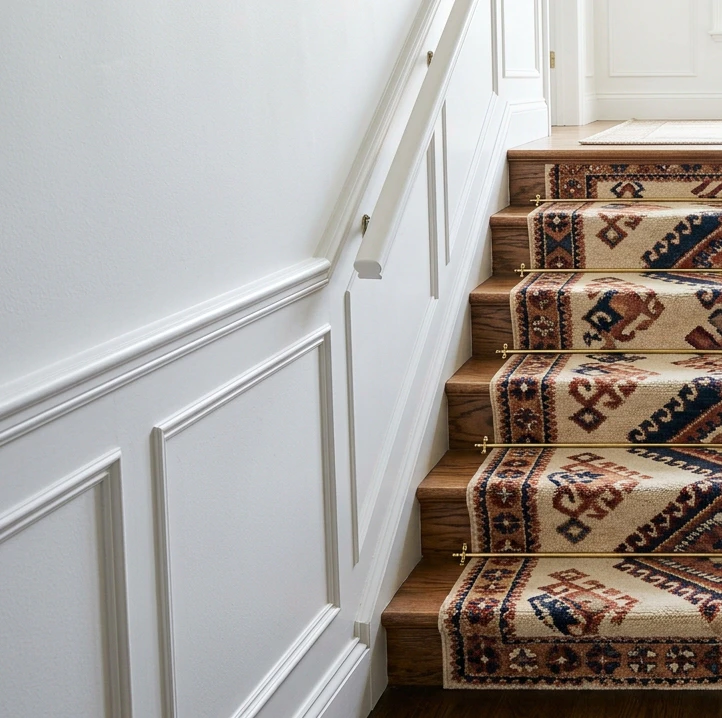
Pick a stair runner if at least three of these are true:
- You rent — and need it gone cleanly on move-out
- You want the "design magazine" stair look (every Pinterest "before and after" runs this)
- You have pets or kids running up and down barefoot daily
- Your stairs feel slippery in socks and you want passive safety
- You'd like to swap the look in a few years without redoing the underlying stairs
A wool or polypropylene runner from Loloi or Safavieh at $80-200 paired with brass stair rods at $30-50 for a 13-step set hits $110-250 total. The install is one afternoon: lay the runner down the center of each tread, slip the brass rod into the angle where tread meets riser, screw the rod brackets to the wood. Done.
The honest case for runners in 2026: they're the right answer for any rental staircase, period. Landlords love them because there's literally zero damage at any point. And for owners, runners are increasingly the preferred choice over painted stairs because: pets get traction, kids don't slip in socks, the look reads as intentional rather than budget, and you can swap the pattern in five years without redoing anything underneath.
What you give up: upfront cost (3-4x more than paint), pure-paint aesthetic (you'll always see the runner, not the stairs themselves), and some pattern persistence — bohemian or oriental patterns hide wear and stains better than solid colors, so pick busy if you have pets or kids.
When to pick painted stairs
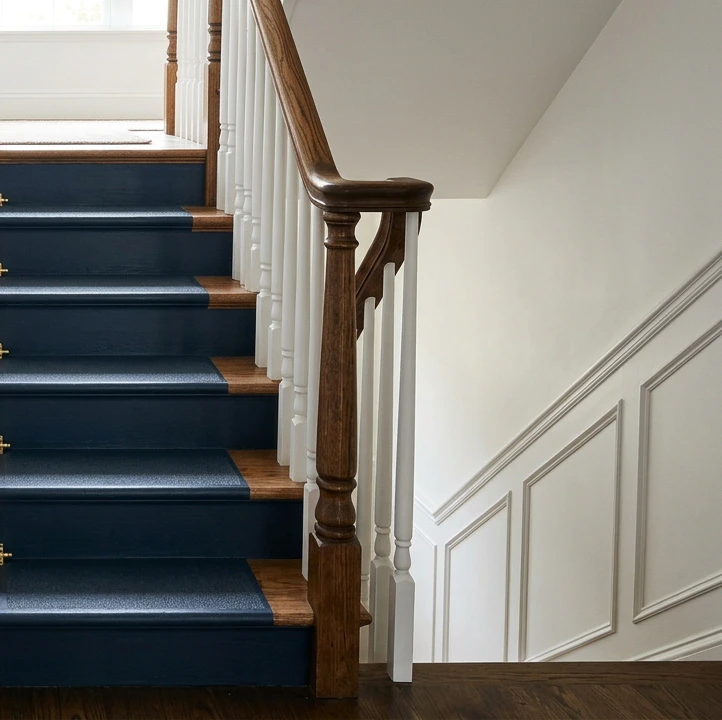
Pick painted stairs if at least three of these are true:
- You own the home and plan to stay 5+ years
- Total budget under $80 for the whole staircase
- No pets, no small kids, no elderly residents — the slip risk is minimal in your household
- You're committed to mixing anti-slip grit into the topcoat (non-negotiable)
- You want the pure clean-line aesthetic that runners can't deliver
Standard porch and floor paint from Rust-Oleum or Behr at $25-45 for a quart (enough for 13 steps with two coats) plus Rust-Oleum Anti-Slip Additive at $8-15 hits $30-60 for the whole staircase. The install is more involved than a runner: sand the existing finish, prime any bare wood, two coats of paint with cure time between, then a topcoat mixed with anti-slip grit.
The honest case for painted stairs: they're the right answer for tight-budget owners in low-slip-risk households (no pets, no kids, no elderly residents). The pure aesthetic of painted stairs — clean lines, single color, no fabric pattern competing for attention — is genuinely beautiful when the rest of the room is busy or patterned. And the price-per-year math is solid: $40 amortized over 6 years is $7/year, vs $25-40/year for a runner.
What you give up: slip safety without grit additive (the most serious risk on this site — see the dedicated section below), renter flexibility (permanent, no going back), pet traction (smooth painted surfaces are a real fall hazard for older dogs and cats), and maintenance cycle (the anti-slip grit wears in 3-5 years and needs topcoat refresh).
The slip safety problem on stairs
This is the single most important factor specific to stair flooring, and it tilts the decision heavily for households with pets, kids, or elderly residents. Painted stairs without anti-slip grit are genuinely dangerous — emergency rooms see a meaningful number of fall injuries every year from freshly-painted-smooth stairs.
What happens: a freshly-applied coat of standard porch/floor paint cures to a smooth surface with very low friction. In socks or smooth-soled shoes (slippers, flat sneakers), the friction between foot and stair is below the safe threshold for stair use. The first surprise step — turning to grab something, moving too fast, carrying an object that obscures the next step — and you go down.
The non-negotiable fix for painted stairs: mix anti-slip grit additive into the topcoat. Brands that work:
- Rust-Oleum Anti-Slip Additive — fine grit, mostly invisible in the finish, $8-12
- Behr Premium Skid-Resistant Additive — same concept, slightly coarser grit, $10-15
- H&C Shark Grip — most aggressive (visible texture), $10-15
All three mix into the topcoat at about 1 packet per gallon. The finish stays the same color, but the surface gets the texture of fine sandpaper — invisible at conversational distance, immediately noticeable when bare feet or socks touch it. Never skip this step on painted stairs. The $10 of additive is the difference between safe stairs and an ER visit.
Runners solve this automatically: the fabric surface of any wool or polypropylene runner has built-in friction that exceeds safe stair-traction thresholds without any additive. Runners are the inherently-safer choice for stairs specifically — that's a real factor beyond aesthetics.
Pets, kids and bare feet
The slip safety section above applies to humans. Pets and small kids have additional considerations that further tilt the decision toward runners in most households.
For dogs (especially older ones):
- Smooth painted stairs are a real injury risk for senior dogs with hip or joint issues — they often refuse to use the stairs entirely, or fall trying.
- Runners with low-pile polypropylene provide grip without snagging claws.
- Avoid wool runners with looped construction — large dogs can catch claws in loops on the way down.
For cats:
- Cats handle smooth painted stairs better than dogs (better balance, lighter weight), but kittens and elderly cats still slip occasionally.
- Tight low-pile polypropylene runners are ideal — claws don't snag, traction is reliable.
- Avoid sisal or jute — cat claws destroy natural fibers within months.
For small kids:
- Sock-foot toddlers on painted stairs is the highest-risk combination — many household stair injuries happen here.
- Even with anti-slip grit, a runner is meaningfully safer than painted-with-grit for small kids.
- Pattern selection matters: busy patterns hide drool, spilled juice, and the inevitable accident better than solid colors.
The short verdict
Pick a stair runner if you rent, have pets or kids, want the design-magazine aesthetic, or want passive slip safety without thinking about grit additives. Pick painted stairs if you own, have a low-slip-risk household (no pets, no kids, no elderly), your budget is genuinely capped at $80, and you're committed to mixing anti-slip grit into every topcoat for the life of the floor.
For most households in 2026, a runner is the better answer — design appeal + safety + renter flexibility all in one move. Painted stairs win for a specific narrow case: budget-constrained owners in pet-free, kid-free households who want clean lines and accept the maintenance cycle.
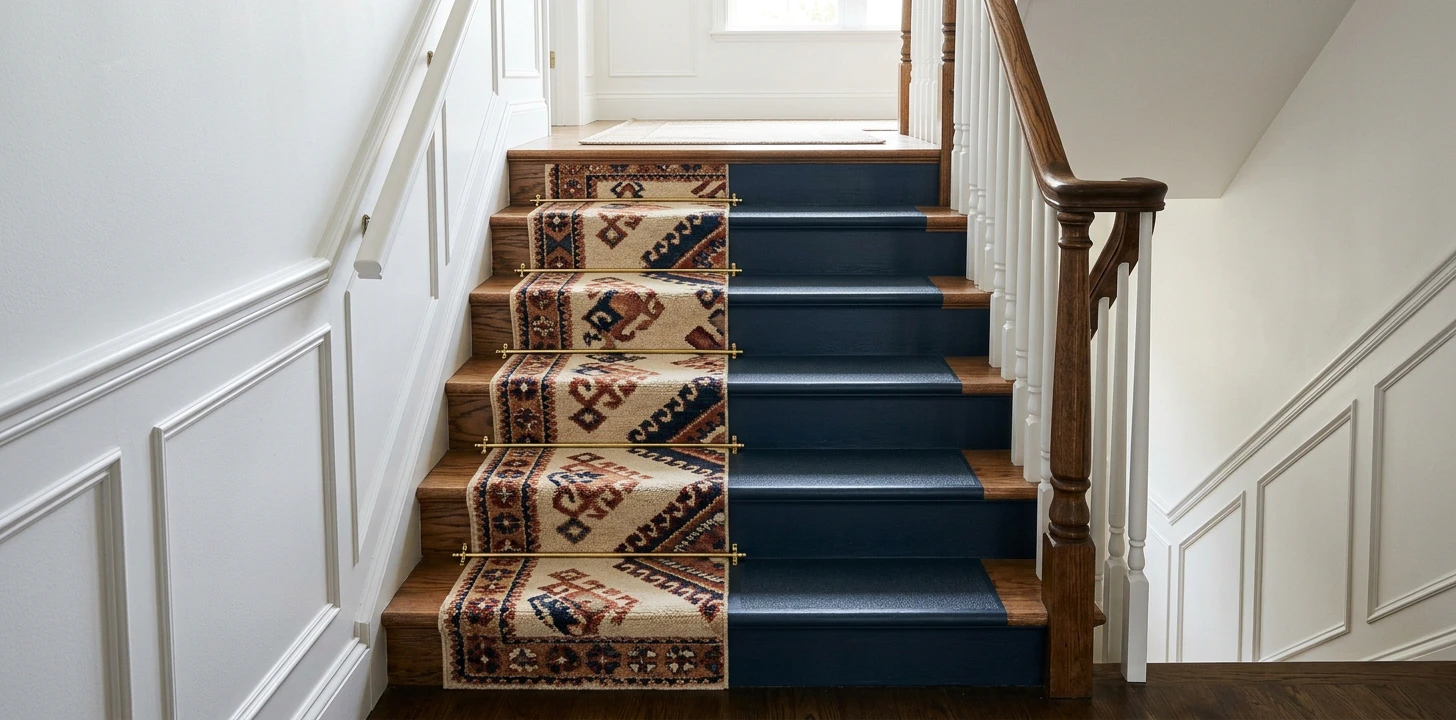
The third option that the FAQ above mentions: paint the risers, runner on the treads. This hybrid gets you the painted-stair color contrast (the visible vertical stripes when you look up the staircase) plus the runner's safety and design appeal where you actually step. Total $150-260 for a stair makeover that punches well above its budget.
Comparing more stair options? The full stairs guide also covers peel-and-stick stair treads (renter quick fix) and hardwood tread caps (premium owner upgrade) — useful for budgets at either extreme.
 Full stairs guide
 Bedroom Walls: Wallpaper vs Paint
 Entryway Floor: Porcelain vs LVP
 Bedroom Floor