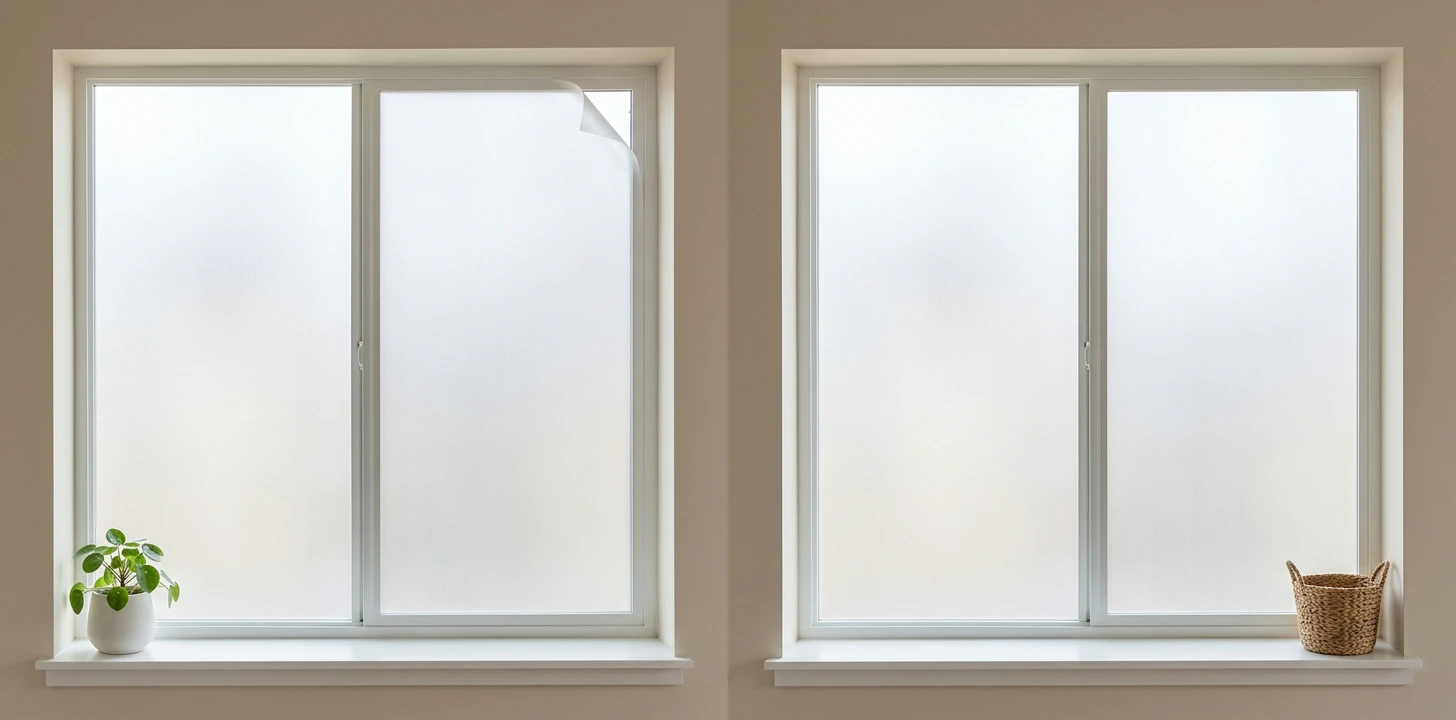
Updated July 2026. Prices reflect US market costs from Amazon, VViViD, Artscape and Gila. All comparisons based on a typical residential window (10-15 sq ft of glass surface).
Same film, two install methods, very different outcomes
Frosted privacy, decorative stained-glass, UV-blocking — the four major window film categories all come in either static-cling or adhesive variants. The film pattern is identical; the install method is the difference. And the install method decides almost everything about how the film performs over years.
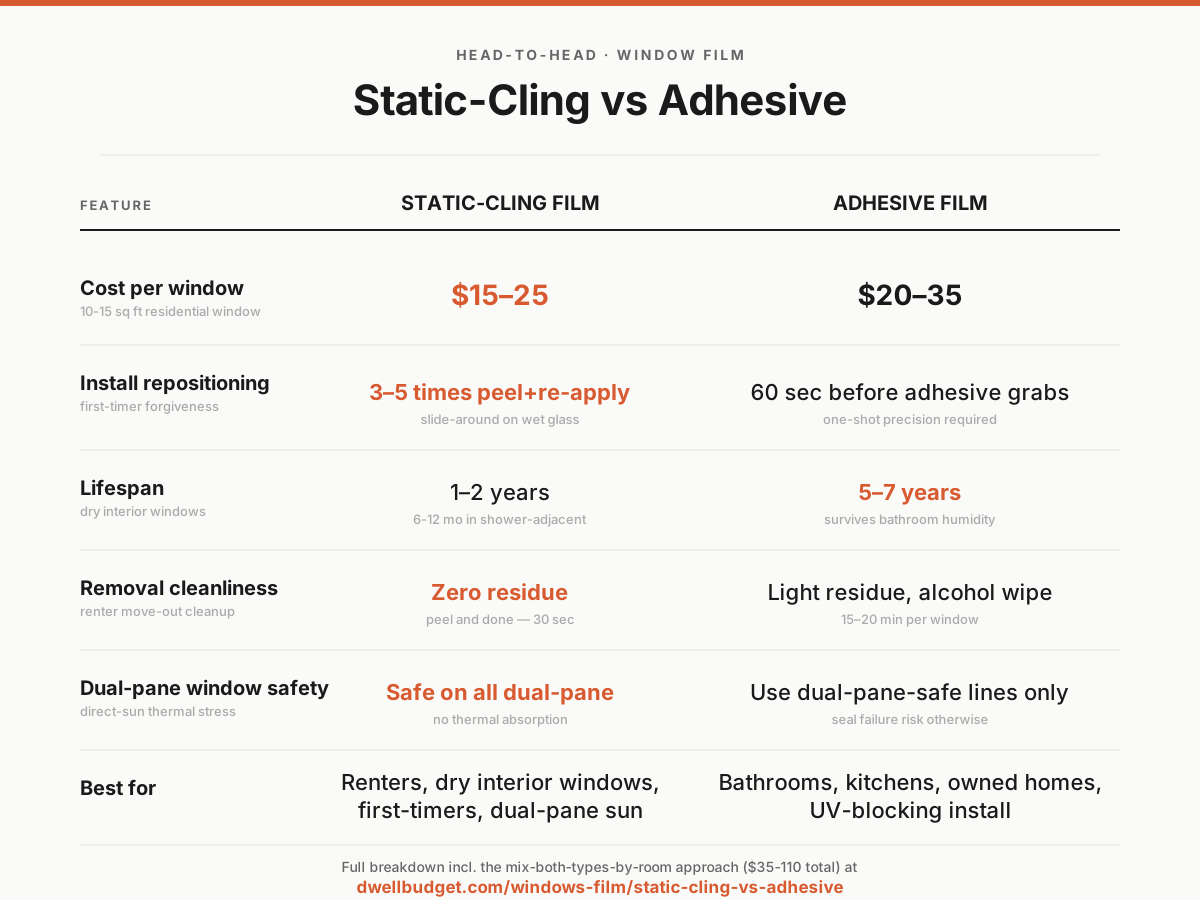
The short version: static-cling film at $1.50/sq ft repositions during install (forgiving for first-timers), peels off with zero residue (renter-safe), but only lasts 1-2 years before edges start curling. Adhesive film at $2/sq ft lasts 5-7 years even in humid bathrooms, survives high-traffic windows, but leaves minor residue on removal that needs alcohol cleanup. The decision is mostly about whether you rent or own, how forgiving you need the install to be, and whether the window faces a humidity source.
Below: side-by-side table, when each one wins, the renter security-deposit math that decides it for rental properties, the humidity and dual-pane window safety factor most product reviews skip, the mix-both-types approach most homeowners actually end up with, and FAQs.
Side-by-side comparison
| Static-cling film | Adhesive film | |
|---|---|---|
| Cost per sq ft | $1.50 | $2.00 |
| Typical residential window total | $15–25 | $20–35 |
| Install repositioning during first 30 min | 3–5 times (peel + re-apply on wet glass) | Once — 60 sec before adhesive grabs |
| Lifespan (dry interior windows) | 1–2 years before edge-curl | 5–7 years |
| Lifespan (bathroom shower-adjacent) | 6–12 months | 5–7 years |
| Removal cleanliness | Zero residue — peel and done | Light residue, alcohol-wipe 2-3 min |
| Dual-pane window safety | Safe on all dual-pane | Safe only on rated dual-pane-safe lines |
| Tempered safety glass | Safe | Avoid — thermal stress risk |
| Renter-safe? | Yes — fully reversible, zero risk | Yes with cleanup — 15 min per window at move-out |
| Best for | Renters, dry interior windows, first-time installers | Bathrooms, kitchens, owned homes, west-facing UV need |
When to pick static-cling
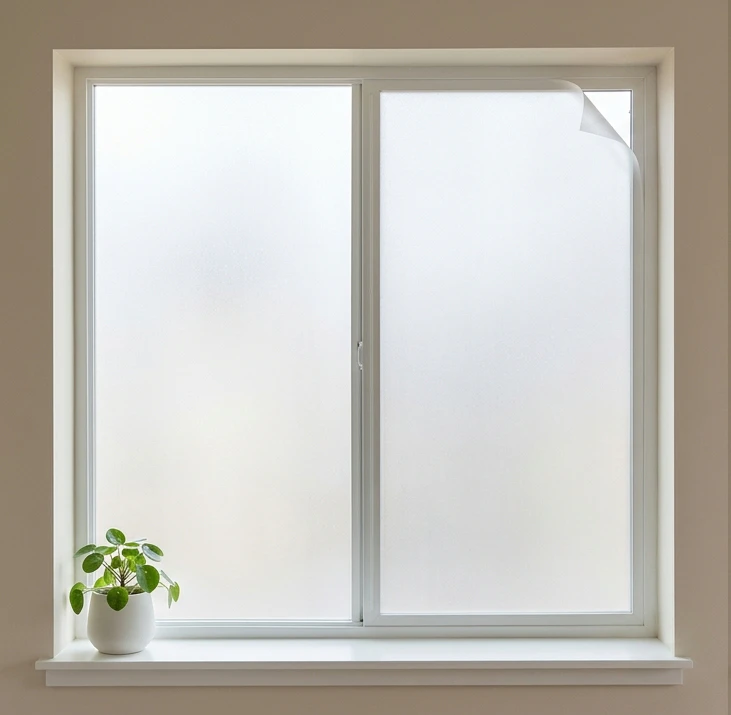
Pick static-cling film if at least three of these are true:
- You rent — security deposit protection is the primary concern
- The window is in a dry interior room (bedroom, living room, home office)
- This is your first window film install — repositioning forgiveness matters
- The window is dual-pane in direct sun (static-cling avoids the seal-failure risk adhesive carries)
- You expect to swap the design within 1-2 years (different pattern, different room, redecorating)
Quality static-cling from Artscape, Coavas, or VViViD static-cling line at $1.50/sq ft costs $15-25 for a typical 10-15 sq ft residential window. Install takes 20-40 minutes for first-timers — the repositioning forgiveness during the first 30 minutes (peel + re-apply on wet glass 3-5 times) means you can perfect the alignment without paint-flake disaster.
The under-discussed advantage in dual-pane window installs specifically is thermal safety. Static-cling films don't absorb solar heat the way adhesive films do — the seal between dual-pane window glass layers stays intact for the window's full lifespan. Adhesive films in direct sun on dual-pane windows can cause seal failure within 2-3 years, voiding the window manufacturer warranty and creating fogged-window-between-panes that requires full window replacement to fix. For any owned-home dual-pane install in a sunny exposure, static-cling is the safer-by-design choice.
What you give up: 1-2 year lifespan on dry windows vs 5-7 for adhesive, 6-12 months in shower-adjacent bathroom installs before edges curl, incompatibility with textured/pebbled glass (needs smooth glass for static adhesion), and weaker hold in temperature swings (winter cold + summer heat cycles loosen static adhesion over time).
When to pick adhesive
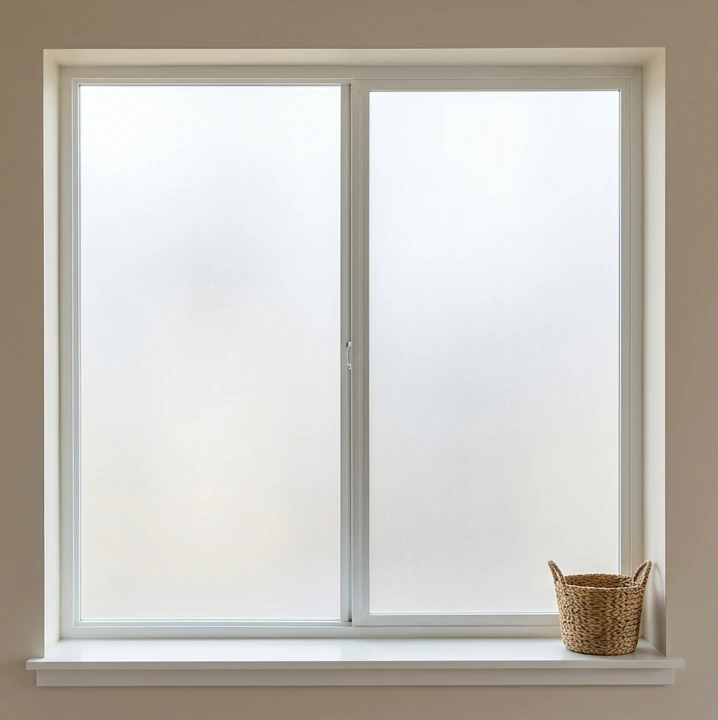
Pick adhesive film if at least three of these are true:
- The window is in a humid room (bathroom shower-adjacent, kitchen above stove, laundry)
- You own the home and the install is intended as a permanent or 5+ year solution
- You need UV-blocking for floor/furniture protection (UV films are predominantly adhesive)
- The window has any texture (pebbled, frosted, etched) that static-cling can't grip
- You're confident enough in measuring + alignment to do a one-shot install
Quality adhesive film from VViViD or Gila at $2/sq ft costs $20-35 for a typical residential window. The install takes the same 20-40 minutes as static-cling, but the repositioning window is roughly 60 seconds — once the adhesive contacts the glass, you have a brief slide-to-align window before it grabs permanently. Measure twice; cut once; apply with confidence.
The biggest practical advantage is humidity tolerance. Bathroom windows above showers and kitchen windows above stoves see daily humidity spikes of 70-85% for 30-60 minutes at a time. Static-cling adhesion weakens in these conditions; adhesive films cure harder in humid environments and hold for the full 5-7 year lifespan. For any bathroom or kitchen window install, adhesive is essentially the only durable choice — static-cling alternatives fall off the wall within a year in those rooms.
What you give up: one-shot install precision required (no peel-and-reposition for first-timers), renter cleanup time at move-out (15-20 minutes per window with rubbing alcohol + plastic razor), dual-pane window thermal risk on direct-sun installs (use dual-pane-safe rated lines only), and tempered glass incompatibility (use static-cling on any tempered safety glass).
The renter security-deposit math
This is the install-method factor that decides the question for any rental install, and it's the under-discussed cost factor most renters don't quantify until move-out day.
The math: typical security deposits in the US are $1,500-3,500 (one month's rent in most markets). Standard rental agreements include language allowing the landlord to deduct "any damage beyond normal wear and tear" — which can include residue on windows, paint flake damage from removed films, or visible adhesive residue. Aggressive landlords have deducted $50-200 per window for film removal cleanup in disputed move-out cases.
Static-cling at move-out: peel the film, the window underneath looks exactly as it did before install. Zero residue, zero risk of deduction, zero cleanup time. The film comes off in 30 seconds per window.
Adhesive at move-out: peel the film, expect light residue that needs rubbing alcohol + a microfiber cloth to remove cleanly. 15-20 minutes per window of cleanup work, total project 1-2 hours for a typical apartment with 5-6 filmed windows. If the film has been up for 5+ years (or in direct sun), the residue cures harder and removal needs a heat gun (or hair dryer at high heat) to soften the adhesive first. Cheap Amazon-import adhesive films can leave permanent haze that the landlord could legitimately call damage.
The implication for renters: for any window install in a rental property, static-cling is the default-correct choice unless the room is humid (bathroom or kitchen) and the lifespan gap matters more than the cleanup time. The cost difference ($1.50 vs $2/sq ft) is trivial compared to the security-deposit risk-reduction value.
Humidity and dual-pane window safety
The two physical-environment factors that constrain the install-method choice in specific window positions — and the most-common sources of "my window film failed in a year" complaints in product reviews.
Humidity tolerance. Static-cling adhesion relies on water + smooth glass + static charge — all three weaken in high humidity. Bathroom shower-adjacent windows, kitchen windows above the stove, and laundry windows above the dryer all hit 70-85% peak RH for 30-60 minutes daily during normal use. Static-cling on these windows lifts at edges within 6-12 months. Adhesive films cure harder in humid environments and hold for the full 5-7 year lifespan. The rule: humid rooms = adhesive, period; static-cling is the wrong tool for the job in shower/cooking/laundry zones.
Dual-pane window thermal safety. Modern residential windows are dual-pane (two layers of glass with insulating gas between, sealed at the perimeter). Adhesive films absorb solar heat and transmit it to the glass; on dual-pane windows in direct sun, the heat absorption can stress the perimeter seal until it fails. Once the seal breaks, moisture enters the gap between the panes, creating fogging that's impossible to clean. The fix is full window replacement at $400-1,500 per window. The rule: dual-pane windows in west-facing or south-facing rooms with direct afternoon sun → either static-cling (no thermal absorption) or "dual-pane-safe" rated adhesive lines only (Gila Dual Reflective is the most-tested). Most generic adhesive privacy films are NOT dual-pane-safe.
Tempered safety glass. Bathroom shower doors, sliding patio doors, large picture windows, and glass within 18 inches of a door are usually tempered safety glass — designed to shatter into harmless small pieces if broken. Adhesive films on tempered glass + direct sun can create thermal stress that triggers spontaneous breakage (tempered glass is more thermal-sensitive than annealed). The rule: tempered glass = static-cling only, never adhesive.
Mixing both types in the same house
The under-discussed approach that most homeowners end up with after the first year of testing what holds where — and the one window-film-company sales reps don't push because it complicates the upsell.
The decision rule by window position:
- Bathroom shower-adjacent windows → adhesive (humidity tolerance is decisive)
- Kitchen windows above stove → adhesive (cooking humidity + grease splatter)
- Laundry room windows → adhesive (dryer humidity)
- Bedroom windows → static-cling (dry, repositionable, renter-safe)
- Living room windows → static-cling unless UV-blocking needed (then adhesive UV film)
- Home office windows → static-cling (lets you swap design when redecorating)
- West-facing dual-pane windows → static-cling (dual-pane safety) or dual-pane-rated adhesive UV film
- Tempered glass anywhere → static-cling only
The shopping list: buy 1 roll of frosted static-cling ($15-25) + 1 roll of frosted adhesive ($20-35) + 1 roll of UV-blocking adhesive if needed ($30-50). Total $35-110 covers a typical small house with material left over for redoing windows down the road. The cost is genuinely trivial vs the per-window benefit — film is the cheapest privacy/UV upgrade in any home.
Most homeowners install everything in one weekend afternoon, mix the install methods based on the room, and end up with a fully-filmed home for under $100 in materials. Far better than the alternative most people default to (curtains for every window at $30-100 each = $300-1,000 for the same coverage).
The short verdict
Pick static-cling if you rent, the window is in a dry interior room (bedroom, living room, office), this is your first install (repositioning forgiveness matters), or the window is dual-pane in direct sun. Pick adhesive if the window is in a humid room (bathroom, kitchen, laundry), you own the home long-term, you need UV-blocking for floor/furniture protection, or the glass is textured. For most multi-window installs in owned homes, mix both types by room — adhesive in bathrooms/kitchens, static-cling everywhere else, total $35-110 for a typical small house. The cost difference between methods is trivial; the install-method mismatch with window position is where most film-failure complaints come from.
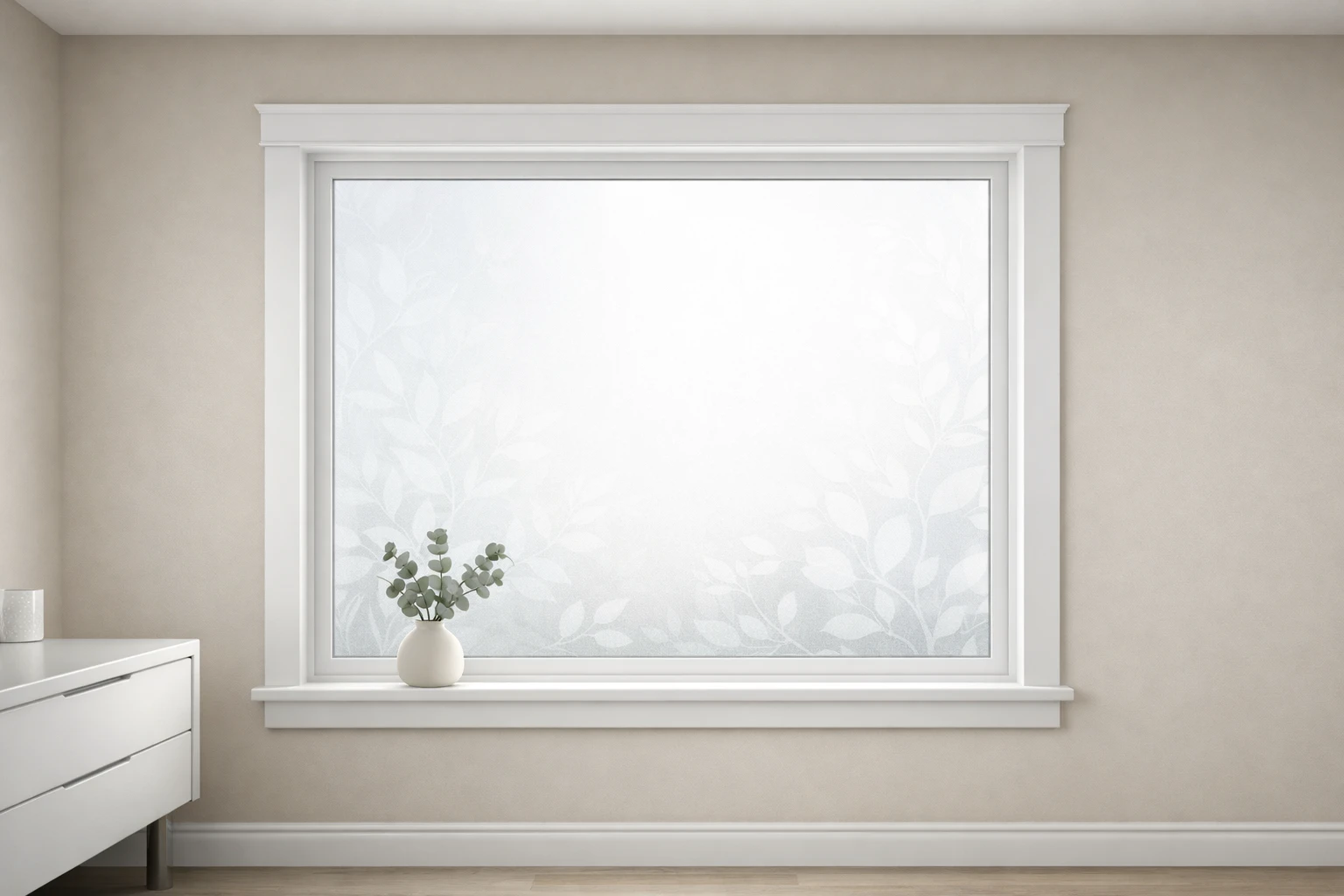
Comparing more window film options? The full window film guide covers all four film categories (frosted privacy, decorative stained-glass, UV-blocking, one-way mirror) with brand picks for each, plus the install technique (rubbing alcohol prep + soapy-water spray + center-out squeegee) that works for both static-cling and adhesive.
 Full window film guide
 Window Treatments: Curtains vs Roman Shades
 Bathroom Walls
 Bedroom Walls: Wallpaper vs Paint