Updated July 2026. Prices reflect US market costs from Home Depot, Lowe's and specialty coating suppliers. All comparisons based on a typical 40 sq ft bathroom floor.
The trendy bathroom floor vs the proven one
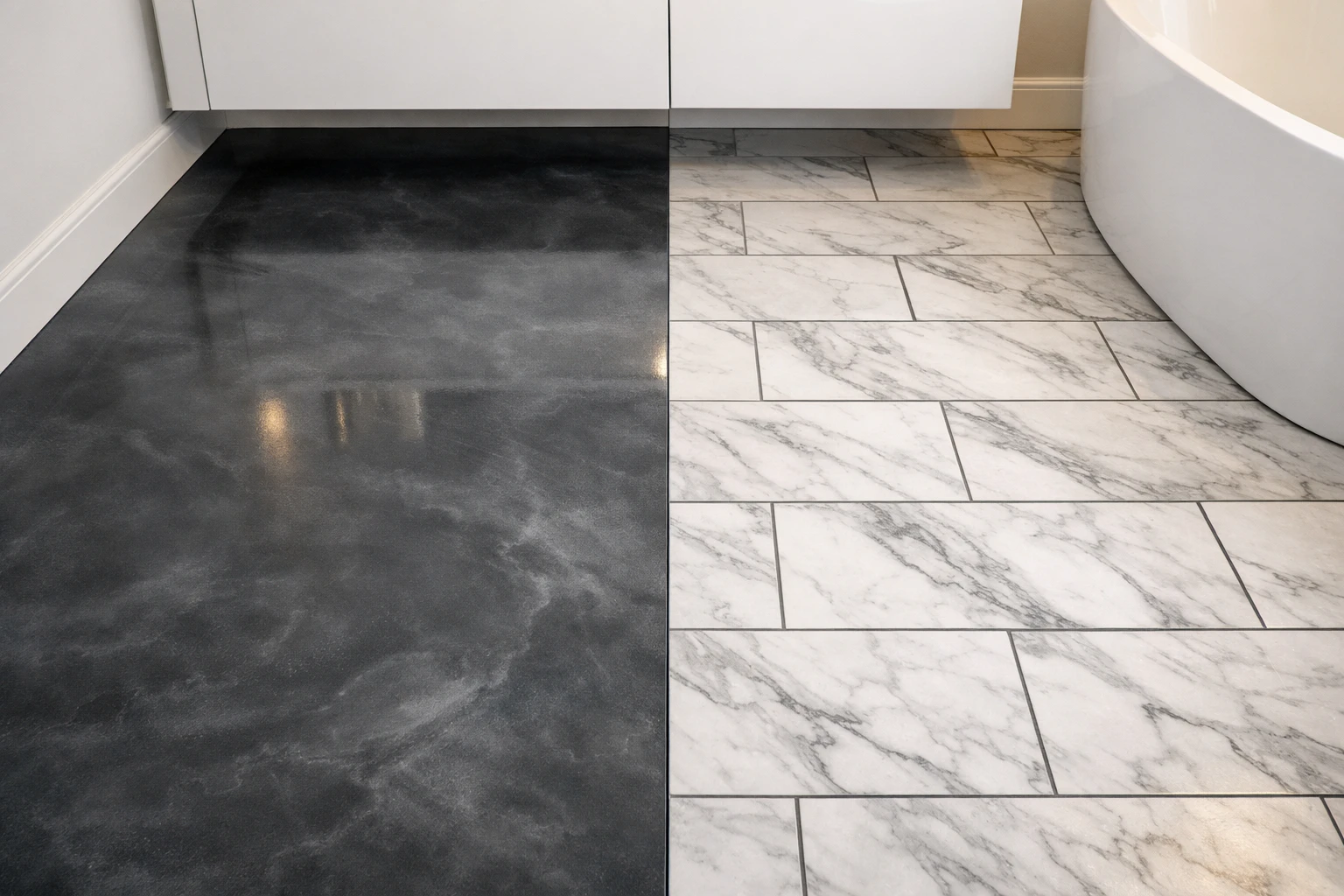
Epoxy bathroom floors are having a moment. Scroll any home-design feed and you'll find seamless, glossy, marbled-metallic bathroom floors with no grout lines anywhere — and a comment section full of "how do I do this?" The appeal is obvious: a single waterproof surface with nothing to seal and nothing for mildew to grow in.
But the bathroom is a very different room from the garage where epoxy earned its reputation. A bathroom is small, enclosed, walked on barefoot, and wet — and each of those changes the math. The honest question isn't "is epoxy cool?" (it is) but "is epoxy the right floor for this room, versus the tile that's been the bathroom standard for a century?"
The short version: epoxy wins on seamlessness, no-grout maintenance, and DIY material cost. Tile wins on slip safety, forgiving installation, and lifespan. Epoxy is the right call if you specifically want the seamless modern look and you'll hire a pro or take on a real DIY challenge. Tile is the safer default if you mostly want waterproof-and-low-fuss.
Below: a side-by-side table, when each one wins, the slip-safety problem that's epoxy's biggest bathroom weakness, the no-grout advantage that's its biggest strength, the DIY reality in an enclosed room, and FAQs.
Side-by-side comparison
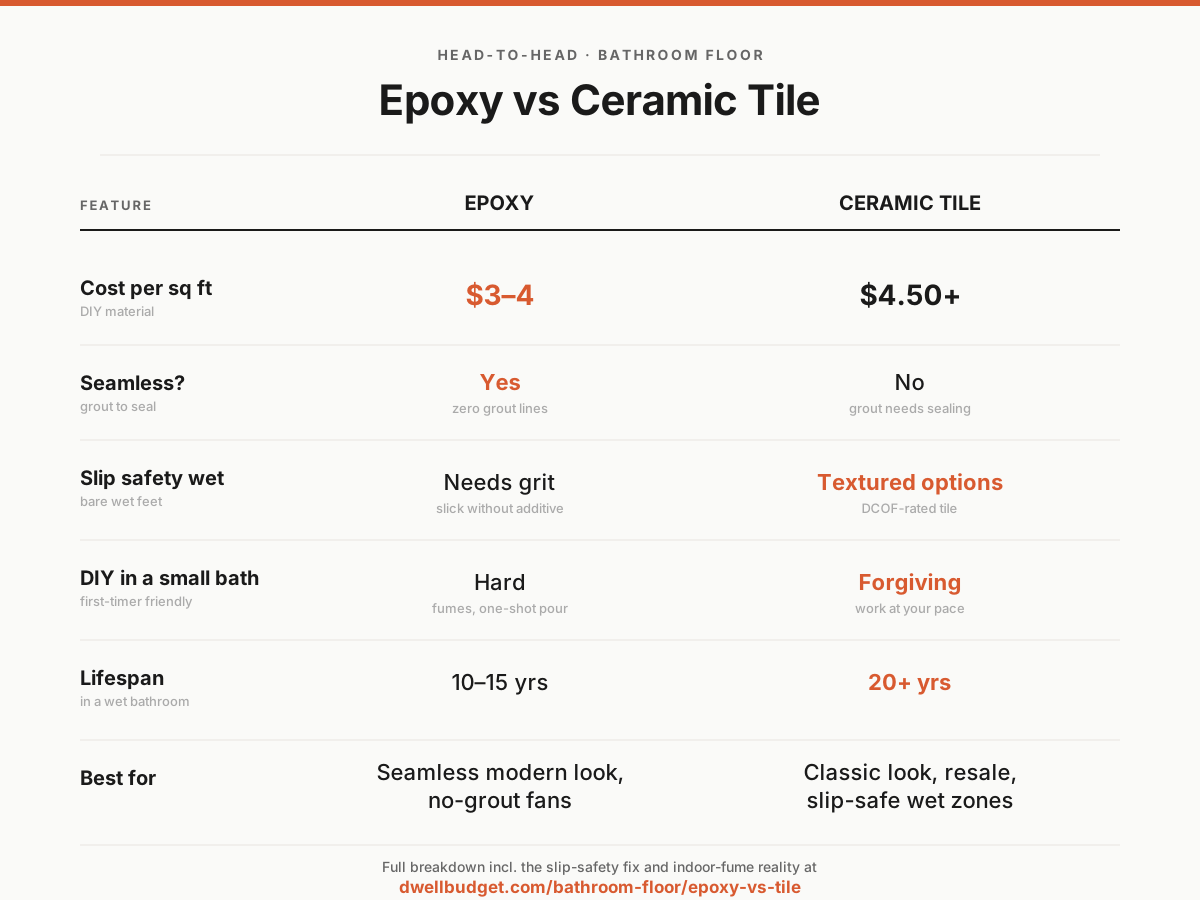
| Epoxy floor | Ceramic / porcelain tile | |
|---|---|---|
| Cost per sq ft (DIY material) | $3–4 (kit + primer + topcoat + grit) | $4.50+ (plus thinset, grout, saw rental) |
| 40 sq ft bathroom total (DIY) | ~$150–200 | ~$240+ |
| Pro install | $7–12/sq ft (specialty metallic work) | $4.50–9/sq ft |
| Seamless / grout? | Seamless — zero grout lines | Grout lines need sealing every 1–2 yrs |
| Slip safety when wet | Slick — needs anti-slip grit additive | Textured / DCOF-rated options grip wet feet |
| DIY in a small bathroom | Hard — fumes, one-shot pour, cutouts | Forgiving — wet saw, but work at your pace |
| Lifespan | 10–15 years (re-coat to renew) | 20+ years |
| Underfoot temperature | Cold and hard | Cold (warm with radiant heat) |
| Best for | Seamless modern look, no-grout fans, slab/basement baths | Slip-safe wet zones, resale, forgiving DIY |
When to pick epoxy
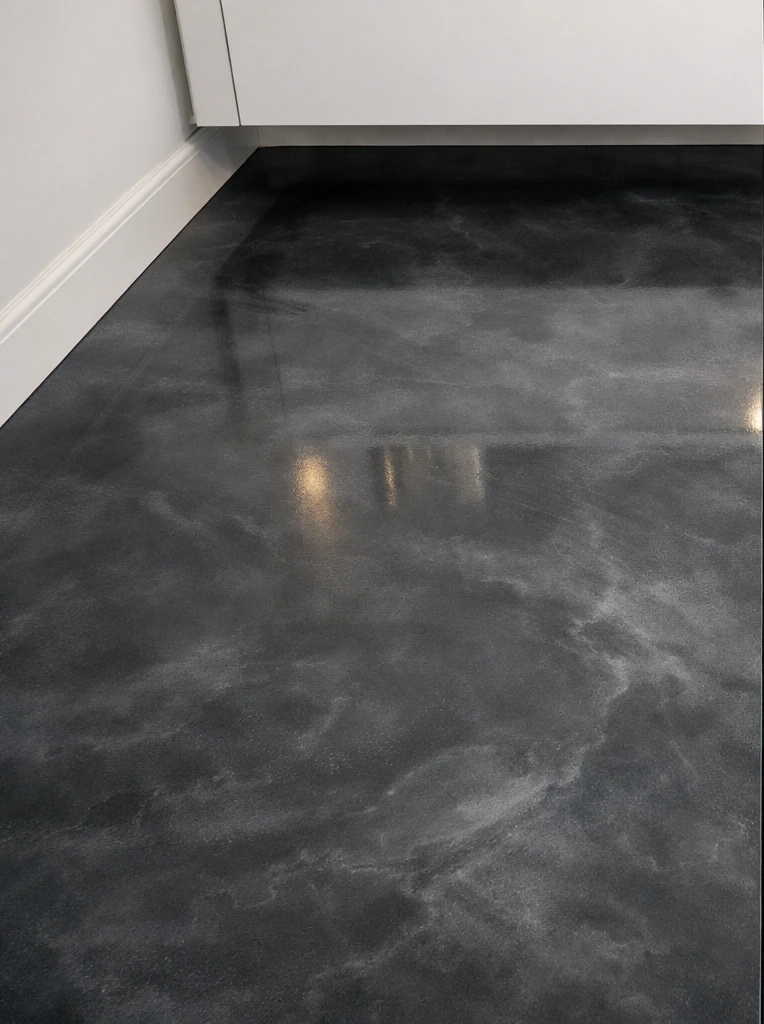
Pick an epoxy bathroom floor if at least three of these are true:
- You specifically want the seamless, no-grout, modern look — and that look is the whole point, not an afterthought
- You're tired of sealing grout and want zero grout lines to maintain
- The bathroom is on a concrete slab (basement or slab-on-grade) — epoxy's native substrate
- You'll either hire a specialty installer or take on a genuine DIY challenge with proper ventilation gear
- You want a waterproof surface that wraps seamlessly into corners and up a short cove base
A quality DIY epoxy floor for a 40 sq ft bathroom runs roughly $150–200 in materials — the coating kit, primer, a clear topcoat, and the all-important anti-slip grit. Use a low-VOC or water-based product for an interior room (more on fumes below). The look is unmatched if seamless-modern is your goal: marbled metallic, solid charcoal, or a flake system, with no grout grid breaking it up.
The same chemistry that coats garages applies here — if you want the brand-by-brand breakdown of epoxy, polyurea and polyaspartic kits, our 11 Best Garage Floor Coatings roundup covers the products, and our epoxy mistakes guide covers the moisture-test and prep rules that decide whether any epoxy floor lasts.
What you give up: slip safety (mandatory grit additive — see below), a hard DIY in a small room, cold-and-hard underfoot, and a shorter lifespan than tile. There's also a resale wildcard — some buyers love a seamless modern bathroom floor, others read epoxy as "garage-like" indoors.
When to pick ceramic tile
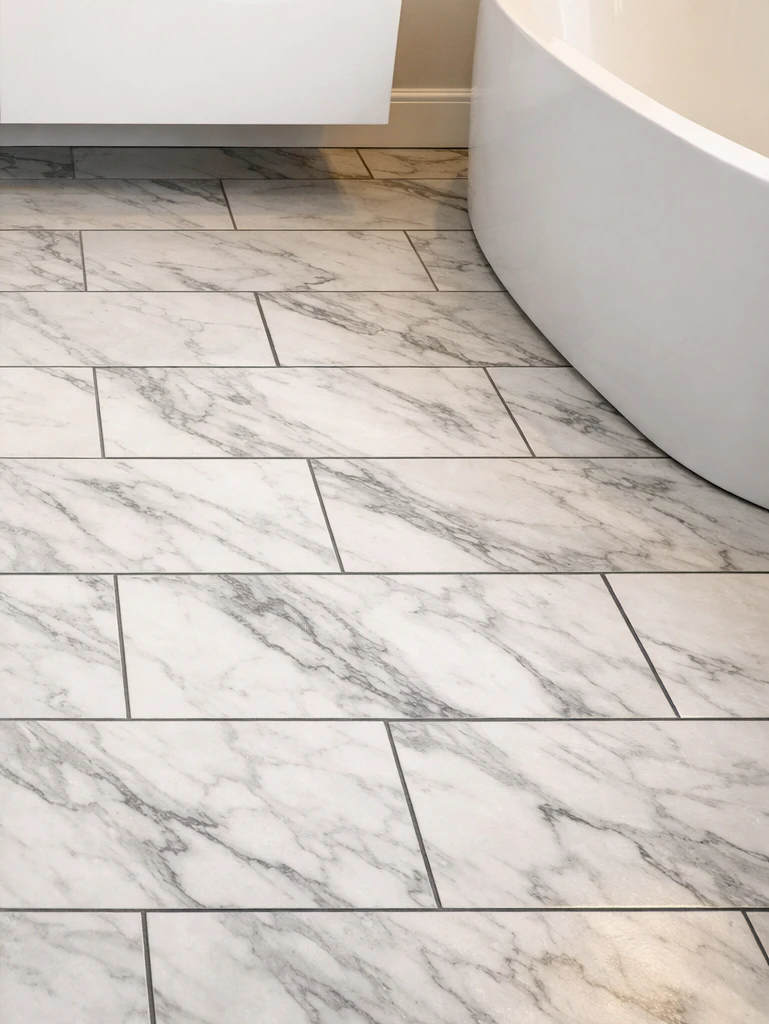
Pick ceramic or porcelain tile if at least three of these are true:
- You want the safest wet-floor option for kids, elderly residents, or a curbless shower zone
- You want a proven 20+ year floor with real resale value
- You're a first-time DIYer who'd rather work at your own pace than commit to a one-shot pour
- You're adding radiant floor heating — tile is the ideal partner
- You're sensitive to fumes, or the bathroom is interior living space with poor ventilation
Tile at $4.50/sq ft plus thinset, grout and a weekend wet-saw rental hits roughly $240 installed for a 40 sq ft bathroom. Porcelain (denser, under 0.5% water absorption) is the smarter bathroom buy than standard ceramic. The 20+ year lifespan, the slip-safe textured options, and the resale-listing premium are why tile has stayed the bathroom default for a century.
The fuller tile story — including the renter-friendly vinyl alternative — is in our LVP vs ceramic tile comparison, the other half of the bathroom-floor decision.
What you give up: grout maintenance (reseal every 1–2 years, or pay more for epoxy grout), a 2-day install with a learning curve, and the grid of grout lines that the seamless-epoxy crowd is specifically trying to escape.
The slip-safety problem (epoxy's biggest bathroom weakness)
This is the section that should decide it for anyone with kids or older residents. A smooth, glossy epoxy floor — the exact look that makes epoxy desirable — is dangerously slippery with wet bare feet. What's a non-issue in a garage (you're in shoes) becomes the highest-consequence risk in a bathroom (you're barefoot, wet, and there's a hard floor and a tub edge).
The fix is mandatory, not optional: broadcast an anti-slip additive into the final clear topcoat. A fine aluminum-oxide or polymer grit — Shark Grip or Rust-Oleum Anti-Slip Additive, $15–25 — sprinkled into the wet coat adds micro-texture you can feel but barely see. Decorative flake systems add some grip as a bonus. Never pour a smooth bathroom epoxy floor without it.
Even fully gritted, epoxy doesn't quite match a properly textured tile. Tile gives you a published DCOF rating (dynamic coefficient of friction) — look for 0.42 or higher for wet-area floors, printed right on the box. That measurable, built-in slip resistance is why tile wins the safety row even though gritted epoxy is "good enough" for most adults.
The seamless, no-grout advantage (epoxy's biggest strength)
Here's the flip side — the reason people want epoxy in the first place. Grout is the weak point of every tile floor, and in a bathroom it's the part that actually fails. Grout is porous; unsealed, it absorbs water, discolors, and grows mildew in the lines. Keeping it sealed means a $15 bottle and 30 minutes every 1–2 years, forever.
Epoxy has no grout lines at all. It's a single continuous waterproof surface — nothing to seal, nothing to discolor, nothing for mildew to colonize. You wipe it and you're done. For anyone who's spent a Saturday scrubbing grimy grout, that's the entire pitch, and it's a genuinely strong one.
If grout-free is the goal but epoxy's downsides scare you off, two middle paths exist: large-format tile (fewer, thinner grout lines) or epoxy grout with normal tile (non-porous, never needs sealing — Mapei Flexcolor, Custom Pre-Mixed — for $30–50 more on a small bathroom). You get most of the low-maintenance benefit without giving up tile's slip safety and lifespan.
The DIY-in-a-small-room reality
Epoxy looks DIY-friendly in garage videos — wide-open floor, roll it on, broadcast flakes. A bathroom erases most of that ease:
- Fumes in an enclosed space. Standard 2-part epoxy off-gasses strongly, and a bathroom is the worst-ventilated room in the house. You need a window open, a fan exhausting outward, the exhaust fan running, and a real organic-vapor respirator — not a dust mask. A low-VOC or water-based product is the right indoor choice.
- A one-shot, short-window pour. Mixed epoxy has a pot life of 20–40 minutes. There's no "stop and finish tomorrow" — you commit to the whole floor in one go, working fast around fixtures.
- Awkward cutouts. A small bathroom is mostly edges — toilet flange, vanity base, tub apron, door threshold. Cutting and coating cleanly around all of them in one timed pour is the opposite of the open-garage experience.
- Slab moisture still rules. On a slab, test for moisture first — a slab releasing vapor blisters any coating. It's the same plastic-sheet test from our epoxy mistakes guide.
None of this makes bathroom epoxy impossible — but it's an honest "experienced DIYer or hire a pro" job, not a confident-beginner weekend. Tile, for all its wet-saw intimidation, is the more forgiving first-timer project in a small room because you can work slowly, fix as you go, and there are no fumes.
The short verdict
Pick epoxy if the seamless no-grout look is specifically what you want, you're sick of sealing grout, the bathroom is on a concrete slab, and you'll hire a pro or take on a real DIY challenge with proper ventilation and mandatory anti-slip grit. Pick ceramic or porcelain tile if you want the safest wet floor, a proven 20+ year lifespan, forgiving installation, radiant heat, or you're fume-sensitive. For most upstairs family bathrooms, textured tile is the safer default; for a slab basement bathroom or a design-led modern look, epoxy earns its place.
Still weighing all your options? The full bathroom floor guide compares LVP, tile, epoxy and peel-and-stick side by side — and the LVP vs ceramic tile head-to-head covers the renter-friendly route.
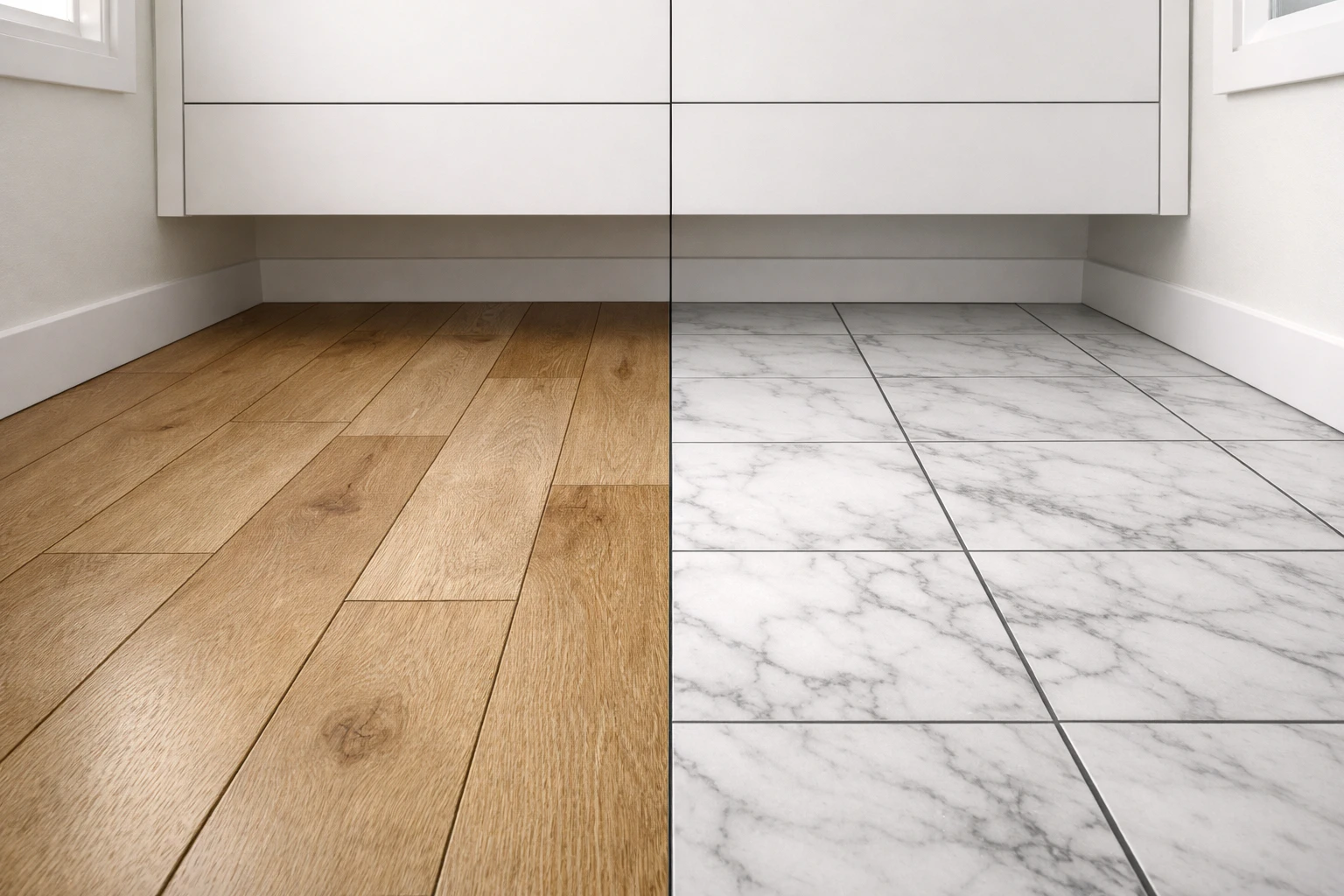 Bathroom Floor: LVP vs Ceramic Tile
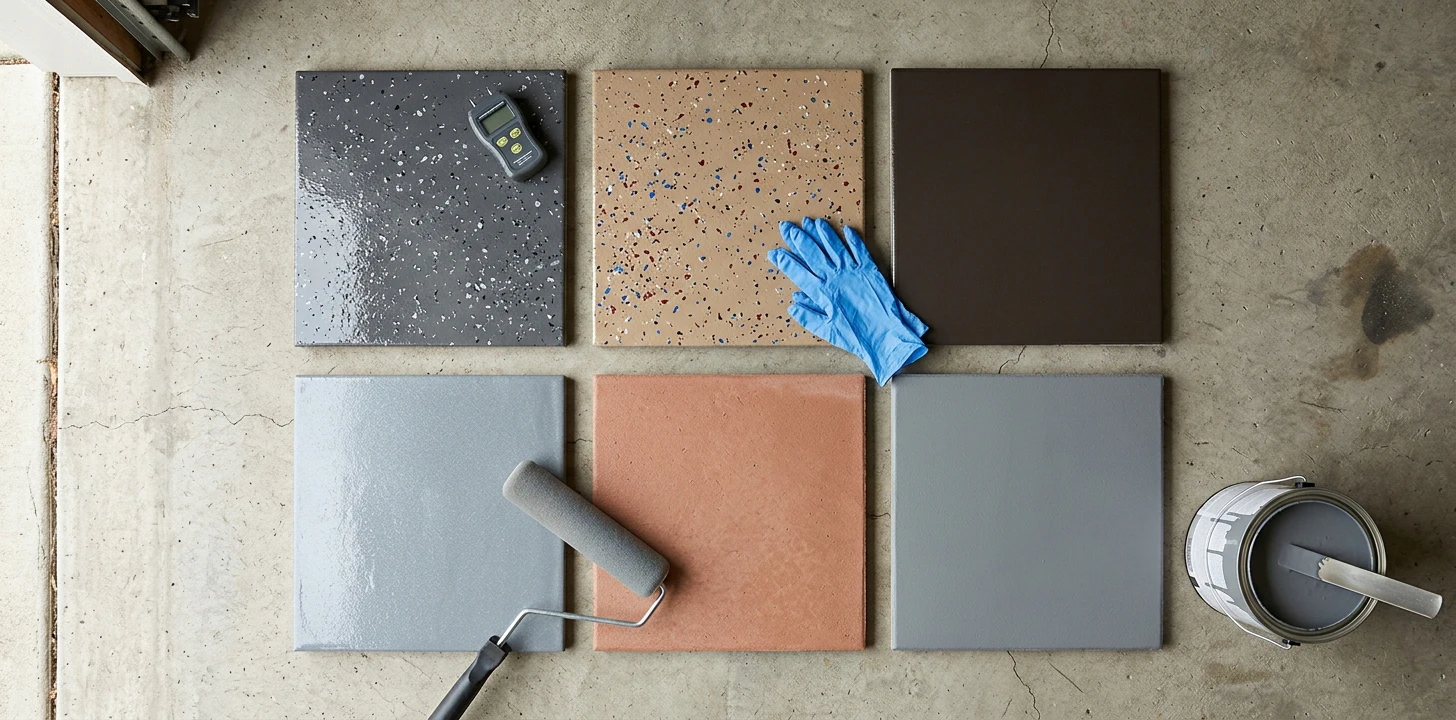 11 Best Garage Floor Coatings 2026
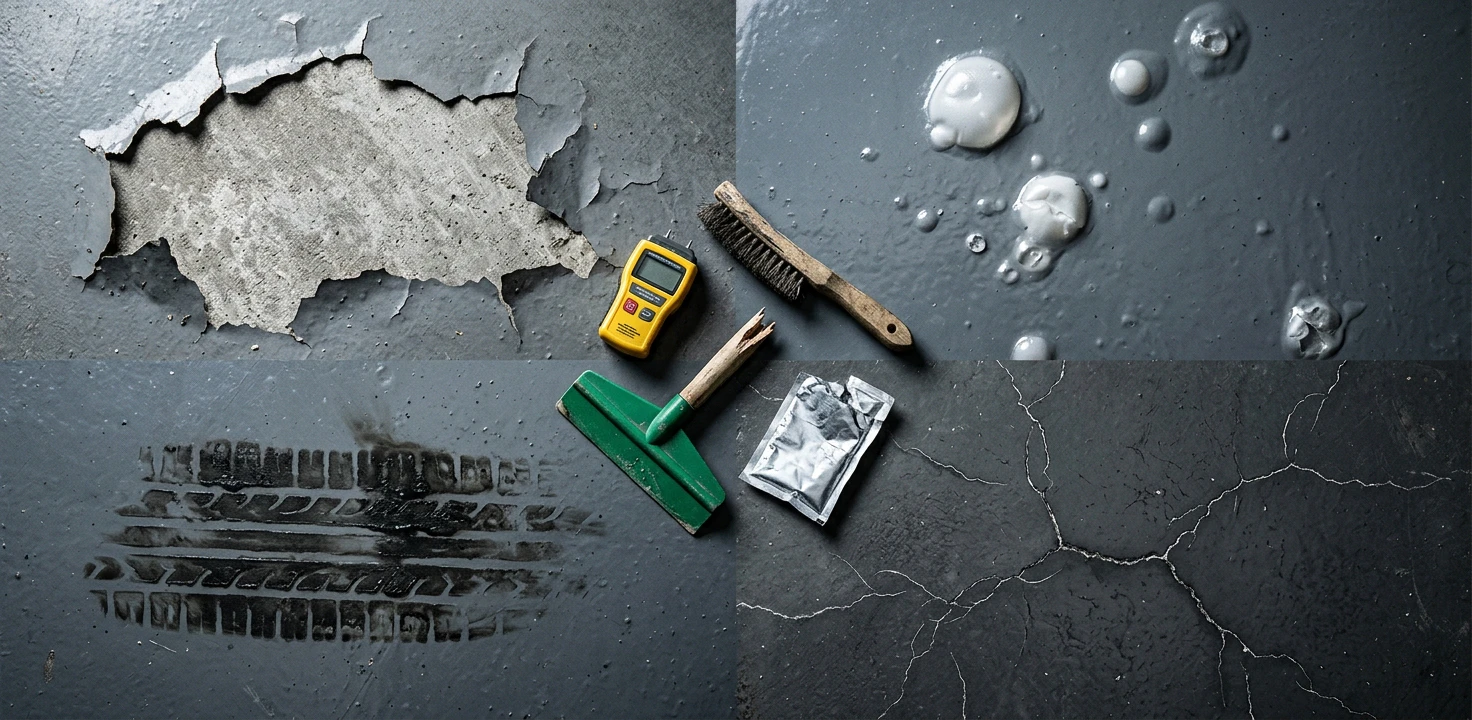 7 Garage Epoxy Mistakes That Make It Peel
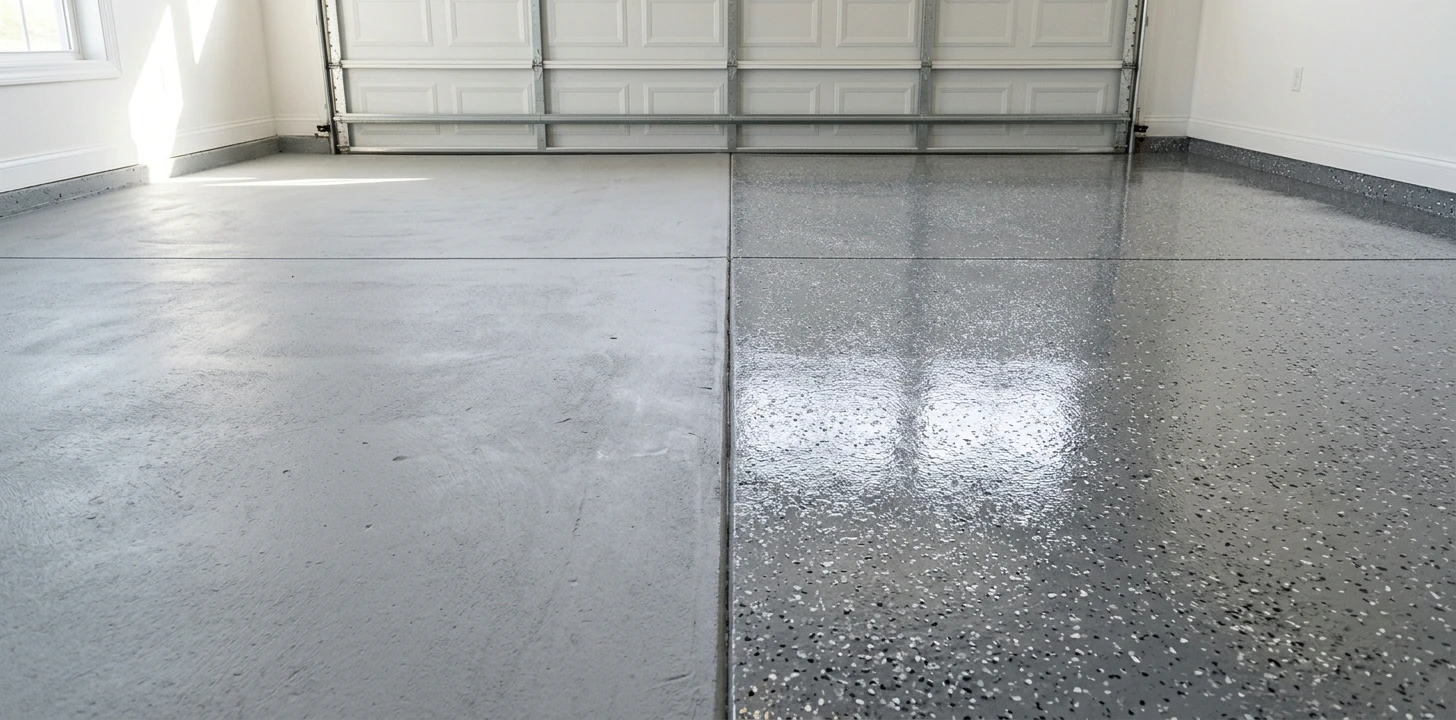 Garage Floor: Painted Concrete vs Epoxy
 Full bathroom floor guide