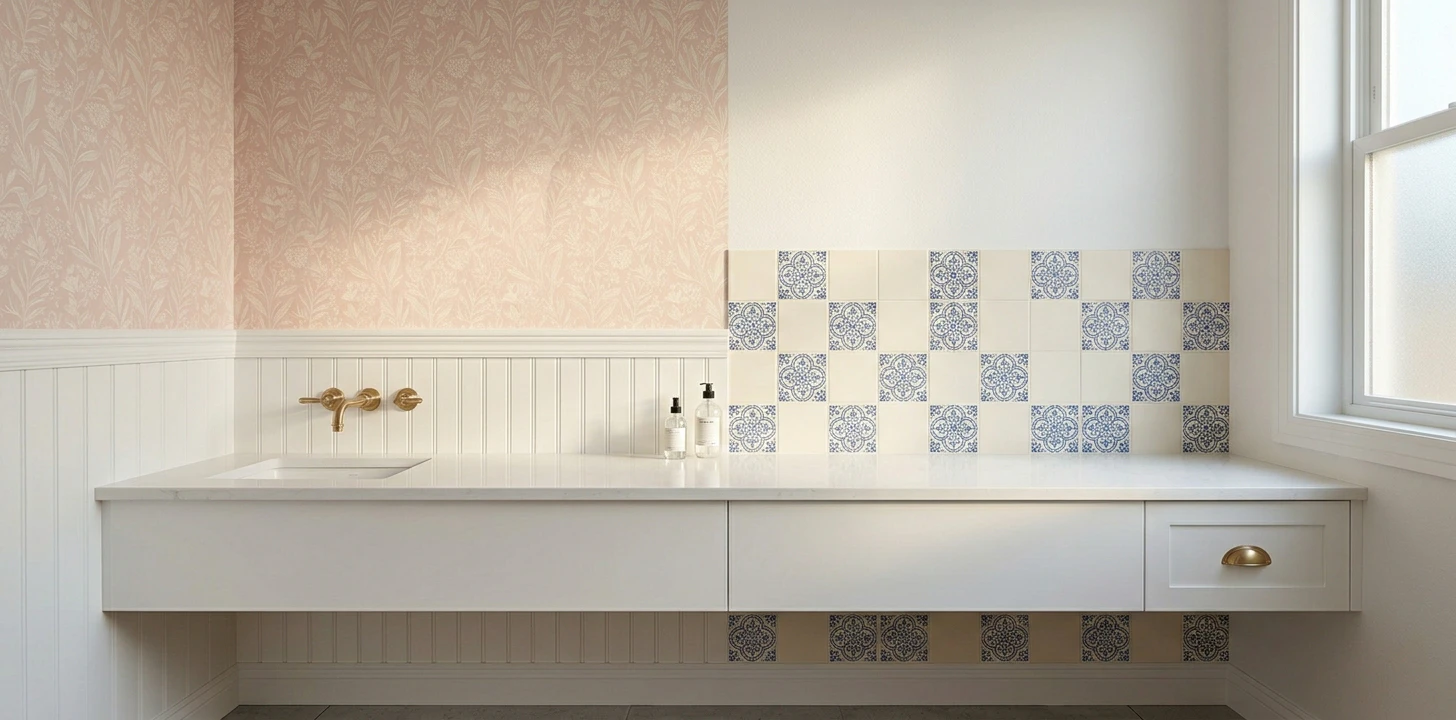
Updated July 2026. Prices reflect US market costs from Amazon, Tempaper, Spoonflower, Quadrostyle and LUCKYYJ. All comparisons based on a typical small bathroom (5×8 ft, ~60 sq ft of wall surface, ~40 visible 4×4 inch wall tiles).
They cover different surfaces — start here
Most "wallpaper vs stickers" head-to-heads compare them as if they were two ways to solve the same problem. They aren't. Peel-and-stick wallpaper goes on drywall; tile stickers go on existing ceramic tile. Trying to use one where the other belongs fails fast — wallpaper telegraphs grout lines through within days, stickers won't grip flat drywall at all. So the real question isn't "which one is better" — it's which one matches the surface in front of you.
For most rental bathrooms, the answer is both, applied to different zones. The typical American rental has tile wainscot to about 4 ft, then painted drywall above. Wallpaper goes on the upper drywall. Stickers go on the lower tile. The decision becomes "which one am I doing first" rather than "which one wins."
The rest of this article covers each option's strengths and failure modes individually, the humidity reality for both, the combined-rescue approach that delivers the biggest visual impact per dollar, and FAQs on edge cases (wallpapering over tile, sticker-on-painted-drywall workarounds, removal-day reality).
Side-by-side comparison
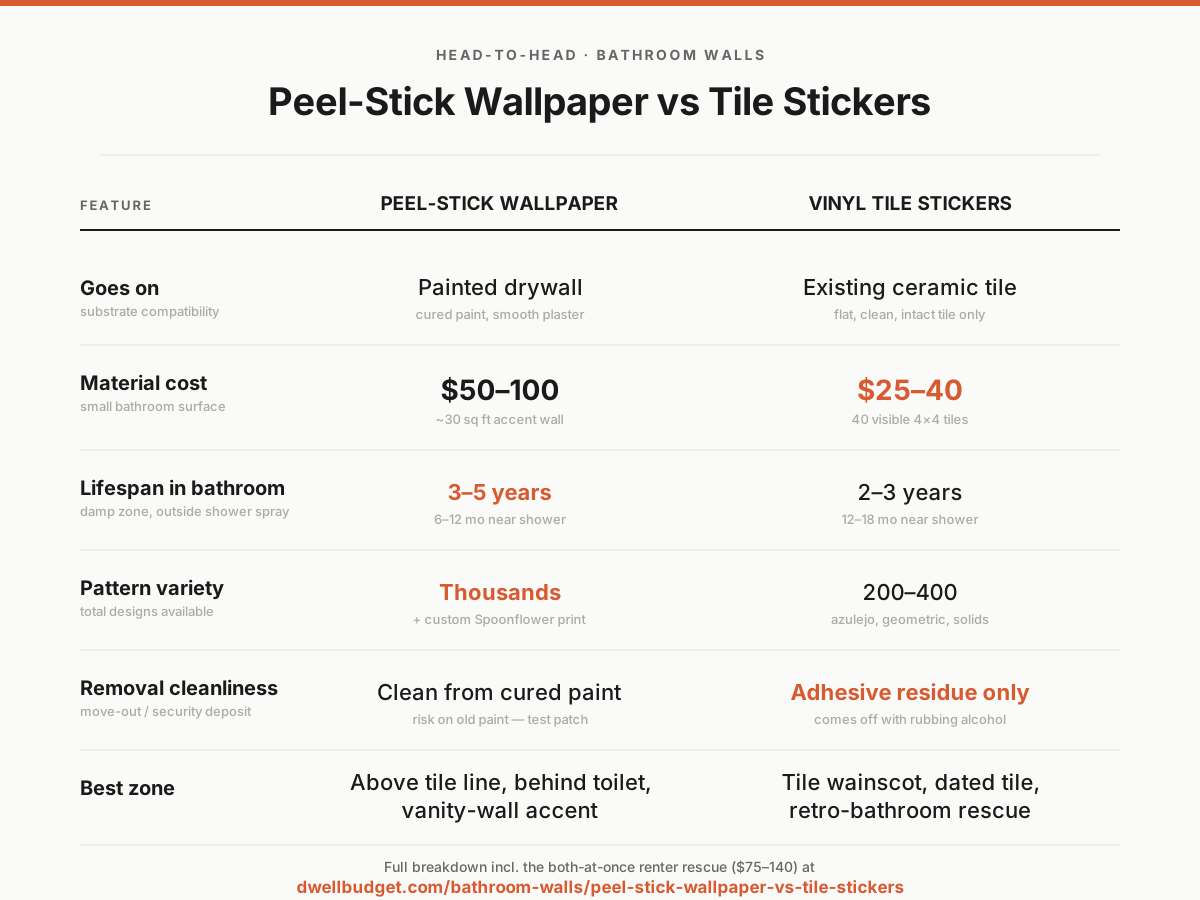
| Peel-and-stick wallpaper | Vinyl tile stickers | |
|---|---|---|
| Goes on | Painted drywall, smooth plaster | Existing ceramic/porcelain tile only |
| Cost (small bathroom) | $50–100 (one accent wall, ~30 sq ft) | $25–40 (40 visible 4×4 tiles) |
| Install time | 1–2 hours per wall | 2–3 hours for full wainscot |
| Humidity tolerance | 3–5 yrs in damp zone; 6–12 mo wet zone | 2–3 yrs in damp zone; 12–18 mo wet zone |
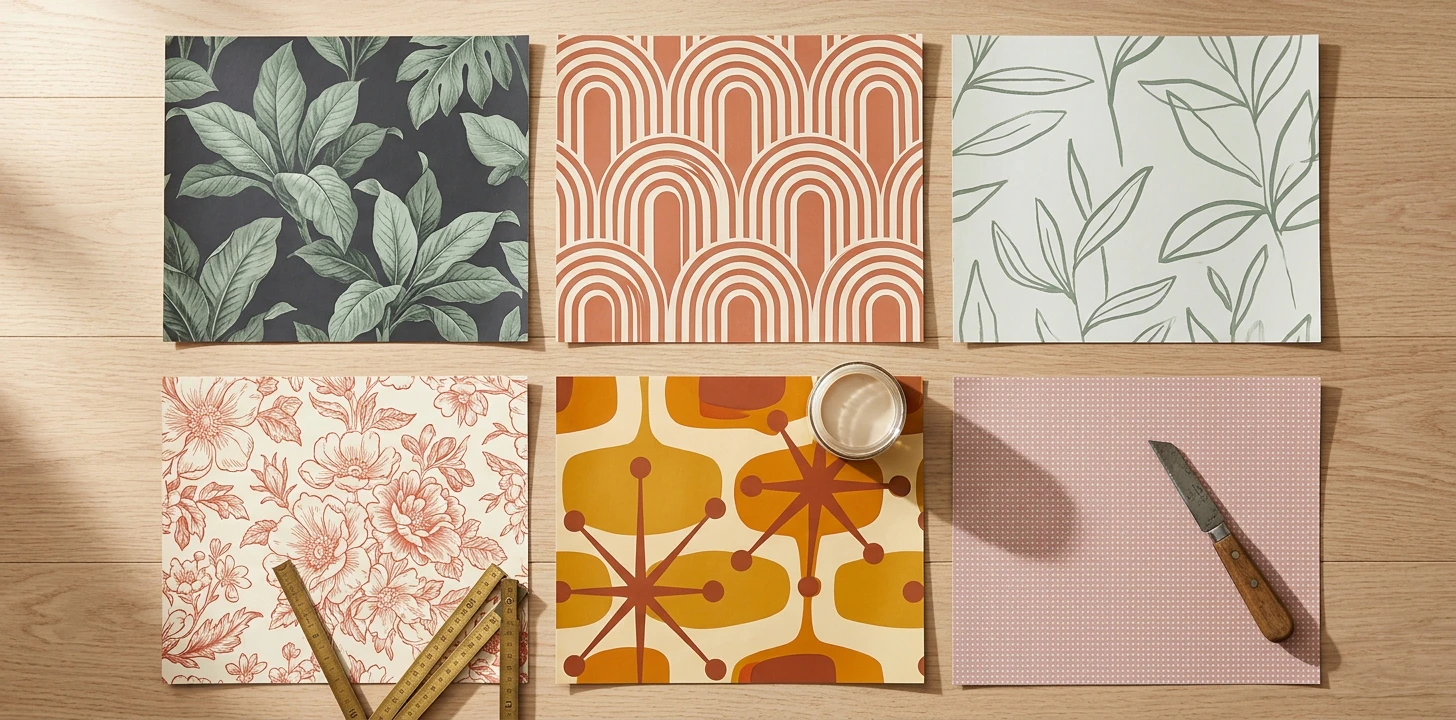
| Pattern variety | Thousands (incl. custom Spoonflower print) | ~200–400 across all major brands |
| Removal cleanliness | Clean from cured paint; risk on old paint | Adhesive residue, removable with alcohol |
| Renter-safe? | Yes — with 7-day test patch first | Yes — almost always |
| Best zone | Above the tile line, behind toilet, vanity wall | Tile wainscot, dated ceramic backsplash |
| Best for | Pattern-rich aesthetic, full wall transformation | Specific ugly-tile rescue, retro bathroom fix |
When to pick peel-and-stick wallpaper
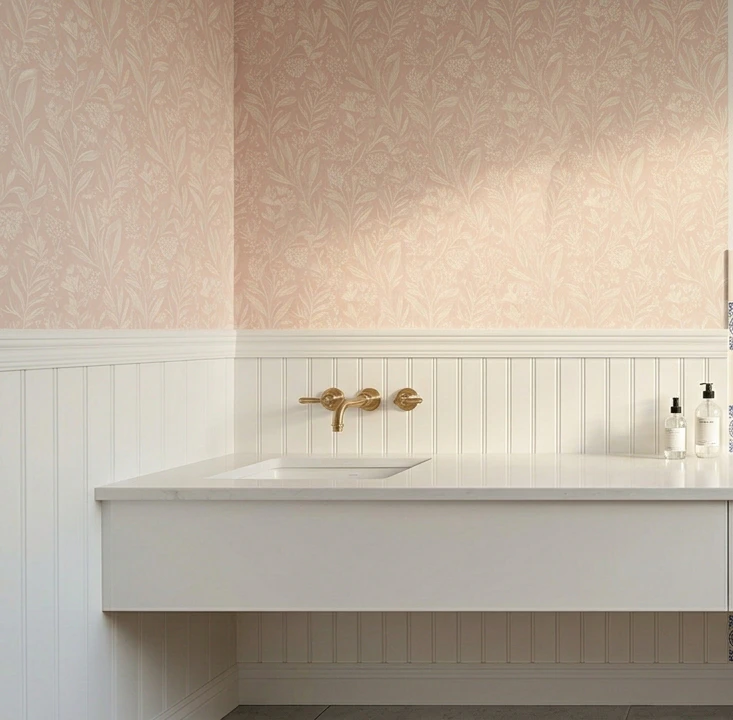
Pick peel-and-stick wallpaper if at least three of these are true:
- The wall surface you want to transform is drywall or smooth plaster (not tile)
- You want pattern-rich aesthetic — a specific design, color scheme, or custom print
- The walls were last painted with a quality paint, fully cured (over 30 days ago)
- You're covering large areas — full walls, accent walls, ceiling sections
- The wall is outside the direct shower spray zone
Removable wallpaper from Tempaper, NuWallpaper, or custom-printed Spoonflower goes up in 1–2 hours per wall and delivers the biggest visual transformation per dollar in any rental bathroom. For a typical bathroom accent wall (the wall behind the vanity, around 30 sq ft), expect $50–100 in material plus a Saturday afternoon.
The under-discussed advantage of wallpaper in bathrooms specifically is custom print — Spoonflower lets you upload exact colors and patterns, which means you can match an existing duvet, paint color from another room, or a Pinterest board reference exactly. No tile sticker brand offers this. For renters with strong aesthetic preferences, that custom-print gap alone usually decides it.
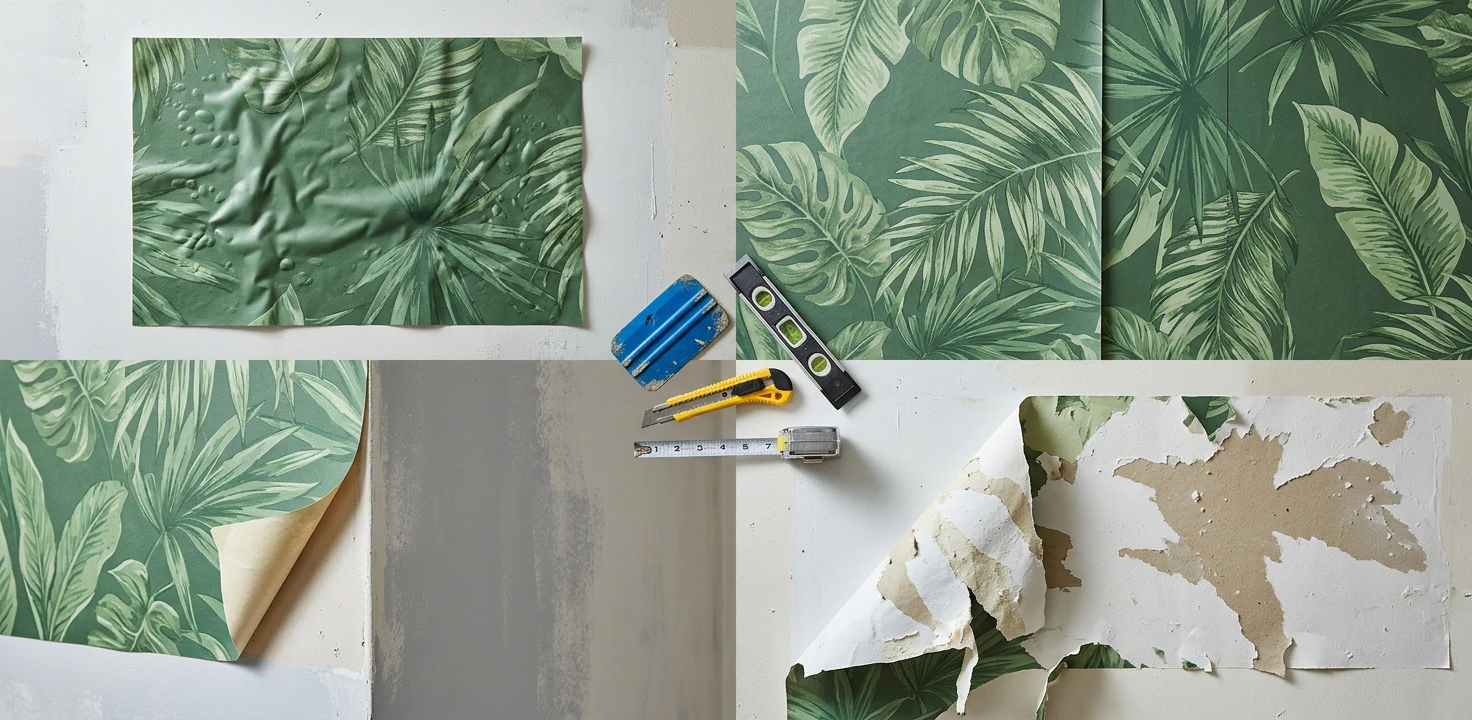
What you give up: can't apply to tile (the most common dated surface in rental bathrooms), removal risk on old or freshly painted walls (always do the 7-day test patch in a closet first), and shorter lifespan in wet zones (6–12 months on the wall facing the showerhead, no matter the brand).
When to pick tile stickers
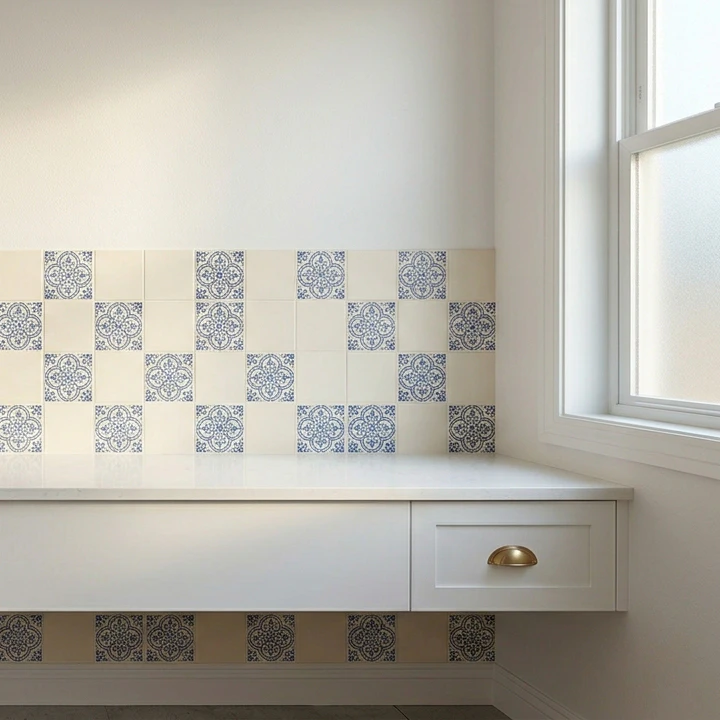
Pick vinyl tile stickers if at least three of these are true:
- You have existing ceramic or porcelain tile you want to transform without removing it
- The tile is flat (not heavily textured), clean, and intact (no missing pieces or major chips)
- Total budget is under $50 for the wall surface in question
- You're OK with the more limited pattern selection (200–400 designs across all brands)
- The tile is in the damp zone, not the direct shower spray zone
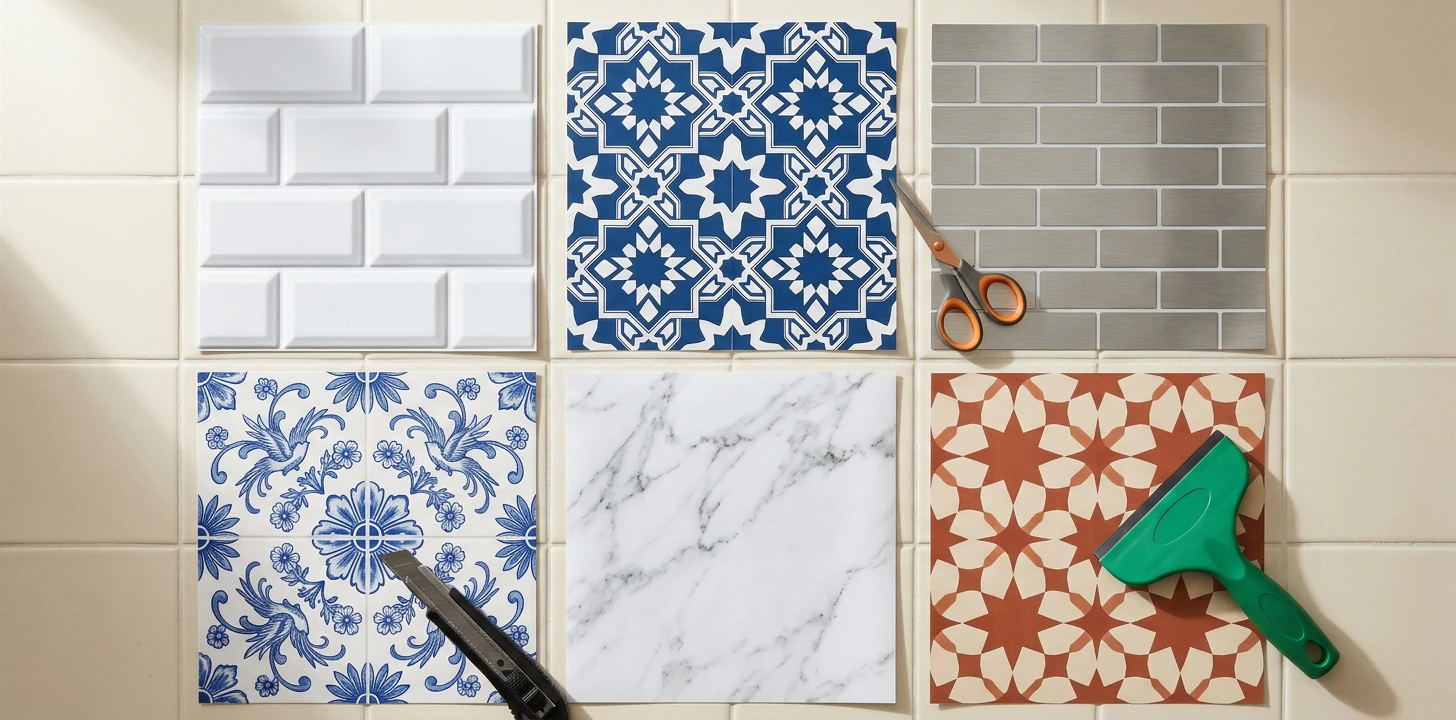
Tile stickers from Quadrostyle, LUCKYYJ, or Smart Tiles cover 40 typical 4×4 inch wall tiles for $25–40, install in 2–3 hours, and convert a dated 1970s–1990s tile bathroom into something that reads as deliberate design. The classic application: Portuguese azulejo patterns or Moroccan geometrics over cream, pink, or pale-blue legacy tile.
The under-discussed advantage is no demolition. Removing real tile from a bathroom wall is a half-day project that exposes whatever's underneath (often damaged drywall behind the original tile install), and you're usually on the hook to fix it. Tile stickers cover the problem without touching the structure — when you move out, peel them off, leave the original tile, done.
What you give up: limited pattern selection (~200–400 designs total, vs thousands for wallpaper), can't be applied to bare drywall (need existing tile substrate), and edge-curl over time (more pronounced near direct shower spray — caulk the perimeter on install day for shower-adjacent placements).
The both-at-once renter rescue
For most rental bathrooms with the classic "tile wainscot to 4 ft + painted drywall above" layout, neither option alone fixes the whole room. The combined rescue does — and it's the single highest-impact renter bathroom move at this budget level.
The recipe:
- Below the tile cap rail: tile stickers over the dated ceramic, matching the bathroom's intended aesthetic (Portuguese azulejo for vintage-leaning, solid colors for modern minimalist, geometric for mid-century)
- Above the tile cap rail: peel-and-stick wallpaper in a complementary pattern — botanical, geometric, custom-printed — covering the painted drywall up to the ceiling
- The transition between the two materials is naturally hidden by the existing tile cap rail or bullnose row at the top of the original tile install
The math: $25–40 in tile stickers + $50–100 in wallpaper = $75–140 total for a complete small-bathroom transformation. One weekend of work. Fully reversible on move-out (stickers peel with hair-dryer heat, wallpaper peels cleanly from cured paint). This is what bathroom designers on Instagram are quietly doing for rental clients with under-$200 budgets.
Color-coordination tip: if pattern matching is the priority, look for both materials from the same retailer's collection (NuWallpaper makes tile-sticker-like options; some tile sticker brands have matching wallpaper lines). Otherwise, pick the wallpaper first, then choose a tile sticker pattern in a complementary solid or simple geometric — easier than the reverse.
Humidity reality check for both
Both materials fail the same way in bathrooms, just at slightly different rates: adhesive lifts at the edges in high-steam zones.
Wet zone (within 2 ft of showerhead): wallpaper edges lift in 6–12 months even on "waterproof" grades; tile stickers curl at corners in 12–18 months. The fix is the same for both: clear silicone caulk along all edges on install day. That tripled lifespan in the highest-humidity testing.
Damp zone (rest of the bathroom): wallpaper holds 3–5 years; tile stickers hold 2–3 years. The bathroom fan does most of the work here — running it during showers AND for 15 minutes after each shower is the single biggest variable for either material's lifespan. Without fan use, cut both estimates in half.
Dry zone (above 6 ft, no fixtures): either material lasts indefinitely.
The short verdict
Pick peel-and-stick wallpaper if your surface is drywall or smooth plaster, you want pattern-rich aesthetic on a full wall, your walls were painted with cured paint over 30 days ago, and the wall is outside direct shower spray. Pick tile stickers if you have ugly existing ceramic tile you want to transform without demolition, the tile is flat and clean, and your budget is under $50 for that surface. For most rental bathrooms with both drywall and tile surfaces, do both — total $75–140, one weekend, the highest-impact renter bathroom rescue at this budget.
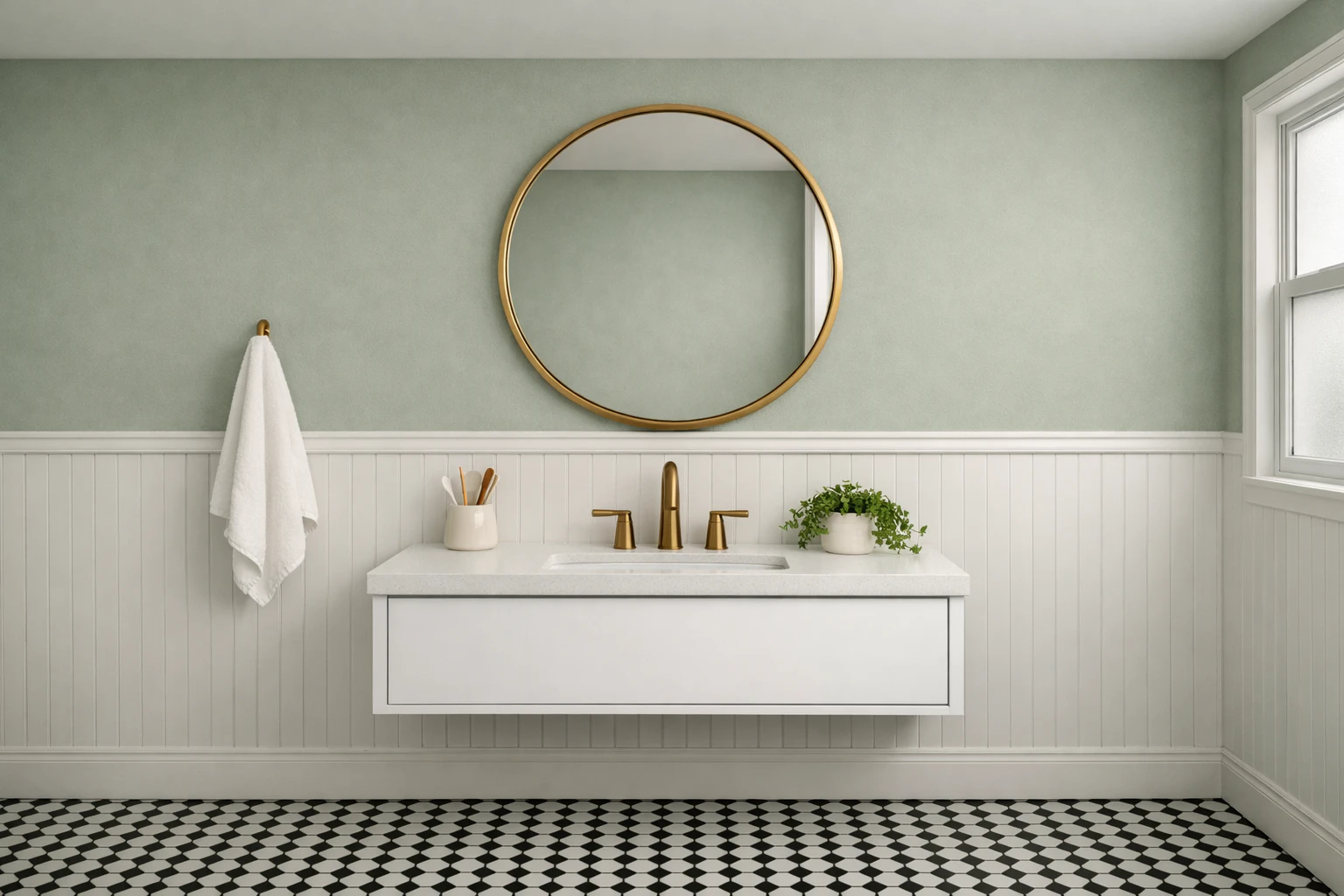
Comparing more bathroom wall options? The full bathroom walls guide covers paint (the unsexy correct answer for damp-zone walls), mold-resistant primer techniques, and PVC beadboard wainscoting (the durable upgrade for owners with damaged drywall to hide).
 11 Best Removable Tile Sticker Brands
 7 Peel-and-Stick Wallpaper Mistakes
 11 Best Peel-Stick Wallpaper Brands
 Full bathroom walls guide
 Bedroom Walls: Wallpaper vs Paint
 Kitchen Backsplash: Peel-Stick vs Real Tile
 Bathroom Floor